
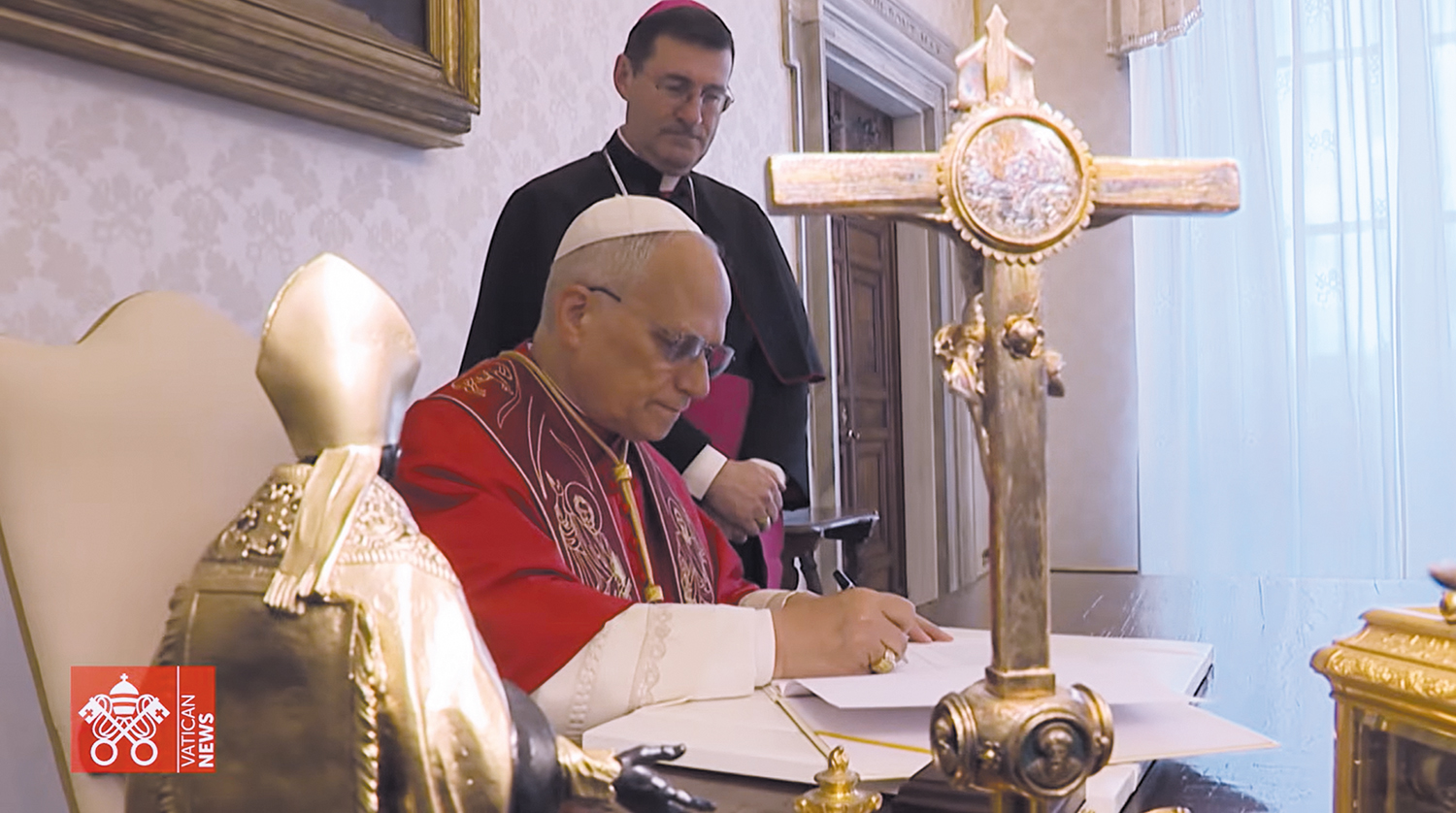
The encyclical, Magnifica Humanitas: On Safeguarding the Human Person in the Time of Artificial Intelligence, was released May 25. The document says it is essential for the decision-makers who are guiding AI's evolution to engage in comprehensive, ongoing ethical discernment to ensure the technology promotes human flourishing, rather than degrades it.
Three ministry leaders say that while the pontiff did not directly address the implications of AI for healthcare beyond a couple short references, Magnifica Humanitas contains much wisdom that will be invaluable for the Catholic health ministry as it continues to grapple with understanding and implementing AI.
Byron Yount, chief data and AI officer for the Chesterfield, Missouri-based Mercy system, said, "I think the significance is that Pope Leo was placing AI among the central social questions of his papacy, so he's not really treating this as a technical sidebar, but essentially he mentions it as being a defining question about the human person."
Becket Gremmels, CommonSpirit Health system vice president, theology and ethics, thinks the encyclical is "groundbreaking in a lot of ways. ... it's very timely and very prescient and hopefully it will have the influence it deserves."
Daniel Daly, executive director of the Center for Theology and Ethics in Catholic Health, said, "The most important message is essentially that Pope Leo is calling on leaders to participate in discernment. ... And this is not a rejection of AI, but putting AI in its proper place."
An ongoing conversation
The 42,000-plus-word document is a continuation of an ongoing conversation on AI by the Vatican.

In early 2020, the Vatican's Pontifical Academy for Life joined Microsoft, IBM, FAO and the Italian Ministry of Innovation in becoming the first signatories to the "Call for an AI Ethics," a document developed to "support an ethical approach to AI and to promote a sense of responsibility among organizations playing a leading role around AI development and use," as is described in a website about the document. Since then, the Vatican has led efforts to study AI and to provide wisdom on its use. Ministry members, including Yount, are involved with such efforts.
In June 2024, Pope Francis spoke to the leaders of the Intergovernmental Forum of the G7 about effects of artificial intelligence on the future of humanity.
Vatican contemplation of the impact of technology on society goes back many decades, Gremmels noted. "I think Pope Leo making this his first encyclical and doing so on the 135th anniversary of Rerum Novarum really speaks to how he sees AI moving forward and the influence it is going to have and is already having on human development and society itself," he said. Rerum Novarum, or Rights and Duties of Capital and Labor, is an encyclical issued by Pope Leo XIII in May 1891 warning about the threat the industrial revolution posed to working-class people.
Humans as protagonists
Yount said the pontiff is clear in the encyclical that humans are responsible for how AI is deployed. The pope says the technology should be a force for good that promotes human flourishing.
Gremmels noted that Pope Leo mentioned discernment more than 30 times in the encyclical. The document is a call to take a pause, and to ensure ethics is woven into the very code involved in developing AI.
Daly said the pope writes of the importance of humans not remaining on the sidelines as AI technology is developed — humans are to be the protagonists.
Critique of the technocratic paradigm
Daly, Gremmels and Yount said Magnifica Humanitas covers numerous important points about the potential dangers of unrestrained use of AI technologies.
Daly said the pope expressed important concerns, including that AI could displace human workers, degrade meaningful work opportunities, and undermine people's intellectual prowess.

There's also a warning about movements and perspectives that threaten human dignity. For instance, Daly said, the pope critiques a technocratic paradigm that says that all problems and solutions are technology-centric. The pope also criticizes transhuman and posthuman movements that say technology will enable humans to surpass their limitations. These are problematic perspectives that counter human dignity.
Yount said he especially appreciated the pontiff's words of caution about how AI technologies can interfere with human relationships. The encyclical warns that AI could try to replace, mimic or reduce human interaction and that developers and users of AI should counter this.
The pope's warning that AI is not neutral but driven by the biases of those who develop and use it is a very important caution, too, said Yount.
War analogies
Gremmels said that while the encyclical does not focus on the healthcare sector, there are many concepts in a section on AI in war that extrapolate well to healthcare.
For instance, Gremmels said, the pope warns that only humans — and not AI — should make judgments of other humans. And only humans should have decision-making power over life and death matters of other humans. Transparency and chain-of-command accountability are also essential in the use of AI in healthcare, just as they are in war. Gremmels covered many of these concepts in a recent CHA webinar.
Daly noted that many other sections of the encyclical also apply to healthcare. For instance, when the pope writes of the potential for AI to worsen inequities between the powerful and the powerless, this is a warning that is very relevant to people on the margins in healthcare, Daly said.
Life, more abundantly
Gremmels said a refreshing focus of Magnifica Humanitas is that guiding AI is not just about not doing harm. It also is about doing good. Gremmels said Pope Leo "brings in the social doctrine a lot, so the common good, the impact of power, work, truth, peace."
Yount added that the encyclical makes clear that AI needs to be in service of humans. It is to promote human connections and human dignity.
Daly said Pope Leo sets forth a vision in the document for the benefits that AI can provide when implemented within proper ethical limits. He said the pope's focus on human flourishing calls to mind the scriptures about Jesus coming so that people might have life, and that they might have it more abundantly. And, if AI does not promote that flourishing, it will not serve the common good.
Yount agreed, "The pope is calling us to leverage AI for good, with the dignity of the human person at the center. It's not about efficiency or productivity, it's about human dignity."
Visit site.chausa.org/theologyandethics/podcast for podcasts from the Center for Theology and Ethics in Catholic Health Care, including sessions on AI use in healthcare.
Further reading: Ministry leaders say encyclical on artificial intelligence provides valuable direction for Catholic healthcare systems