
The departments at each hospital, which are both part of Saint Peter's Healthcare System, have become certified autism centers through the International Board of Credentialing and Continuing Education Standards.
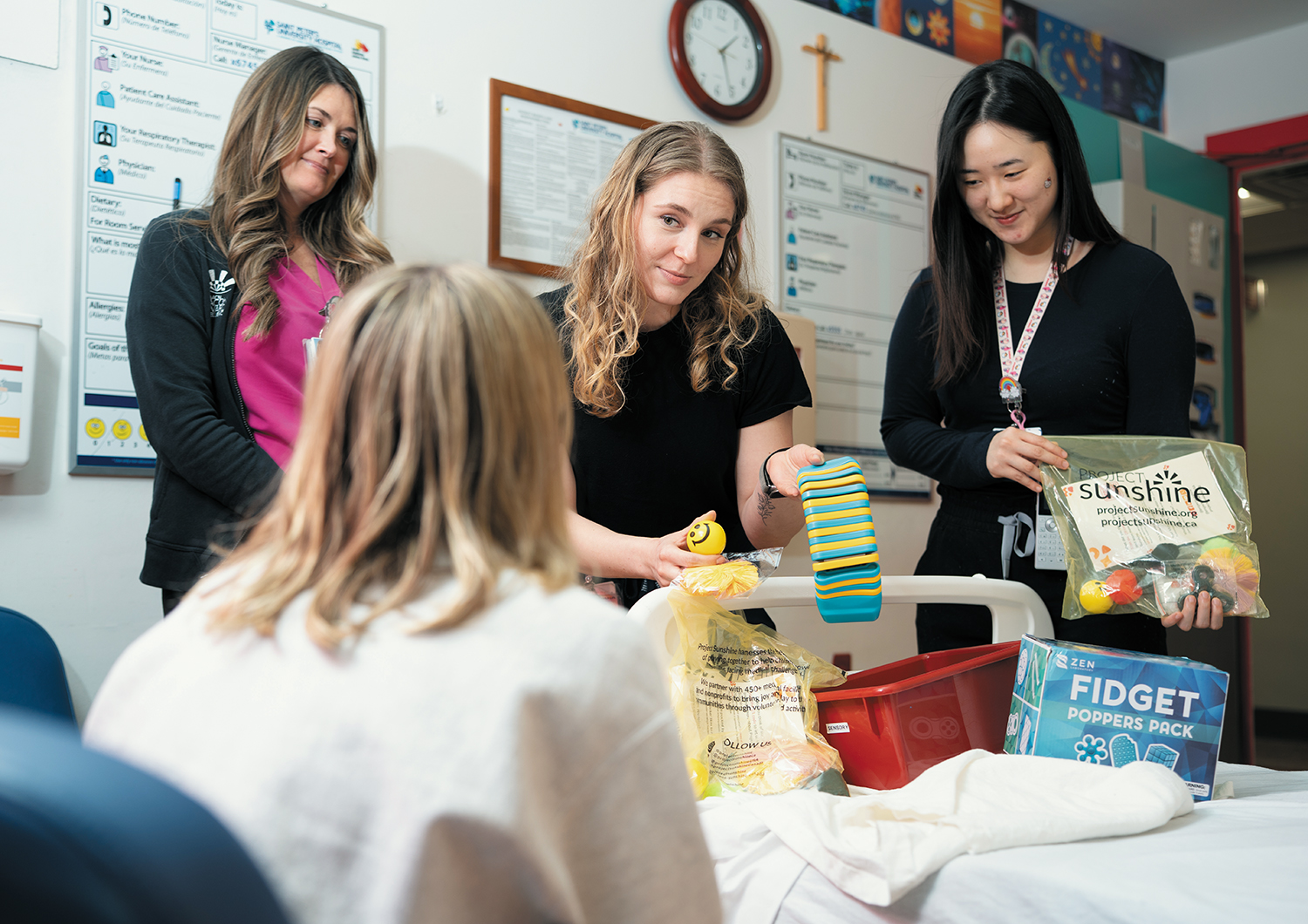
Each member of the departments' staffs underwent 14 hours of online training. The departments made physical changes such as painting exam rooms a calming gray. They added features to improve patients' experience including tube-shaped aquariums with plastic fish and water sounds; an interactive projector for playing games or for watching soothing nature scenes; and a variety of items like noise-canceling headphones, sunglasses and fidget toys that channel restlessness and reduce anxiety.
Creating a calmer space
The certification process at the children's hospital started about two years ago when an assistant manager wondered how the hospital could better handle what seemed to be an increasing number of patients on the autism spectrum. A study published in JAMA Network Open in 2024 found that diagnosis of autism among U.S. children had increased fourfold from 2000 to 2020.
Jacqueline Maloney, nurse manager of pediatrics, the pediatric intensive care unit and the pediatric emergency room at the children's hospital, said the idea was to "give our staff the proper tools to work with this population coming into a hospital, where it's not great for anybody with a sensory concern."
She points out the experience can involve loud noises, bright lights, and many people walking in and out of the room. In an emergency, neurodivergent patients may be unable to communicate that they are feeling anxious or in pain.
The university hospital emergency department staff saw the need to help the same population, and found the same organization to help. The hospital turned an emergency room bay into a sensory room, adding the calming aquarium and installing the interactive projector on the ceiling. The hospital received its designation earlier this year.
The designation "marks a powerful step forward in creating a more inclusive, responsive healthcare environment for all patients," Myron Pincomb, board chairman of the credentialing organization, said in a statement.
The credentialing board offers autism, sensory and neurodiversity training and certification for professionals around the world, including people in healthcare, education, public safety, travel and corporate sectors. The hospitals are listed in the IBCCES Accessibility App, which is free to download and provides guidance on certified destinations and sensory-friendly spaces.
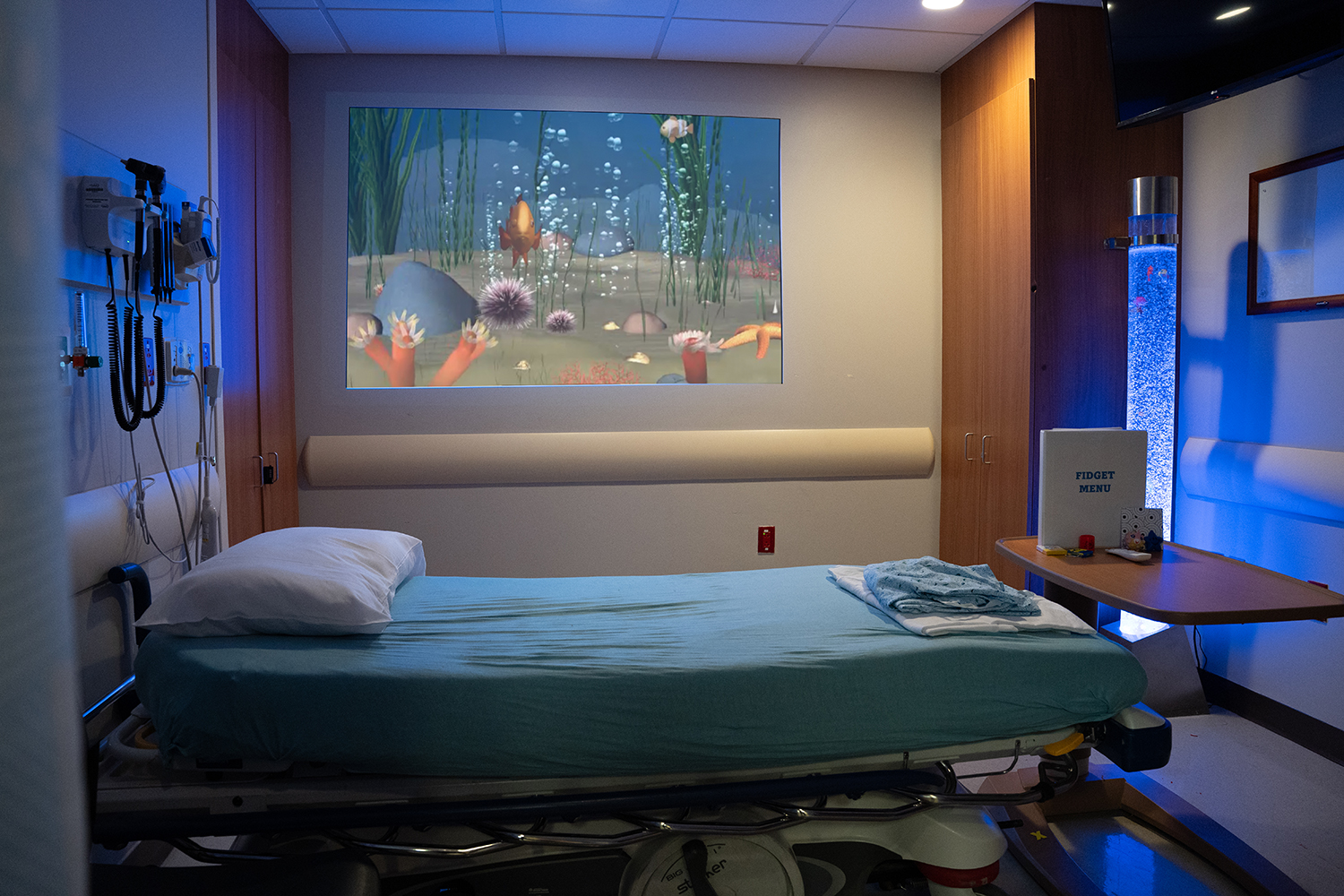
Officials with the credentialing board walked through the Saint Peter's Healthcare System sites to make suggestions. Janine Brys, nurse manager of adult emergency services at Saint Peter's University Hospital, said the group was impressed by the university hospital's menu of fidget items and took pictures of it to share. "I think it was a learning experience" for both groups, Brys said.
Other area hospitals that heard about the autism certification of the emergency department at the children's hospital are calling to see if they can transfer children with special needs to the hospital, Maloney said. The hospital has a child life team with a lot of experience with the autistic population, and they gave the emergency department staff advice.
'A sense of relief'
While the adult hospital offers patients a menu of available sensory items, the children's hospital transports the sensory items on carts, allowing clinicians to turn most any area there into a sensory-friendly spot. The children's hospital also has large communication boards patients can use to point out things like the location of their pain or what food they prefer to eat.
Rooms and other areas in both hospitals are painted a shade called "amazing gray," which has a calming effect.
"Our walls before were kind of a yellowish color," Brys said. "I've never in my life had a color do something to me, and when I walked into the room, I was like, oh, my gosh - it really did make you feel calmer."
Maloney said caregivers of children who are autistic are relieved to know clinicians are specially trained, that specific resources are available, and that they don't necessarily have to explain or advocate as much for their children. "It's a sense of relief, and it's a sense of, thank God, because you just made my stay a little bit less stressful, not only for my child, but for us," she said.
Brys said that caregivers tell her it's a tough decision to bring their adult children with special needs to a hospital or ED, because it can take the patient two or three weeks to settle back into their routine. Getting the patients seen sooner may prevent a worsening medical situation, she pointed out.
Clinicians know to ask caregivers what might work best to communicate with a child or to do a procedure like a blood draw. They come up with creative solutions, such as singing to a patient to calm them.
Brys inserted an IV as a patient walked around the room at the caregiver's suggestion. "It does make it a little tricky, but it's so much better than to traumatize the patient even more with putting them in a restraint. It just makes life a lot easier," she said. "I just think the education has kind of opened up that creative thinking of how we can get this done."
Helping everyone
The changes and new tools help more patients than just those who are on the autism spectrum. Someone with a behavioral health issue who is unable to sleep might be calmed by "popping balloons" on the interactive projector, Brys pointed out. That distraction can mean other patients aren't disrupted.
Recently, an elderly patient and her sister, who were neurotypical, happened to be placed to wait in the adult sensory room. "She was getting a little restless," Brys said of the patient.
Brys put on an interactive bingo game on the projector, and soon everyone heard chuckles and giggles coming from the room as the women played. "It was so good for the staff to hear it," she said. "We were all laughing."
That reinforced to the staff that every patient appreciates their efforts, she said.
"We did the right thing, and not just for one population, but it can be used for all," she said.