
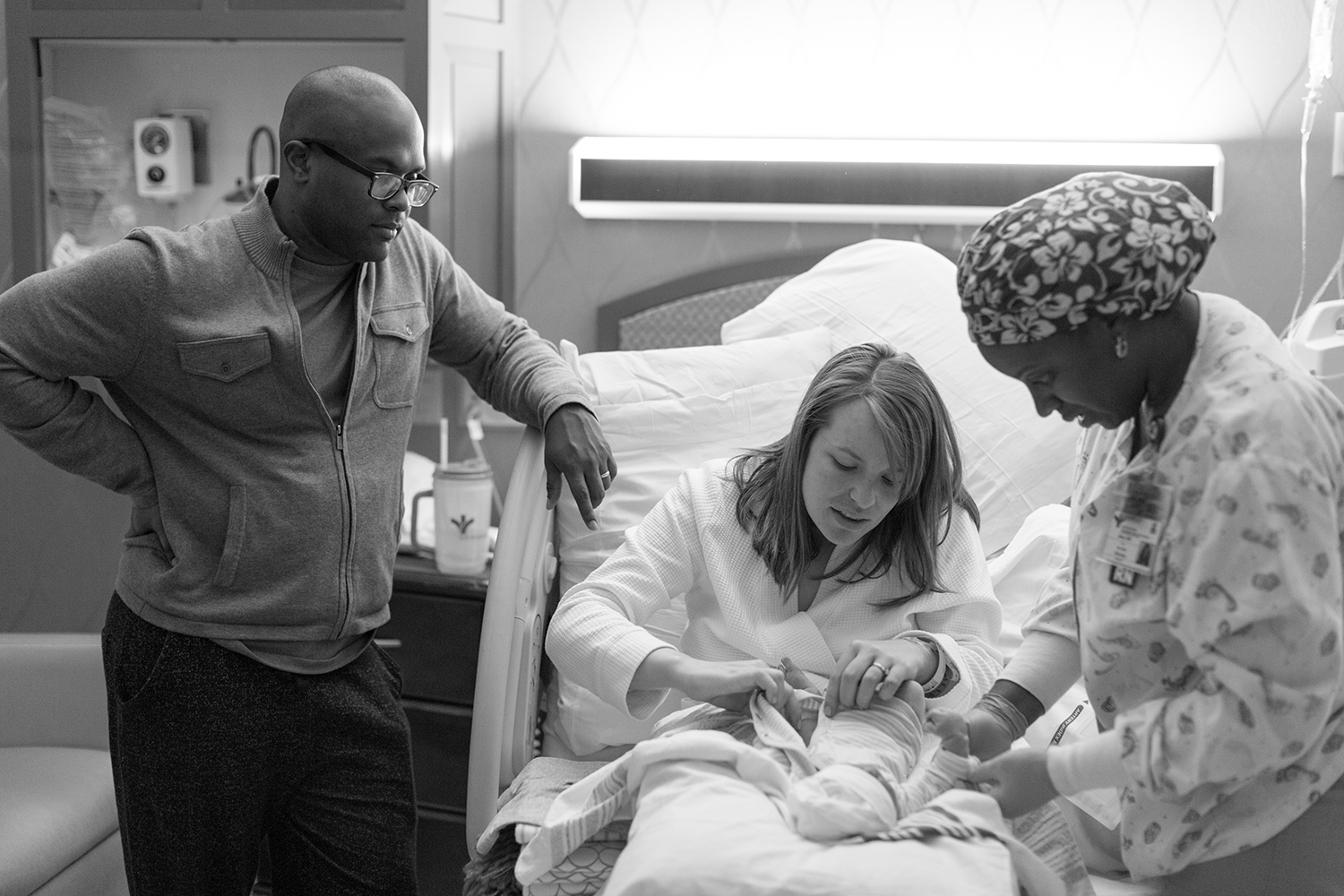
The Richmond, Virginia, couple were determined to see the pregnancy through and to spend whatever time they could with Jacob. It turned out to be seven hours, all of them spent in the arms of family.
Ten years later, Walker says the experience, while sad and painful, was also an unforgettable celebration of life that she, her husband, John-Mark Walker, and their extended family can look back on with joy.
She credits much of that to the tenderness Jacob was shown by the labor and delivery staff at Bon Secours St. Mary's Hospital. "They gave him any extra care he might need, like suctioning," Walker says, "but really what they did is they gave us space to enjoy his life."
St. Mary's and the other hospitals within the Bon Secours Richmond market with birthing centers, St. Francis Medical Center, Memorial Regional Medical Center and Southside Medical Center, are intentional about perinatal bereavement support. All are part of the Bon Secours Mercy Health system.
Amy Hill, bereavement coordinator for labor and delivery at St. Mary's, says the infants lost before birth, at birth or shortly thereafter are "our little quiet patients." She and the others on the staff ensure the infants get dignified care.
"They are a person. They deserve to be talked to. They deserve to be handled with care," Hill says.
In addition to tending to the infants with dignity, the hospitals' labor and delivery staffs accompany mothers and other family members through their grief, ensure that families get to spend time with their infants, and create personal keepsakes that honor the life that was lost.
The Centers for Disease Control and Prevention says one in every 175 births is a stillbirth. The March of Dimes estimates that up to 20% of pregnancies ends with a miscarriage. That organization says that while a woman's body might need months to recover from a stillbirth or miscarriage, the emotional recovery can take much longer.
Hill recalls that when her supervisors at St. Mary's asked her to take on the role of bereavement coordinator, she wasn't sure it would be a good fit. "I was one of those people that did not even go to family funerals," she recalls.
By then she had been a labor and delivery nurse at St. Mary's for 13 years and she had been at the bedside of many mothers who went through miscarriages and stillbirths. She knew well the toll that the death of an infant took on families as their emotions ricocheted from joy over the upcoming birth to grief over the sudden loss.
"Finally, I just sat back, and I was like: You know what? God is trying to do something with me, and I'm just going to let that happen," Hill says.
That was 15 years ago, and she has stayed in the position since.
"I count it as a blessing that people are letting us participate in one of the happiest days of their lives and one of the darkest days of their lives," Hill says. "To be a part of someone's life and to make an impact is just something that we should do."
When she trains staff on providing care for grieving families, Hill tells them the number one thing to do is to be present and "just be human." She assures them that it's OK to hold the patient's hand and to cry. "Just become one with that family and provide the care that you would want to receive," she advises.
Time and remembrances
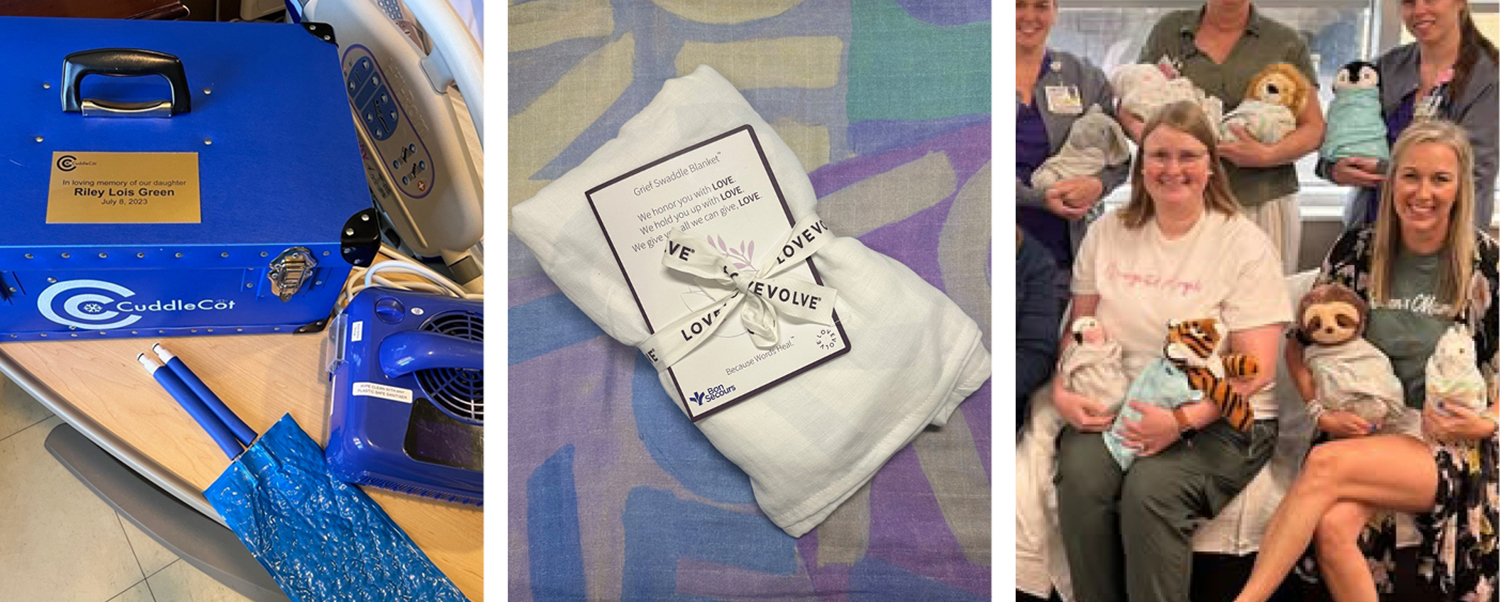
Along with emotional support, St. Mary's and the other Bon Secours Richmond hospitals offer families means to extend their precious time with stillborn infants. Each hospital provides access to CuddleCots, temperature-controlled basinets that slow the physical changes that occur after death.
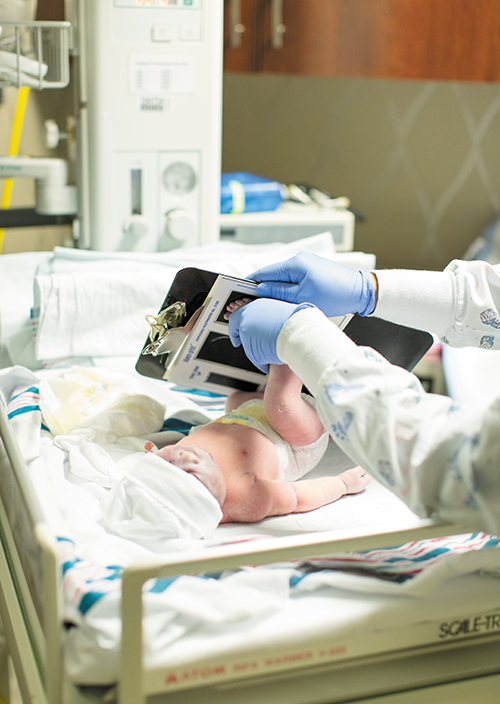
The hospitals' staffs also give families the opportunity to have pictures taken with their infants. Hill says the offer is sometimes initially met with reluctance but then with gratitude once relatives see the photos.
The pictures can become part of the personalized memory boxes that St. Mary's labor and delivery staff make for families. The boxes include other mementos, such as imprints of the baby's footprints and tiny bracelets with the infant's name.
Hill remembers a first-time teenage father who saw the memory box that had been given to his baby's mother and asked for one of his own. She saw the emotion in his face as he examined every item.
While most families are grateful to get the keepsake boxes, occasionally the offer is declined. The St. Mary's staff still makes one and tucks it away, in the event of a change of heart.
Hill remembers a young mother who left her infant's box behind. A couple of years later, the same woman was expecting again and planning her delivery at St. Mary's. "Before she delivered, she called and asked us about that box," Hill says. "And I cannot tell you how much it touched my heart that we had that box to give to her."
Another keepsake Bon Secours hospitals offers families comes courtesy of the nonprofit Weighted Angels. The organization creates plush stuffed animals of various types that weigh 1 to 9 pounds. Families are given a stuffed animal that matches the weight of their lost infant.
In partnership with another nonprofit called LovEvolve, Bon Secours Richmond hospitals give grieving families custom-designed muslin blankets.
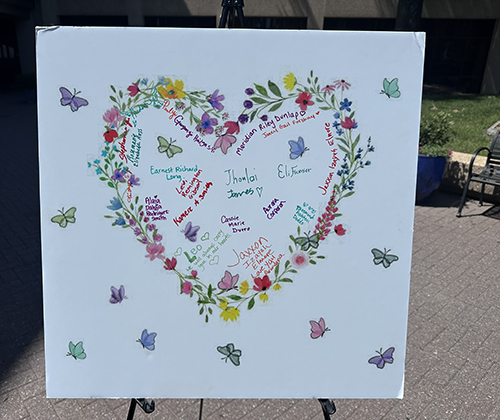
The hospitals also hold annual remembrances to honor the lost infants and reconnect families and the caregivers who were at their sides at their time of loss. St. Mary's invites the families of lost infants back for a communal celebration of life for their lost infants. The event includes a butterfly release.
In addition, the Bon Secours Richmond Healthcare Foundation maintains a Pediatric Bereavement Fund that accepts donations to help support families.
Celebration and grief
In the months before Jacob's birth, the Walkers met with the St. Mary's labor and delivery staff and well as with staff from Noah's Children, a Bon Secours Richmond pediatric palliative and hospice care program, to plan for his arrival and for what they knew would be a too-brief life.
At Jacob's birth, the St. Mary's team set up a delivery room for Walker and her husband and another one where Jacob's extended family could gather to meet him.
"He was kind of famous that day," Walker says. "People came to meet him and got a chance to know him. And then after he died in my arms, the way that they gave me and my husband space to be with him was really significant. I never felt rushed. I never felt like I had to make decisions that I wasn't expecting."
The St. Mary's staff recorded Jacob's weight and length, helped his parents bathe and dress him, and made hand and foot imprints. Those items and more contributed to a memory box that Walker still cherishes.
She had chosen St. Mary's for Jacob's delivery in part because she and her siblings were born there. Even though the hospital is where she said goodbye to her firstborn, she says she never thought of going elsewhere when she was again expecting.
"With every subsequent child that I had, which I've had four more since then, every single time, I would have nurses come in and say 'You're Jacob's mom,' and they would remember him and acknowledge him and celebrate him," Walker says. "And so, really, their bereavement care was at a level that I think many people do not receive, and it made such a difference in our ability to celebrate our son, but also to grieve our loss."
Ministry facilities support families grieving stillbirth or miscarriage