
Providence St. Joseph Health is partnering on a federally funded effort to create an online model to help predict, prevent and manage mental health and substance use disorders.

The health system is recruiting participants for a project being led by Ksana Health to develop a predictive model that improves mental health intervention. Ksana Health, a technology company focused on creating digital tools to improve mental health care, will use a $17.9 million federal grant to gather data that will build up a "large health behavior model" to better understand and respond to mental illness, Providence said in a press release.
"By collaborating with Ksana and other partners, we have an opportunity to help develop data-driven tools that can better identify and address behavioral health needs earlier, ultimately improving outcomes for the communities we serve," said Staci Wendt, director of research for Providence's Health Research Accelerator.
She added that "Providence is taking part in this partnership as part of our 2030 Vision to expand access to whole-person care, advance health equity and lead in innovation."
A concerning gap
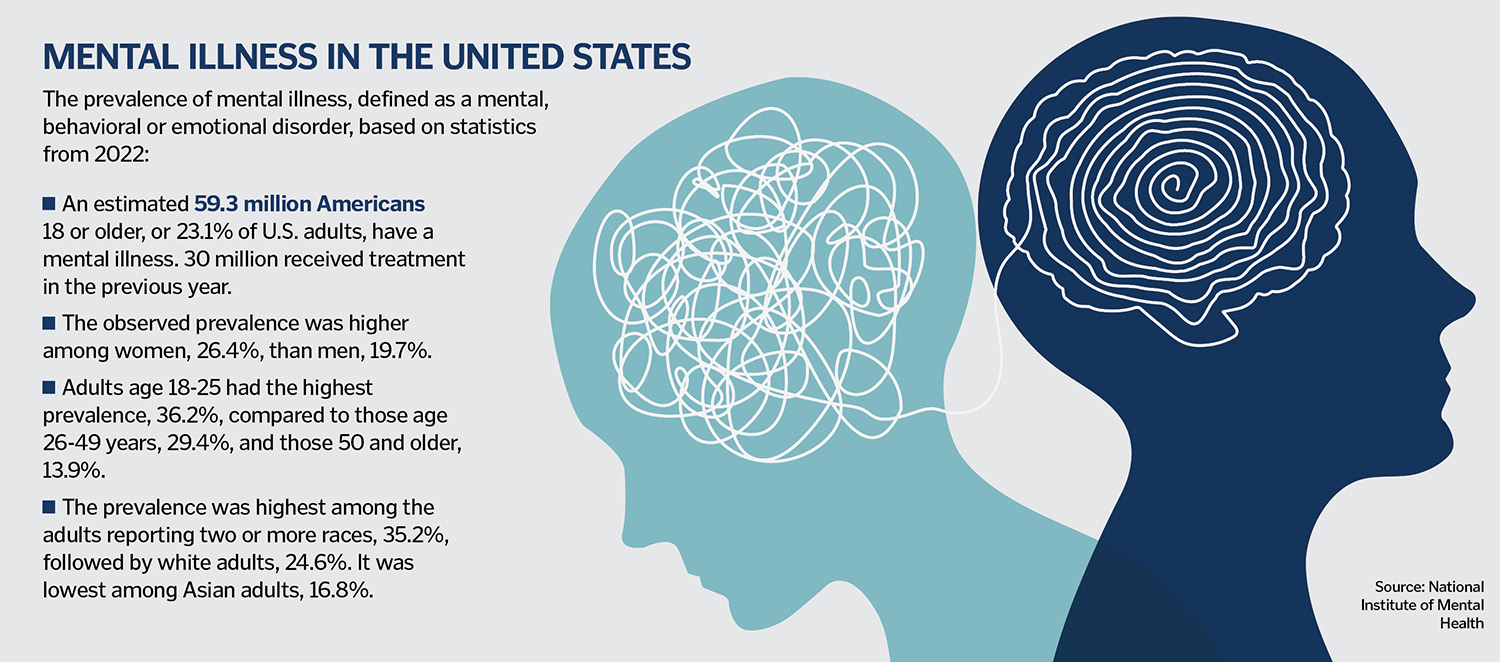
According to the National Institute of Mental Health, in 2022, the latest year cited on the institute's website, there were an estimated 59.3 million adults aged 18 or older in the U.S. with a mental, behavioral or emotional disorder. The institute said young adults aged 18-25 years had the highest prevalence of mental illness, at 36.2%. This compares with adults aged 26-49 years, at 29.4%, and those aged 50 and older, at 13.9%.
The institute said an estimated 15.4 million U.S. adults aged 18 or older had a serious mental illness, which the institute said is a "mental, behavioral, or emotional disorder resulting in serious functional impairment, which substantially interferes with or limits one or more major life activities."
Bill Wright, Providence chief research officer, noted in that release that "behavioral factors are a leading cause in a large majority of patient conditions that the healthcare industry treats."
Despite the high prevalence and multilayered burdens of mental illness, Providence said, screening and early intervention systems are lacking as are reliable ways for clinicians to predict the best treatment options.

Harnessing technological capabilities
Providence pointed to three converging advances for addressing these prediction and treatment gaps through technology:
• The ability to measure behavior at population scale through mobile devices that are used ubiquitously in society.
• The aggregation, or pulling together, of digitized medical records.
• The breakthroughs in artificial intelligence use for drawing powerful information from massive databases.
Ksana Health came up with a plan for using these advancements to research behavioral health intervention. The concept is that Ksana Health and partners will develop artificial intelligence models trained on behavioral data provided continuously through research participants' smartphones and wearable technology. CEO Nick Allen said the research will advance Ksana Health's mission to "transform behavioral healthcare through the use of cutting-edge technology and scientific evidence."
Participant recruitment
Providence is one of multiple organizations taking part in the research project, its first partnership with Ksana Health.
Providence is seeking to recruit up to 25,000 patients to take part in the research study. Providence has 51 hospitals and a network of other care sites across five western states. Another partner, MedStar Health Research Institute of Columbia, Maryland, is recruiting patients from its East Coast footprint to bring geographic diversity to the project, according to Providence's release.
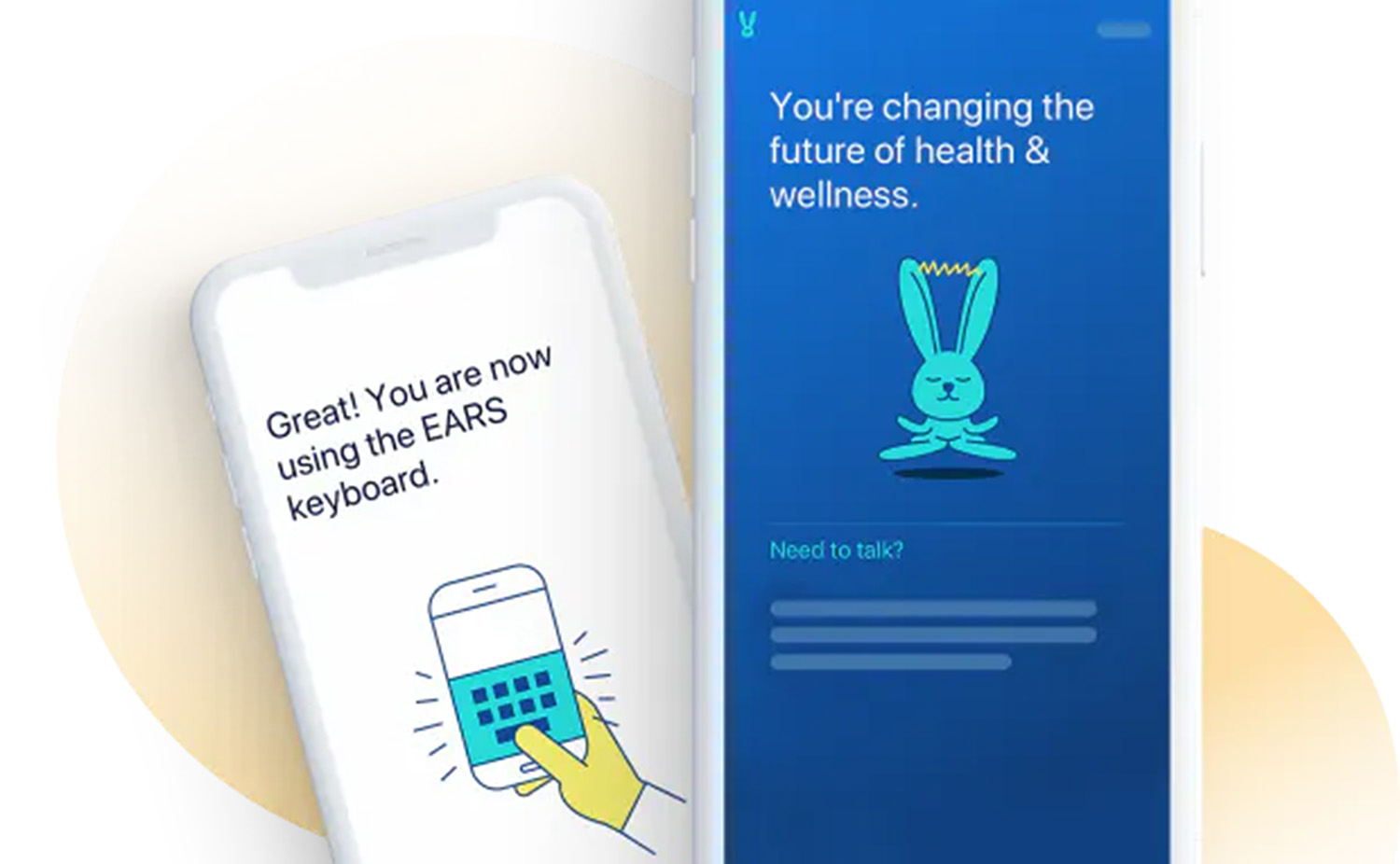
Providence patients who consent and are accepted to be research participants will complete a survey and download Ksana Health's "Effortless Assessment Research System," or EARS. On the EARS app, the participants will answer a couple of questions each day about their mood, and the app will collect data from their wearable devices. This will include data on their sleeping, physical activity and other behavioral patterns. The participants also will answer a weekly set of questions. At the end of their three months of participation, they will complete a final survey.
Platform development then pilot
Wendt explained that the partnering organizations currently have the funding to collect the data that will be the foundation for the development of the model. She said if the partners successfully recruit enough patients to participate, the organizations will receive funding to build the model.
Wendt said the model building will take about two years. Then the group will pilot the model and then will launch it.
Ksana Health's Allen said, "Once the model is developed, we believe it will introduce a new set of possibilities for early detection, prevention and more effective treatments for mental health problems by being able to answer the questions: What works for whom and when?"
Providence's Wright said in the release that "given the proliferation of smartphones and watches, if we can harness the sensing capabilities of those devices and link behavioral signals to patient health records, we can build a new model of personalized, proactive behavioral healthcare."
"This innovation can be a major component of the delivery model of the future," he said.