
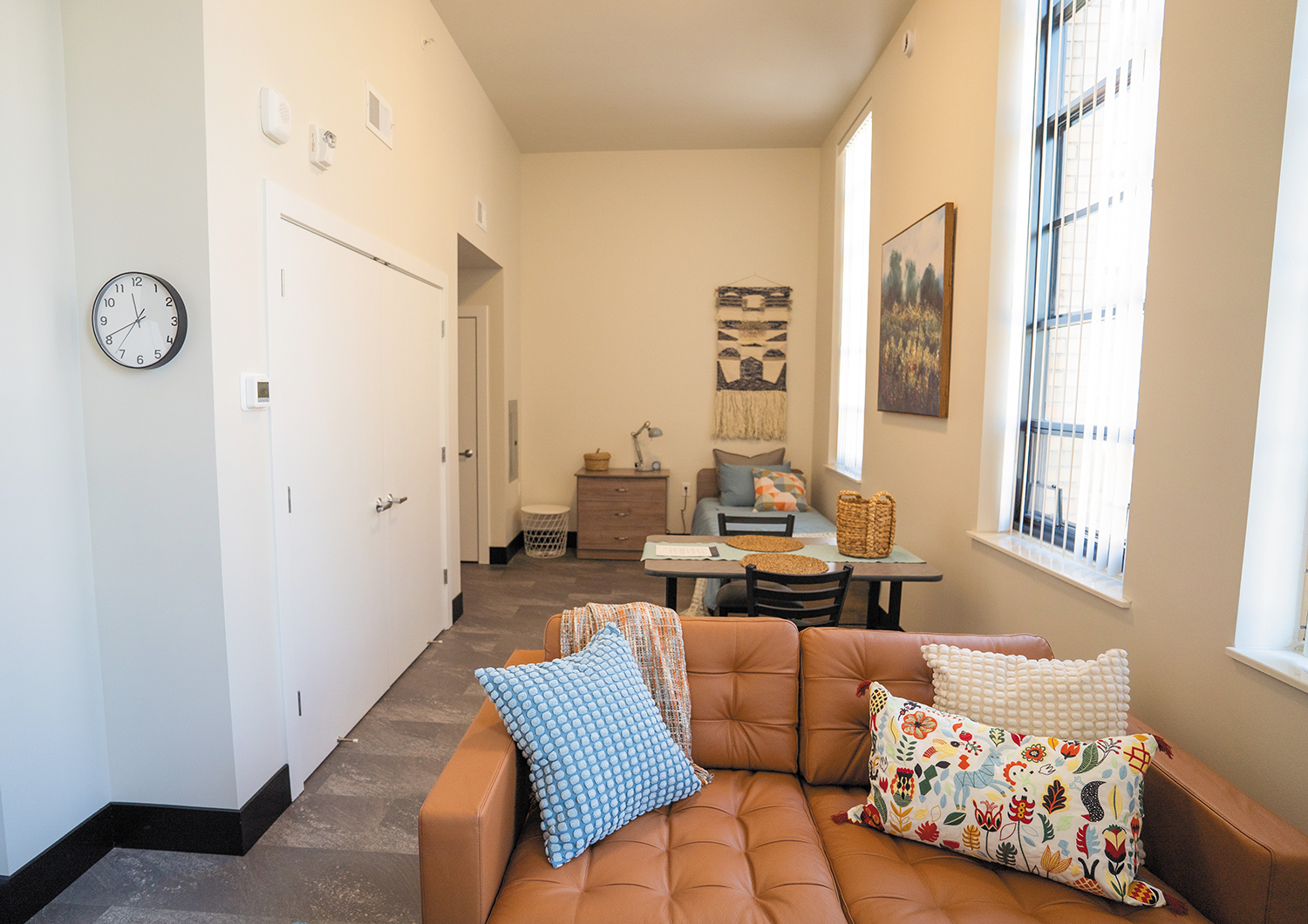
The five-year pilot program developed affordable housing in Detroit; Las Vegas; Portland, Oregon; Spokane, Washington; and St. Louis in collaborations with Ascension, CommonSpirit Health, Mercy, Providence St. Joseph Health and SSM Health.
The goal of the initiative was to house at least 20% of people experiencing chronic homelessness in the five cities, decrease emergency room visits and hospital stays among the newly housed by at least 25%, and connect 35% of the residents to primary care and behavioral health services.
The study, covering 2020-2024 and released Sept. 18, showed:
- 792 people found permanent housing, which was 113% of the original goal.
- Chronic homelessness dropped by 20% in the cities within the initiative.
- After being housed, 86% of residents had a primary care provider and 37% had a behavioral health provider.
- Emergency room visits decreased by 46% and hospital stays by 60% among residents after they were housed for six months.
- Reduced emergency room visits and hospital stays during the first six months of housing for 402 surveyed clients meant an estimated $4.91 million in community health savings.
Even though the pilot phase of the program ended in 2024, the initiative's partners continue to add housing. They have developed or are building 970 more units, which include permanent supportive housing and other affordable units.


Creative approaches to housing
Each city included in the study faces unique issues surrounding homelessness and has approached the situation in different ways, depending on goals and resources.
For example, in St. Louis a major challenge is the high number of vacant and abandoned homes. A Catholic Charities of St. Louis caseworker is embedded with SSM Health to help clients find housing.
In Detroit, the relationship started between Catholic Charities of Southeast Michigan and Ascension St. John Hospital. It continued after the system turned over the hospital to Henry Ford Health in 2024. Developers transformed a vacant Catholic school into 46 units of mixed affordable housing, The Residences at St. Matthew. The Catholic Charities of Southern Nevada rehabilitated and created several service-enriched units in its St. Vincent Apartments for formerly chronically homeless people. CommonSpirit has funded two case managers to address the needs of residents.
Hospitals and health systems are crucial to this work, said Ben Wortham, who served as Catholic Charities vice president of behavioral health integration before becoming a regional coordinator last year. "The hospitals and each Catholic health system supported Healthy Housing in their own unique way, and we saw the benefits of that," he said.

Researchers with Delaware State University prepared the report. They evaluated surveys of 402 clients served in the five cities. Of those, 53% reported their physical and mental health was fair or poor at the beginning of the study and 56% were on medication for a chronic illness.
A year after their enrollment in the Healthy Housing Initiative, a follow-up of 93 clients showed that 46% reported fair or poor mental health and 49% reported fair or poor physical health, and 90% were on medication for a chronic illness.
In the first survey, 53% of clients reported at least one emergency room visit in the six months prior to being housed, and in the follow-up, the number dropped to 32%.
"These promising findings demonstrate the critical connection between housing and a person's health and well-being," Kerry Alys Robinson, president and CEO of Catholic Charities USA, said in a statement. "When people have stable housing and supportive services, they are better able to access healthcare, build relationships and pursue opportunities that allow them to flourish. Addressing the root causes of homelessness requires us to see the whole person and work together across sectors to uphold human dignity."
As one client commented for the study: "When you're homeless, you don't go to the doctor and you can't take care of yourself ... so a lot of them are just afraid to know how bad a shape they are, and they've been traumatized by medical people."
The study notes that systemic challenges remain. "There's kind of long wait times in healthcare," one caseworker reported. "Mental health (providers are) honestly very difficult to find at this point. Even for me working as a mental health service provider, we haven't accepted new clients for intake since 2023. The system is backed up and there is a shortage of providers."
Partnership potential
Johnson and Wortham said Catholic Charities USA, founded in 1910, has always worked closely with Catholic hospitals and health systems. But they said the collaborations have been one-offs and they are only aware of about 40 of them.
There are 170 Catholic Charities agencies throughout the United States, with 3,900 service sites assisting 15 million people. The agencies offer ample opportunities for partnerships with the nearly 700 hospitals and more than 1,500 continuing care facilities served by CHA, Johnson and Wortham said.
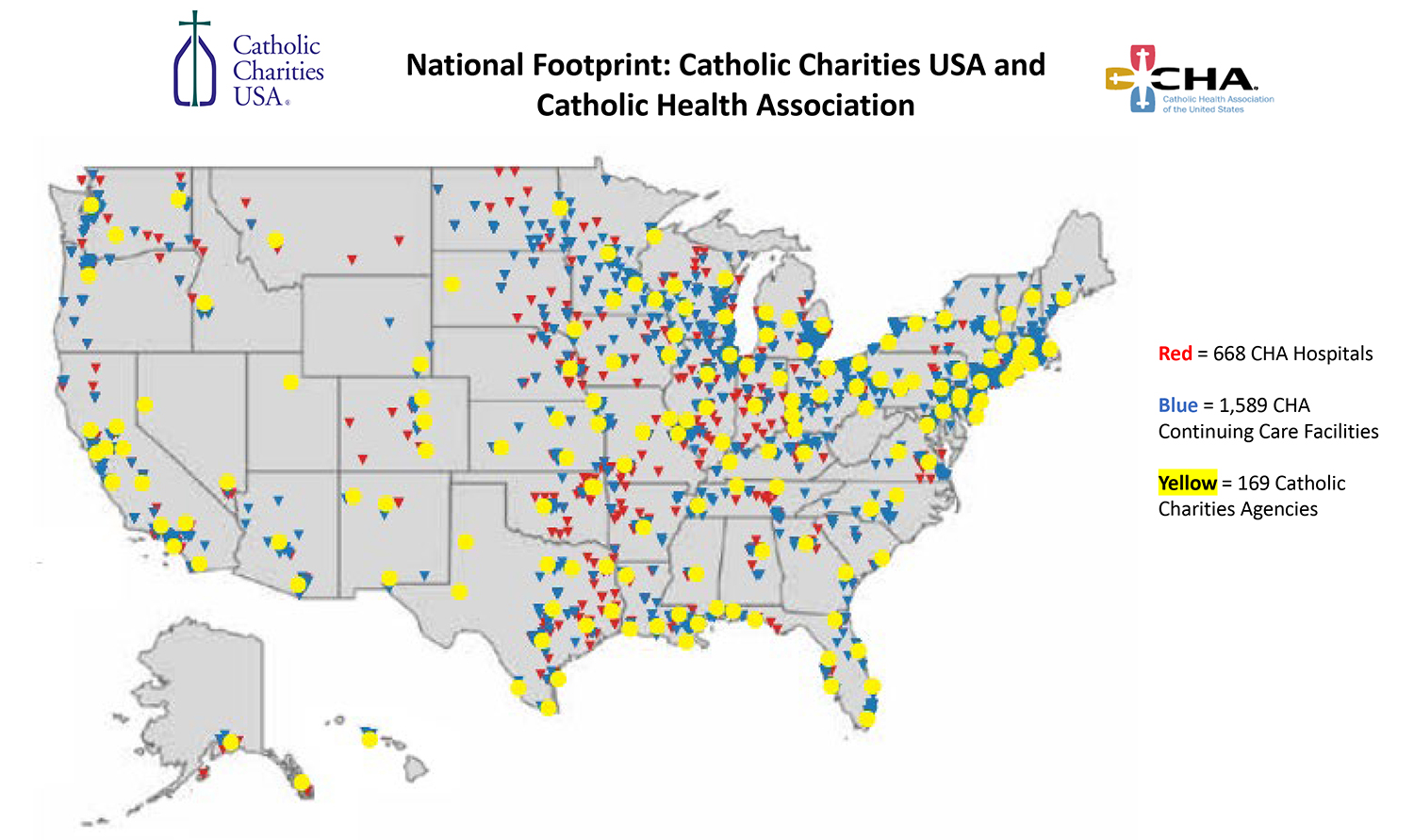
Other partnerships exist with safety net hospitals, some of which are not Catholic, in some cities, they pointed out. At the very least, a Catholic Charities CEO and a Catholic hospital CEO should meet and establish a relationship, Wortham said.
"What we're hoping is that at a very minimum, that our Catholic Charities agencies are able to leverage this report as an example, a very tangible first step," Wortham said.
If food and nutrition is a particular need in one area, Johnson said Catholic Charities can help connect hospitals to its food and nutrition specialists.

"But these collaborations tend to lead to other joint opportunities," Johnson said.
A food partnership might lead to a housing initiative, and that might lead to funding for case manager positions to help people who are chronically homeless find housing and avoid the ER, he said. "Now, we're working upstream," Johnson said. "That's the ultimate goal."
Partnerships don't always have to be financial or involve building something from the ground up, Johnson and Wortham pointed out. Catholic Charities Eastern Washington in Spokane is particularly good at building housing, Wortham said, but in some cities that's not always practical.
"The way the health system supported those efforts in every city was just incredible and similar, but also different in the exact support," he said. "So you could have med students coming over from the hospital to do wellness checks. You could have grant funding support, nurse practitioners coming to the building for primary care. ... Some of the biggest breakthroughs were the time and attention from the Catholic hospitals."