
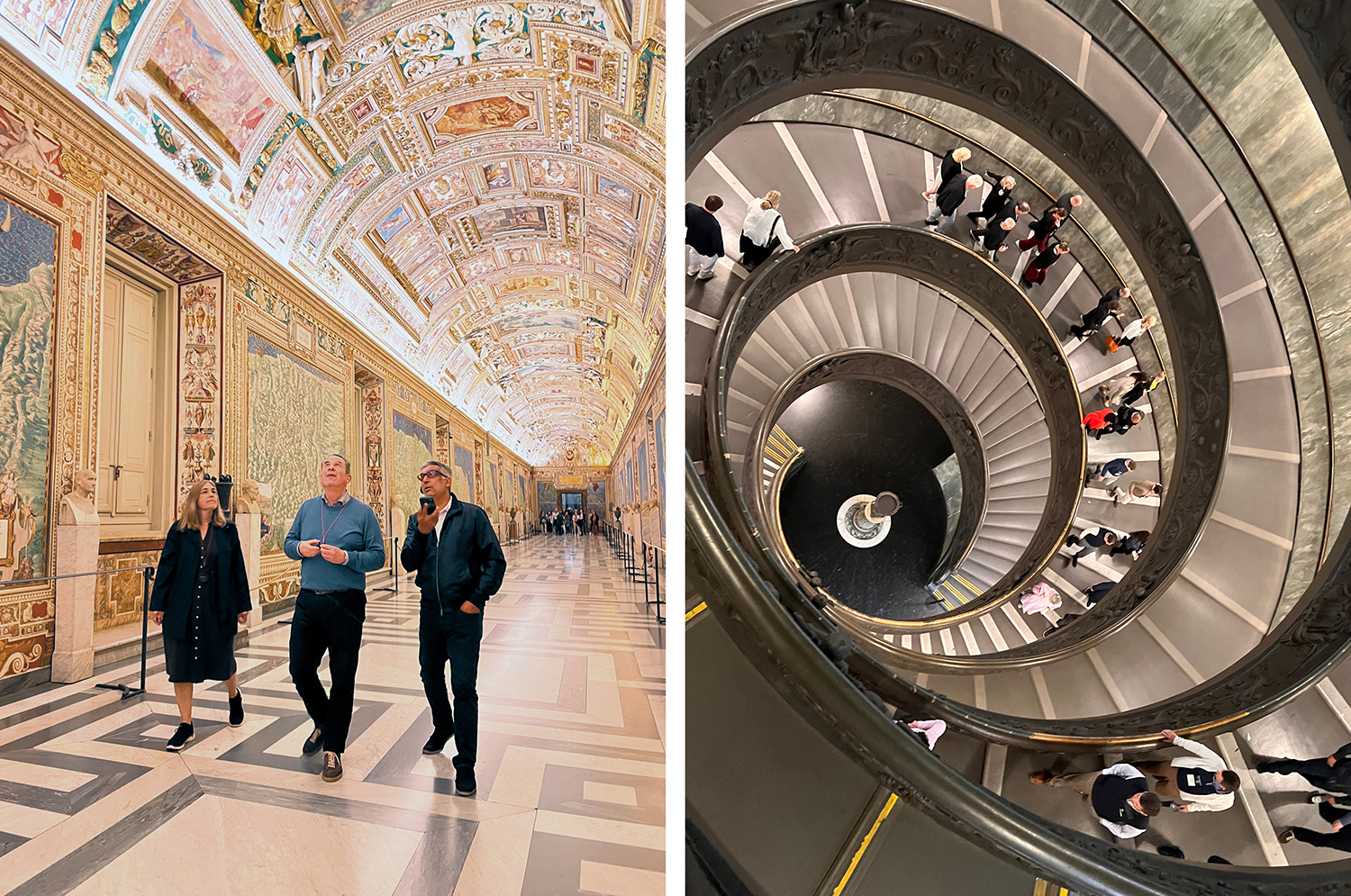
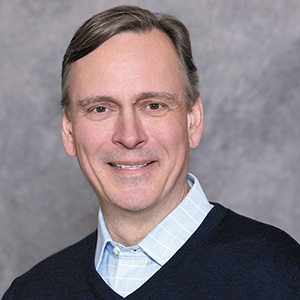
Holubec says while the six-day program gave him numerous opportunities to do this, a specific experience was particularly meaningful: During a half-day in the central Italian city of Assisi, he ascended to a terrace overlooking the mountain town and spent some time in solitude, taking in the beauty of the natural world and pondering his place in the church's healing legacy. In the late 12th century, Sts. Francis and Clare were born in Assisi. Both lived lives of service to the poor, advanced the mission of the Catholic Church in the region and have been remembered since for their profound impact.
Holubec, who is chief mission experience officer for Providence St. Joseph Health, says connecting with that spiritual history of the church - both in Assisi and during the remaining program days in Rome - was inspiring. He says healthcare is moving very fast, and it is important for ministry executives to take time away from that pace to learn about the roots of the ministry and to understand more deeply what makes Catholic healthcare different from secular care.
Through pilgrimage, he says, "We can place ourselves in that story."
Spiritual grounding
CHA has offered the program, "Ecclesiology and Spiritual Renewal Program for Health Care Leaders," nearly annually for more than two decades.
A top reason CHA established and has continued to prioritize the program is because with every new generation of executives, the ministry's leadership gets further removed from the founders. Today's executives do not often have the same personal relationships with members of the founding congregations that their predecessors enjoyed and miss the formative benefit of those experiences, says Lori Ashmore-Ruppel, CHA senior director of mission services management. "We established this pilgrimage as a formation experience, and to give that experience of rootedness to Catholic healthcare's executive leaders," Ashmore-Ruppel explains.
Sr. Teresa "Tere" Maya, CCVI, CHA senior director of theology and sponsorship, notes that as a part of a ministry of the Catholic Church, it's important for these leaders to connect with the church and its mission. She says that is especially true given that most U.S. Catholic health systems now have a ministerial juridic person sponsorship model that makes both lay and religious sponsors directly accountable to the Holy See. She says it's critical that sponsors and executive leaders alike understand that the church is grounded not just in a spiritual legacy but also in tradition and history, and that offices administer its work.
"It's a living church," says Sr. Maya, adding that pilgrimage is a way for ministry executives to experience that.
Empowerment
Each fall, ministry systems determine which leaders to invite for the following spring's program - usually executive, operational and mission executives and/or board members. Each invitee can choose a traveling companion to join them. This year, nearly three dozen ministry leaders attended, most accompanied by a spouse.
While the program elements and particulars vary each year, they usually follow a similar pattern: one day in Assisi and the remainder in Rome, with programming delivered by several CHA staff as well as presenters from the Vatican, from ministries affiliated with the Catholic Church, and from clergy who serve as spiritual leaders and guides. Attendees take part in group sessions to learn about the foundations of the ministry, the call to Catholic healthcare leadership, the ministry's shared commitments, some church history and many other topics.
They also journey to historic basilicas and other sites that are important to the Catholic Church and to congregations that laid the groundwork for the Catholic health ministry. They visit the Vatican's museum and meet with top officials in dicasteries that interact with the Catholic health ministry. They also take part in spiritual experiences, including Masses and prayer services, and enjoy receptions and other gatherings.
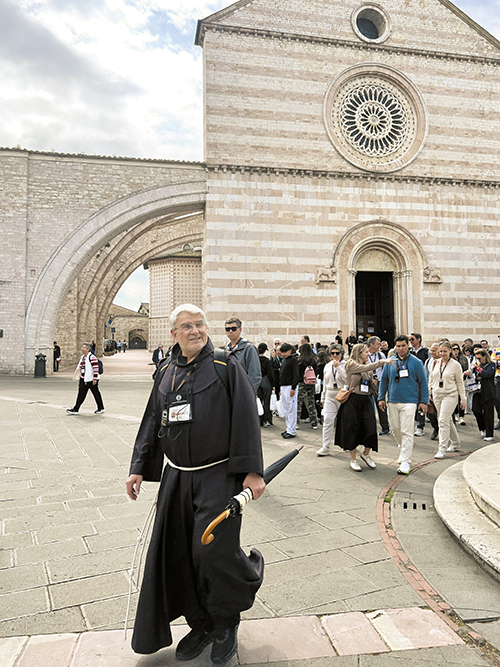
"This pilgrimage is personal and reflective, and that dimension is important," Sr. Maya says.
When the healthcare leaders immerse themselves in the ministry's foundations as they do during the Italy pilgrimage, Sr. Maya says, they "come back empowered. They have a better sense of how the ministry has evolved over time. The pilgrimage is laser-focused on what it means to be a ministry of the church, and (being part of this) builds a network of people who are intimately connected to our strategic priorities, including our strategy of being united for bold change."
'Collective impact'
Holubec attended the CHA pilgrimage about 14 years ago after moving into an executive role with Providence and then again this year in his capacity as CHA board chair. He says that today's Catholic healthcare systems are facing what Providence President and CEO Erik Wexler calls the "polycrisis," with numerous grave threats on an ongoing basis. Holubec says he knows that budgets are tight in the ministry, but he says systems are making an important investment when they enable their leaders to attend the Italy program. He says the pilgrimage can give them a renewed sense of calling and renewed energy to carry out that calling.
The April journey was the first pilgrimage for Scott Kashman, CEO of Ascension St. Vincent's Health System in Northeast Florida. Kashman says the experience helped him more completely comprehend the "dual identity" of all Catholic healthcare leaders in serving both a healthcare organization and a faith-based ministry.
He notes that joining other ministry executives gave all of them a chance to form and deepen important relationships. "We could see we're not doing this alone, and we could see the collective impact Catholic healthcare can have," he says. "You get a much greater understanding - you see the potential for high impact."
Kashman says he's brought some of his learnings back to his colleagues, sharing insights during meetings and roundings and while hosting a podcast that his market started early this year. The podcast, "The Art of Healthcare: Inspired Stories," showcases the positive impact that people can have on their community.
'Incredible gift'
Michelle James is PeaceHealth senior vice president of quality, safety, and clinical risk as well as the system's chief nursing executive. She concedes she had been navigating some challenges before heading to the Eternal City in the spring. She saw the pilgrimage as a time to reflect and use the resources and colleagues around her to reconnect to PeaceHealth's mission.
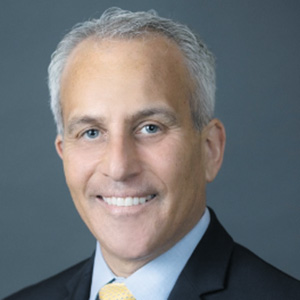
She says the pilgrimage gave her an opportunity to learn, listen, take in information and reflect. She says it was an invigorating reminder that there is a greater purpose to the work.
"I reconnected with my 'why' and my purpose and to ensure I continue to keep the person we're serving at the center of what I do," she says.
A highlight of the week in Italy for James was the opportunity to meet fellow ministry leaders, and she now feels like she has a large network of friends across ministry systems she can reach out to at any time. "This was truly a special way to connect with them," she says.
She calls the pilgrimage an "incredible gift" that has challenged her to draw closer to the spirit of the men and women who founded Catholic healthcare. "What I find so important is: How do we look back to our foundresses and understand there is work to be done in transforming the care we provide?" James says. "How do we stay true to serving the most vulnerable in our communities? And how do we continue to work to stay rooted in our mission?"