
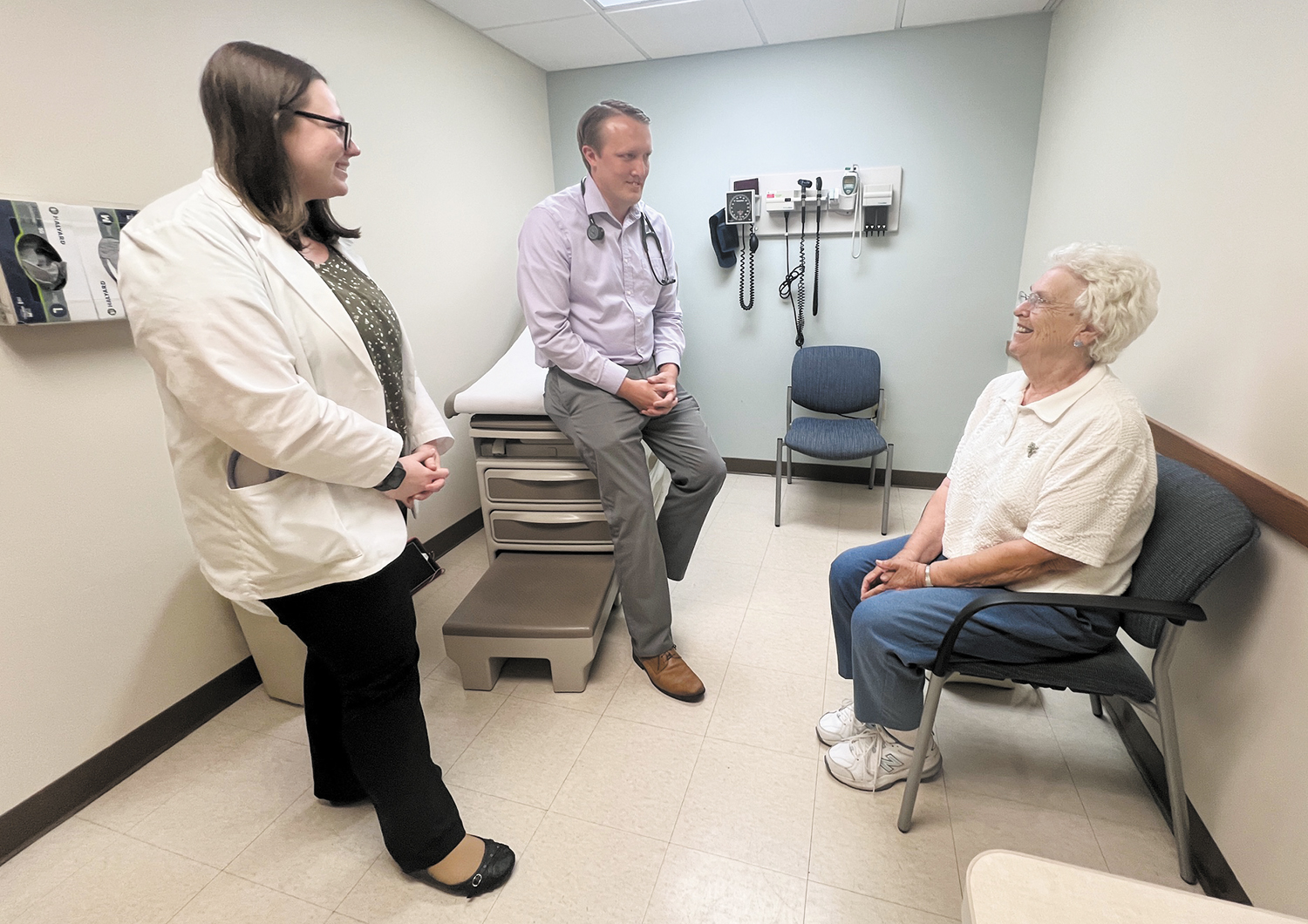
"We invest in communities, and we identify communities that are like-minded," explains Dr. Michael Rowane, the associate dean of clinical education for the Lake Erie College of Osteopathic Medicine, based in Erie, Pennsylvania.
Mercy Hospital Jefferson turned out to be one of them.
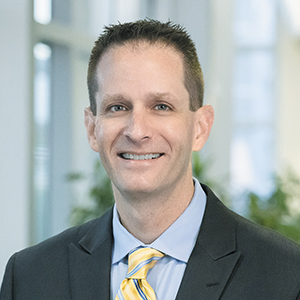
"They've worked out to be a really good match," says Dan Eckenfels, the hospital's president. "We didn't know that they were going to be as good of a match as they've turned out to be."
Now, a cohort of about 24 third- and fourth-year medical students from LECOM currently work and learn at the 251-bed acute care facility in Festus, about 35 miles south of St. Louis. The first LECOM students started when the partnership launched in 2024. It is the medical school's first Midwest location.
While the hospital is relatively close to the attractions of a big city, it's considered rural. The hospital serves about 250,000 patients each year, and many come from rural parts of the region. Festus alone has a population of about 13,000.
"In a large hospital, it can be easy to feel lost in the crowd," says Dr. Karthik Iyer, chief medical officer for Mercy Hospital Jefferson. Iyer was a member of CHA's 2020 class of Tomorrow's Leaders.
That's not the case in a small, community hospital, he says.
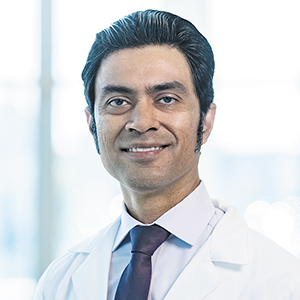
"Everybody knows each other. And when we recruit people, we recruit with the intention that they are lifers or want to become part of our community for the long term," he says.
The mission of both LECOM and Mercy mirror one another, leaders say: following the heritage of the Sisters of Mercy by bringing care where it is needed and to where people live.
Fulfilling a statewide demand
Now, there is a demand for about 1,000 physicians statewide, according to the Missouri Hospital Association. While Missouri is ninth in the nation for medical school enrollment, the association says, only two out of three medical school graduates find a residency slot in the state.
The pipeline at Mercy Hospital Jefferson is expected to include a residency program. Leaders are working to establish one in internal medicine in 2028.
"The statistics show that when you actually train in an urban environment, there's less inclination to go to a semirural one," Iyer says. "Even the physician population is aging. So there's a huge attrition in the rural areas. They always find it very hard to recruit."
The LECOM program at Mercy already has attracted established physicians who want the opportunity to teach and mentor students.
"It's been a recruitment tool for us. I've been surprised by that," Eckenfels says. "It's the reason they chose us."
The partnership with LECOM extends to other Mercy facilities in Southeast Missouri, including Mercy Hospital Southeast in Cape Girardeau, where a cohort of six LECOM students began training in 2025; Mercy Hospital Perry in Perryville; and Mercy Hospital Stoddard in Dexter, where students will have rotations. The long-term goal is to have 72 students per year statewide.
Hopefully, Eckenfels points out, LECOM students will have such a good experience they will want to work for Mercy as doctors.
"Of course, that's good for everybody, and not just necessarily Mercy," he says. "Today, Missouri is a net exporter of medical professionals. We need to get back to at least even and really be keeping our own in this state."
Recruiting students early
LECOM leaders were attracted to Mercy partly because it was also a mission-driven organization, explains Rowane. The school was founded in 1992, and two of its founders, siblings Drs. John and Silvia Ferretti, came from a Catholic, working-class family. Leaders vow to keep tuition lower and offer scholarships to make medical education more accessible. Tuition for first- and second-year students is about $42,000 a year.
LECOM has campuses in or near areas that lack medical access: Greensburg, Pennsylvania; Bradenton, Florida; Elmira, New York; and Jacksonville, Florida.
The medical school also offers early acceptance to qualified high school seniors or college undergrads if they pursue a degree with affiliate universities. LECOM already has established partnerships with six Missouri colleges and universities for the early acceptance program, including Southeast Missouri State University in Cape Girardeau and Jefferson College in Hillsboro.
Leaders are talking to principals and counselors at local high schools. The Jefferson R-VII School District already has hosted a podcast and YouTube series of interviews with LECOM students in the program at Mercy Hospital Jefferson, in the hope to drum up interest.
"If you're a student or a family, contact your counselor who will connect you to LECOM or at least explore the process," school superintendent David Haug says at the conclusion of an interview with one LECOM student.
The numbers are promising: Missouri, once among the bottom 10 states for LECOM early admission students, has ranked among the top 10 for the past two years.
The enthusiasm endures as students go through the program, says Rowane.
"When our second-year students are looking at where they want to go for clinical rotations, we have students from the site share their experiences," he says. "Oh my gosh, they are on fire about Mercy and what they're about."
A warm welcome
Alexis Miller is a third-year osteopathic medical student from Peotone, Illinois, about 45 miles south of downtown Chicago. She completed her first two years of medical school at LECOM's campus in Greensburg, Pennsylvania.
She chose Mercy Hospital Jefferson partly to be closer to home, and partly because she and other students get to participate in more patient care. During one rotation with obstetrics, she got to do pelvic exams, all with patient consent, and even got to help deliver a baby. "My hand was the one touching the baby," she says. "So that was cool."
She recently started a new rotation in family practice with Mercy's Dr. Lawrence Rudolf, who grew up in a suburb near Festus. "It's so great to see how he knows the patients and their families, and they know his family," she says. "Getting to know your patients and being able to follow them through their lifetime is really important."
She also loves getting to know patients. "Here I've never honestly encountered a rude patient," she says. "They're all just super nice. They're curious. They're always like, where are you from? And especially in geriatrics, a lot of them really love to tell their story. And they're willing to just sit down with me and tell me all about their life."
Pooja Patel, from Hanover Park, Illinois, just outside Chicago, is also a third-year LECOM student, having spent her first two years at the Erie campus. She sees her time at Mercy Hospital Jefferson as a good place to help forge her path.
"I've never really pigeonholed my brain into picking whether I want rural medicine or city life. It honestly just depends on where residency takes me and where life ends up in the end," she says.
She says that the patients they see aren't necessarily complex cases, but students get more experience because of the sheer volume. If patients need specialized care, doctors can steer them there. "You're going to go into a family med environment, but the patient that's in front of you might not have access to neurology and cardiology and things like that. So you're acting as a stepping stone to get them to what they need, but also putting interventions in early," she says.
She says the providers at Mercy Hospital Jefferson are good instructors and take time to sit and explain things to students. The cohort takes part in a medical journal club that meets weekly to review and discuss articles. Students even help write articles that get published.
Patel also has been exposed here to families and patients who are adopted or in foster care, and appreciates the opportunity to be a grounding force. "One of the things I notice is that sometimes the clinician is the only constant in those people's lives," she says. "You're a stronger advocate for this person. You're making sure they're getting the care that they need."
One of the more pleasant parts about working and learning at Mercy Hospital Jefferson, she says, is just the experience she feels walking down the hall. "The warm-heartedness when you walk in a hallway — everyone smiles at you," she says. "Everybody is always asking, where are you from? How are you doing? It's a welcoming kind of environment."