
Across Maine, the average age is about 45 years, one of the highest in the nation. In Penobscot County, population of about 158,000, the average age is slightly lower, at about 43. But at St. Joseph Healthcare in Bangor, where Taylor is senior director of population health and care transitions, the average age of patients is in the mid-60s.
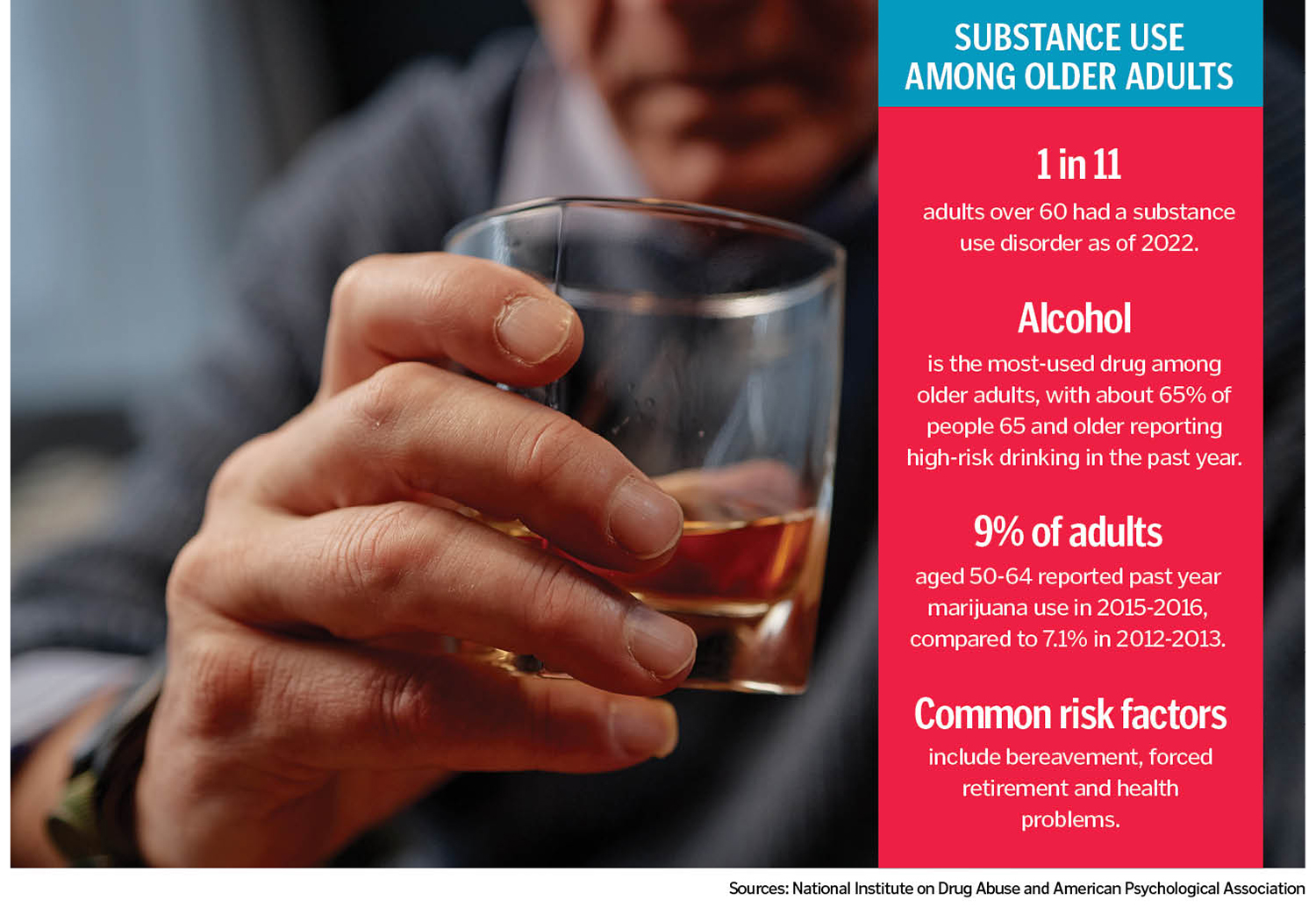
Across the nation, average ages are on the rise. On the upside, that means Americans are living longer. But on the downside, a larger segment of older Americans is dealing with substance use disorders. An article published in January by the American Psychological Association says one in 11 adults over 60 had a substance use disorder by 2022 and the number is going up.
Taylor says the trend is evident in St. Joseph Healthcare's catchment area. That area is largely rural, except for Bangor, and has many seniors who live alone. A growing number of those seniors are homeless.
"We're seeing, and it's not just specific for St. Joe's Bangor hospital, but we are seeing a rise in the state of Maine in older folks that are living with and struggling with substance use disorder," she says.
Unique challenges
Part of Taylor's work involves ensuring this population has access to care and interventions, and she's seen what is helpful. Mainly, it's a community response that takes into account what she says are unique challenges of seniors with substance issues.
Among those challenges are some specific to older bodies, such as that they metabolize drugs like alcohol (still the most misused substance) differently than younger ones. The couple of drinks that might have barely phased them in their younger days can leave them dazed in their later years. Another challenge is that substance disorders might be due to or worsened by medicines that older people take to address ongoing health issues that didn't surface until their later years.
"Polypharmacy is a huge risk when you're looking at older adults with substance use disorder because of those chronic diseases," Taylor says. "They might be on multiple medications, which can interact with whatever substance that they're using."
In addition, Taylor says, many older patients are especially susceptible to societal factors, such as isolation and family deterioration, that can exacerbate substance misuse. And older people often rank low when it comes to the social determinants of health, such as access to healthcare, nutritious food and transportation.
"When we're looking at how do we keep our communities healthy and how do we support the most vulnerable in our communities, those are some of the most vulnerable, folks over the age of 65," Taylor says.
Effective approaches
St. Joseph Healthcare, which is part of Covenant Health, has taken several steps to address substance use disorders among older patients that Taylor says have proven to be effective. One example is that in the past when patients with a substance issue came to the hospital's emergency department, they usually were dropped off and left on their own. Now the hospital encourages community supporters, such as case workers, overdose response teams, or peer supporters, to stay with patients until they have settled. This not only helps patients feel more comfortable, resulting in them staying for needed treatment, but also improves coordination of care and collaboration, reducing fragmented care during the patients' hospital stays and when they transition back to the community setting.
"That can be a wonderful avenue to help someone feel welcome," Taylor says.
When patients receive in-patient care related to substance use disorders, an interdisciplinary St. Joseph Healthcare team, with clinicians, care managers and spiritual care staff, reviews their care, medications and recovery plan to find holistic solutions. The team includes a recovery provider who can prescribe medications that can counter addictions.
This summer, a recovery coach joined the care team. The coach is someone who has dealt with substance issues in her own life. She rounds with the care management team, offering support and information to patients in recovery and stays connected with the patients after they leave the hospital to ensure they are taking advantage of helpful community resources.
Taylor says that warm handoffs of patients overcoming substance misuse to community agencies such as recovery centers, housing navigators, opioid overdose response teams and shelters also has become standard practice at St. Joseph Healthcare.
Creating that connection between St. Joseph and community agencies helps reduce the fragmented care that patients dealing with substance issues sometimes receive, Taylor says. "And it helps that patient that's coming in here to feel more comfortable and welcomed, and their goals are more at the center of care," she adds.
Community partners
From the time she stepped into her current role six years ago, Taylor thought about how to bring in community partners to best support patients with substance use disorders. In one of her outreach efforts, she met with a "users union" of people who have been in and out of recovery. They told her about how they are affected by the stigma surrounding addiction, such as being treated on visits to the ER as if they are there to seek drugs, and about how hard it is to be cut off from their support team when they are getting in-patient care.
Those talks informed the nonjudgmental and welcoming approach the St. Joseph staff takes. The talks also resulted in providing tablet computers so patients with substance issues who are hospitalized can stay in touch with people who are supporting them in recovery. Those patients also have access to spiritual care.
Taylor recalls one older patient who had several visits from spiritual care providers while he was in recovery. Afterward he went into a sober living program. Now he has a job and is a regular churchgoer. His case shows, she says, the importance of the whole-person approach to care.
More broadly, Taylor says the approach St. Joseph has taken to treating patients with substance use disorders has clearly paid off. In-patient stays for this population are shorter, their visits to the emergency department less frequent and more of them discharge to sober living programs.
She credits those positive metrics to St. Joseph staff being intentional about not stigmatizing patients with substance misuse issues, so they feel welcome to come in for care, and to the collaboration with community agencies that address the patients' needs so that their conditions aren't worsening to the point that they require acute and long-term care.
"They're staying within the community and they're feeling better and they're not getting super, super sick," she says.
More resources needed
Taylor says the Bangor area offers many community resources that can be helpful to older adults with substance use disorders. She keeps a multipage list updated with agencies, support groups, churches and the like that offer various forms of support.
Even so, she says more community programs are needed in Penobscot County, and probably in most parts of the country. She would like to see an approach to eldercare that is more proactive than reactive, meaning that services such as transportation to doctors and other necessary outings are readily available, as is in-home care for people who can't get out.
Taylor says the more "protective factors" seniors have, such as community and spiritual connections, the better their health outcomes tend to be.
She's aware that providing the sort of comprehensive services many older adults need comes with a price tag and some communities are struggling with scarce resources. But she says many communities already have programs such as an Area Agency on Aging with expertise in how to meet the needs of older residents. Those agencies' services and reach could be expanded.
"All these resources, all this work, people say it's extra money and no one has the money, and the healthcare system is so stressed right now," Taylor says. "I tell them healthy people cost less. End of story."