
When a Portland, Oregon, day shelter called Rose Haven started a mental health program several years ago that offered support groups, one-on-one therapy and drop-in mental health care, facility leaders wanted to make sure they were implementing the program as well as they could to have the best possible impact on clients' lives.
Data can provide key insights to accomplish a goal like this, but it can be difficult for a small independent nonprofit like Rose Haven to harness and use data in this way. That's where the Portland-based Providence Center for Outcomes Research and Education, or CORE for short, came in.
Through its Data for Change program, CORE worked with Rose Haven to clarify the desired outcomes for the mental health program, used surveys and other data collection tools to gauge progress, and helped the shelter learn from the data to shape the program for maximum effectiveness. Such data services have enabled shelter leaders to continually evolve their programming to meet clients' needs.
Rose Haven is one of dozens of organizations that are working with CORE. CORE's goal is to make important data understandable and usable, so that insights gained through research can help build and sustain effective systems, policies and programs.
Keri Vartanian, CORE's director, says, "There is so much to learn from data, and this information can advance organizations and their work and help the people they serve. You need to collect data to understand a program and its impact. You can tell a story with data."
Broadening scope of services
One of Providence St. Joseph Health's predecessors, Providence Health System, founded the Center for Outcomes Research and Education nearly 40 years ago to use data to improve health care, primarily by evaluating promising medical treatments and programs. In time, leadership decided that CORE should focus more upstream to understand how systems and policies shape health and to determine ways to improve outcomes for everyone. In the early 2000s, that work included research on the effects of Medicaid policies enacted by Oregon. CORE leadership then decided to broaden the organization's purview to get at root causes of health issues and concentrate on the social determinants of health. This includes research on topics such as how housing and food access relate to health.
A current priority for CORE is research that engages community members and that informs action.
Today, CORE, part of Providence, has a multidisciplinary staff of nearly 30 researchers, scientists and data experts. Their several dozen clients include health systems and community-based organizations as well as social service providers, health plans and government agencies. Some of CORE's clients are subsidiaries of Providence, most are not. CORE is independently funded through its clients' projects and grants.
No cookie cutter
CORE conducts a range of research projects, including on equity, health services, population health, housing, and social and economic factors. It's now working on about 30 projects.
Vartanian says many of the smaller organizations CORE works with have limited resources and lack the internal capacity or expertise to conduct research and evaluation, to collect and analyze data, or to use data to build capacity. CORE gives them access to staff with deep skillsets in all these areas.

Hannah Cohen-Cline, CORE's program director of research and evaluation, adds that CORE is independent from its clients, so it can conduct research with less bias, which lends credibility to its findings.
Lisa Angus, CORE's program director for analytics and strategic consulting, says that with decades of experience researching health and social service issues primarily along the West Coast, "We're pretty locally grounded and understand the context of the work. We understand what's going on here, and we meet (our clients) where they are."
Additionally, Angus notes, the center's approach is "not cookie cutter. We are flexible and adaptable, but we also bring a sophistication and rigor to our work without being over the top for what is needed."
A deeper understanding
Clients have employed CORE for many ends. This includes research to get a deeper understanding of the changing landscape in which the client operates, or of the population the client serves, or of the needs that population has, or of the ways that programming can be carried out. Some clients such as state Medicaid programs and plans have worked with CORE to track metrics on the impact of their work and to meet the reporting requirements of grantors or government agencies. Some clients have used CORE's services to refine community benefit programming, and some to further their advocacy work. Some have used it to improve their partnerships with other organizations.
"From a very basic level," Cohen-Cline explains, "when we think about program evaluation, you want to know your program is working and, if not, how to improve it and whether and how to scale it to help the communities you serve."
Angus adds, "It's an opportunity to get better at what you do, to make better decisions and to better understand the needs of the populations you serve and what people are responding to."
Data for Change
CORE's leadership says Data for Change, launched in 2021, has been a big success for everyone involved — CORE, Providence and the community-based partners.
Through this effort, CORE has supported more than 30 small Oregon-based community organizations with data collection and analysis so that they can enhance and grow their work. Many of the clients in the Data for Change program — the Rose Haven shelter included — are recipients of grants from Providence.
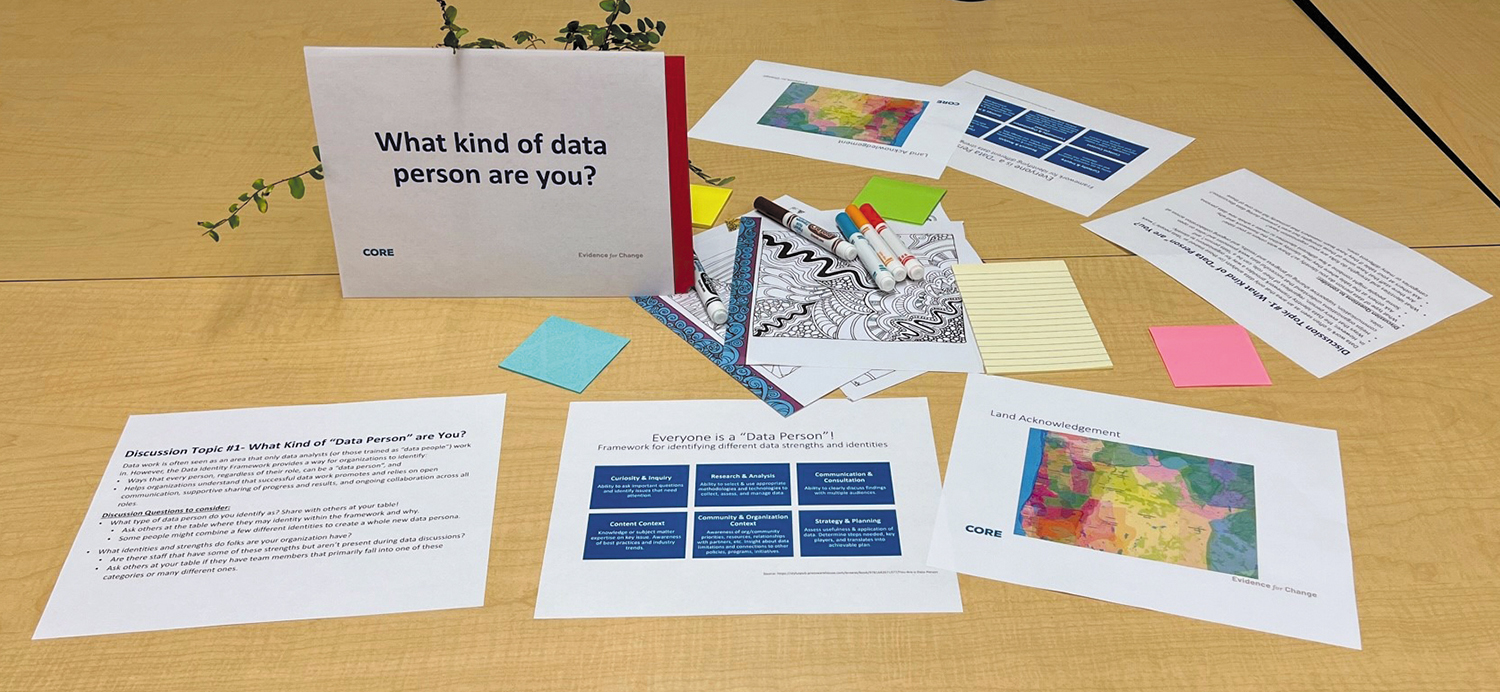
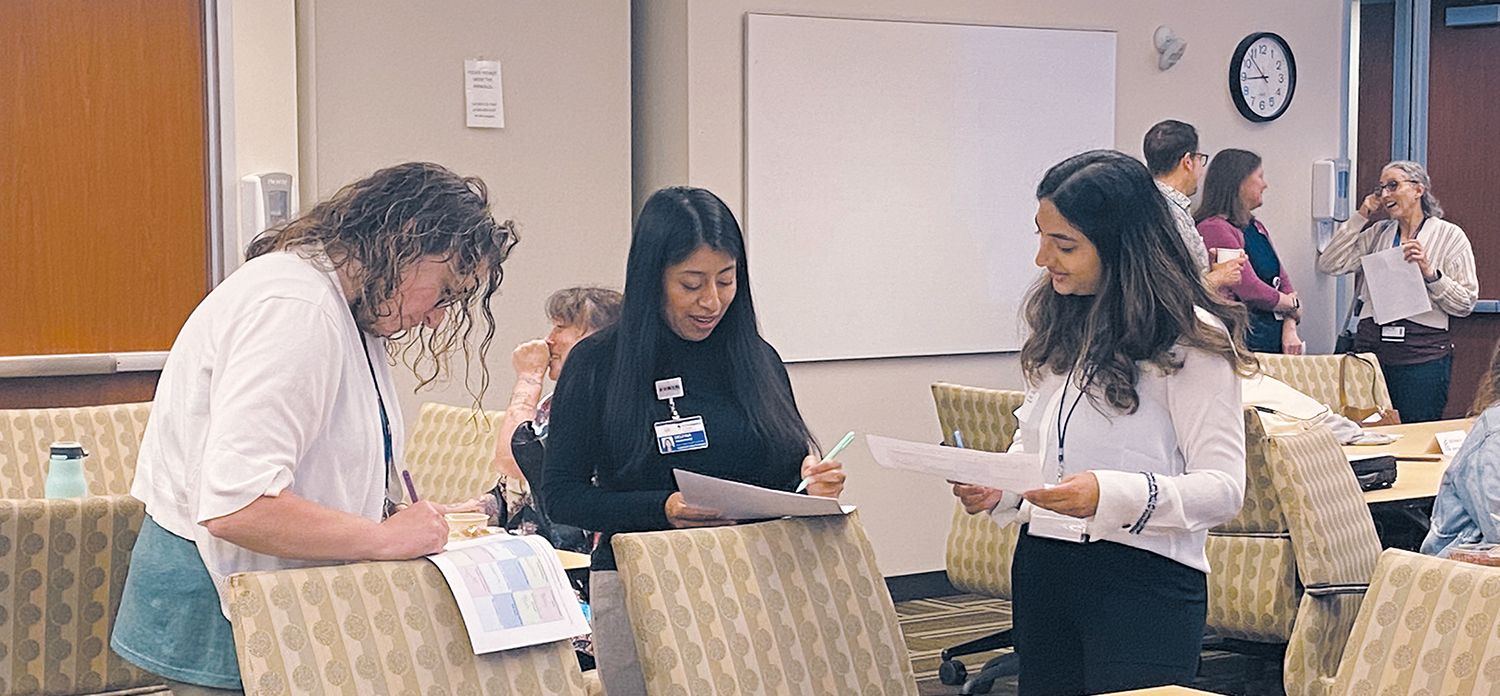
CORE works with its Data for Change clients in a cohort, providing individualized technical assistance, webinars and data summits. One main goal is to help these clients to build their capacity to use data.
Vartanian says CORE supports community-based organizations that provide much-needed services.
Cohen-Cline says CORE helps those providers to take a look at the value they add from many different perspectives, and then to demonstrate that value to others.
"It can be fun to dive into data," Angus says. "Data can bring some really good insights. Data can be engaging and motivating and sense-making. It can help organizations to build their capacity."