
Recent community health needs assessments from Providence St. Joseph Health's Alaska region reveal a familiar pattern: Alaska Native people living in Anchorage face more challenges than other Alaskans when it comes to some social determinants of health, though much progress has been made addressing these determinants through a proactive community-based approach.
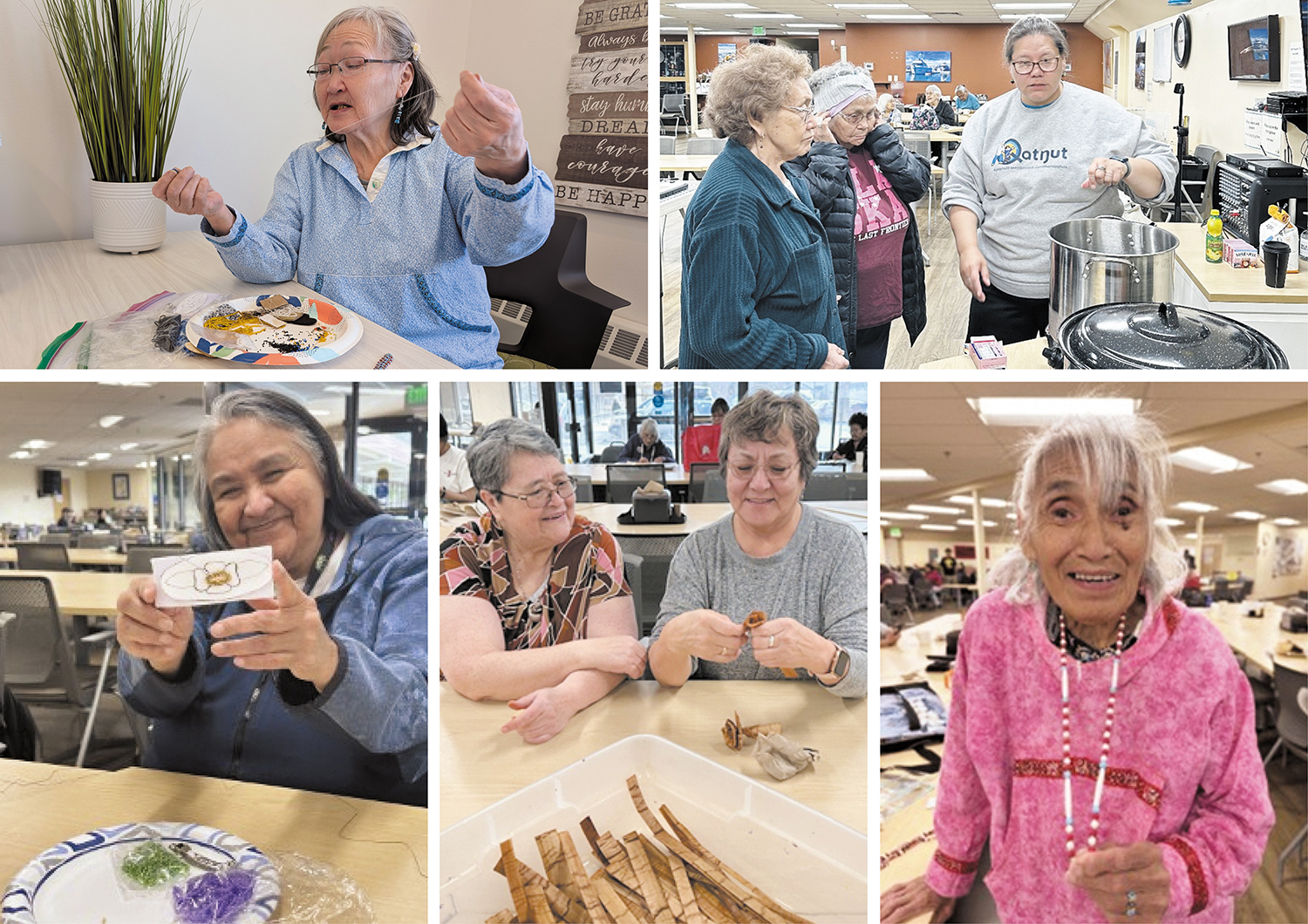
One way the Catholic health system has helped is by supporting and funding programs of the nonprofit Alaska Native Heritage Center, a cultural organization that seeks to preserve and strengthen the traditions, languages and arts of native people. One of the things the center does to further this mission is to collaborate with others to offer culturally supportive services.
Providence Alaska has provided nearly $122,000 to the center over the last five years for programming that helps strengthen the connection indigenous peoples have to their cultures.
"Providence invests in community partners who have the experience and cultural insight to understand local needs and design the most effective solutions," says Nathan Johnson, senior director of community health investment for Providence Alaska. "We know we're not always the expert, so we rely on the strengths of organizations already doing this work to ensure programs truly meet community needs."
Kelsey Ciugun Wallace, president and CEO of the Alaska Native Heritage Center, says it is grateful for Providence Alaska's investment and for the opportunity to have supports in place which allow the center to create access to culture, no matter what the community might be navigating — ranging from homelessness to disabilities to economic struggles.
Addressing disparities
Anchorage has a population of nearly 290,000. According to a 2024 community health needs assessment from Anchorage's Providence Alaska Medical Center and Providence St. Elias Specialty Hospital, nearly 60% of Anchorage's population is white, and just over 7% Alaska Native or American Indian. (The remainder are Asian, Black, Pacific Islander or another race.)
That health needs assessment revealed that native people generally scored lower than other Alaskans on overall life satisfaction, overall well-being, sense of purpose, financial security and ability to meet their basic needs. Previous assessments have shown similar disparities.
Additionally, Johnson notes, roughly 50% of Anchorage residents 55 and older who experience homelessness and meet the criteria to qualify for permanent supportive housing are Alaska Native.
History of inequities
Ciugun Wallace explains that many concerns of the native community have deep roots.
She says that the community has navigated numerous challenges, including fighting for the right to vote, seeking settlements over land that was taken, and struggling because of inequities and structural systems that have deprioritized and discriminated against indigenous peoples in abject ways.
She says such mistreatment has led to today's reality, where Alaska Native people are statistically overrepresented in societal metrics such as homelessness, poverty and incarceration rates.
Healing and restoration
The heritage center serves more than 2,000 Alaska Native people annually through educational programs, culturally supportive services, master artist workshops, community events and other outreach. It also provides cultural tourism experiences such as native dance and drum performances.
Government and philanthropic grants are a major source of funding for the center. Providence's grants enable the center to offer programming that is restorative and healing for Alaska Native people. This includes funding for a research program through which the center is sharing the history of indigenous peoples. The center has documented the sometimes-traumatic past of indigenous people, including accounts of Alaska Native people who were sent to government- and church-run boarding schools in Alaska.
Providence also has funded heritage center programming led by culture bearers, or Alaska Native people who are deeply familiar with the community's arts, language and heritage. This included 70 workshops last year that engaged more than 1,000 Alaska Native elders in traditional arts including making bone bead necklaces, Ulu earrings, birch bark baskets, drums, jam, Baleen etchings, beaded key chains, beaded hair pins with smoked moose hide, Inuit yoyos, fleece headbands and neck warmers, medicinal salves, medicine bags, and various ornaments.
Crystalyn Lemieux, a program manager at the heritage center, coordinated many of the sessions. "We want to provide the tools and the space to help (Alaska Native people) reconnect with their culture and cultural identity," she says. "When you feel a sense of connectedness and belonging, it is a very strong protective factor for suicide prevention and substance-use prevention.
"We really believe culture is prevention," she says.
This year, Providence grant dollars are funding an "Ilitchut" program at the center. Ilitchut means "they are learning" in Inupiaq, an Alaska Native language. That program will unite Alaska Native elders, culture bearers, artists and educators with Alaska Native youth. The young people will gain career skills and will get career development opportunities with a basis in Alaska Native culture.
'I feel stronger'
The center has been using the input of the community it serves to shape its programming.
For instance, the center's arts sessions for elders received participant praise. Ciugun Wallace says elders were excited to engage with crafts that they had never done or had not done in quite a while.
According to the heritage center, the program had a noticeable improvement in elders' moods, mental health, physical health and overall well-being. Some who participated in dance activities found that their mobility improved.
Lemieux shared some feedback from participants. One person said, "The activities of sewing and beading connect me to my past, my heritage — I feel stronger." Another said, "I can be sad and feel lonely and come here and those feelings diminish." Another said, "Each project ... has brought a feeling of family and community which has been lacking prior to joining the elder program."
Preserving essential things
Brian McCutcheon is vice president of behavioral services for the Southcentral Foundation, a nonprofit that offers health and wellness services for Alaska Native and American Indian people living in Anchorage and the Matanuska-Susitna Borough, and nearby villages. As Providence's partner in many initiatives involving the heritage center, McCutcheon says that Providence, Southcentral Foundation and the heritage center together have helped ensure that Alaska Native people do not lose their connection to their heritage and culture. This has promoted healing in a very individualized way.
Ciugun Wallace says the center seeks to be a pillar of support so that the community is comprised of thriving Alaska Native peoples and cultures that are respected and valued by all.