
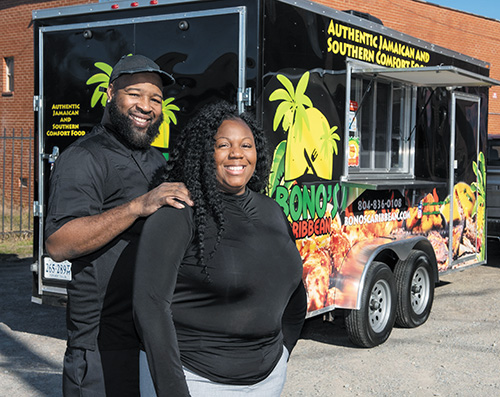
Anthony Cornwall long has had a passion for serving delicious food. Since 2021, patrons of his Bono's Caribbean Cuisine food truck in Richmond, Virginia, have been enjoying his unique style of cooking, which blends Jamaican flavors into Southern comfort foods. His wife, Cortney Cornwall, says several years ago the two of them began thinking about also opening a brick-and-mortar restaurant, but they feared the costs would be too much. A friend told them about a grant program.
They applied to Bon Secours Richmond's Supporting East End Entrepreneurship Development, or SEED, grant program. They were approved and have received three grants -- one per year since 2024. The money is helping them to transform an abandoned building in Richmond's East End into the future home of their restaurant.
"This funding has been extremely valuable," Cortney Cornwall says. "And we've received coaching and business connections to mentors and to other entrepreneurs."
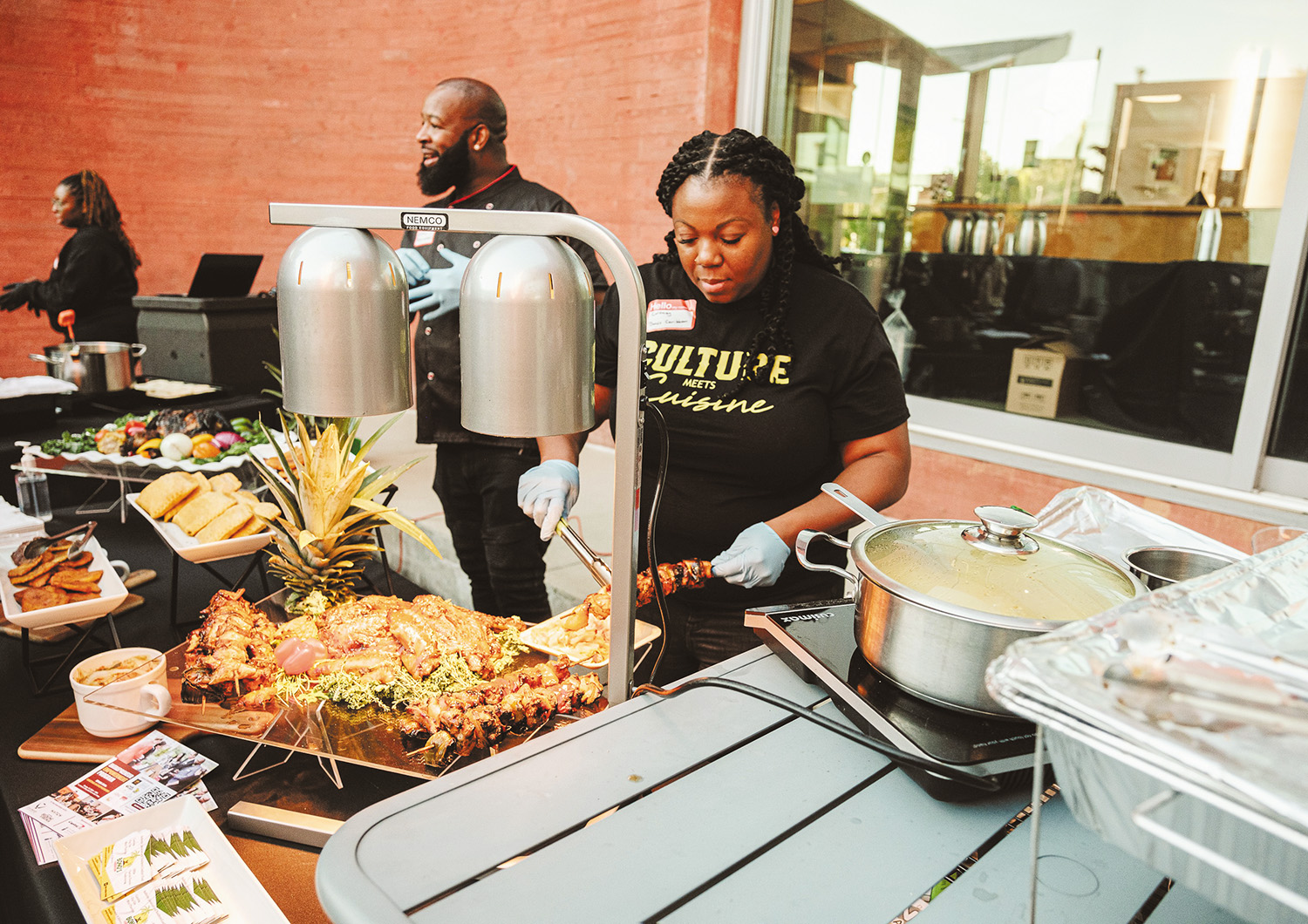
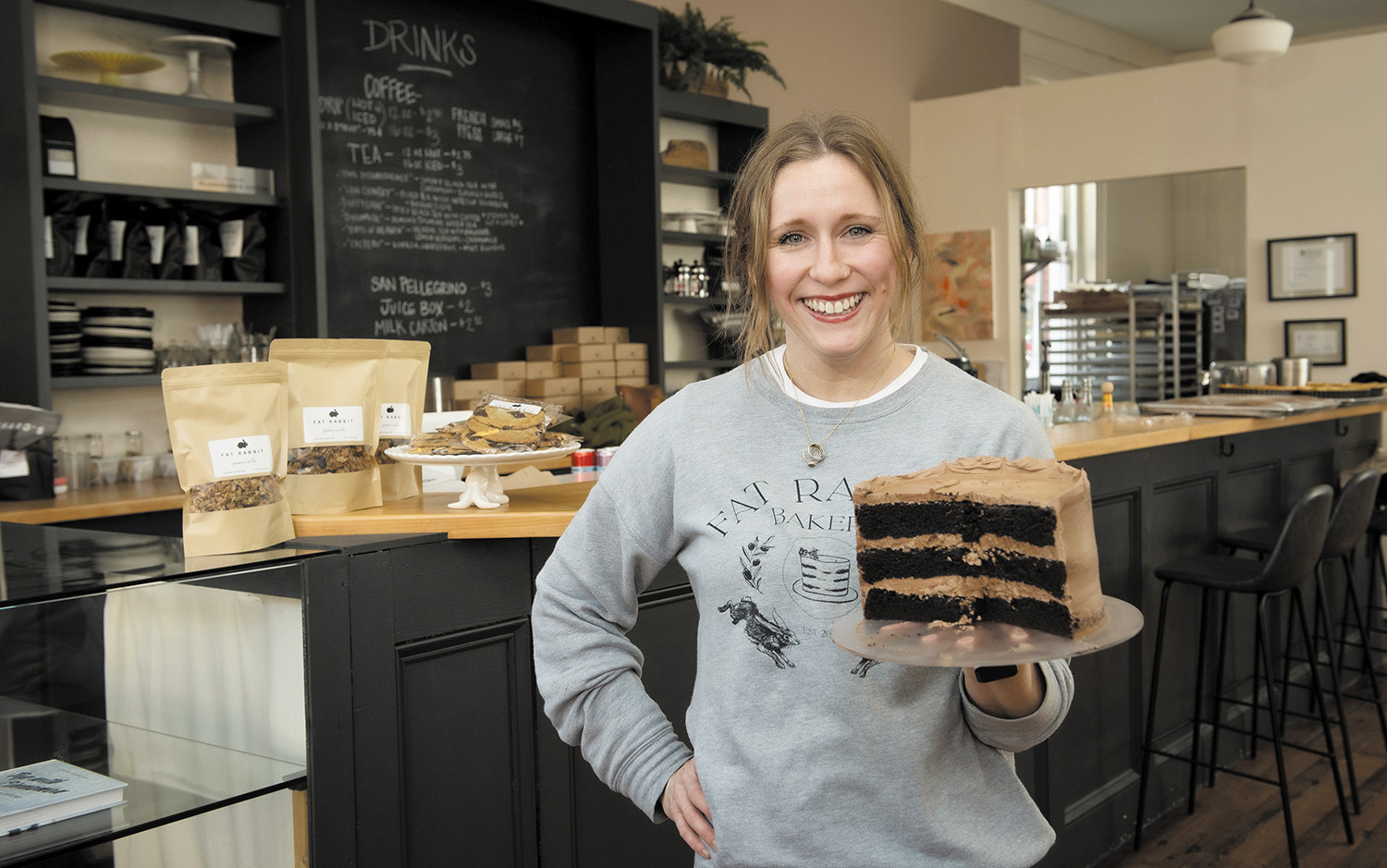
The Cornwalls' budding business is among more than 60 companies in the East End that have received a total of more than $1.2 million in SEED grants from Bon Secours Richmond since 2011. The recipients also receive business guidance, mentorship and other support. The assistance is helping a variety of local enterprises -- including restaurants, a bakery, ice cream shop, beauty salon, and wellness center -- to launch, evolve and grow.
In a press release, Michael Lutes, state president of Virginia for Bon Secours Mercy Health, says, "The SEED program is a testament to what can happen when an anchor institution commits to supporting its community, and we are proud of the impact it has had on local entrepreneurs."
Redlined neighborhoods
Shekinah Mitchell is director of community health and neighborhood engagement for Bon Secours Health in Richmond. She says the East End has deep historical roots -- Patrick Henry is said to have delivered his famous "Give Me Liberty or Give Me Death" speech there in the late 1700s. The community increased greatly in population over its history, and in time several vibrant business corridors took shape. But then, Mitchell notes, the area was hit by multiple blows, especially the practice of redlining -- that is when marginalized populations are denied bank loans. Some residents fled. By the early 2000s, the business corridors were suffering. Dilapidated and vacant properties and other worrisome signs of urban decay popped up.
It was in this context that Bon Secours Richmond launched its SEED grant program. Mitchell explains a key priority was to revive blighted properties, particularly by funding businesses that could enliven the "front porch of the neighborhood," those dilapidated tracts along the business corridors.
She says the priority has been to partner with innovative entrepreneurs who see themselves as part of the community, are engaged with the area and wish to give back and to do good. Many of the people who apply for the grants live in the East End and want to contribute to its revitalization by opening businesses that can serve the area, employ local residents and attract other development.

'Tale of two cities'
Mitchell notes that the SEED grants are part of somewhat of a renaissance in the East End. Parts of the community have been receiving broader investment and have seen gentrification. But, she notes, there are some neighborhoods that continue to experience stark poverty. These left-behind areas have large swaths of public housing units, and community health needs assessments show a high level of chronic disease, including diabetes and obesity.
"It's like a tale of two cities," Mitchell says of the dichotomy of gentrified neighborhoods just blocks from struggling areas.
The focus of the SEED grant cycles has been to build up the low-income neighborhoods.
The SEED program provides grants of up to $25,000 to individuals to start, develop or grow their business in three East End neighborhoods: Church Hill, Shockoe Bottom and Fulton. A panel of local leaders, including former grant recipients, reviews all applications and selects the recipients. Recipients can receive grants up to three times, for a maximum of $75,000.
Boot campMitchell says all businesses that apply for a SEED grant become part of a network, whether they get grants or not.
Businesses in the network can at no cost receive coaching from other entrepreneurs and business experts, help writing a business plan, technical assistance, marketing advice and other support.
Any business, including those benefitting from SEED, can take part in a separate program -- Bon Secours Richmond's Entrepreneur 101 Boot Camp -- and those that have existed for five or more years can take part in 201 Boot Camp, which provides more advanced guidance and resources, including assistance connecting with banks, the municipal government and other players that can help the businesses to stabilize and expand.
Another separate Bon Secours Richmond program that businesses can apply to access is Parsley's Kitchen, a commissary kitchen that offers companies affordable rates to use its equipment. The kitchen is on the campus of Bon Secours Richmond Community Hospital in the East End and is located within Bon Secours Richmond's Sarah Garland Jones Center.
Several organizations partner with Bon Secours Richmond in this work, including business consultant InUnison, which provides much of the outreach, technical assistance and coaching and handles the practicalities of the application and fund distributions.
Building community
Bon Secours Richmond operates a network of seven hospitals and additional outpatient sites throughout the Richmond area. Mitchell says it is common for these facilities to engage some of the SEED grant recipients. For instance, they'll tap the restaurants and bakeries for event catering.
Mitchell and her team are looking into how to make the SEED program more generative. She's exploring whether the initiative can coach the small businesses to be in a strong position to access a secured line of credit, perhaps even through SEED.
Mitchell says she is seeing "ripple effects" in the East End from Bon Secours Richmond's SEED program.
She says strong businesses can restore vibrancy to a community. "These entrepreneurs are incredible people doing incredible work," she says, "and I feel privileged to affirm their value."
She adds, "It makes me proud to work in a place that thinks out of the box, that has a bigger idea of what health is."
Cortney Cornwall says she is among the many business owners who have a great appreciation for what Bon Secours Richmond is doing. She says it has been exciting to watch the restaurant take shape -- it could open later this year. She and her husband have used the SEED funds for renovations, equipment, a heating and air system and other necessities.
"Our hope is for it to become a successful restaurant serving good food in a welcoming environment," she says. "And we hope to be an example that encourages others to invest in the Fulton community."
Cornwall adds, "Bon Secours has a long history of supporting the community, and this is another powerful way they are improving the community. They see that the community does not just need healthcare, we need long-term change."