
As compared to the U.S. population generally, the Laredo population has a high rate of poverty, disproportionately struggles with housing costs, has high rates of food insecurity and has a high percentage of people facing poor health outcomes.
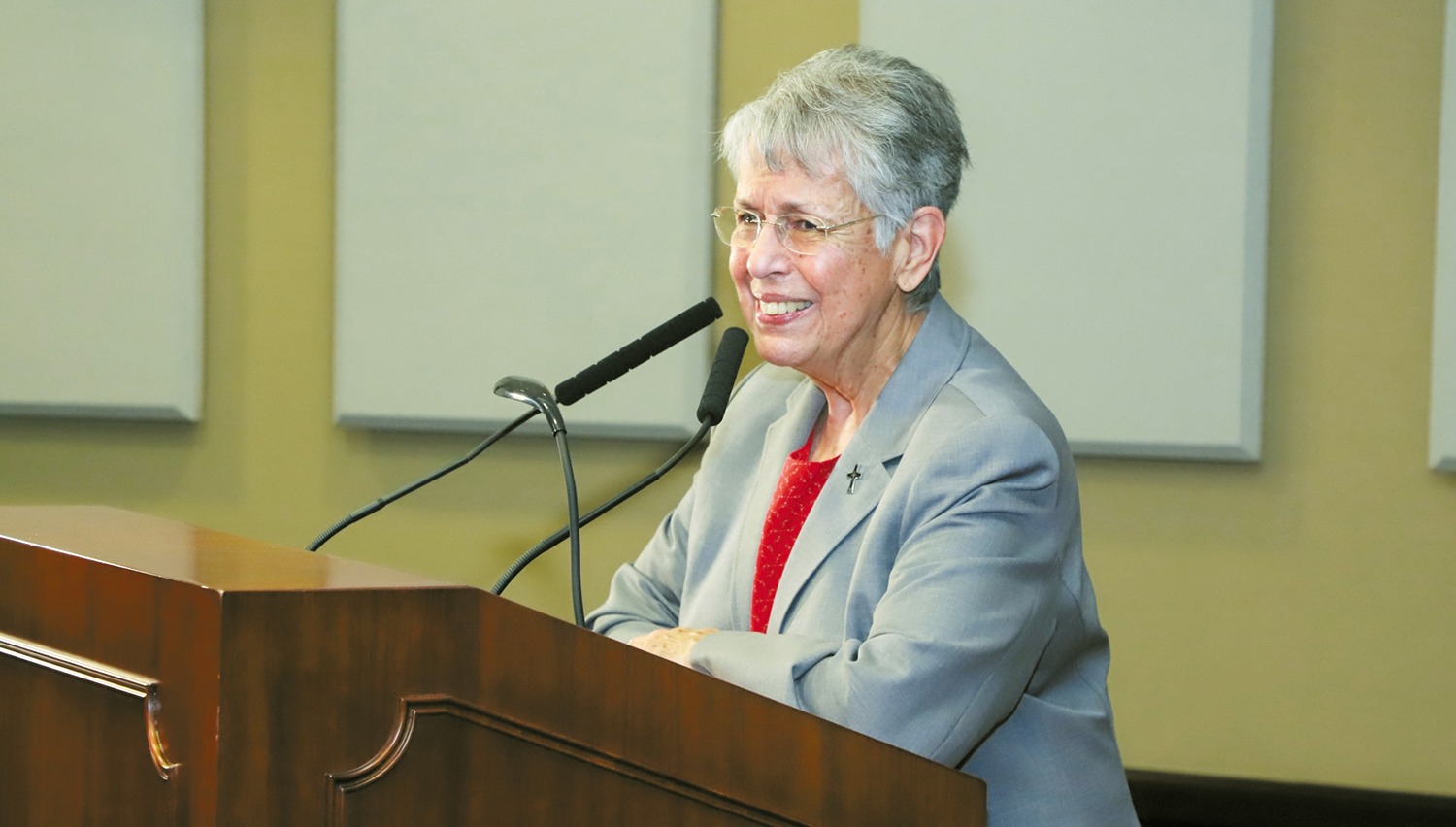
But even the most marginalized people in this area have access to high-quality healthcare and other services, thanks in large part to the visionary leadership of Sr. Maria Luisa Vera, RSM. From 2005 to 2020, Sr. Vera headed Mercy Ministries of Laredo. Because she immersed herself in the community and listened to people, she had a solid understanding of local needs as she shaped Mercy Ministries' work. That nonprofit includes an expansive medical clinic as well as a domestic violence shelter and food pantry. Since its 2003 opening, Mercy Ministries, which is part of the Chesterfield, Missouri-based Mercy system, has served about 133,000 people.
Through her leadership of Mercy Ministries, Sr. Vera "has always advocated for those on the margins," says Karen Martinez, a grant writer and data specialist for Mercy Ministries' domestic violence shelter, Casa de Misericordia.
Sr. Vera insisted upon providing exceptional care to the people of Laredo, says Sr. Rosemary Welsh, RSM, director of outreach for Mercy Ministries' Mercy Clinic Laredo, and executive director of Casa de Misericordia. "She always challenged us to be the best we could be" in delivering high-quality services to the community, Sr. Welsh adds.
And the people of Laredo "are attracted to her and respect her. They feel at ease coming in," says Ana Garza, a nurse at Mercy Clinic Laredo.
CHA is honoring Sr. Vera with a 2026 Lifetime Achievement Award for her contributions to the Catholic health ministry.
A call to nursing and religious life
Sr. Vera, who is of Hispanic descent, grew up in Brownsville, Texas, on the U.S.-Mexico border. After high school, she wasn't sure what career path to pursue — she decided to "try out" nursing, following her older sister's lead. She began as a practical nurse at a Mercy hospital in Brownsville. She says she "fell in love with nursing." She was particularly drawn to the fast-paced emergency department.
Mercy sisters at the hospital noticed how she excelled at her work. They asked her whether she'd considered a religious vocation. She says she didn't see herself as a Sister of Mercy until she took part in one of the congregation's retreats and met other Hispanic women who had joined the congregation. She recalls thinking, "I may want to be a sister. This is crazy."
Further discernment convinced her. She says she has a deep concern for people's health and well-being and wants to provide care for them and their loved ones, and being a sister and a nurse enabled her to serve Jesus and others in a hands-on way.
Transition to leadership
Sr. Vera lived in the Mercy sisters' convent in Fort Scott, Kansas. She professed her final vows in 1971. She pursued advanced training and education in Catholic nursing schools before returning to the Brownsville hospital to work in the emergency department. When that hospital closed, the congregation deployed her to a Mercy hospital in Laredo, a border town about 200 miles northwest of Brownsville. Sr. Vera says there was a shortage of nurses at the Laredo hospital, plus the congregation appreciated that she spoke Spanish. About 95% of people in Laredo are of Hispanic descent.
Sr. Vera's later work took her away from Laredo. The congregation elected her to provincial leadership roles between 1985 and 1992 and to regional leadership roles between 1992 and 1995. From 1995 to 2005, she served on the leadership team of the Institute of the Sisters of Mercy of the Americas.
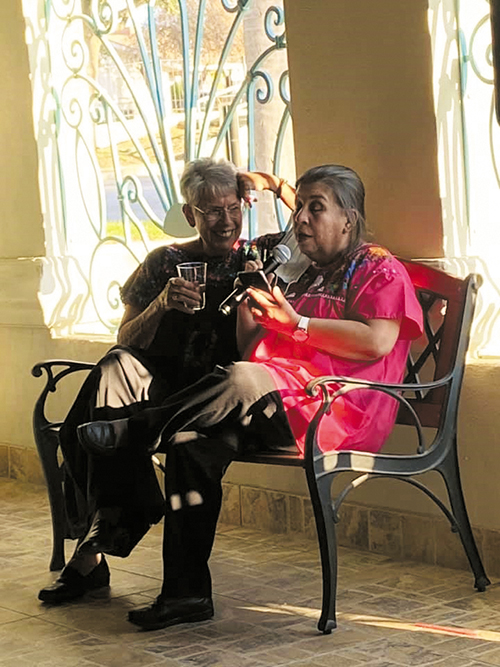
While discerning her next move after two decades in leadership roles in the congregation, Sr. Vera visited family in Brownsville. While on a telephone conversation during that trip, she accepted Sr. Welsh's invitation to consider serving in Laredo once again.
A population in need
Mercy had recently divested its Laredo hospital and created Mercy Ministries of Laredo out of two existing entities, the stand-alone clinic and Casa de Misericordia. Mercy Ministries addresses healthcare needs in the outpatient setting. Sr. Vera recognized her talents could benefit a vulnerable population of uninsured and underinsured people, many of them migrants.
"I felt this is where I needed to be," she recalls.
The U.S. Census Bureau says that just over 20% of Laredo's population is impoverished, compared to about 10% of Americans generally. The latest community health needs assessment published by the city says about one-third of the residents of Webb County — where Laredo is located — have a housing cost burden of a third or more of their income, about 37% fear they won't have enough food to eat, and 28% say crime and violence are harming their health or the health of a member of their household. The assessment also says more than 45% of Laredo residents are obese and nearly 20% have a mental health condition.
Sr. Vera anticipated that she would serve just several years in Laredo before retirement. She ended up spending more than a dozen years as president of Mercy Ministries.
Prophetic decision-making
Sr. Welsh, who has been friends with Sr. Vera since they served together as nurses in Brownsville in the 1970s, says Sr. Vera has been "prophetic" in her decision-making as a leader.
Early in her nursing career at Mercy's Laredo hospital, Sr. Vera pushed for community outreach, a novel concept at the time. She organized blood pressure checks and educational events. She also began a program to teach clinicians CPR, then a rare practice.
Her forward-thinking bent continued while in congregational leadership, when she helped establish the Alliance of Women of Color, a Sisters of Mercy group to encourage diversity and offer support to members. Her trailblazing efforts led to the prioritization of anti-racism efforts by the congregation.
At Mercy Ministries, her pioneering approaches continued. That organization had an aging mobile clinic van, and Sr. Vera acquired funding to replace it in order to enhance services to the community. She also helped expand a team of outreach workers called "promotoras" to assist people with socioeconomic needs. She also extended that service into more underserved areas of Laredo.
A vital resource
Garza says there are many people in great need in the Laredo area, and they have a place to turn because of Sr. Vera's work. "I often think, 'What would happen to our patients if the clinic wasn't here?'" she says. "I know there would be lots of people who wouldn't be taken care of. I don't know what they'd do."
Sr. Welsh says Sr. Vera's tenacity has been key to Mercy Ministries continually evolving its services to respond to local needs. "If she says she's going to do something, she does it," Sr. Welsh says.
Sr. Welsh adds that Sr. Vera's deep care for people has been pivotal to Mercy Ministries' success in helping people in desperate need. Sr. Vera "really listens to people" — and that includes Mercy Ministries' staff, clients and local community members, Sr. Welsh says.
Martinez says Sr. Vera's ability to connect with others in an authentic way built trust with people who can sometimes find it difficult to rely on healthcare institutions. This includes immigrants and people impacted by domestic violence.
Though Sr. Vera is retired, she keeps in touch with Mercy Ministries and remains a consistent presence. She serves on several boards and committees in the Laredo area and for the Sisters of Mercy. She also serves on the Mercy system board of directors.
She says she's drawn on the example of Sisters of Mercy foundress Catherine McAuley in discerning her own leadership path throughout her life.
"We need to always look beyond the present, and not become so set in what we're doing now," Sr. Vera says. "We can't get too complacent or comfortable. Catherine McAuley said we can rejoice in the great gifts and talents we have now but we can always be better tomorrow."