
CHA has joined the United States Conference of Catholic Bishops and Catholic Charities USA in expressing "serious concern" about rules the federal government has released for implementing new Medicaid work requirements.
The three organizations made their views known in a letter sent July 31 to Dr. Mehmet Oz, the administrator of the Centers for Medicare & Medicaid Services. They said interim final rules released by CMS in June appear to conflict with Congress' intent to make the changes easy to navigate "so eligible people can get and stay covered."
The work requirements were added to Medicaid as part of H.R. 1, also known as the One Big Beautiful Bill Act. Congress passed and President Donald Trump signed that legislation last year. It enacts sweeping federal budget cuts. For Medicaid, the safety net health insurance program for low-income Americans, the measure is projected to reduce funding by $1 trillion over the next decade.
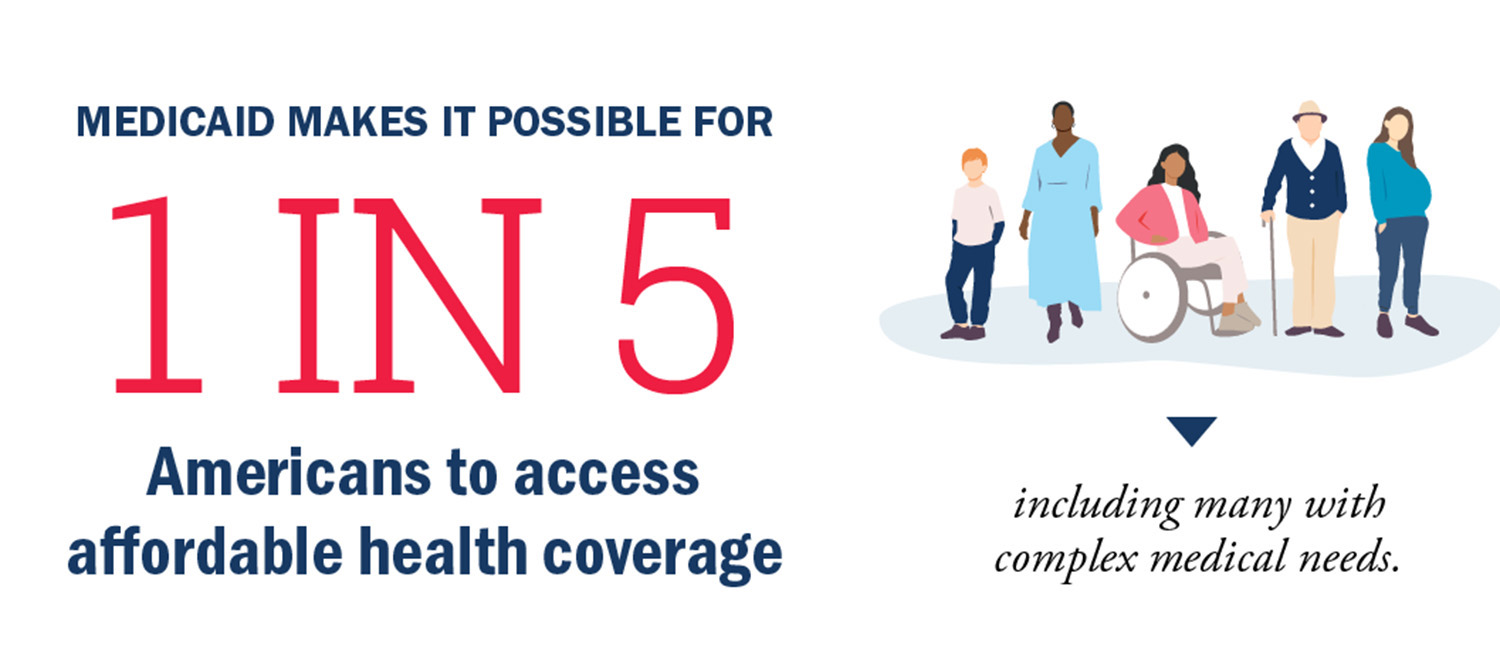
Starting next year, the legislation requires that most adult Medicaid recipients ages 19-64 must work at least 80 hours per month. The Congressional Budget Office projected that the requirement would affect about 18.5 million Americans and that more than 5 million of them would lose coverage for failure to comply.
An exhortation from the pope
CHA and its co-signers cited Pope Leo XIV's apostolic exhortation Dilexi Te in their letter. In that missive, the pope says society is judged by how it treats the poor and vulnerable. He calls on Catholic ministries to accompany those who often have little voice within complex systems and institutions.
"Consistent with the principles articulated in Dilexi Te, we support implementation approaches that emphasize compassion, simplicity, and access to care and that safeguard eligible individuals from losing coverage due to administrative burdens rather than true ineligibility," the letter to Oz says.
One of the specific concerns the letter cites relates to the definition of "medical frailty." Currently, if someone has a condition that qualifies them as medically frail, such as blindness or a disabling mental disorder, they qualify for Medicaid coverage. Under the final interim rule, the determination of medical frailty will include that the condition significantly impairs an individual's ability to comply with the work requirements.
"This policy will create significant operational and administrative challenges for states, providers, and patients, increasing the risk that eligible individuals lose coverage because of administrative barriers," the letter to Oz says.
In asking that the definition remain as is, CHA and its co-signers also say that the planned change would shift responsibility for establishing medical frailty for a patient from state Medicaid agencies to hospitals, doctors and patients. "As a result, hospitals and clinicians will need to assume significant new, unreimbursed administrative responsibilities to support implementation of the medical frailty exclusion, diverting clinical time and resources away from direct patient care," the letter says.
More time to prepare for changes
Another recommendation in the letter is that CMS delay implementation of the work requirements, set to take effect Jan. 1, for at least six months. The letter says states need the extra time to develop, test and validate their systems for putting the rules in place.
"Ensuring eligible patients can obtain and maintain Medicaid coverage and continue to access needed care should remain the central objective as states implement the work and community engagement requirements," CHA and its co-signers say. "Achieving that goal requires states to have operational systems that are fully prepared before implementation begins and that patients understand what is expected of them to maintain coverage."