
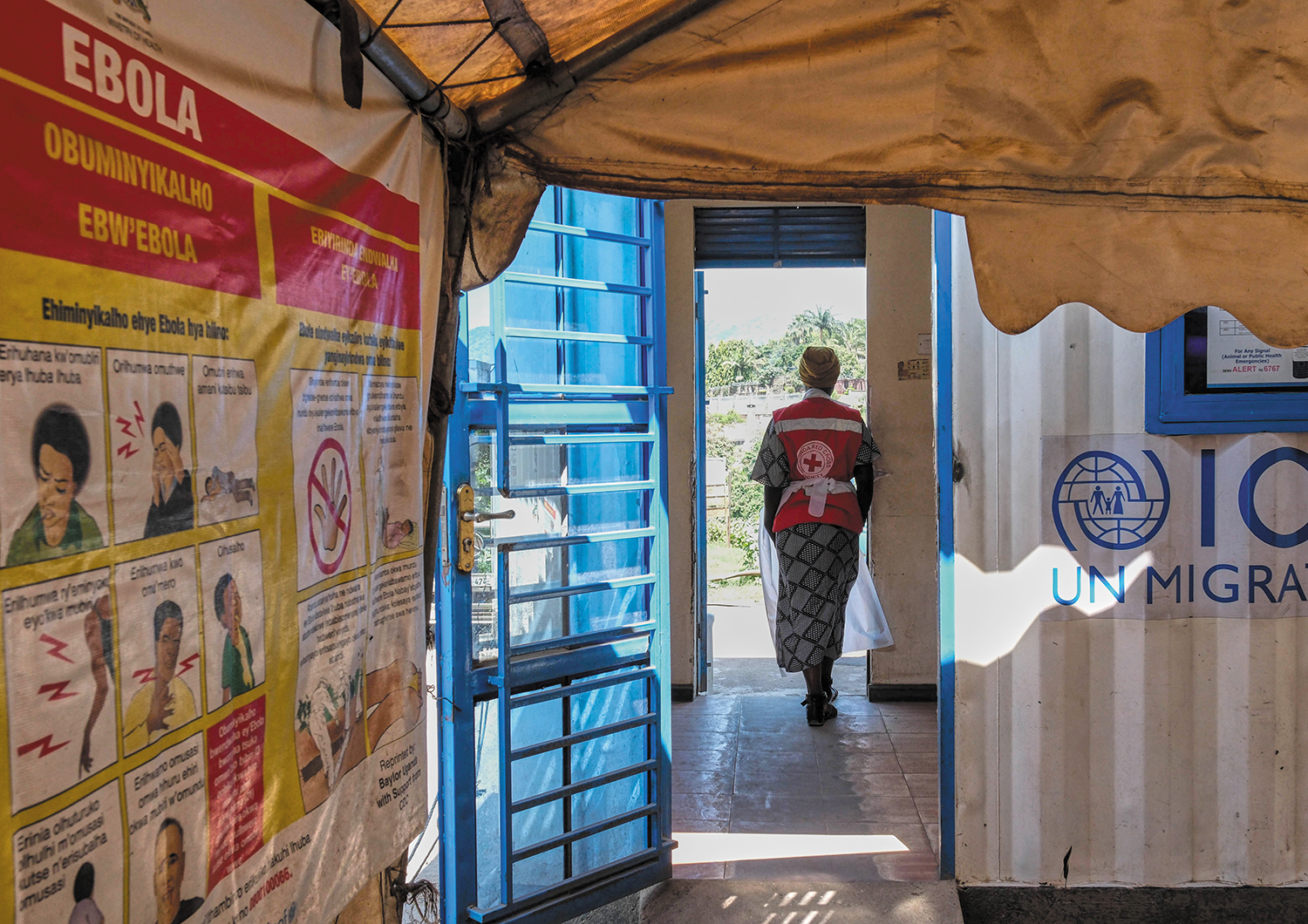
Speaking during a networking call that CHA convened in May, Nkatha Njeru, CEO of the African Christian Health Associations Platform, said in the Democratic Republic of Congo, where the deadly virus appears to be spreading largely unchecked, five facilities within the organization’s network had reported cases. Affiliates of the organization operate more than 10,000 care sites in 32 African nations.
Njeru, who joined the call from Nairobi, Kenya, said there are gaps in early detection and triage of Ebola cases, in preparedness among healthcare providers, in supplies of protective medical gear and disinfectants, and in capacity to isolate patients with the virus.
For groups that want to jump in with assistance, Njeru had advice. "Right now, one of the things that I know is that in emergencies, cash support is often the most effective and responsive, because it will help local organizations be able to use the money to get what they need immediately," she said.
An international emergency
Bruce Compton, senior director of global health at CHA, moderated the call. He pointed to the Ebola crisis resources on CHA’s website. Those resources include a link to the World Health Organization’s declaration that the Ebola outbreak in the DRC and Uganda is a public health emergency of international concern, WHO’s highest alert level.
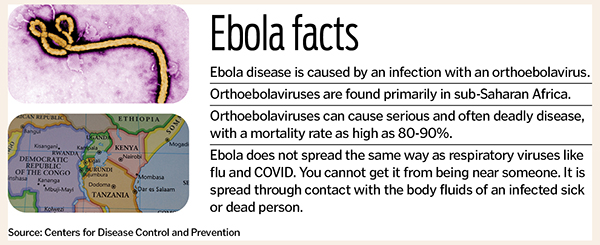
As of June 8, the Centers for Disease Control and Prevention reported that the DRC had 598 confirmed cases of Ebola and 115 deaths. Uganda had 19 confirmed cases and two deaths in the outbreak.
WHO said the outbreak "requires international coordination and cooperation to understand the extent of the outbreak, to coordinate surveillance, prevention and response efforts, to scale up and strengthen operations and ensure ability to implement control measures."
"We do know how to deal with it"
During the CHA call, Christian Acemah, executive secretary of the Uganda National Academy of Sciences, stressed the value of front-line nations’ experience and expertise as the world responds to the crisis. He noted that Uganda has been controlling disease outbreaks for decades, including outbreaks of Ebola.
"This last one in West Africa, we had Ugandan doctors go over there to Liberia, Guinea and Sierra Leone, partly because of that experience," Acemah said. "No one ever wants to be known as, 'We are the Ebola people,' but we do know how to deal with it."
That Uganda can lead its own response to the outbreak is not in doubt, Acemah said, but whether it will be allowed to is. "The more important question is whether international partners can have the humility and presence of mind to coordinate effectively amongst themselves," he said.
Njeru urged that faith-based providers be part of any coordinated response to the outbreak. She noted that those providers are responsible for much of the healthcare in African nations. In DRC, she estimated that 70% of "street-based" healthcare comes from providers supported by Catholic and other religious organizations.
The response to the Ebola emergency, Njeru said, is complicated by many factors — including ongoing civil conflicts in DRC that have uprooted much of the population. Other complications include mistrust of healthcare providers and misinformation about Ebola that is spreading through communities. "We are hoping that faith leaders are going to play a critical role as trusted champions and advocates at this juncture," Njeru said.

Compassionate, intelligent response
Meredith Stakem, health technical adviser with Catholic Relief Services who is working with teams in DRC and Uganda to mount a response to the Ebola crisis, said church leaders are part of that response. She compared skepticism around the Ebola outbreak in DRC and the response to that around the COVID-19 pandemic in the United States.
Stakem said the medical approach to containing Ebola "doesn’t always resonate with the population, so we have been working with church leaders to be that voice to help us get the word out in ways that people understand the message here and have an opportunity to discuss their concerns."
Erica Smith, president and executive director of Hospital Sisters Mission Outreach, stressed that any relief efforts meant to assist the nations where Ebola is spreading should be based on what the people on the front lines say is needed.
"The first thing that we should do, if we are in an area or we have access to resources that are needed, is to stop and listen to people who are local and to locally established organizations working in-country," Smith said.
She added that providers who aren’t in areas directly impacted by Ebola can help counter the fear and misinformation the outbreak has spurred by amplifying the voices of experts on the ground. She said sharing the words of trustworthy experts will promote a "compassionate and intelligent response."