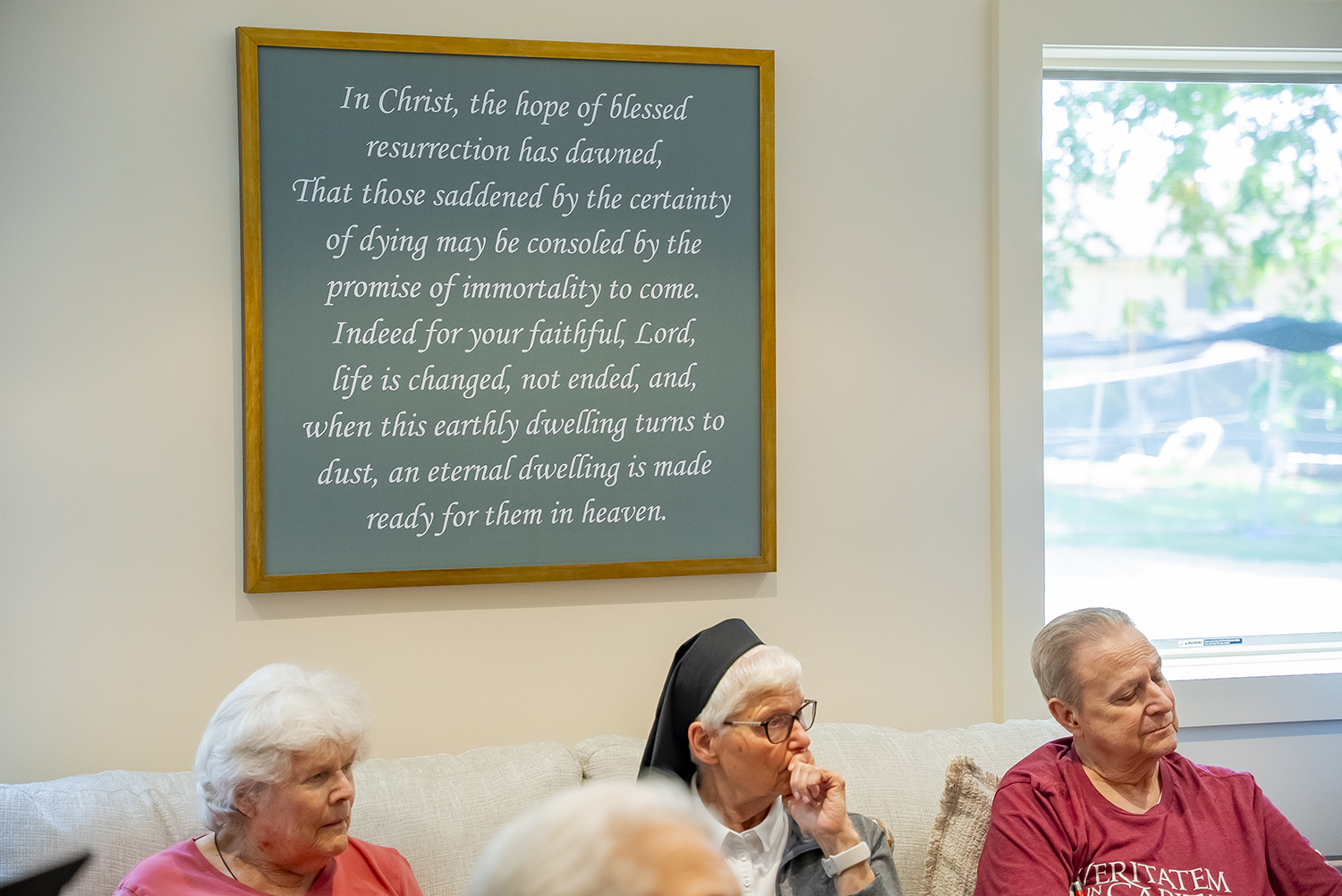
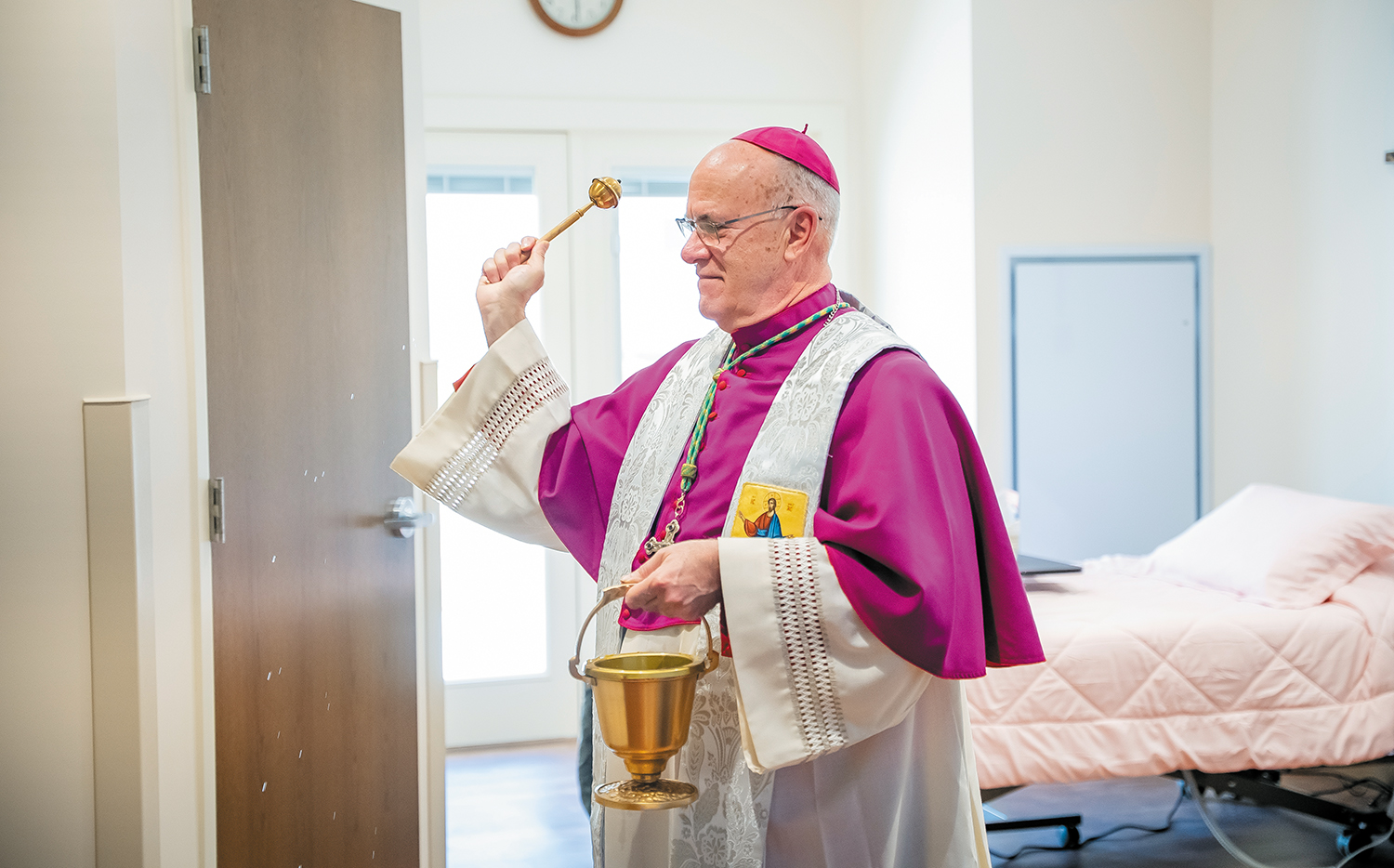

In the Saint Joseph Hospice Suites, staff provide medical, spiritual and emotional care to residents as well as support to their loved ones. Facility leaders said Saint Anne designed the suites to have a homelike feel. They said a key priority is to surround the residents and their loved ones with prayer, comfort and dignity.
Bishop Kevin C. Rhoades of the diocese of Fort Wayne — South Bend said in a statement, "We pray this beautiful new space will be a blessing to patients, families and all those who minister to them in their final days." That diocese sponsors Saint Anne.
Gap in services
Elaine Wilson is chief operating officer and Emily Thiel is community engagement specialist for Saint Anne Communities, which offers 162 nursing home beds and rehabilitation suites, 88 apartments, 14 memory care apartments and adult day services in Fort Wayne. They also offer an independent and assisted living community in Huntington, Indiana.
Wilson said a wing of the Fort Wayne facility had become outdated. When determining how best to use the space, Saint Anne leaders assessed local needs and decided to respond to the often-expressed desire for faith-based hospice care.
Wilson said the services Saint Anne provides are the result of listening to the community. She said Saint Anne asked people what they wanted in their final moments and designed a unit with their desires in mind.
Thiel added that local Catholics had voiced concern about the growing acceptance in society of physician-assisted suicide. Saint Anne wanted to offer a loving alternative for people at the end of life, she said. While Indiana lawmakers have considered legislation to legalize physician-assisted suicide, such legislation has not passed there as it has in 13 other states and the District of Columbia.
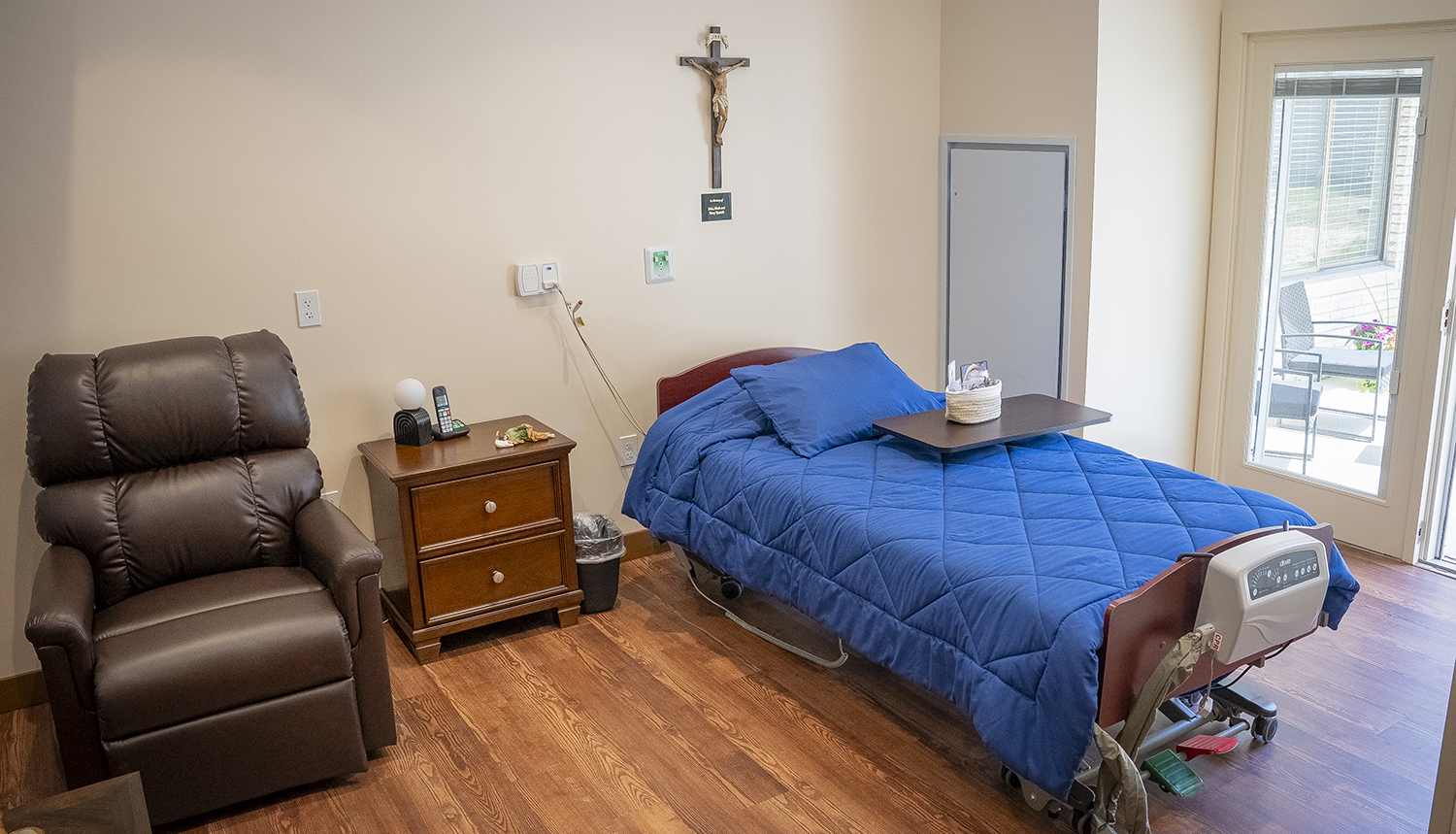
According to a website on the new accommodations, each of the Saint Joseph Hospice Suites that opened in early June provides a serene, private space with a kitchenette, shower, bathroom, couches and chairs and a patio. The wing has a lobby and nurses' station as well as a small chapel. Patients and families also can access a larger chapel that serves the broader campus. The suites also offer respite care to assist caregivers of people with life-limiting illnesses.
The wing cost $1.2 million to build. The local diocese contributed $10,000, and the Mary Cross Tippmann Foundation provided funding as well.
Thiel said Saint Anne was intentional about design choices, even down to the artwork.
Each suite is dedicated to different religious figures. For instance, one is dedicated to the Holy Family, another to Our Lady of Guadalupe. Staff have put books and other resources on the religious figures in the rooms.
Spiritual care
According to Wilson, Saint Anne hopes the suites help patients achieve what Catholic social teaching terms a "good death."
Bishop Rhoades explained on the hospice suites' website that "having a Catholic Hospice Home ensures that the dying will be served in a manner following the church's ethical teachings in an atmosphere of love and prayer."
That website further explains that staff will help ensure people who are dying can live as fully and comfortably as possible "while preparing their souls to meet our Lord."
Saint Anne has a full-time chaplain who lives on campus who can provide spiritual guidance and comfort to residents of the suites as well as their loved ones. Retired priests also live at Saint Anne and can assist the chaplain.
Specialized training
All Saint Anne staff, including physicians, nurses, clergy, social workers and counselors, as well as volunteers will receive training to provide specialized hospice care in the new wing.
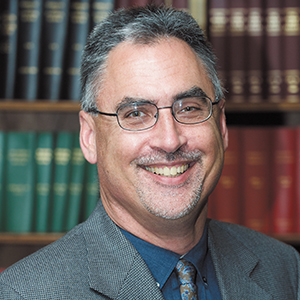
As part of this training, ethicist Joe Zalot, director of education for the National Catholic Bioethics Center, will visit Saint Anne next month to provide education and resources to staff and volunteers. He'll speak of how to provide holistic care to people at the end of life, including the importance of ensuring they have access to the sacraments afforded to the dying.
He'll also discuss important ethical concepts, including the distinction between ordinary, proportionate and extraordinary, disproportionate means of care; the provision of medically assisted nutrition and hydration; advance directives; and physicians' orders for life-sustaining treatment, or POLST. He'll also talk about ethical challenges that can arise with patients and their loved ones in the context of the end of life.
Providing accompaniment
Zalot said that those who support physician-assisted suicide argue it is needed so that people do not experience unremitting pain. He said offerings like the suites at Saint Anne help address the multilayered pains people worry they will face when dying.