
How can virtue alone help Catholic health care organizations? What role does establishing a good discernment process play? What are the practical benefits of integrating virtue into an organizational culture?

Kristy Ehlert, who most recently served as south region director of theology and ethics for CommonSpirit Health and will serve as the director of mission and ethics at Hospital Sisters Health System starting in February, explored these issues in the Jan. 7 webinar "The Hidden Benefits of Virtue in Catholic Health Care Organizations."
The webinar was part of CHA's series Emerging Topics in Catholic Health Care Ethics.
Ehlert earned a doctorate in bioethics from Loyola University Chicago, one of the co-sponsors of the webinar series. She is also a Presbyterian minister.
Virtuous organizations, Ehlert said, quoting researcher L. Froman, "strive to do well by doing good and to do good by doing well." The culture they create can perpetuate flourishing, relationships, meaningful work, and ongoing development and learning that results in virtuous behavior, she said.
Ehlert discussed what virtuous ethics look like in the workplace based on her experience as a chaplain and pastor, and told stories based on a compilation of experiences shared with her in recent years.
One story was about an organization that closed a unit and cut positions. Leaders of the organization called employees in to say they were sorry and explain what was happening. "Today is your last day," Ehlert said the employees were told, "and here's HR to help you, and have a donut, and let us know if there's anything we can help you with."
People got their severance packages and left, Ehlert said, but there was a sense of disconnect with the organization among the staff who were let go and those who remained with the organization. Long-term effects included decreased trust in the organization and increased turnover.
Conversely, when another organization had layoffs, leaders there talked to staff about the organization's values and its purpose. They communicated that in order for the organization to thrive, changes in staffing were necessary. While they acknowledged the grief and disruption for those being laid off and those remaining, their words and actions communicated that their intent was to support each person and for those who were laid off to thrive. Leadership gave the employees access to computers to see other job opportunities at the organization and told them about a severance package. Workers who weren't laid off were told about what was happening and assured that those who lost their jobs would be taken care of. Perhaps most importantly, this organization regularly communicated decisions in terms of values. In this case, trust in the organization remained high, and turnover low.
"Although it was still a sense of grief, there was a sense of understanding," Ehlert said. "So no one was happy with the situation, but there wasn't that same sense of shock and disconcertedness about how this happened and how could an organization do this in such a way."
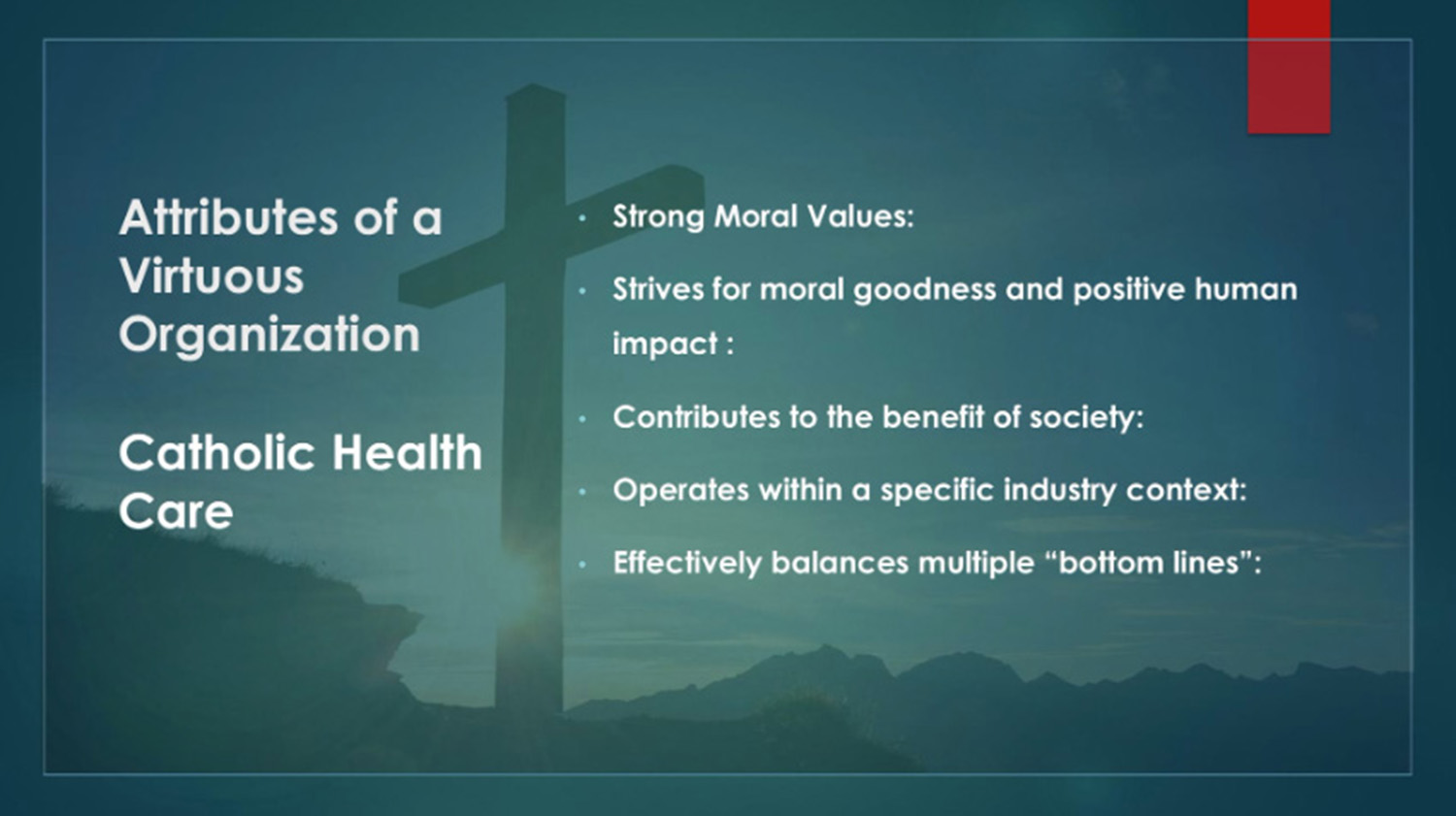
Virtuous organizations do five key things, she said: they are guided by strong moral values, strive for moral goodness and positive human impact, contribute to the benefit of society, operate within a specific industry context such as health care, and effectively balance multiple bottom lines that they need to support and discern their work.
"I would suggest, by virtue of our shared identity, Catholic health care is grounded in the attributes of a virtuous organization," she said.
The role of discernment
Discernment is one way Catholic health care organizations integrate virtue into organizational practice, Ehlert said.
"Discernment in a virtuous process," she said. "It's focused on making decisions grounded in shared values and good data, and decisions that come from discernment can be clearly articulated and presented as an expression of organizational values."
Ehlert referenced two forms of decision-making. One involves the quick decisions made each day that are informed by experience and presumed knowledge and even emotion. The other is discernment, a slowed down, very deliberate process, with people consciously articulating their values as they make decisions.
"If we engage discernment consistently, we model virtuous decision-making and all of the members of our organizations see our individual and corporate values in action," Ehlert said.
A snowball effect
She said that when people witness virtuous behavior, the likelihood that they themselves will engage in virtuous behavior increases, creating a snowball effect. Such behavior creates positive emotions that are contagious, she said.
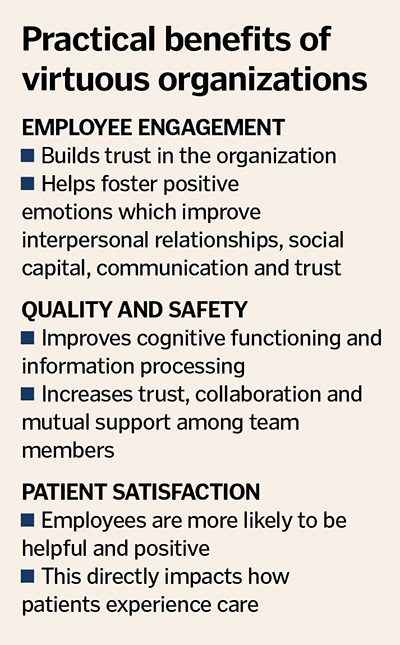
Ehlert cited practical benefits from cultivating a virtuous organization: it builds employee engagement, improves quality and safety, results in greater patient satisfaction, and opens the door for innovation.
Ehlert said virtuous organizations "contribute to moral goodness, the common good, all of the things that we're seeking to achieve." She cautioned that virtue is not a strategy, but rather a genuine expression of organization and values.
"We have this foundation of thousands of years of theology, of faith, of seeking to do the right thing, of doing good because it's the right thing to do," she said. "We have this opportunity ... to lean into the virtue of Catholic health care and discover the hidden benefits of virtue within our walls and within our works."