
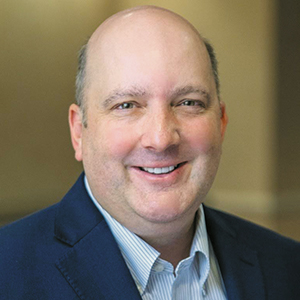
Mike Wascovich can point to many reasons Ascension wants patients who are uninsured or underinsured to have access to prescription medications.
Wascovich, Ascension's vice president and chief pharmacy officer, says one is that studies have shown the return on investment is substantial, with patients who have access to needed medications avoiding health crises and expensive medical care. Another is that drugmakers often have surpluses that, if they didn't go to patients, might be wasted and even disposed of in ways that are harmful to the environment.
However, Wascovich says the main reason the St. Louis-based system wants to see that patients, regardless of circumstances, get their prescribed medications is because it's the right thing for a Catholic ministry to do.
"It's taking and stretching finite resources to the most vulnerable," he says, "and I think that is part of Catholic social teaching and our Catholic identity."
Wascovich has made it his goal to see that Ascension's charity efforts cover or reduce the cost of prescriptions for as many low-income patients as possible.
Dispensary of Hope
One of the main avenues Ascension uses to ensure patients in need get their prescriptions is Dispensary of Hope, a charitable subsidiary of the system. Dispensary of Hope distributes medications through a network of pharmacies run by Ascension and other nonprofit health care providers. Those pharmacies in turn pass the medications along to people who have prescriptions but are uninsured and whose incomes are no more than three times federal poverty guidelines.
In the fiscal year that ended last June, Ascension distributed 71,000 prescriptions through its partnership with Dispensary of Hope.
That number is certain to grow in the current fiscal year because Ascension added 11 of its pharmacies to the Dispensary of Hope network last August. With the expansion, 34 Ascension sites are now part of Dispensary of Hope's web of 305 pharmacies. An Ascension home-delivery pharmacy in Austin, Texas, is one of those newly added. That pharmacy is licensed to ship medication to 48 states, and Wascovich hopes that its reach can eventually spread to the other two.
Wascovich points out that the medications supplied by Dispensary of Hope are kept in a "segregated inventory" at dispensing pharmacies. The donated medications are solely for patients who qualify based on their insurance status and finances. The pharmacies get no financial gains from them.
Conversely, the patients who qualify for medication through Dispensary of Hope get the same customer service as any other Ascension pharmacy client. If the drugs are shipped, there is no charge. If patients pick up their prescriptions in person, they have access to pharmacists who can explain proper use and potential side effects.
Scott Cornwell, CEO of Dispensary of Hope, says since founding the charity, Ascension has leaned into its mission of medication access "in a very assertive manner." In addition to making up about one in 10 pharmacies in the charity's network, Ascension, through its charitable foundation, helps attract the philanthropic support that covers about 40% of Dispensary of Hope's budget.
Cornwell foresees their joint efforts expanding access to free medications to ever more patients across Ascension's footprint, which is in 15 states and the District of Columbia. "We expect that we will see double-digit growth over the course of the next two or three years," he says.
Other charitable programs
Dispensary of Hope relies on donations from drugmakers for its supplies. Wascovich says the charity's formulary, or list of available drugs, covers only about 30% of those that Ascension's uninsured and underinsured patients need.
To close some of that gap, Ascension operates other charitable pharmacy programs. One of them is its prescription assistance card. Patients with limited incomes who sign up for the card can get free or discounted prescriptions. Another way the system provides prescription assistance is by enrolling patients directly in giveaway programs that many drugmakers offer for people who can't afford their products. The system also participates in the 340B Drug Pricing Program, a federal initiative that allows safety-net hospitals to purchase certain outpatient drugs at discounted prices.
Aside from its partnership with Dispensary of Hope, Wascovich says Ascension's charitable prescription programs had a community benefit of about $200 million last year.
He predicts that total will keep climbing as Ascension grows its prescription access programs and looks for more new ways to get medications to those in need, such as the 28 million people who lack insurance in the United States. "We're highly, highly invested in it, and we think we should be, and we want to expand it," he says.
Further reading: 'We are literally coast to coast': Dispensary of Hope continues to expand reach