
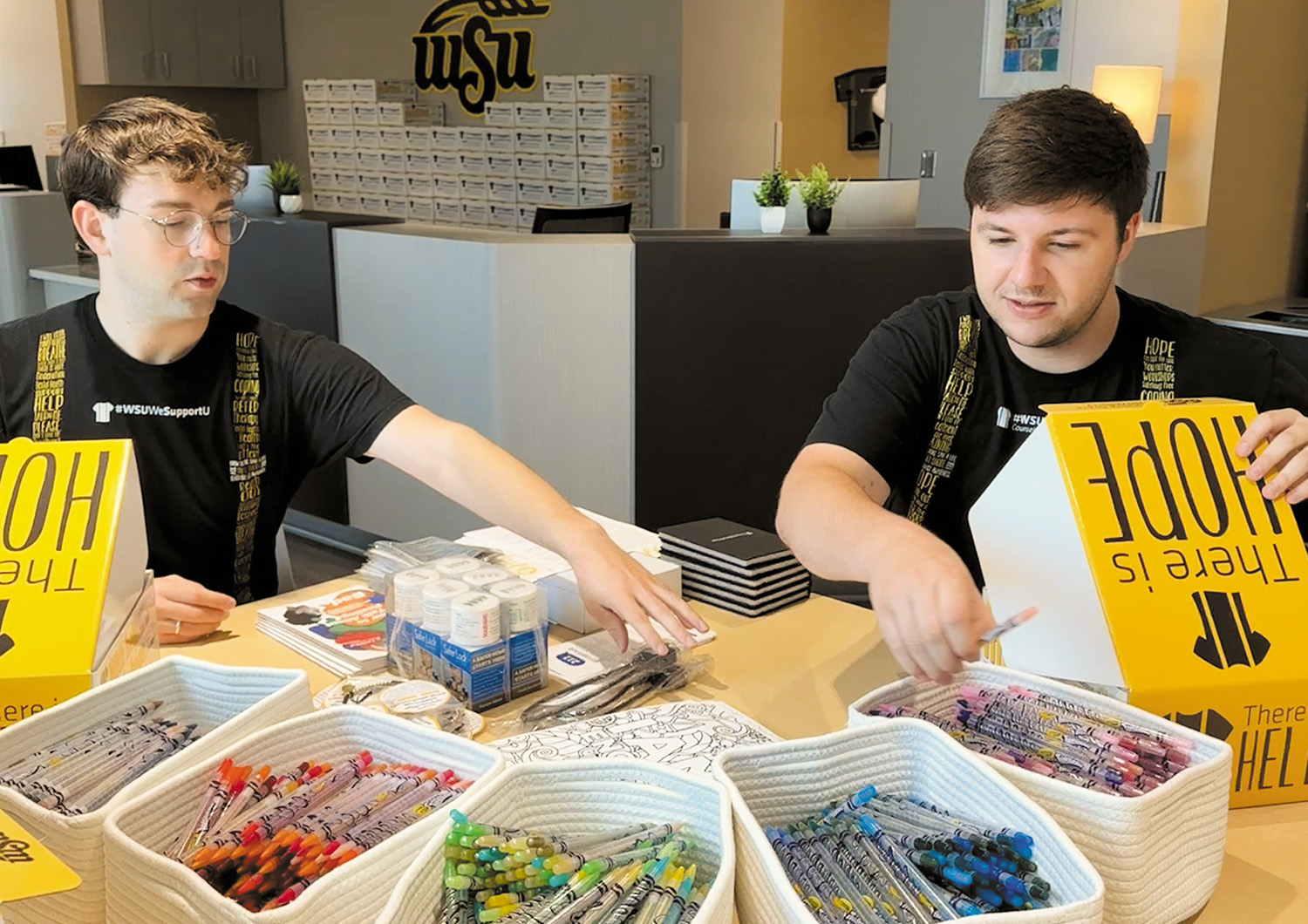
That's the thinking behind Hope Kits and Care Kits given to patients getting trauma or psychiatric care at Ascension Via Christi St. Francis and Ascension Via Christi St. Joseph hospitals in Wichita, Kansas.
The kits, created by Wichita State University and handed out by hospitals and other community partners, are more than a gift. They're an evidence-based intervention, one that provides ready access to emotional regulation and resilience skill-building tools for times of distress.

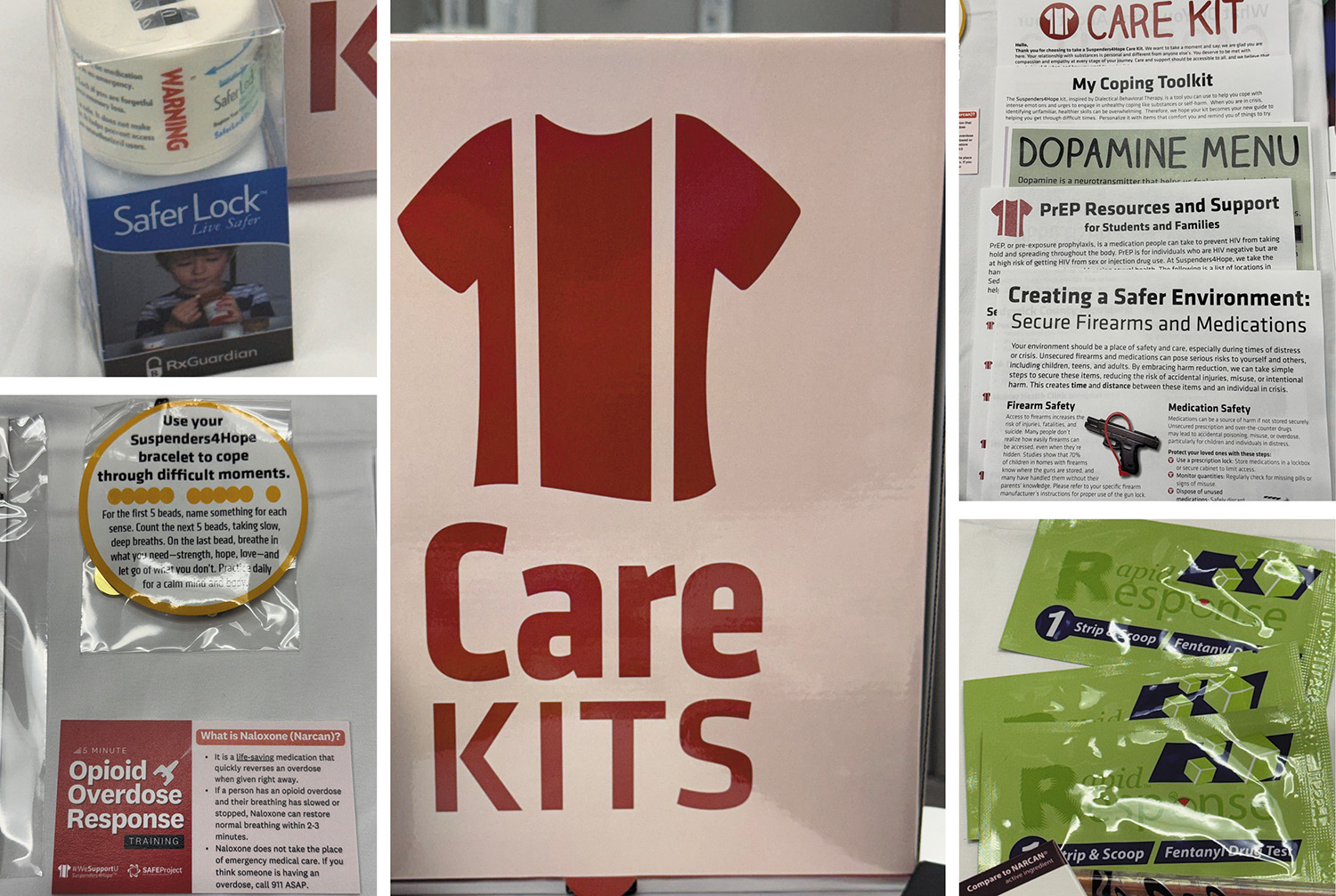
The Hope Kits feature items and resources to support mental health, such as a journal, a magazine with stories of hope, a coloring book and crayons, and a gun lock. They are meant to serve as "emotional first aid kits." The Care Kits feature many of the same items plus resources and items specific to addressing substance use disorders, such as fentanyl test strips and the opioid-reversing drug naloxone.
The kits come in cardboard boxes about the size of a large shoebox. Recipients are encouraged to customize them with items such as photos of loved ones.
"This is something that we can give them, I think, to let them know that there's somebody here that wants to help," said Dr. Joseph Nold, the medical director of the trauma center at Ascension Via Christi St. Francis.
Ascension Via Christi hospitals started giving out the kits last year, and Nold already knows of a family who used the naloxone in a kit to save a family member from overdosing. As of the end of July, the university had sent about 180 Hope and Care kits to Ascension Via Christi.
Nold said hospital clinicians often give the kits to patients with underlying issues, such as someone who was injured in a car crash but who had been drinking, or someone who was hurt in a fall but is addicted to painkillers. The kits can serve as a stopgap until patients follow up with specialized care, and they are something people can take with them if they refuse that care.
"This is for those people who fall through the cracks a lot, and they need some help, but they don't need to be in the hospital," Nold said.
Developing a gift
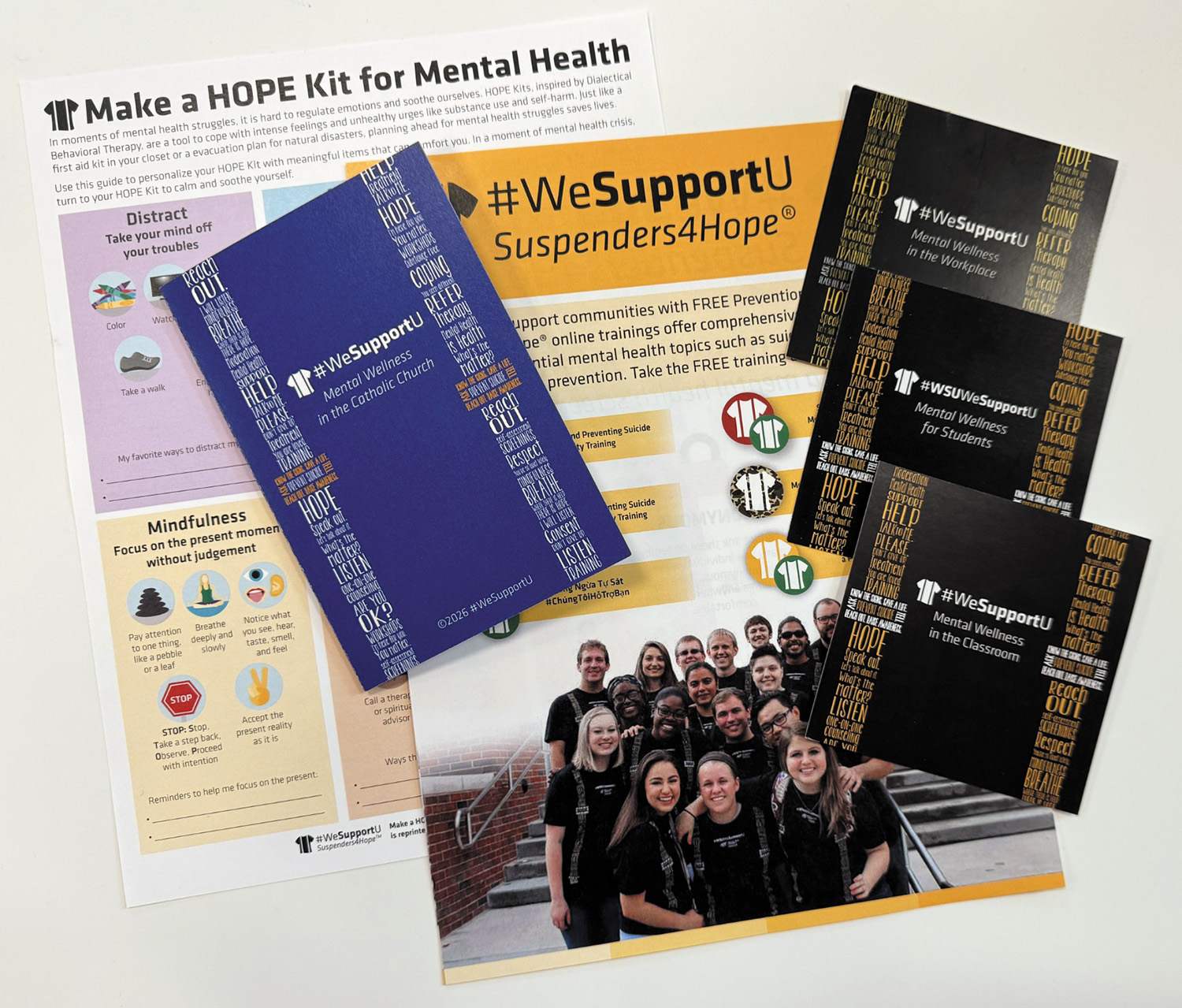
The kits are part of Wichita State's Suspenders4Hope program, which is the school's "comprehensive, strategic approach to promoting mental health wellness, preventing suicide, substance misuse, and sexual violence," according to its website. The program provides training, crisis resources and online mental health screenings and promotes awareness. It's known for its signature T-shirt with supportive words printed in a design that looks like a pair of suspenders.
Marci Young, a clinical psychologist and the director of Health, Outreach, Prevention, and Education (HOPE) Services at Wichita State, created the Suspenders4Hope program with Jessica Provines, also a clinical psychologist and the school's assistant vice president for wellness.
Provines got the idea for the kits after her daughter was diagnosed with Type 1 diabetes. She remembers leaving the hospital with her arms full of supportive materials to cope with the disease: a teddy bear for her daughter to use to practice injections, books, a T-shirt that said "Type ONEderful."
Provines said that made her wonder: "Why do people go to the hospital for a suicidal emergency or a substance use overdose and not get the same kind of love and care?"
Young said the idea isn't overly complicated, and the kits appear simple, but are anything but.
"There is a tremendous amount of research and detail into each of them," she said. "There isn't a single thing in there that isn't in there really, really deliberately."
The kits have various funders, including grants from the Kansas Department of Aging and Disability Services and Kansas Fights Addiction. A Growing Hope kit for expectant and new mothers that was developed and distributed in collaboration with the University of Kansas and a Spanish version of the Hope Kits are also being distributed through community partners. Each Hope Kit costs about $35 to produce and each Care Kit about $60. That higher Care Kit cost is mostly because of the naloxone and fentanyl test strips and the portable pouch that comes with them.
Other resources
The kits are meant to be visible. If someone has a kit sitting on a table at home, that promotes conversation or keeps the topic of mental health or substance use top of mind, Provines and Young said. Ascension Via Christi associates who take online mental wellness and suicide prevention training are allowed to wear Suspenders4Hope T-shirts with their scrubs or uniforms, another visible symbol of allyship.
"We're bringing this issue that has been historically very stigmatized and misunderstood - and a lot of faith communities and the Catholic church are not immune from that - out of the darkness and into the light," Provines said.
Wichita State's Suspenders4Hope team also has worked with the Diocese of Wichita and Ascension Via Christi to produce Catholic-specific resources, such as:
- A suicide prevention training adapted for a Catholic audience. School administrators take the training as do freshmen in one of the diocese's two high schools.
- Cards to distribute to the community with the prayer of St. Francis as well as a QR code that links to the free online training.
- A novena for suicide prevention to Our Lady of Sorrows, whose feast day is on Sept. 15 and in the same month as World Suicide Prevention Week.
- A set of cards designed to incorporate mental wellness into Catholic school classrooms, Bible study and support groups, and individual daily reflections and prayer.
The Suspenders4Hope program also hosts an annual prayer service for those who have experienced suicide loss or who have suicidal thoughts.
"We just wanted to meet humans wherever they are, because wherever they are, they are loved," Young said.
Nold said his colleagues at Ascension Via Christi St. Francis appreciate having the kits as an extra resource to help patients. "ER doctors especially - even though they're ER physicians, they're also the psychiatrists and the medicine doctors and they're everybody wrapped into one," he said, "and so just to have something that they can give people - they've loved it."
Nold said the kits evoke Jesus' teaching of "what you do for the least of others you do for me." Some people who come in for trauma or emergency care are going through a tough time outside of their immediate medical need, he said, and a Hope Kit or Care Kit can help.
"That's very little work on our part to make a huge difference in their life," he said.