
"The pain that moves us to compassion is not the pain of a stranger; it is the pain of a member of our own body ... ."1
— Pope Leo XIV, Message for the 34th World Day of the Sick, January 2026
In the United States, conversations about Catholic healthcare understandably focus on access, financing, workforce shortages and a rapidly evolving policy environment. These are urgent concerns. Yet to fully understand Catholic healthcare today, we must widen our lens.
The global reality is not peripheral to the story of Catholic healthcare in the U.S. It is part of what makes us Catholic, and it always has been. The roots of many U.S. Catholic health ministries can be traced to missionary movements and religious congregations that crossed borders to serve communities in need. Today, many Catholic health systems operate internationally, engage in global partnerships, and depend on an increasingly interconnected workforce, supply chain and healthcare ecosystem.2
This perspective is reinforced by a recent evaluation, "Global Health Landscape Analysis," commissioned by CHA's Global Health Advisory Council. Drawing on interviews with global health leaders, practitioner surveys and published research, the study found that global health is not experiencing a temporary disruption but a profound structural transformation. Long-standing assumptions about funding, leadership, governance and partnership are being reshaped as countries pursue greater ownership of their health systems and organizations adapt to a rapidly changing environment.3
Pope Leo XIV's reflection on compassion, shared in his 34th World Day of the Sick message, offers more than spiritual encouragement. It provides a framework for understanding Catholic healthcare itself. If we are truly one body, then the global and the local cannot be separated. Through our shared humanity and common calling, the health of communities in Nairobi, Accra, Mumbai, Lima and Dar es Salaam is connected to the mission of Catholic healthcare in St. Louis, Baltimore, San Francisco and every community we serve.
STRUCTURAL TRANSFORMATION, NOT TEMPORARY DISRUPTION
One of the most significant findings of the landscape analysis is that global health has entered a period of fundamental change.4
Recent contractions in international health financing exposed vulnerabilities in systems that often depended heavily on external funding and priorities set far from the communities they serve. As explained by Fr. Paul Steve Chobo, director of social services and head of the health department for the Tanzania Episcopal Conference, "We have suffered greatly. Programs that were once fully funded by USAID are completely gone; the cost will be very great."
While the immediate consequences have included staffing reductions, medication shortages, weakened surveillance systems and disruptions in care delivery, many leaders interviewed during the study also described this moment as an opportunity to build stronger, more sustainable and locally led health systems.5
The most important question is no longer how to restore previous funding models. Instead, it is how countries, health providers, faith-based organizations and international partners can create systems that are more resilient, accountable and sustainable over the long term.
For Catholic healthcare, this shift aligns closely with our tradition. Catholic social teaching has long emphasized subsidiarity, the principle that decisions should be made as close as possible to the communities affected by them. What many now call localization or health sovereignty reflects values that have always been central to the Church's understanding of human dignity and participation.6
WHY GLOBAL HEALTH MATTERS AT HOME
Some may ask why these developments should concern Catholic healthcare leaders in the United States. The answer is simple: Global health challenges are no longer distant realities. The COVID-19 pandemic demonstrated how quickly local events can become global crises. Health security, workforce shortages, migration, climate-related health impacts, supply chain disruptions and emerging technologies increasingly transcend national boundaries. What happens elsewhere affects communities here.7
The landscape analysis identified workforce capacity as one of the most significant vulnerabilities facing healthcare systems worldwide. Many countries, including the U.S., continue to experience shortages of trained clinicians, challenges in retaining health professionals and limitations in educational infrastructure. At the same time, healthcare systems in higher-income nations increasingly rely on internationally educated health professionals to fill workforce gaps. These realities are connected and call for solutions rooted in solidarity and mutual benefit rather than extraction.8
Likewise, the study identified pandemic preparedness, digital health, artificial intelligence, climate change and noncommunicable diseases among the forces that will shape global health for decades to come.9 Catholic healthcare has an important opportunity to ensure that innovation remains centered on human dignity and that vulnerable populations are not left behind.
TRUST: CATHOLIC HEALTH'S DISTINCTIVE ASSET
At a time when many institutions struggle with declining public trust, the study found that faith-based healthcare providers remain among the most trusted actors in many communities worldwide. This trust is not the result of branding or public relations. It has been earned through decades, and often centuries, of consistent presence, service and commitment to human dignity.
Participants in the study repeatedly emphasized that faith-based organizations are trusted because they remain present in communities where others often do not go, particularly in rural and underserved areas. They are valued not only for the care they provide but also for how they provide it, with respect for the whole person and a commitment to the common good.
For Catholic healthcare, this trust is more than an asset. It is a responsibility. Trust can be strengthened through quality, transparency, humility and accountability, but it can also be diminished if these commitments are neglected. Maintaining that trust requires an ongoing fidelity to mission and to the people we serve. As Dr. Shailey Prasad, executive director and Carlson Chair of the Center for Global Health and Social Responsibility at the University of Minnesota, explained, "Trust is like a clay pot that takes months to form, but can be shattered in a moment by a stick."
ACCOMPANIMENT AS THE PATH FORWARD
Perhaps the most important lesson from the landscape analysis is that partnership itself must evolve.
The future of global health will not be built through transactional relationships or externally designed solutions. As Christian Acemah, executive secretary of the Uganda National Academy of Sciences, noted, "[If] it's only good while things are going well, that's not a partnership … It's a transactional affair. Period." The leaders consulted throughout the study consistently pointed toward a different model: one based on listening, shared decision-making, local leadership, mutual accountability and long-term commitment.
Accompaniment means walking with communities rather than directing them. It means supporting local leadership rather than replacing it. It means recognizing that sustainable change emerges from within communities themselves, not from outside them.10 Far from being a new concept, accompaniment reflects the foundations of Catholic ministry and the values that shaped Catholic healthcare from its earliest days.
The opportunities identified in the landscape analysis, including workforce development, leadership formation, technology partnerships, pandemic preparedness, collaborative learning and stronger advocacy, share a common theme: strengthening local capacity so that health systems can thrive long after external support ends.
A CALL TO LEADERSHIP
The question before Catholic healthcare is not whether we are connected to global health realities. As already stated, we are connected through our workforce, supply chains, technology, partnerships and the Church's universal mission.
The real question is how we will respond.
We can cling to models rooted in dependency, or we can help build models rooted in dignity, trust, sustainability and shared responsibility. We can choose to measure success only in margins, or we can measure it in stronger communities, healthier populations and more resilient health systems.
Catholic healthcare has always been strongest when mission and strategy are aligned. Today, as global health enters a new era marked by greater local ownership and shared accountability, we are called to lead in ways that reflect both our deepest values and our greatest strengths.
If, as Pope Leo suggested in his World Day of the Sick message, the pain of another is truly the pain of a member of our own body, then solidarity is not optional. It is both a theological imperative and a practical necessity. By accompanying our brothers and sisters around the world as they build stronger and more sustainable health systems, Catholic healthcare does more than respond to a changing landscape. We fulfill the purpose of our ministry: advancing human dignity, promoting the common good and bearing witness to hope in a world that needs it more than ever.11
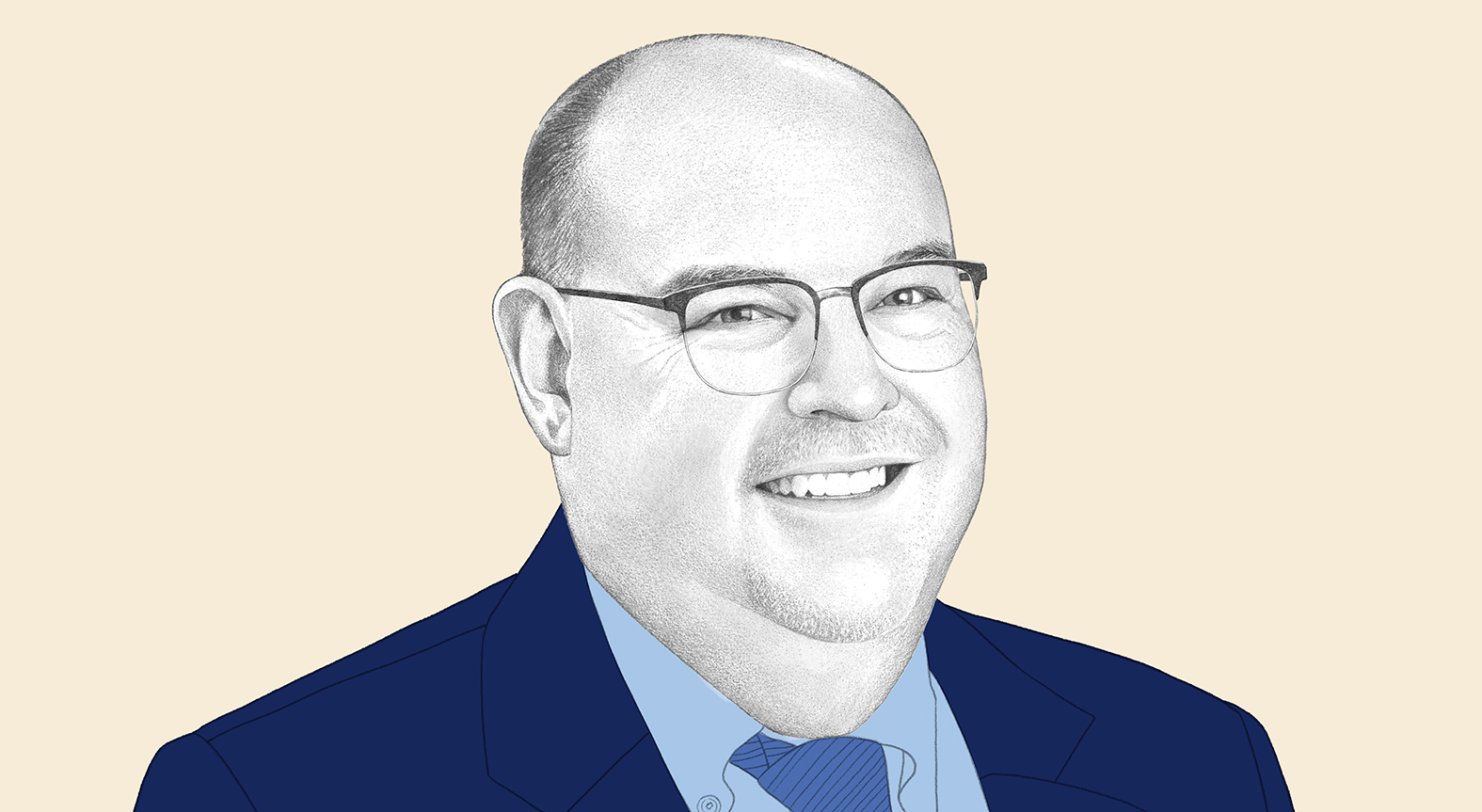
BRUCE COMPTON is senior director, global health, for the Catholic Health Association, St. Louis.
NOTES
- Pope Leo XIV, "Message for the 34th World Day of the Sick," The Holy See, January 20, 2026, https://press.vatican.va/content/salastampa/en/bollettino/pubblico/2026/01/20/260120d.html.
- CHA's Global Health Advisory Council, "Global Health Landscape Analysis (2025-2026)," July 2026.
- "Health Workforce," World Health Organization, https://www.who.int/health-topics/health-workforce.
- "Health Workforce."
- "Health Workforce."
- "Global Strategy on Human Resources for Health: Workforce 2030," World Health Organization, July 7, 2020, https://www.who.int/publications/i/item/9789241511131; Mathieu Boniol et al., "The Global Health Workforce Stock and Distribution in 2020 and 2030: A Threat to Equity and 'Universal' Health Coverage?," BMJ Global Health 7, no. 6 (2022): https://doi.org/10.1136/bmjgh-2022-009316. Both references identify workforce shortages, migration pressures and persistent inequities in workforce distribution.
- CHA's Global Health Advisory Council, "Global Health Landscape Analysis (2025-2026)."
- "Subsidiarity," United States Conference of Catholic Bishops, 2023, https://www.usccb.org/resources/Subsidiarity.pdf.
- "Accelerating Action on the Global Health and Care Workforce by 2030," World Health Organization, May 27, 2025, https://apps.who.int/gb/ebwha/pdf_files/WHA78/A78_R16-en.pdf.
- Yin Zou, "The Pandemic Exposed Fragile Supply Chains: Here Are 3 Ways to Strengthen Them and Build on Global Trade," World Economic Forum, January 2, 2024, https://www.weforum.org/stories/2024/01/supply-chains-global-trade/; Ukamaka Gladys Okafor et al., "Global Impact of COVID-19 Pandemic on Public Health Supply Chains," IntechOpen (2021): https://doi.org/10.5772/intechopen.97454. These analyses document how the pandemic exposed the interconnectedness of health security and global supply chains.
- Pope Leo XIV, "Message for the 34th World Day of the Sick"; Pope Francis, "Fratelli Tutti," The Holy See, sections 63-86, https://www.vatican.va/content/francesco/en/encyclicals/documents/papa-francesco_20201003_enciclica-fratelli-tutti.html. Both messages emphasize accompaniment, solidarity, encounter, and a model of care rooted in proximity and relationship rather than transactional engagement.