
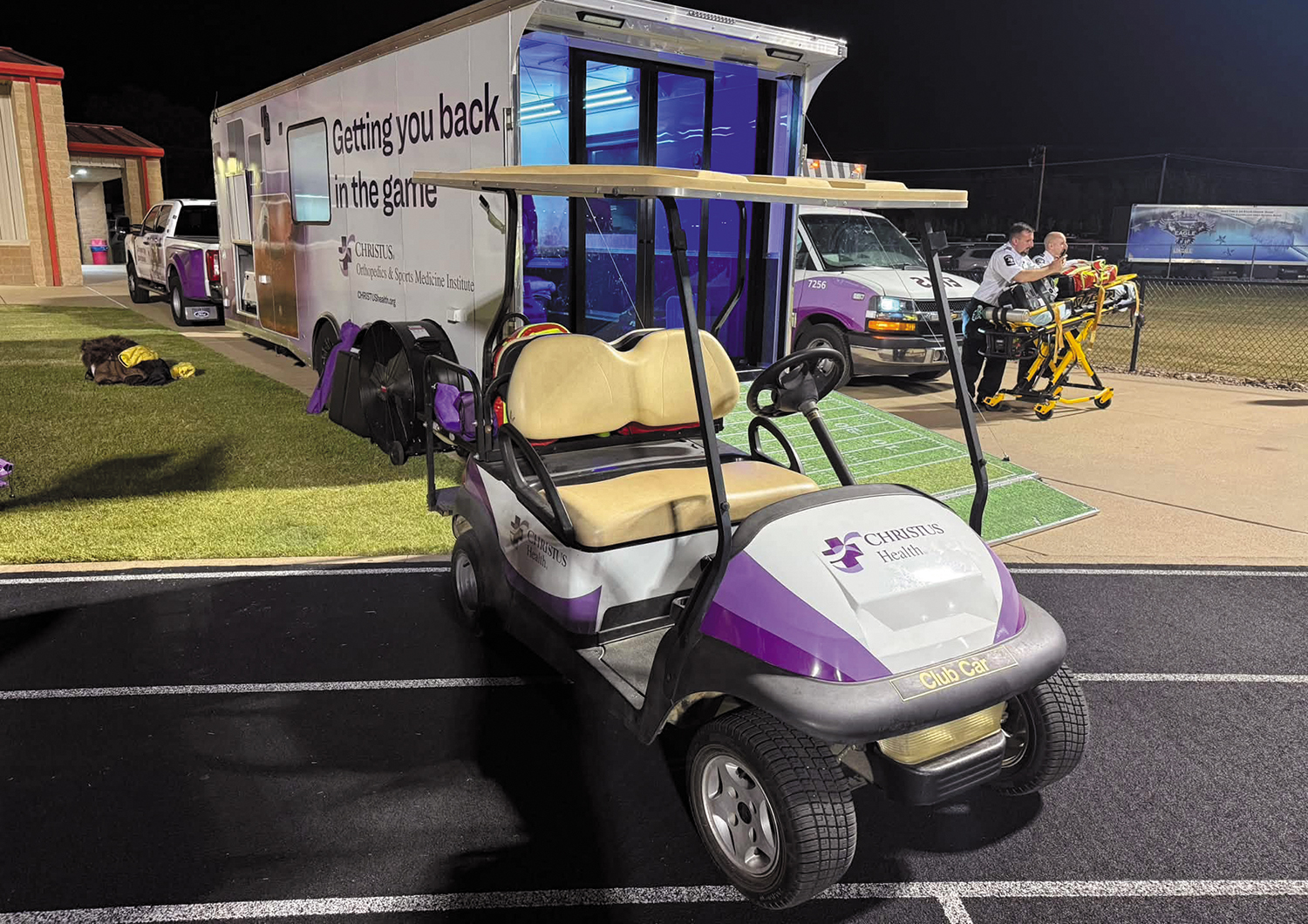
They're athletic trainers, doctors and radiation technicians from CHRISTUS Health Northeast Texas. And chances are, they are parked on the sidelines with their MATR - pronounced MAY-ter, like the tow truck character in the cartoon franchise Cars. MATR stands for mobile athletic training room.
CHRISTUS recently rolled out its fourth MATR. The unit, and the CHRISTUS team staffing it, stands ready to assist players, marching band members, spectators and anyone else at the game who might need a place to stretch, recover from the heat or get an X-ray after an injury, stitches for a cut or tape for sore muscles.
Community visibility
The trailers and the trucks towing them are wrapped in colorful graphics: "Getting you back in the game," says the side of one unit. Some units include golf carts for easier access at the venue.
In addition to being on the sidelines of many high school football games in the fall, the mobile units go to other sports games and tournaments throughout the year, such as volleyball, baseball and track, as well as community events, such as 5Ks and rodeos.
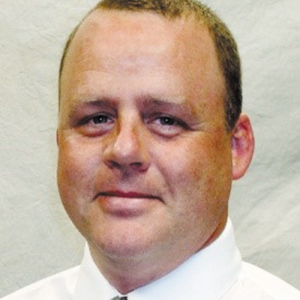
Jim Rapp is the director of sports medicine for CHRISTUS Trinity Mother Frances Health System. The system's athletic trainer outreach program started in 1996. Ray Thompson, the system's chief operating officer at the time, was a big sports fan and realized that in Northeast Texas, schools didn't have trained medical professionals at games, and that system trainers could help, Rapp explained.
"Our mission has always been: If we can put resources out in the schools and create a safer, healthier environment for athletes, you have a ton of health benefits, both community benefits and health benefits," Rapp said.
Studies show, he said, that kids who participate in athletics are more likely to graduate from high school, pursue further education and just be healthier overall.
"The idea is that kids who stay in school tend to have higher levels of self-esteem, higher levels of motivation, self-motivation," Rapp said. "They have healthier lifestyle habits. They're more likely to succeed and surpass their parents' socioeconomic status, which is extremely important for a healthy community."
Rolling out the mobile units
The first unit rolled out in 2017 in Tyler. The second one arrived in 2021 in Sulphur Springs. In 2022, one rolled out in Longview, and the fourth unit, put into service this year, also serves Tyler because CHRISTUS Health's ministry there is so large.
"We have 46 athletic trainers here in Tyler that are employed by just the system here, so we needed two units," Rapp said. "So any given Friday, we can be in two different locations."
One recent week, Rapp himself worked on a unit that went to football games Thursday and Friday nights, a 5K Saturday morning and another football game Saturday.
And yes, there are personal alliances and school rivalries. "The biggest question I get asked is, how do we decide where it goes?" Rapp said.
The CHRISTUS athletic trainers meet with sports medicine physicians once a month to map out where the units need to go. In the Tyler area alone, they service more than 20 school football programs and only have five active sports medicine physicians, he said. "We can't be everywhere," he said.
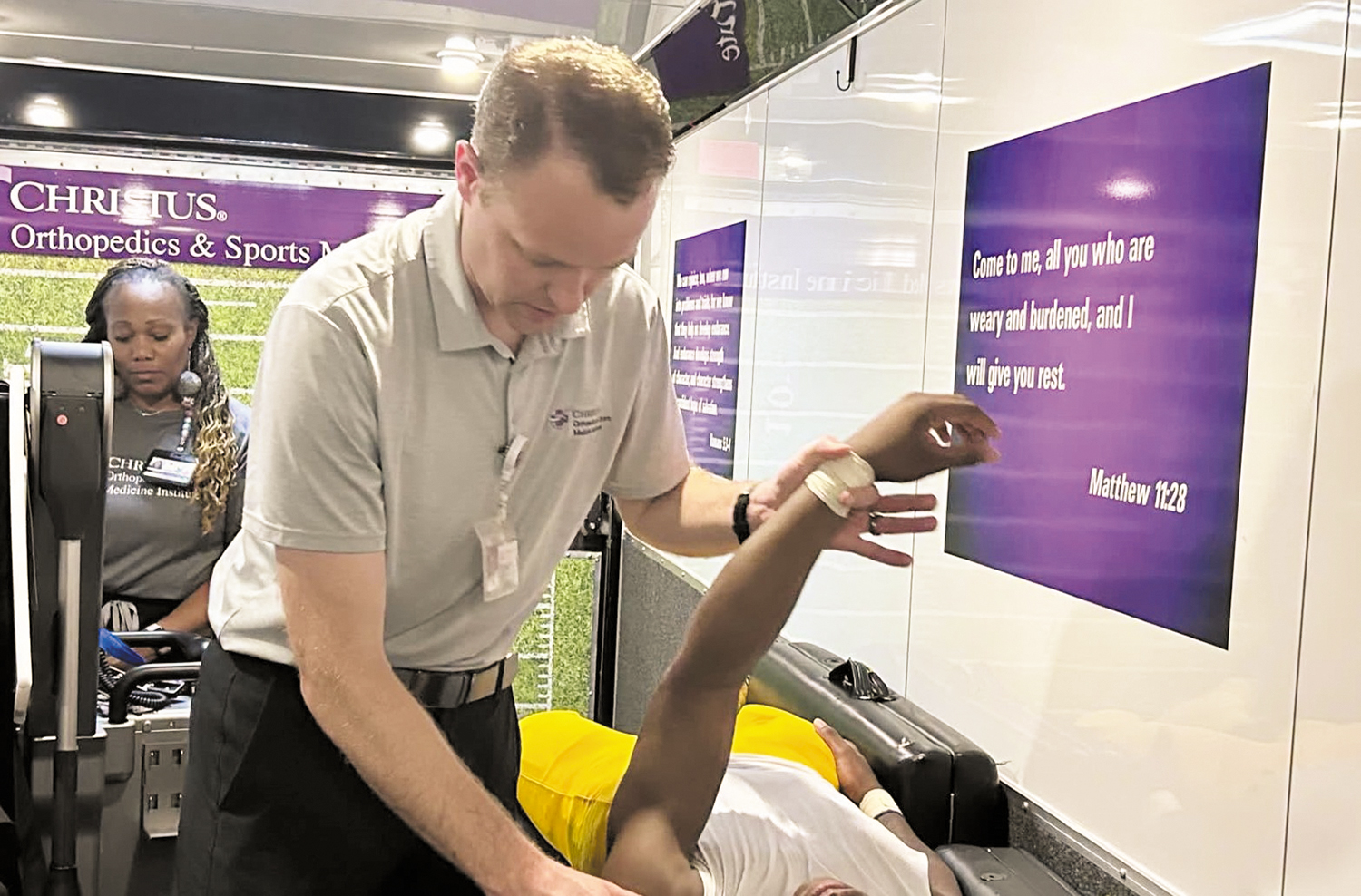
In addition to the action on the field, the units can be kept busy by the Texas heat. The air-conditioned units serve overheated spectators, players and marching band and flag team members.
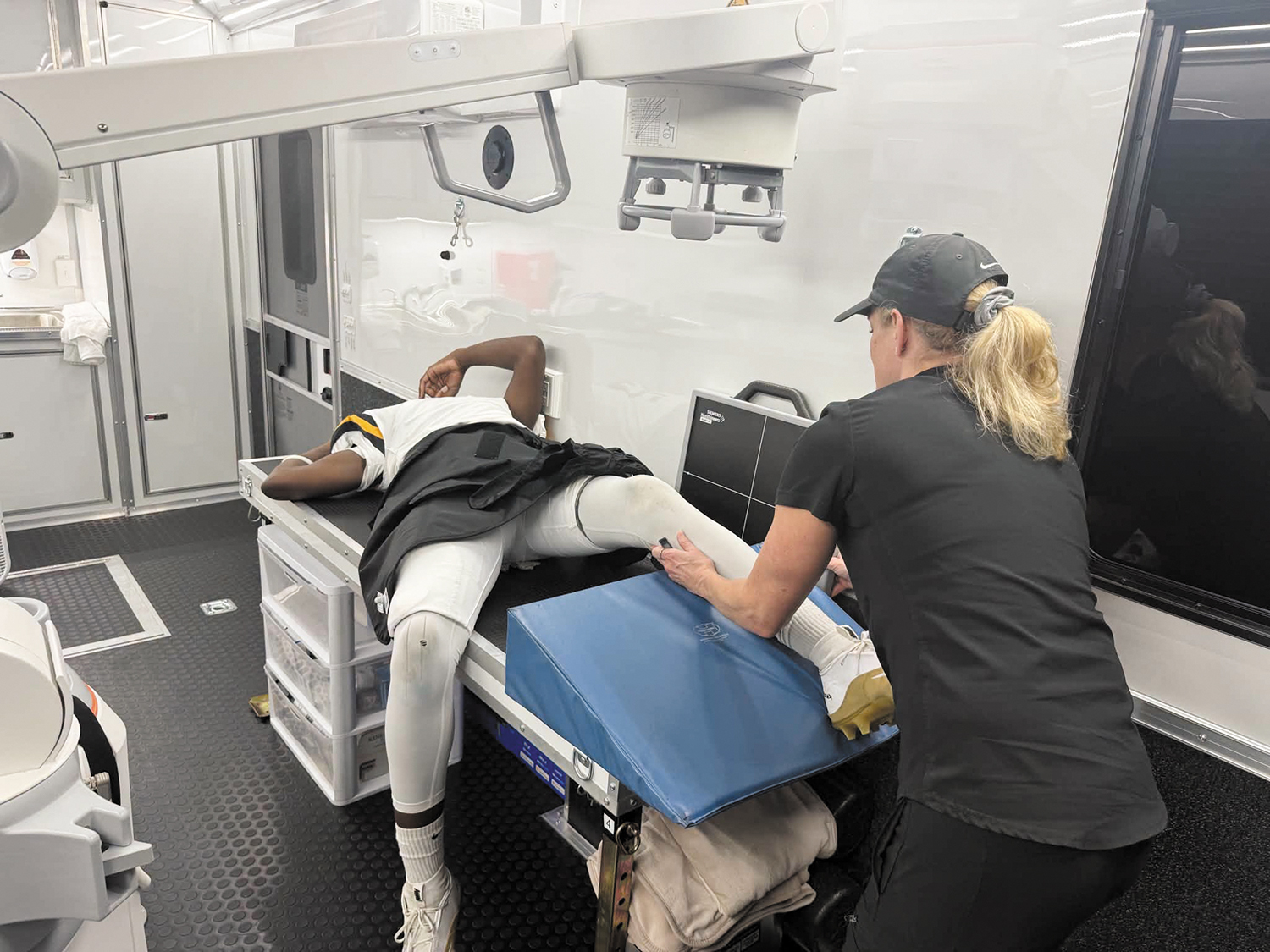
Some nights, the unit's staff might X-ray three or four athletes, Rapp said. The X-ray machines in the units came after he half-joked with a radiology leader about getting one for a new unit in 2017. "We took possession of the trailer in July," he said. "He and I had a meeting with his leadership team about two days later, and two weeks later we had a license, we had an X-ray machine and we had a plan for delivering that care out into the field."
Rapp had made the comment partly because of his diverse career in professional and college athletics, including as an athletic trainer for the Cleveland Browns and The University of Tennessee at Martin. He figured college stadiums had X-ray machines, so why couldn't high school players have access?
Thinking outside the box and having colleagues willing to help has paid dividends, he said.
"It's a huge team effort," he said. "It's not just athletic training. It's not just a trailer."
Establishing a relationship
The care given is at no cost to patients, and units not only provide care but also reassurance. The X-ray capacity gives a patient and their parent relief to know one of two things: The bone isn't broken and the player can get safely back into the game, or the bone is broken and there's a plan to care for it. And the blue lighting available inside can be soothing to players who come in with concussions.
There is no obligation to follow up with a CHRISTUS provider, but often the patients do. Rapp said getting initial care in the mobile unit can speed up the process and improve communication between providers and parents. Players also can follow up during CHRISTUS Saturday injury clinics for athletes, which are also free and held in the fall.
The latest MATR cost about $100,000 to furnish and equip, not counting the X-ray unit and the truck to pull it. Each unit has been paid for by the hospital foundations and is supported by community benefit dollars.
"We're there to keep them calm, reassure them that their kid's OK, provide that medical care that gives them confidence in what we're doing," he said. "You can really establish a very positive patient relationship right from the beginning."
Positive outcomes
One recent evening, a football player collapsed at a local high school practice, Rapp said. Two athletic trainers were there: one from CHRISTUS and the other from the Tyler school district.
The trainers provided CPR and used a portable defibrillator, and they transferred the boy to an ambulance within 10 minutes. "He was responding and had a positive outcome," Rapp said.
CHRISTUS is happy to be on the sidelines, ready to help, Rapp said.
"I think we're doing more than just marketing," he said. "I think we're teeing up positive outcomes."