
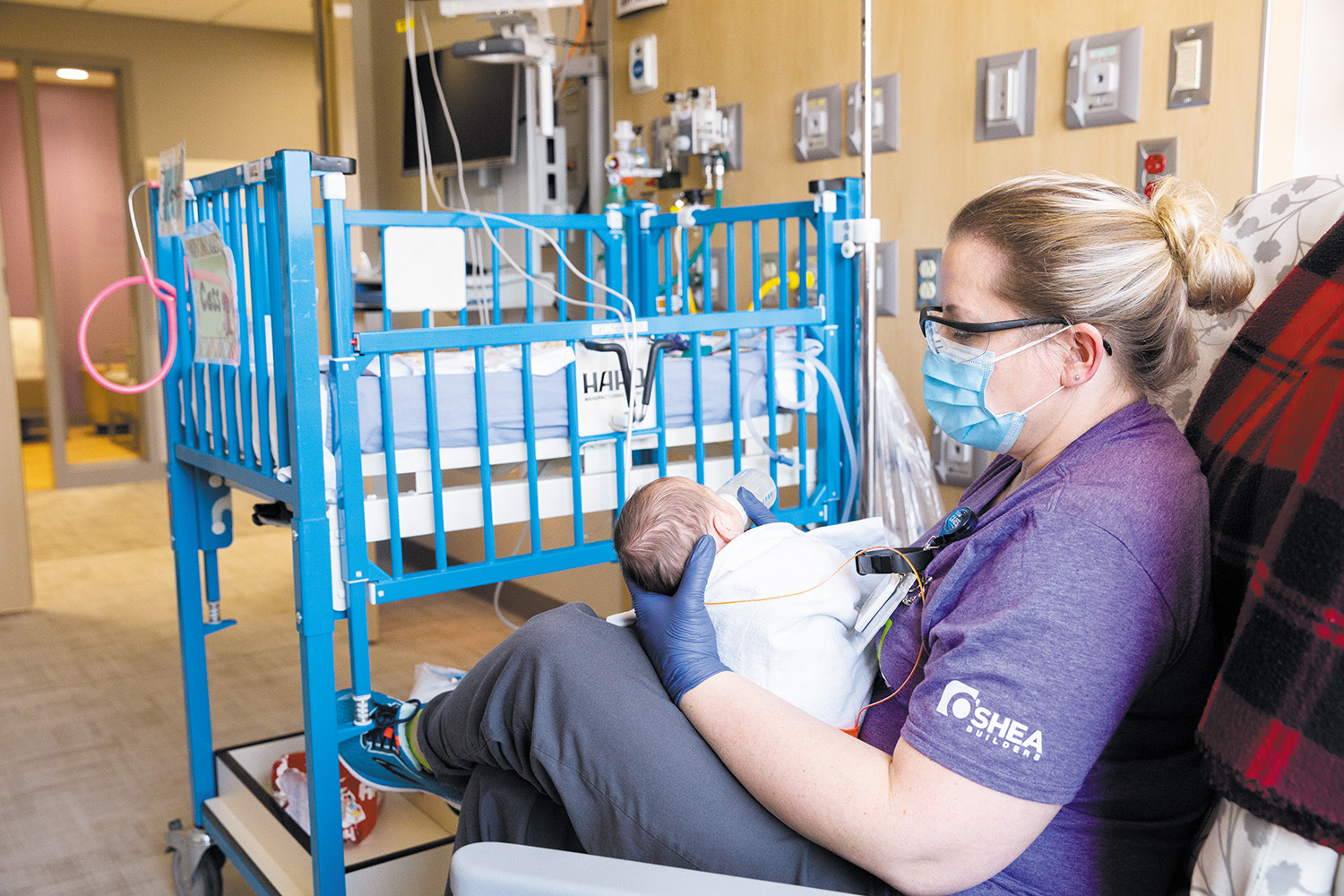
Never before in her 35 years as a nurse has Kathy Donovan seen the number of births at the hospitals within Hospital Sisters Health System go down while the number of admissions to the neonatal intensive care unit go up.
Donovan, who is HSHS senior vice president and chief operations officer, says the same trend is happening nationally, as birth rates decline and the demand for NICU care increases.
For one thing, Donovan says, "We're seeing sicker moms, and that often means sicker babies."
Maternal and neonatal care experts at three other ministry systems say they've seen similar trendlines. Like Donovan, they say a complex set of factors explains the phenomenon.

Dr. Maria Pierce who is affiliated with CHRISTUS Health NICUs, cites a growing population of extremely premature infants and babies with complex medical conditions. She says many babies who would not have survived a decade ago do now, but that survival often comes with extended NICU stays.
Dr. Maria Barber, an Avera Health neonatologist, says care disparities as well as socioeconomic disparities can explain some of the increased need for NICU care.
CommonSpirit Health neonatal care experts Mindy Foster and Dr. Mark Bergeron say the trends hospitals are seeing among moms and babies mirrors what is happening in the general population.
Opposite trendlines
According to the Centers for Disease Control and Prevention, the number of annual births in the United States declined by 10% from 2010 through 2023, the latest numbers available. The National Center for Health Statistics says that the percentage of infants admitted to a NICU rose from 8.7% in 2016 to 9.8% in 2023. The NICU rates rose for all maternal age groups, for all racial groups and for most states.
At CHRISTUS, Pierce says attended deliveries are up, average length of stay has increased, patient days have grown, and average daily census is higher across NICU units.
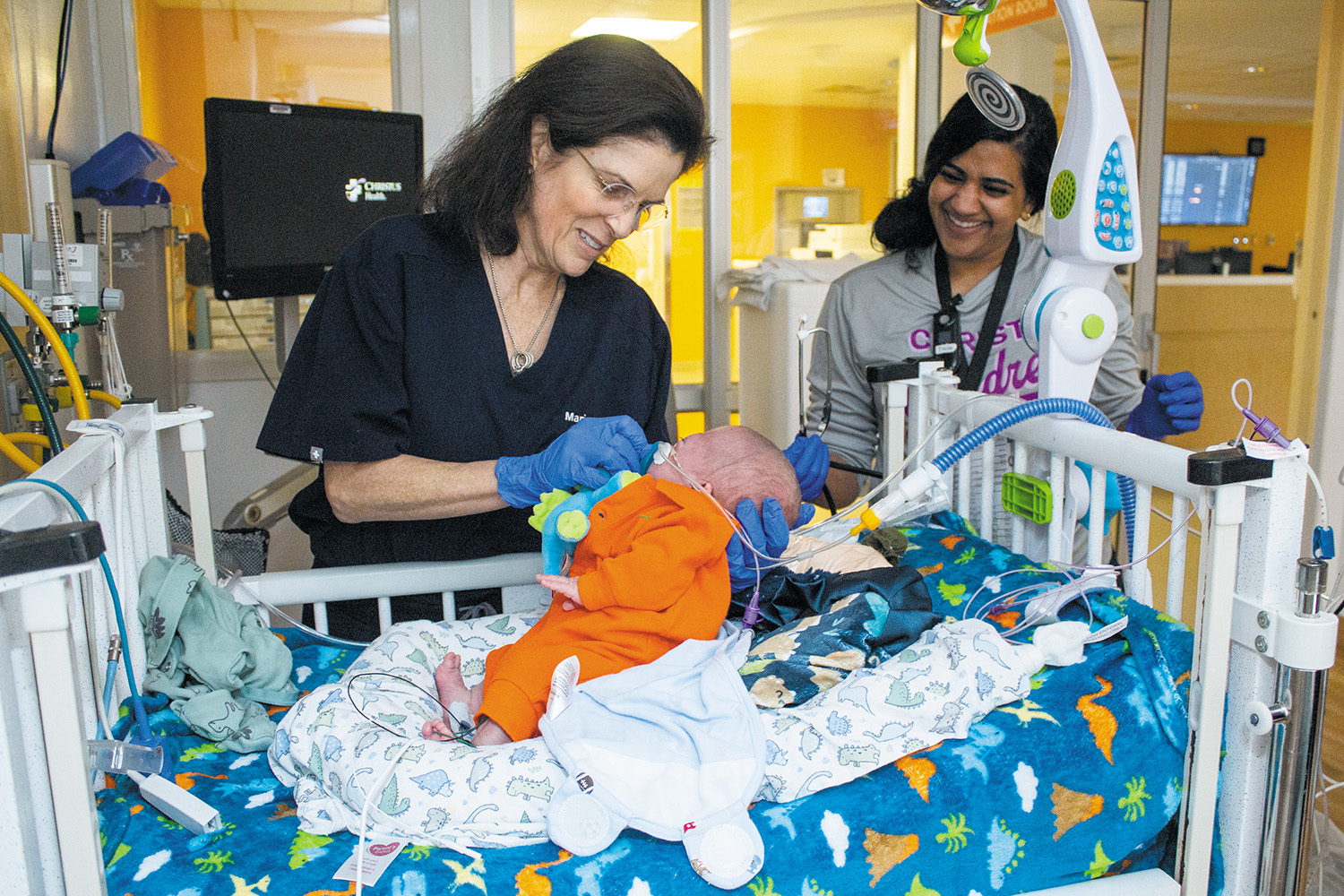
"Taken together, these trends suggest we are caring for smaller, sicker babies who require more intensive and longer-lasting interventions rather than simply caring for more babies overall," she says. Pierce is clinical assistant professor for Baylor College of Medicine and system director of neonatology for CHRISTUS Health in San Antonio and New Braunfels, Texas.
Threshold of viability
Bergeron, CommonSpirit physician system vice president of the women and infants service line, says a key reason for the increased NICU admissions is that the threshold of viability, or the gestational age at which a preterm baby can survive once delivered, has lowered over time. As a result of improvements in medical capabilities, knowledge and technology, high-level NICUs now can provide intensive care for babies as young as 22 weeks' gestation with meaningful outcomes, whereas not long ago, babies younger than 25 weeks had extremely poor outcomes.
Donovan adds that improved medical technology and capabilities have increased clinicians' ability to identify at-risk pregnancies and diagnose babies' conditions in utero earlier. This has meant that more babies have a better chance of survival, but that they likely also will need interventions that place them in the NICU.
Pierce says "in general, advances in neonatal medicine now allow us to support infants who previously would not have survived, but this comes with increased care demands, longer stays and higher specialized clinical expertise." She expects modern medicine to continue to push the threshold of viability to earlier and earlier ages. A December 2025 JAMA Network Open article seems to lend support to this concept. The researchers studied the outcomes of 22 infants born alive at 21 weeks' gestational age. Six of those babies survived to hospital discharge. The study authors said their learnings suggest that "some infants born at 21 weeks' gestational age can survive, some with minimal morbidities."
Poor maternal health
Barber says a reason that more babies are born needing NICU care is that expectant moms aren't as healthy as in the past, and this puts their babies at risk. Just as Americans generally experience high rates of hypertension, diabetes, obesity and other chronic illnesses, so too do moms.
These conditions present a public health problem, Bergeron says. Some chronic illnesses of pregnant women can have a long-term impact on their children's health outcomes.
Donovan adds that women have babies at older ages now, and this also can increase the health risks for both them and their babies.
Social drivers
Foster, CommonSpirit system vice president for the women and infants service line, says social drivers of health, including difficulty in accessing pre-conception care, can lead to additional challenges during pregnancy. Some women delay or forego prenatal care because of these barriers, increasing the chance of poor outcomes, she says.
Bergeron notes that increasing numbers of babies are born to women who have been affected by substance use during their pregnancy, and this can lead to neonatal complications that can require NICU care. Barber says the increased use of marijuana among moms could contribute to neonatal health issues.
Donovan adds that women who are low income, who lack access to nutritious foods, who have poor housing quality, who have transportation barriers or who have other significant socioeconomic challenges are at risk for negative maternal health outcomes. Likewise for those who lack insurance. "These social determinants of health absolutely affect the well-being of these patients and their families," Donovan says.
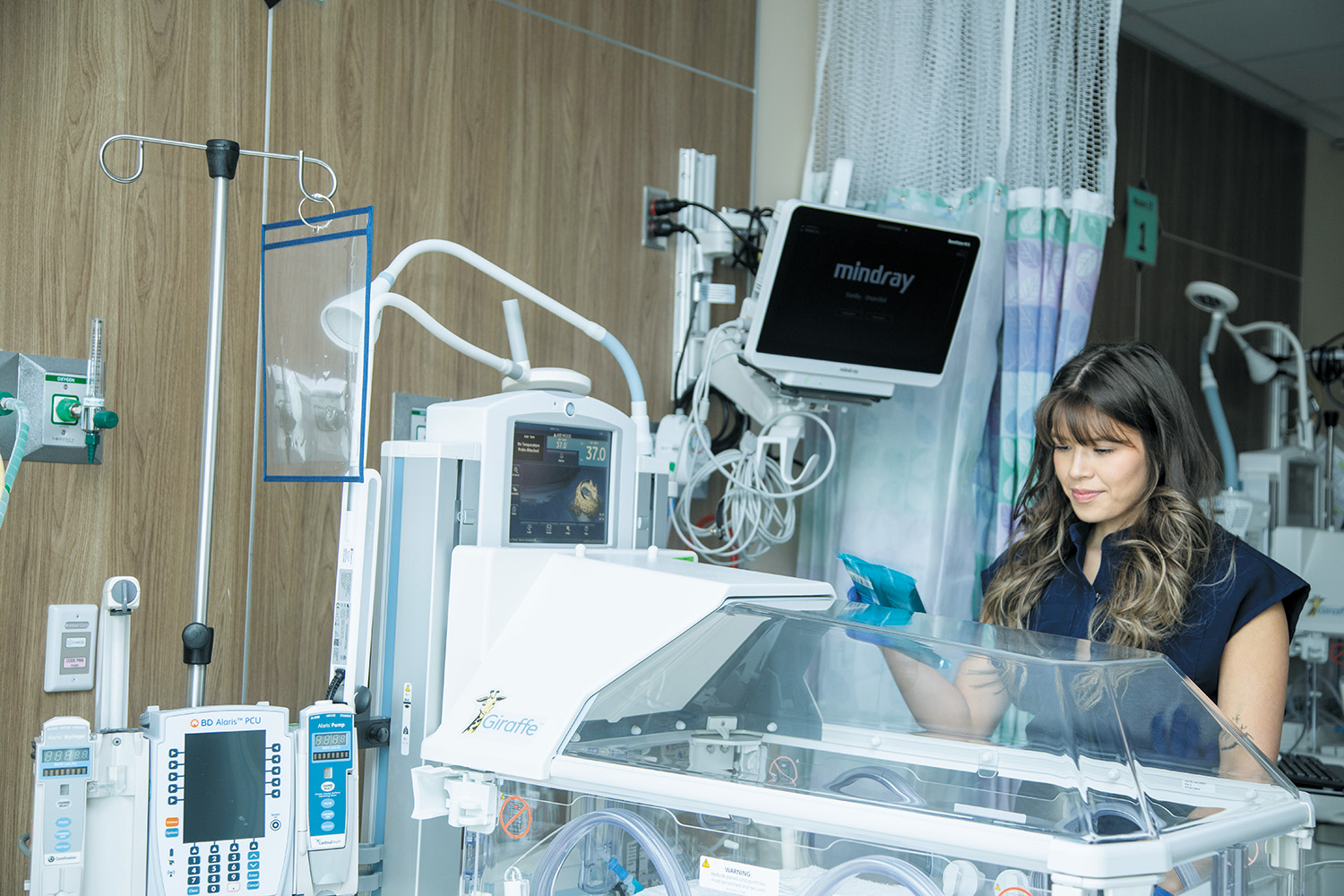
Pierce agrees, noting, "Social determinants can significantly influence length of stay, caregiver engagement and post-discharge outcomes."
Protecting humanity
While a constellation of factors drives the increased NICU admission rates, the ministry experts say their response for all the patients is to provide mission-based care.
Avera's Barber says, "While the challenges in the NICU can be traumatic, we're helping families to have hope."
HSHS's Donovan says the system's NICUs "reflect our mission. We're caring for the most vulnerable, and this is one of our most important service areas."
Pierce of CHRISTUS says: "Caring for extremely premature infants, often at the margins of viability, reflects a deep commitment to the sanctity of life and to accompanying families during some of the most vulnerable moments."
Further reading: Catholic healthcare facilities increase NICUs' physical space, staffing and services to meet growing need