
When Bon Secours Mercy Health decided nearly six years ago that it would build a new hospital in southeast Virginia, the leaders who helped develop the campus had a nearly blank slate when selecting which technology to deploy and how to deploy it.
So, how did they build this "smart hospital"? The leaders say that through a collaborative process that prioritized clinician and patient input, Bon Secours Mercy Health helped build a technology platform for Bon Secours Harbour View Medical Center that was designed to promote top-quality care, free clinicians to focus on delivering that care, keep patients and family engaged and informed and ease communication among everyone involved.
About a year and a half out from the Suffolk hospital's opening, the leaders involved in the rollout say the technology, including electronic whiteboards, artificial intelligence tools, smart communication technology, advanced safety features and more, — is exceeding expectations.
Kelly Stuart, vice president of ethics at Bon Secours Mercy Health, says: "Building a hospital from the ground up with technology and patient care in mind and determining how technology can enhance our work helps to ultimately improve our relationship with patients, families, and each other. I think that is exciting!"
Dr. Mark Townsend, Bon Secours Mercy Health chief clinical digital ventures officer, says: "Adoption is a way to measure success. So, if you've been admitted to Harbour View, and the connectivity with your family was such an important part of your admission, and you can't imagine going to a hospital that doesn't have that technology, then that's our definition of success."
Harbour View Vice President of Nursing Kristen McSorley says outcomes look promising so far. "Our patient experience results have been one important way we've measured the overall impact of the Harbour View experience," McSorley says. "We've consistently remained in the 90th percentile for patient experience, and strong communication and alignment between our care teams and patients has been a consistent theme."
Response to increased demand
In a press release, Suffolk Mayor Michael Duman says the community needed this new facility because the city has been growing, and people wanted access to high-quality care close to home. The U.S. Census Bureau estimates Suffolk has grown by about 10% since 2020.
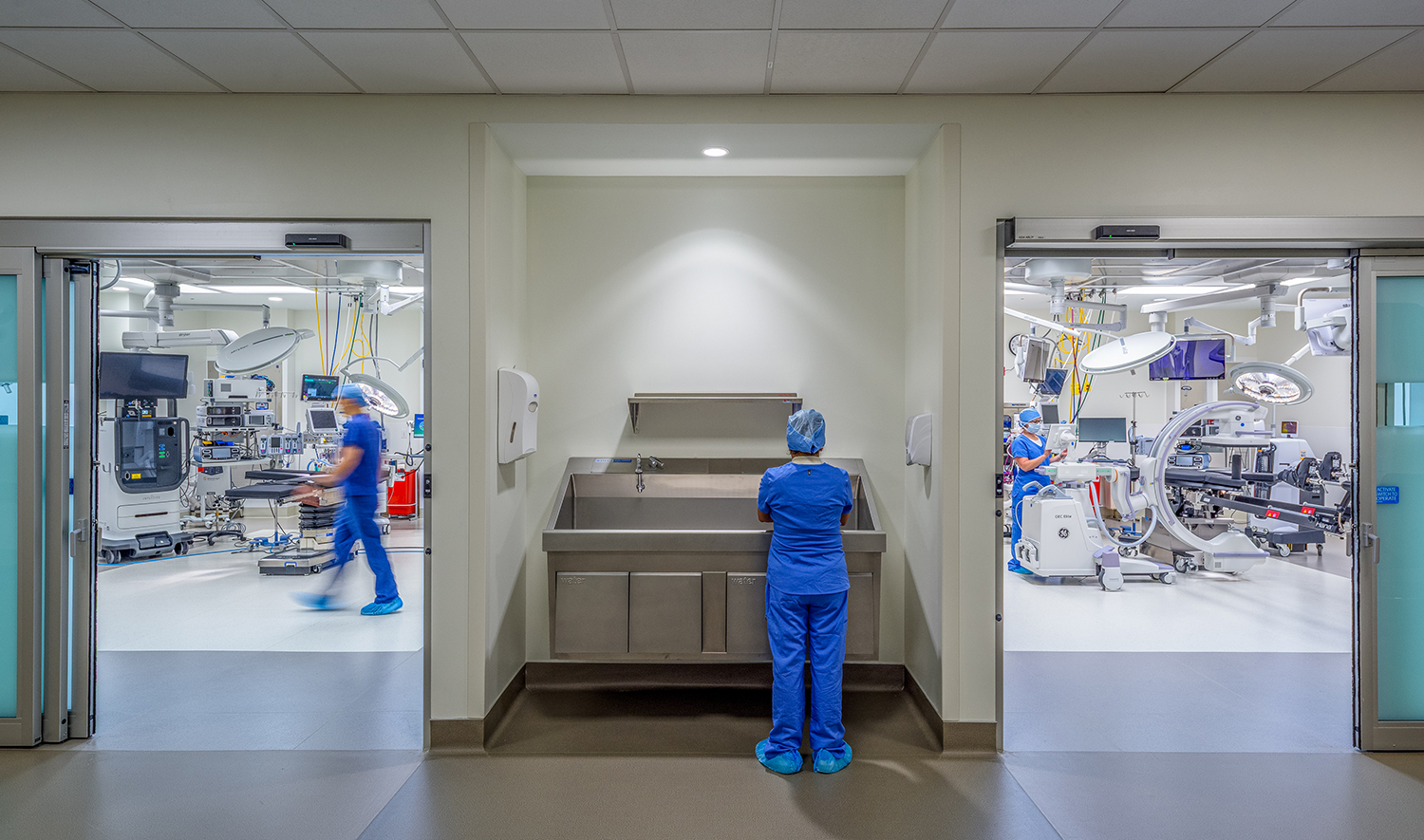
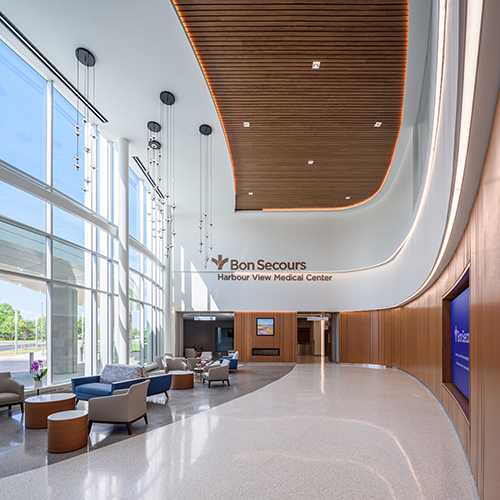
Opened in May 2025, Harbour View is an $85 million, 100,000-square-foot hospital built on a campus where Bon Secours Mercy Health already had an outpatient medical center. The hospital has 18 inpatient beds and four operating rooms and offers emergency care, imaging, primary care and specialty care. Specialty services include orthopedic care, cancer radiation therapy, bariatrics and robotic surgery.
Bon Secours Mercy Health began planning the technology components of the new hospital in earnest around 2024, with a central technology planning team that included McSorley, Townsend, Stuart and many others. That team engaged workgroups to take on specific aspects and use cases of various technologies. The team included experts in a range of disciplines at the system level as well as at Bon Secours Mercy Health facilities. The system has 47 hospitals in Kentucky, Ohio, South Carolina and Virginia, as well as some international enterprises.
Technology for a purpose
Townsend says numerous associates and vendors were involved in building out the technology, including nurses, physician leaders and other clinicians; information technology experts; engineers; architects; designers; and compliance experts. They thought through different ways technology would likely be used, anticipated issues and problem-solved solutions. They spoke with patients. To test it all out, they set up a simulated hospital environment outfitted with the technologies they were considering.
McSorley says throughout the technology planning process, "a major focus was making sure we were not adding technology simply for the sake of having it. Every solution needed to serve a purpose and address a real need for patients or clinicians."
She adds that the planning team incorporated the patient voice throughout the process.
Townsend notes a challenge was that "as you build hospitals, technology is continually evolving as well." Early in the process of designing the technology platform, "AI was upon us, and then that really opens up the realm of possibilities specific to how you can integrate these technologies into health systems. So then, as Harbour View opened last year, it had been built as our first smart facility through design and construction."

Smart technology
There are almost countless advanced technologies used throughout the Harbour View campus.
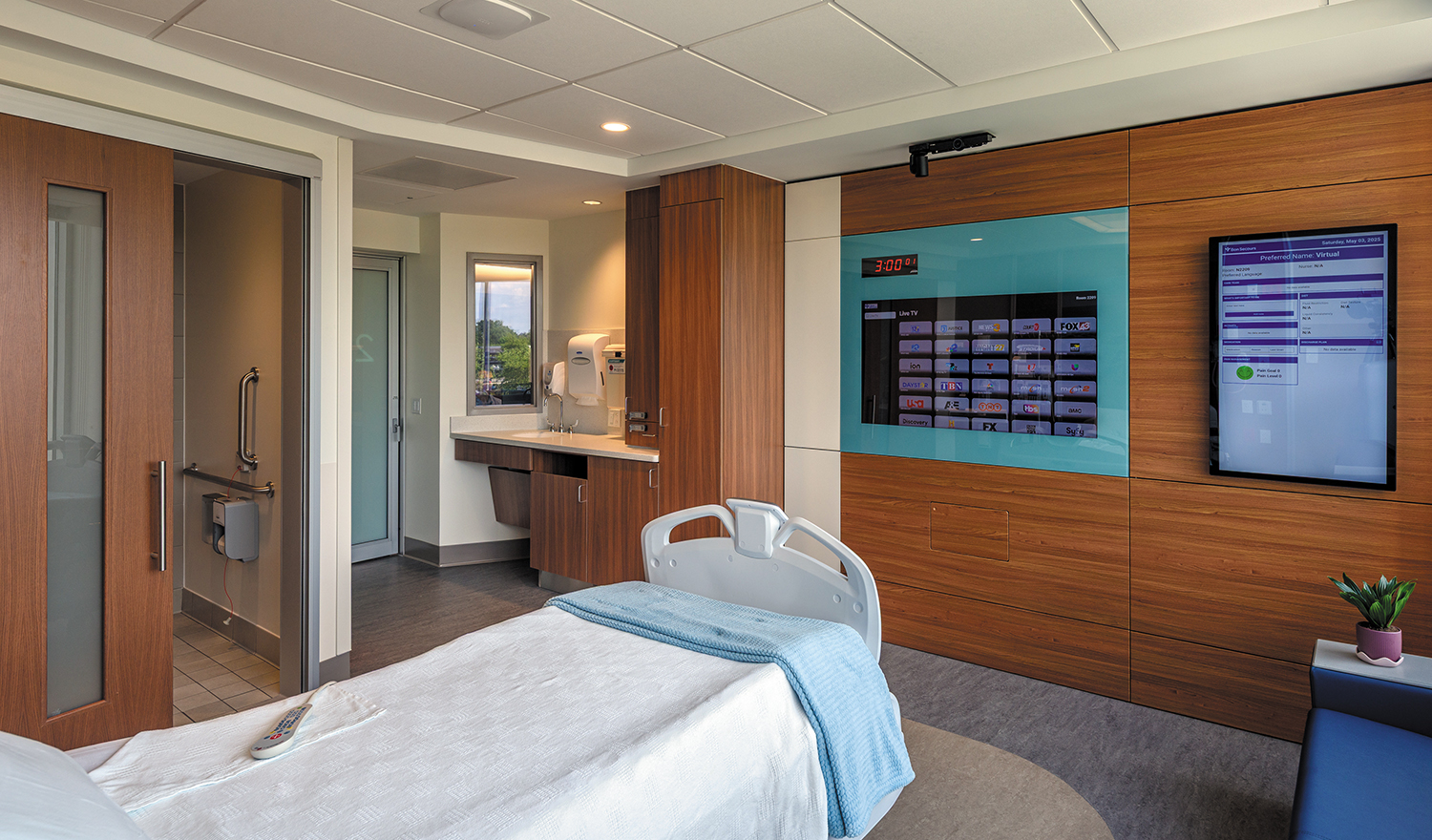
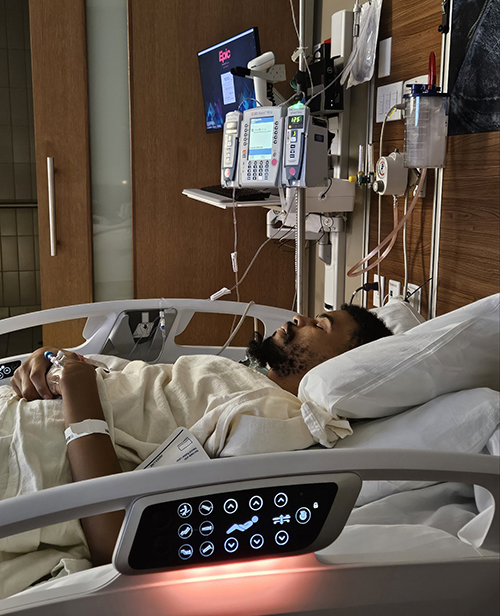
A digital whiteboard, telehealth cameras and digital room signs together make up the facility's smart hospital room. Some of this technology allows for telehealth calls with clinicians and video visits with loved ones. The digital whiteboards are in all inpatient rooms. These screens are integrated with the hospital's Epic electronic health record. The screens display important information about the patient's care team and care plan. Patients also can control many of their environment settings from this system, including room lighting, blinds and temperature.
The black box multimedia system uses cameras, microphones and sensors to monitor patient safety. Artificial intelligence, for instance, helps determine whether a patient is likely to fall.
At Harbour View, ambient technology, which is used increasingly in healthcare nationwide, uses digital tools to listen to, document and analyze clinical discussions happening in select care areas in order to use the information to improve patient care.
Supporting, not replacing, caregivers
McSorley says throughout the technology planning, leadership has been very intentional that the tools support the human side of care, not replace it. She says, "Technology is at its best when it helps us better live our mission and strengthen the human connections at the heart of healthcare."
Results are showing that the technology is accomplishing that goal by enhancing what clinicians are doing, McSorley says. "Communication is better, information is easier to access and our teams can stay focused on the patient."
Stuart says the patients and families also are pleased. The whiteboard system enables them to see which clinicians and other staff have worked with the patient, which Stuart says enhances staff credibility and accountability with patients.
McSorley adds, "Patients and families really value having information readily available and feeling connected to their care team. Patients increasingly expect healthcare to be easier to navigate, more connected and more responsive to their needs."
She says, "The technology at Harbour View Medical Center helps us meet people where they are and create a more convenient, informed and personalized experience."
'That escalated quickly'
Deylon Quarles says he and his family benefited from the technology when he was hospitalized at Harbour View shortly after the hospital opened. Quarles, who is in his late 20s, had spent Easter weekend in 2025 extremely ill. Never eager to go to the doctor, he argued with his mother about going to the hospital but finally relented after several days in pain. Expecting a quick, perfunctory stop in the emergency department, Quarles initially laughed and joked with hospital staff, despite his pain.
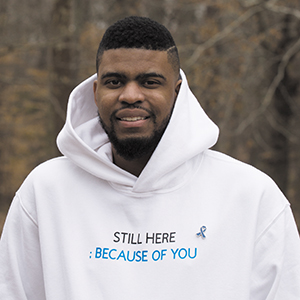
The next thing he knew, a surgeon told him he had an advanced case of colon cancer and would need surgery right away. Quarles remembers thinking, "Well, that escalated quickly."
Within 24 hours, he underwent surgery. Post-procedure, he required physical therapy to regain his motor skills. After his spring discharge, he underwent chemotherapy until he received the all-clear just before Christmas last year.
Quarles says the smart technology at Harbour View was key to his successful treatment. He says, "It's like a beautiful combo of things. You have the technology element, and then you have the people working hand in hand to make everything work. You need both."
Quarles says, "It's crazy to think, but I don't know where I would be and what kind of condition I would truly be in if it wasn't for the staff at Harbour View. And I'm absolutely grateful to each and every person that invested their time and showed up and cared about me."