
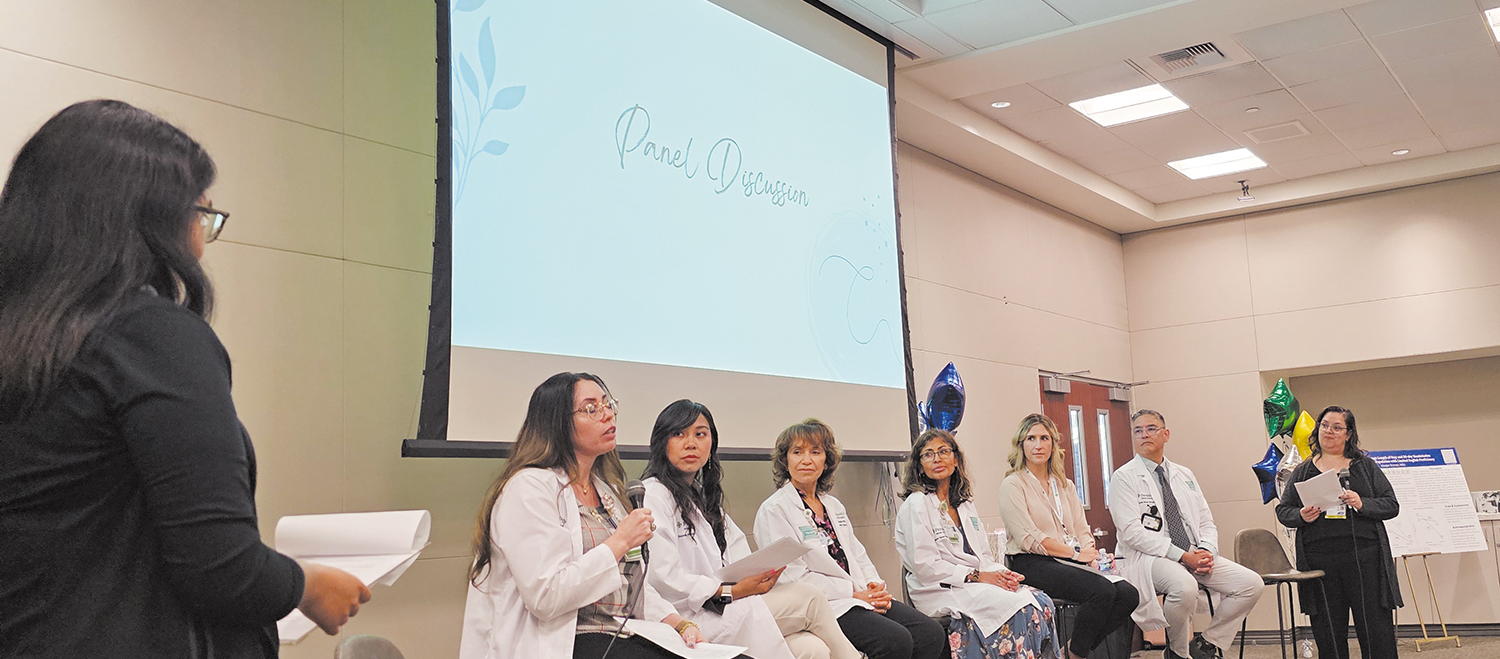
Under a fellowship program that Providence St. Joseph Health launched amid nationwide racial unrest in 2020, each year, about 20 of its associates get in-depth education and training on health inequity and develop practical approaches for closing equity gaps.

Staffers from across Providence attend monthly learning sessions with internal and external faculty as a cohort. At the same time, they design and put in place programming to address health inequities in their own facilities. After the fellowship, the participants teach others what they've learned, share their successful programs, and spread enthusiasm for health equity throughout Providence.
"We're making an investment in about 20 fellows every year, but we're really getting hundreds of champions from this program over time," says Whitney Haggerson, vice president of health equity and Medicaid. "All of our fellows are deeply committed to advancing health equity and to teaching others to do the same."
Multimillion-dollar pledge
Providence founded the fellowship under a body of work it began in late 2020 in the wake of the killing of George Floyd, a Black man, by a white police officer. Floyd's death put a spotlight on racial disparities across the nation. Providence and many other health systems took a hard look at how differential treatment of many minority people and other vulnerable populations resulted in worrisome health inequities.
In September 2020, Providence pledged $50 million over five years to address such inequities.
Haggerson says before the fellowship program Providence had involved large groups of associates in an Institute for Healthcare Improvement collaborative learning program on health system change. But, she says, Providence wanted to find a way to give associates an even deeper understanding of health inequity and an opportunity to put the ideas into practice. So, the health system developed the fellowship using evidence-based concepts on change management. It launched the fellowship in 2023.
Fellows, sponsors, champions, coaches
Providence employs about 125,000 staff in its 51 hospitals, 1,014 clinics and at its other sites across Alaska, California, Montana, New Mexico, Oregon, Texas and Washington. Any staff member can apply for the fellowship, which has cohorts running from June to June. The third cohort is currently underway.
When associates apply for the fellowship, they must share their idea for a project they will complete during the year to address health inequities. The project may change during the course of the fellowship.
When selecting fellows, Haggerson says, "we prioritize high-impact, high-value ideas" that are replicable throughout the system.
Those accepted attend monthly virtual sessions with a comprehensive curriculum on health disparities. Faculty are Providence administrative and clinical leaders as well as external contributors including leaders from IHI, the National Committee for Quality Assurance and the Centers for Medicare and Medicaid Services.
Each of the fellows has an executive sponsor at their facility who guides them as they execute their project, a champion who is a system-level leader who can assist in getting Providence support, and a coach who helps address the practicalities of carrying out their project.
The fellows give about 20% of their work time to the program. They not only attend the virtual learning sessions, they also attend virtual group discussions to talk through how their projects are going and what's ahead. They meet in person halfway through the fellowship for more learning and to refine their projects and then again at the end to formally present the results.
Past fellows have completed a range of projects. For instance, one project markedly reduced the length of stay and readmission rates for people with sepsis who had limited English proficiency. Another led to improvements in those metrics for Black patients with sepsis.
All the fellowship graduates share what they've learned, including by serving in various roles with the current cohort. Those whose projects were successful work to spread their approaches beyond their immediate facility, including by presenting the ideas to other health facilities, some of them outside of Providence.
'Raw enthusiasm'
Haggerson says the fellowship program has been transformational at Providence, enabling frontline associates to address the root causes of inequities at their facilities. "The fellows are taking what they learn and applying it in real time," she says. "This is not just academic."
She says the fellows "elevate the visibility of problems" at the local level. "It is valuable to get this type of response to the unique needs of communities, and you get more passion … because this is deeply personal work," Haggerson adds. "This is affecting the fellows' families and neighbors."
She says because the fellowship employs a continuous learning model and quality improvement science, and because adaptability and flexibility are encouraged, the fellows can evolve their projects in real time. This refinement has resulted in programs that advance care quality and promote positive health outcomes.
Haggerson says that since fellows are encouraged to spread their knowledge, this teaches everyone "that health equity is the job of all of us."
She notes that the fellows also grow as leaders because they learn about maintaining executive presence, gain the capability to use data well, build confidence, and interact with top executives from throughout Providence. "We're developing the workforce of the future," she says.
"We are really getting raw enthusiasm from some rising leaders," Haggerson says. "And at the same time, we are getting at the root causes of health inequity. I can't think of anything more important to do."
Further reading: Through a fellowship, Providence hospital associate improves health outcomes for vulnerable population