
In 1965, when Dr. John Howard was 19, his mother was diagnosed with pancreatic cancer. Howard, then a college student in Atlanta, made the long journey home to Savannah, Georgia, to visit his mother, Vera, every other weekend. Family and doctors chose not to tell her that her diagnosis was terminal.
"She believed she just had a liver condition that they were going to fix and cure her of," he said. "But that was the tragedy of it all. We didn't get to say goodbye." His mother died in early 1966.
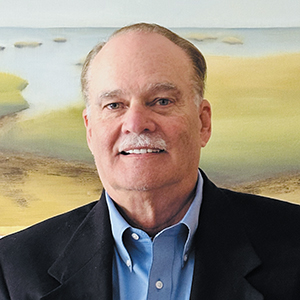
Howard, now a retired dentist, wants to be sure other children and families get the right tools to deal with a serious illness and the prospect of death. In 2014, he and his practice donated $150,000 to St. Joseph's/Candler Health System, based in Savannah, to create the Howard Hand in Hand Program for children who have a parent with a life-threatening illness.
The Howard Family Dental locations have raised money from grassroots fundraising for the program since, contributing at least $50,000 annually, and the St. Joseph's/Candler Foundations contributes about $70,000 every year.
The free program provides a social worker to meet with families and children and connect them with other resources, such as a nurse navigator, therapist, church, chaplain or support group, if needed.
"Remember, the patients and the family are under tremendous stress in so many ways, the fear of the unknown, and that's very debilitating," Howard said. "So help them out. Put your arm around them, guide them, open up the door, get them connected."
'Out on the front porch'
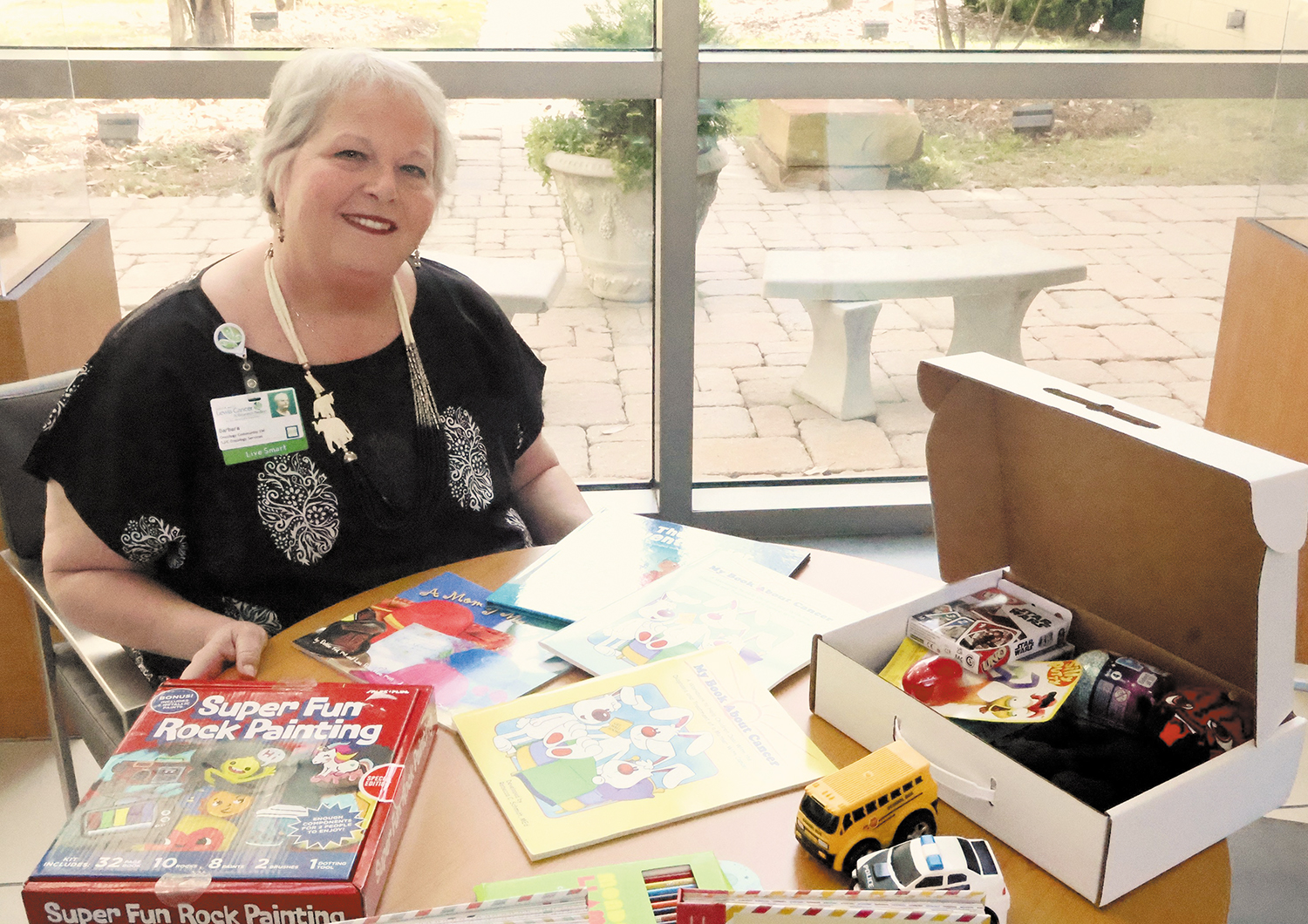
Barbara Moss-Hogan is an oncology community social worker and the heart of the program. She gets references from nurses and oncologists and hears about families through churches and schools. The patient does not necessarily need to be in the St. Joseph's/Candler system — she's there to help anyone if she can. She has been in this position for a little over a year, and figures she has met with about 120 parents, children and other family members.
Moss-Hogan said, as a society, people aren't equipped to talk about how to cope when a parent or guardian has a terminal illness.
"Besides someone actually dying, this is not talked about at all," she said. "And I'm somebody who I want to bring it out, put it out on the front porch, and I want the world to know, and I want kids to have the tools and understanding and know there's help."
Moss-Hogan is based at the system's Nancy N. and J.C. Lewis Cancer & Research Pavilion in Savannah, even though the families she serves do not necessarily need to be facing a cancer diagnosis. She wants to be visible, to meet families, and to instill trust. She thinks of herself as a mother who adults can talk to with no judgment, and as a grandmother who children can trust.
She spends most of her time on the road. The back of her Subaru Outback is full of bins of coloring books, stuffed animals, Play-Doh, cookie cutters, and other tools to ease her way into a child's or teenager's world and get them to talk. Once she learns more, she may talk to parents or staff at the child's school to come up with more ways to help.
She runs small support groups at three schools and checks in with individual families in person or by phone as long and as often as they need her.
"As far as I'm concerned, my services never end, even if there is a death," she said.
Passion for helping kids
Moss-Hogan has a background in parks and recreation and ran camps for children. In her 30s she got her master's degree in social work and public health. For many years, she worked in New Orleans with a law enforcement crisis team to help children having mental health issues. When Hurricane Katrina hit in 2005, Moss-Hogan went out with police to assist families who did not want to leave their homes. She lost her own home in the storm, and friends in Florida convinced her to move there. She got a job working with patients at Orlando Health Arnold Palmer Hospital for Children. She then moved to Georgia to be with her now-husband and spent 14 years with Hospice Savannah as a bereavement counselor.
"My specialty was children," she said. "I loved working with the kids, and I love an oppositional teenage boy."
She got one such teenage boy in the Howard Hand in Hand Program to open up about his mother's throat cancer. After the two met at a McDonald's and sat in silence for a while, he asked to walk with her. He said he was worried that his mother was going to die. He said he felt like he was in charge of the family because his dad was a trucker and he had to care for younger siblings. He didn't want to tell any friends what was happening, because he felt it wasn't their business.
Moss-Hogan suggested he tell his parents about his concerns and talk to his friends. On a recent call, the boy reported he was doing well and that his friends had shaved their heads in solidarity for his mom and were having a fundraiser at school.
"I realize I don't have to be the man of the family," he told her. "I get to be the son by doing the fundraiser, which is serious but also fun, especially with my friends' support."
When he asked her if she would be available for a phone call when he needed it, she assured him she would. He occasionally calls to check in, she said.
A holistic approach
St. Joseph's/Candler President and CEO Paul P. Hinchey said that when the cancer center opened about 20 years ago, it first focused on treatment regimens and protocols for patients. It later expanded its offerings for survivors and family members, children in particular.
Hinchey said many parents come through treatment and ring a bell to signify the end of treatment, but what then?
"The children have to live their lives and can't always be looking through the rearview mirror of the car, wondering when the disease might come up," he said. "How do you create an environment where the family can talk about it when mom or dad go to a checkup? How can we talk about it so things aren't kept internal, but still go on living?"
That support is what Howard Hand in Hand offers.
Hinchey pointed out that the program is part of the system's holistic approach to treatment, which includes chaplains, mental health professionals, nurse navigators, support groups for specific needs, and other resources. "But it's not advocating. It's not saying, 'Well, you might want to go and call this,'" he said. "It's more than a passive act. We actually make the call."
Howard likes that the program empowers clinicians and caregivers with a means to help families. Early in his career he worked as a respiratory therapist and he remembers meeting the families of patients who died.
"It was just so heartbreaking in having to deal with that grief," he said. "This is an incredible gift to the doctors in the staff who are dealing with the loss of loved ones and helping the family, giving them a resource to turn to."
Howard would like to see other hospitals and systems replicate the program. He's grateful he’s been able to help take his experiences with grief and turn them into something that helps others.
Every year, at a celebratory summit he hosts for the Howard Family Dental team, he tells his story and why the program is so important. Every year, he breaks down crying.
Sometimes, he said, it's tough to pursue a calling. "It's challenging emotionally, but you have to be committed and knock down any barrier that’s in your way," he said. "Very fortunately, when you get connected with the right people, they're the same, like mind, and they will support you in that process."