
The alliance convenes and represents the leadership of California's Catholic healthcare systems and facilities. Despite the alliance's efforts in opposition, the California State Legislature passed the End of Life Option Act during a special session in 2015. The state enacted the law a year later.
California now is one of 13 states that have so-called Death With Dignity laws. With more than a dozen states considering such laws in the near term and many more poised to take up such legislation, Dangberg says Catholic healthcare providers nationwide could learn from the experience of those in states where the laws have passed.
She advises ministry organizations to build and strengthen coalitions of like-minded partners, to warn of and anticipate erosion of safeguards in laws, and, perhaps most importantly, to promote whole-person care.
She says some primary concerns should remain: "How do we support those at the end of life? How do we provide a loving alternative to physician-assisted suicide for patients and their families? And how do we create a loving community to surround them?"
Advocating for protections
Through the Alliance of Catholic Health Care, leaders of CommonSpirit Health, Providence St. Joseph Health, and Scripps Mercy hospitals collaborate on advocacy, ministry leadership formation, church relations, and other activities.
The coalition's top focus areas include serving vulnerable people, advocating for expanded health insurance coverage and access, strengthening Medicare and Medi-Cal, providing leadership around public policies promoting community health and well-being, promoting not-for-profit healthcare generally, and protecting religious freedom. When it comes to religious freedom, the alliance focuses on preserving "the ability of Catholic and other religious organizations to deliver healthcare consistent with their religious beliefs and values."
Alliance President and CEO William Cox and Dangberg are retiring at the end of this year. The member health systems have decided to dissolve the alliance on Jan. 31 and transition responsibility for its projects, partnerships, and relationships to those health systems.
Decades-long push
Dangberg says the nonprofit Compassion & Choices, formerly the Hemlock Society, and various partners have conducted a well-organized campaign for decades to legalize assisted suicide in every state.
In roles with various organizations, Dangberg tried to defeat these attempts in California since the early 1990s. She says most of her involvement has been through her role with the Alliance of Catholic Health Care. She says a key strategy of the alliance from the start has been to help build a diverse coalition of like-minded organizations. Together, they fought the legislative onslaught by proponents.
She notes that such coalitions can be fragile precisely because of their diversity. The California coalition, which, in addition to the alliance, included civil rights groups and advocates of people with disabilities, hired a consultant to manage the group and keep members united.
Prior to the 2015 passage of the legislation in California, the alliance had noted three changes in state dynamics. First was a shift in key social and moral attitudes, including on same-sex marriage and the use of stem cells. Second was a change in "the face" of euthanasia. Previously, it was associated with older white men like Jack Kevorkian, one of its high-profile proponents. In 2014, that changed when a 29-year-old terminal cancer patient named Brittany Maynard chose assisted suicide. Her decision, promoted by Compassion & Choices, gained national attention. And third was the California Medical Association's change in position on assisted suicide, from opposed to neutral.
"The momentum changed," Dangberg says, noting that shortly thereafter the law passed in California.
Rollbacks
Dangberg says with assisted suicide legal for a decade, the Alliance of Catholic Health Care and its partners have been working to help ward off continual efforts to roll back the legislation's safeguards. One safeguard that was rolled back was a clause to sunset the law in 2031 if not renewed. The alliance and other opponents of the law have helped thwart attempts to make more people eligible for aid in dying and to relax the requirement that aid-in-dying medications be self-administered by the patient.
Dangberg says a paramount concern is that there has been no full public reporting and no public auditing of the impact of the law, though assisted-suicide proponents had promised both. "We want consistent data reported across the state. The full impact of this law is unknown at this time because of the lack of reporting of key data that is collected, but that the state has chosen not to report," she says. "We don't know what is truly happening at the bedside."
'Pivotal and profound moment'
Dangberg says a "pivotal and profound moment" in the California battles over assisted suicide came shortly after the law's passage.
The alliance had gathered leadership and sponsors of its member Catholic healthcare systems as well as multiple California bishops. During a presentation, Dr. Ira Byock, a palliative care physician and founder of Providence's Institute for Human Caring, delivered what Dangberg recalls as a simple but insightful reflection. She remembers Byock said, "We've been opposed to physician-assisted suicide for a long time. The American public knows what we are against. But they could be forgiven if they don't know what we're for."
The moment spurred a more proactive stance for the alliance and the bishops. They united behind a vision that people in church ministries could help those who are suffering feel loved, wanted, and worthy, and help those people prepare for serious illness.
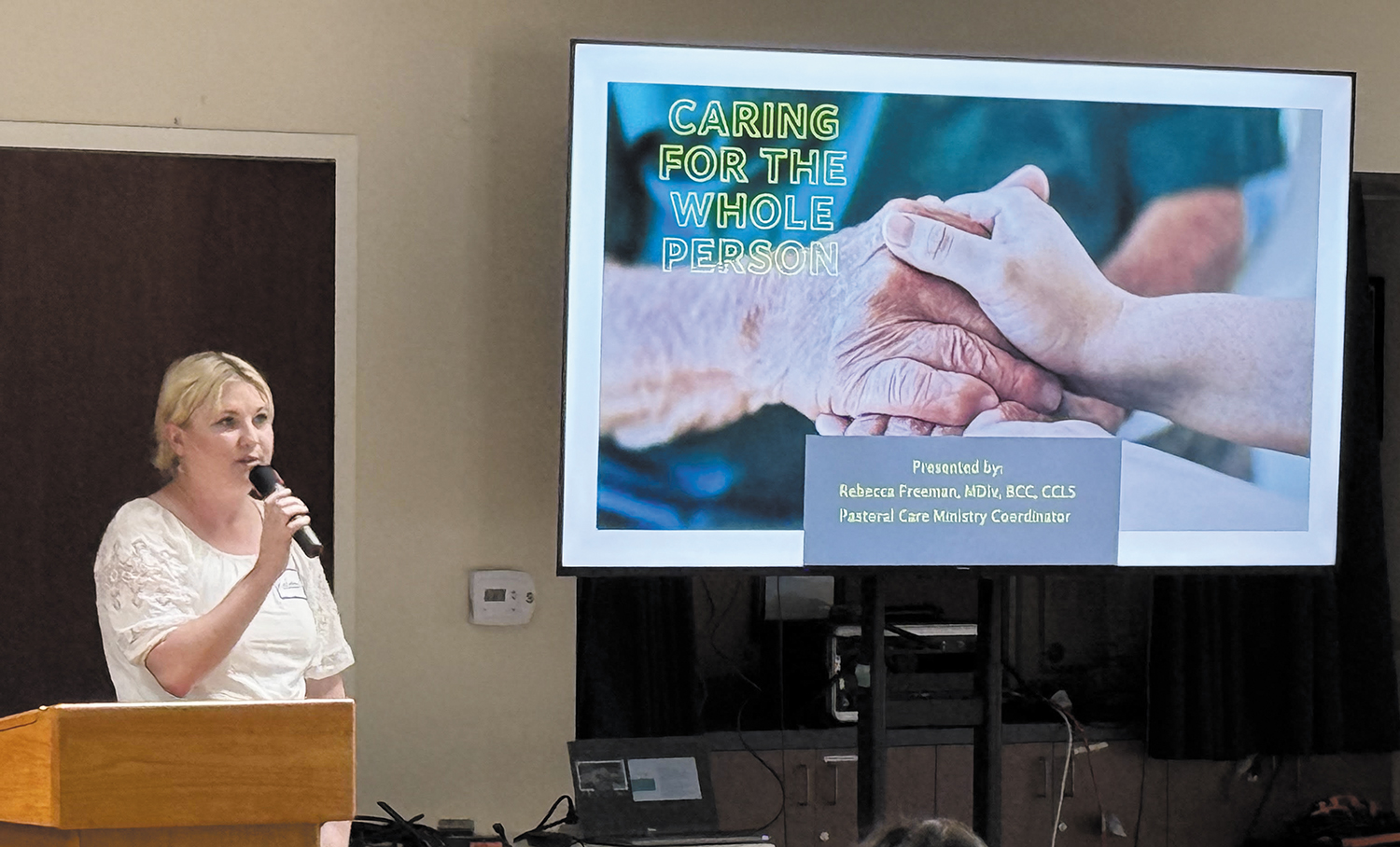
The resulting Caring for the Whole Person Initiative from the alliance and the California Catholic Conference brings programming, education, and training to parishes throughout the state. CHA has supported the initiative. The goal of the effort is to equip people to support fellow parishioners who are suffering and need holistic care. In a CHA podcast earlier this year, Dangberg described how some of this work has played out.
Dangberg says she's had some similar takeaways from the initiative's success as from the alliance's work opposing assisted suicide. Namely, that the needs of the suffering should remain the ultimate focus of those opposing assisted suicide.
"We have to balance our opposition to assisted suicide with also saying what we can offer," she says. "We can understand people's needs and determine how to address the needs of patients and families. We can offer hope that we can address their issues."