
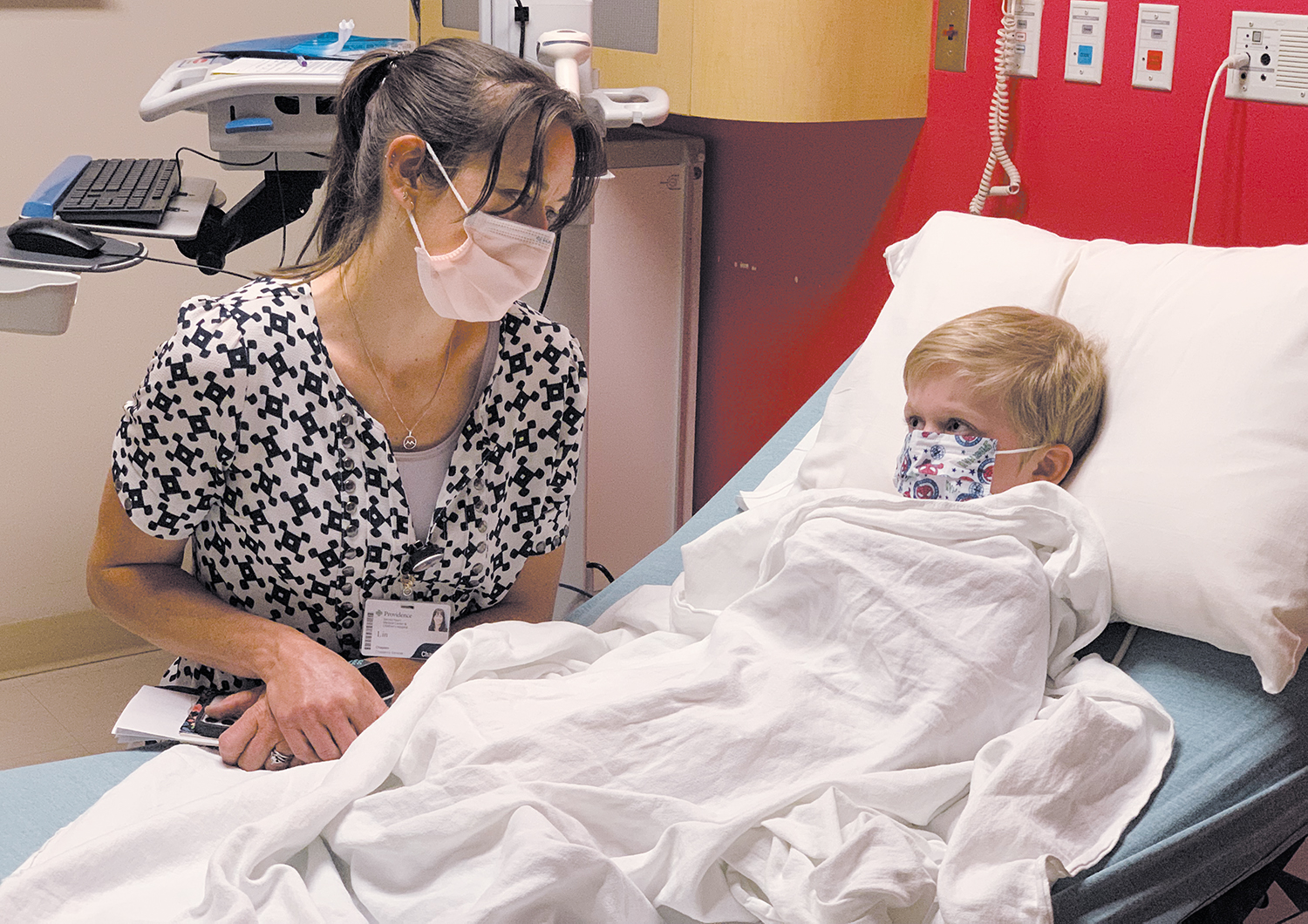
As the U.S. health system has changed dramatically in recent years, so too has the spiritual care that is delivered in Catholic health systems and facilities. The role of the chaplains who deliver this type of care also has changed.
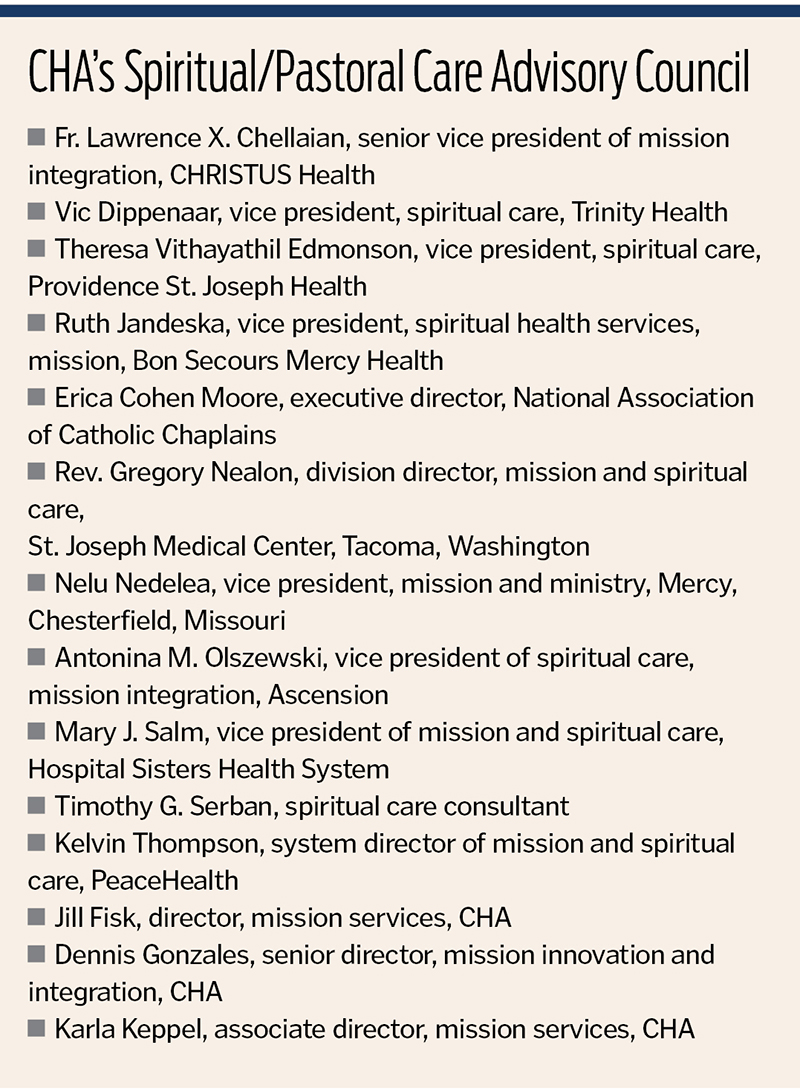
A 14-member committee made up primarily of CHA and Catholic health system leaders is overseeing a study of the changes and challenges for spiritual care providers, as well as future opportunities.
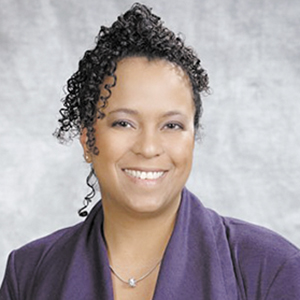
"We need health care leaders and others to have a better understanding of the strategic role of spiritual care in health care — we need a new framework for understanding spiritual care's importance," says Jill Fisk, CHA mission services director.
Fisk staffs the Spiritual/Pastoral Care Advisory Council that spearheaded a survey this summer. That council will oversee the development of a white paper on the essentiality of spiritual care in the ministry, which will complement the survey results. The association is partnering in the work with the National Association of Catholic Chaplains. NACC's executive director, Erica Cohen Moore, is on the council.
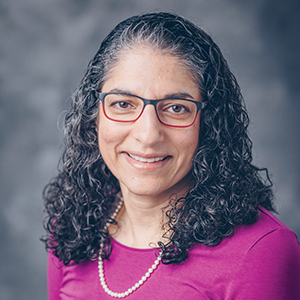
Through this work, Catholic health care will be "putting a stake in the ground when it comes to having a foundational understanding of the need for spiritual care," says council member Antonina M. Olszewski, Ascension vice president of spiritual care and mission integration.
"This work is important because this is who we are as Catholic health care — we are obligated to care for the whole person, and to do it well," says Theresa Vithayathil Edmonson, vice president of spiritual health for Providence St. Joseph Health and another council member. "We need to make sure all our patients — and especially those who are poor and vulnerable — get the spiritual care interventions they need to flourish."
Integral to ministry's mission
As delineated in the Ethical and Religious Directives for Catholic Health Care Services and as described in CHA's Shared Statement of Identity for the Catholic Health Ministry, Catholic health care provides holistic and sacramental care to patients, and it supports the well-being of its staff. Spiritual care staff — primarily chaplains — are essential to ensuring that ministry systems and facilities pursue these aims effectively, say advisory council members.
Edmonson adds that the spiritual care discipline is key to advancing the quintuple aim framework for optimizing health care system performance, not just narrowly defined spiritual care goals. The framework strives to reduce costs, improve population health and patient experience, advance health equity and attend to health care team well-being.
Fisk says CHA long has worked to promote a comprehensive understanding of spiritual care and chaplaincy, why they are essential to the ministry's mission, and how to prioritize them. The association has developed a library of resources and offers programming in this area. Related resources include the "Essential Services of Spiritual Care" overview for acute care settings and another for continuing care settings as well as the publication "Standard Work and Staffing Tool for Acute Care Settings."
Also, CHA is working with NACC to develop new career pathways and pipelines for the chaplain role. This work is parallel to CHA's work on a Faithfully Forward initiative for building a pipeline of ethics and mission leaders.
CHA has created a video series on what a chaplain is and why that role is critically important. The videos will be released soon and can be used for awareness-building among ministry colleagues and those considering the profession of health care chaplaincy.
New landscape
While the existing resources and programming from CHA and NACC remain vitally important, spiritual care experts say recent changes make it necessary to reassess the state of spiritual care and chaplaincy, how the ministry should respond, and how CHA and NACC can support this response.
Edmonson notes that in the past hospital leaders thought of chaplains primarily as providers of bedside spiritual care to patients and their families in acute care settings. Now, she says, leadership is seeing the value of involving chaplains in aspects of health care beyond the bedside. Chaplains are working across the continuum of care, including outpatient, long-term care and virtual care settings. They tend not just to patients and families but also to staff who can struggle with the toll of caregiving.
Olszewski says health care leadership is starting to recognize that spiritual care and chaplaincy can strategically support their facilities' top priorities, including improving patient care and experience, preventing violence against staff and improving staff retention.
Moore adds that other changes involve who is serving in spiritual care and who is being served. While men and women religious used to occupy most chaplain roles, it's now mainly laity with diverse backgrounds. They have not been formed in the same way as clergy. And chaplains are providing spiritual care to populations with a wide range of spiritual backgrounds, whereas religiosity of patients was more homogenous in the past.
Fisk adds that even as spiritual care and the chaplain role become more complex, there is a lack of qualified candidates for chaplain and spiritual care leadership positions.
Need for visibility
Moore notes that there also is increased pressure on health care executives to make cuts to save money. Olszewski says in this environment, "it could be seen as easy to cut spiritual care services because they're considered to be non-revenue generating."
She says, "It's an issue of visibility. We need to raise up the essentiality of spiritual care and we need to cement the idea that spiritual care creates value in health care."
The survey that CHA conducted starting in July went to professional health care chaplains, chaplains serving in leadership roles, leaders overseeing spiritual care departments and human resource leaders. The survey is expected to illuminate innovations and issues that spiritual care is facing and other concerns.
Moore says, "If we want to remain relevant to the people we serve, we need to transform as their needs change. With this work we're doing, CHA is providing a roadmap or a pathway for change — where we need to head, what resources are needed, being honest and transparent about the obstacles we face."
Part of clinical team
Fisk, Edmonson, Olszewski and Moore say they anticipate the work will build awareness of the vital importance of spiritual care and chaplaincy to the Catholic health mission. They think the work will shed light on the key role spiritual care providers play on the clinical team and the value they add to the health care ecosystem.
The work likely will also make the case for continued emphasis on metrics to document the value of spiritual care providers. As part of this push toward greater transparency, there likely will need to be a continued prioritization of standardizing spiritual care work, and ensuring all those who practice it have the best training and are fully certified.
Olszewski says spiritual care team members "are a largely untapped resource to support all the needs" of health systems and facilities. "And, I personally believe that we cannot treat physical health without addressing the mind and the spirit."
This is the final article in a series on how CHA's sponsorship and mission services department is reimagining its work.
_____
For further reading:
CHA offers prayers, prayer resources for just about any need in online library
CHA's sponsorship and mission services department revitalizes its programming