
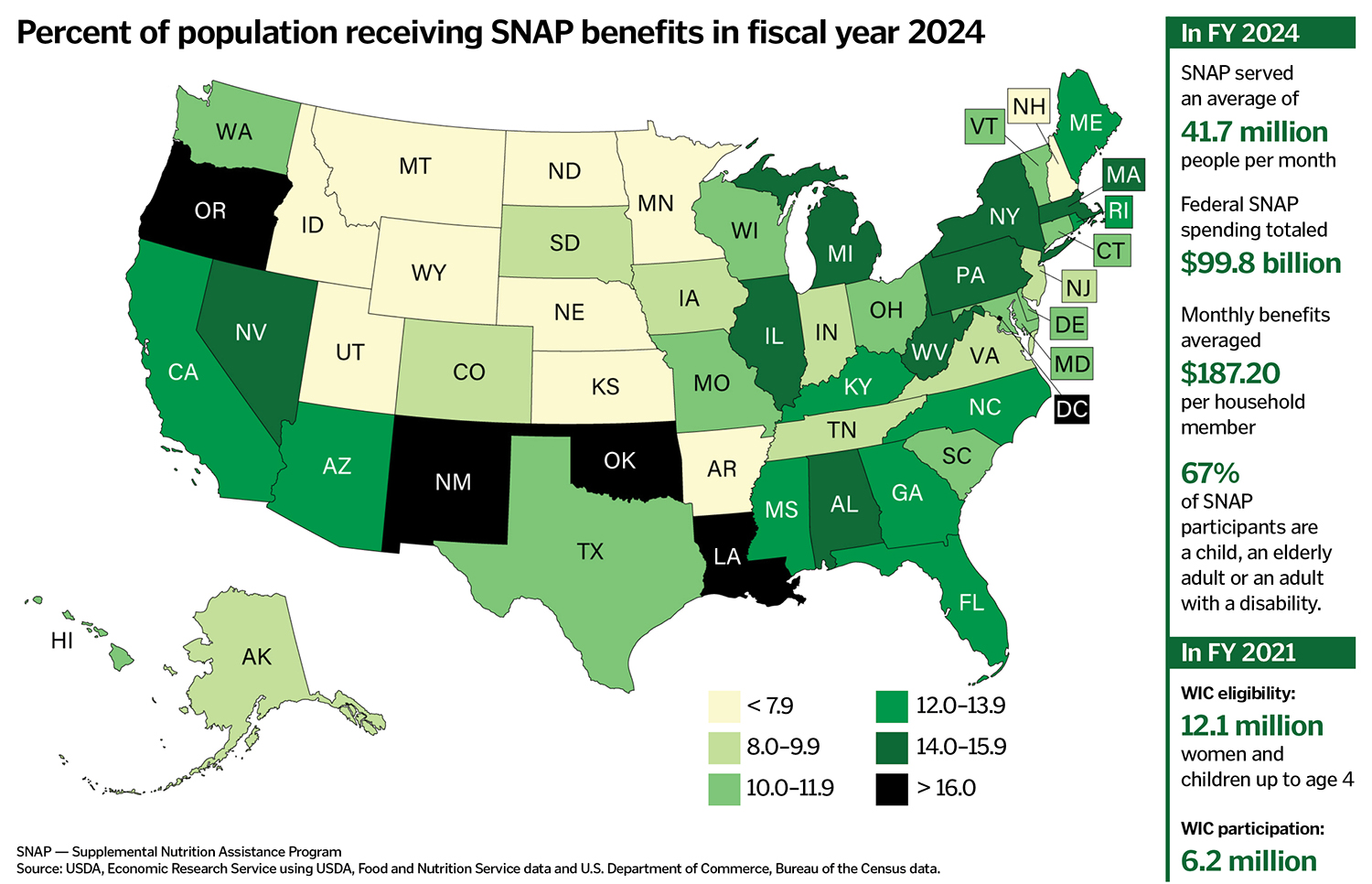
The federal government shutdown that began just over a month ago is putting at risk the food benefits of more than 40 million Americans.
Funding for the Supplemental Nutrition Assistance Program and the Special Supplemental Nutrition Program for Women, Infants and Children was set to lapse Nov. 1 due to the congressional impasse. And while some moves by the judiciary promised the restoration of some of the funding, the fate of SNAP and WIC benefits remained uncertain.
With the food security of throngs of Americans under threat, top Catholic health and social agency leaders warned that the political stalemate could put vulnerable people's health and well-being at serious risk. While those leaders urged the government to resolve the issue, their agencies sprung into action to shore up emergency food programs for people in need.
"For low-income families and individuals who rely on SNAP and WIC to put food on their tables, this could be a catastrophic moment," Catholic Charities USA President and CEO Kerry Alys Robinson said in an Oct. 30 release. "The Catholic Charities network stands ready to come to the aid of our vulnerable brothers and sisters during this time of dire need."
CHA President and CEO Sr. Mary Haddad, RSM, said in an Oct. 30 statement that "Congress and the Administration have an obligation to ensure that those who depend on these vital (federal) programs are not left to wonder where their next meal will come from. The inability (for elected leaders) to work together in a bipartisan way is not just a political failure — it is a moral one."
In a statement Oct. 31, John Berry, national president of the national council of the U.S. Society of St. Vincent de Paul, said, "the stark truth is that politics has weaponized food and safety, holding the most defenseless as hostages for ideological gain."
Lapse of benefits
The lapse of food benefits is connected with the shutdown that began Oct. 1 as Senate Democrats and Republicans came to an impasse around legislation to fund the government. One point of contention concerns whether the government will preserve enhanced premium tax credits for people insured through the federal marketplace, credits that would otherwise expire at the end of this year.
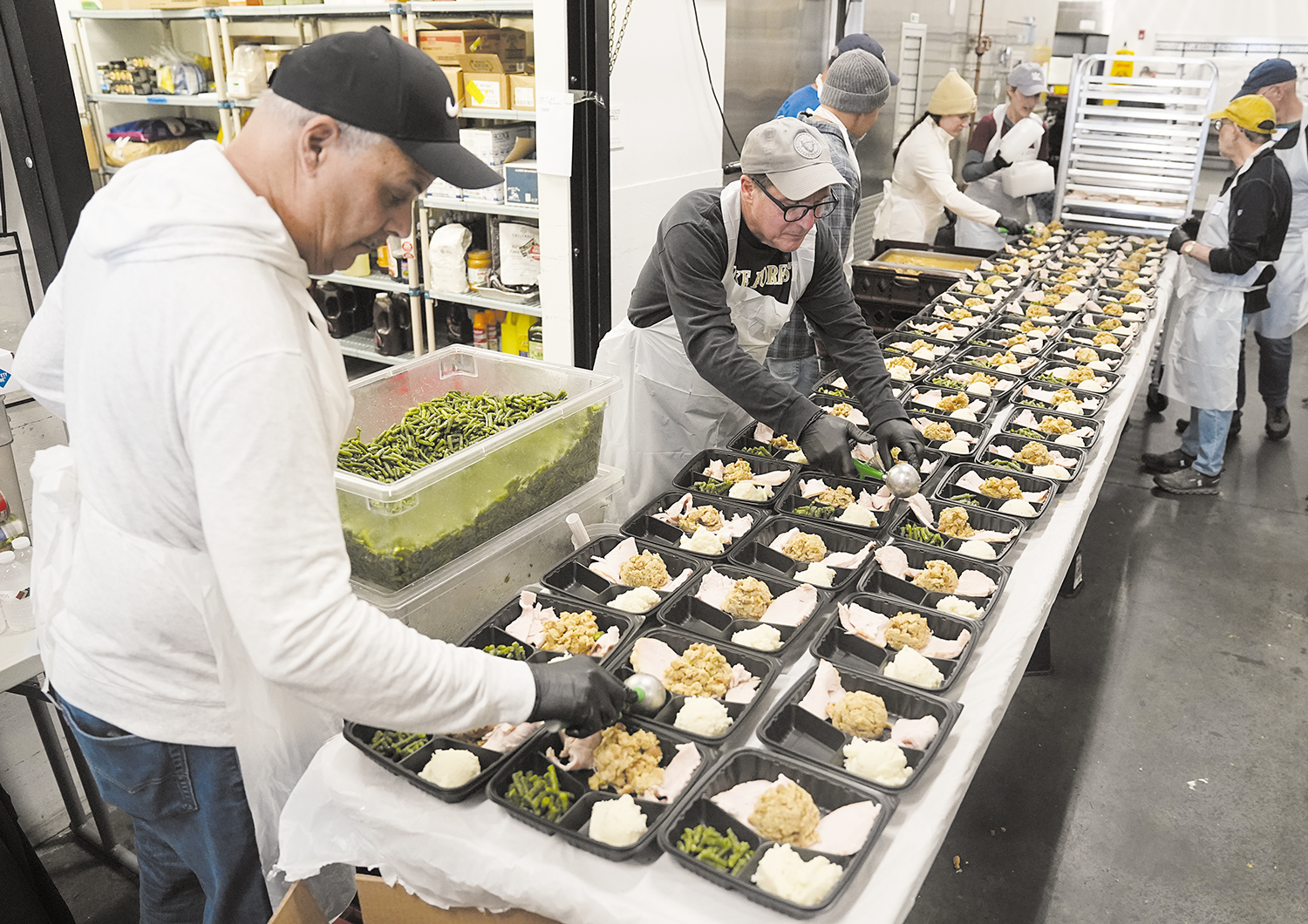
Now more than a month in, the shutdown triggered a Nov. 1 lapse in SNAP and WIC benefits. Court rulings during the week of Oct. 27 said that the U.S. Department of Agriculture had to use contingency fund dollars to maintain food benefits for SNAP and WIC recipients. The Trump Administration said Nov. 3 that it would fund such benefits for select recipients. It would be up to the states to implement new policies for reduced benefits. There could be continued disruption of benefits for SNAP and WIC recipients.
In the leadup to the SNAP and WIC cutoff date, Robinson said in the Catholic Charities release, "The ongoing government shutdown is not merely a political negotiation. It has created incredibly serious, real-life consequences for millions of people, from furloughed federal workers to those living in poverty who will now struggle even more to provide for their families.
"It is past time for congressional leaders of both parties and the administration to forge a bipartisan path to reopen the government and provide relief to all those who are suffering."
Sr. Mary said in her statement that the congressional stalemate "directly harms low-income moms, children, working families, seniors and individuals across the nation."
Immediate aid
As these Catholic organizations advocated — in public and directly to elected officials on Capitol Hill — for relief for SNAP and WIC beneficiaries, they also focused on practical solutions.
Catholic Charities USA, which represents 168 independent Catholic Charities agencies nationwide, put out an urgent plea for donations to an emergency relief fund.
Noting that its agencies nationwide already are stretched thin with food supplies, Catholic Charities USA said that it anticipated a great surge of demand for food in the wake of SNAP and WIC disruption. The organization will use donations to the emergency food relief fund to stock up food pantries, soup kitchens, food delivery programs and other initiatives at its agencies across the U.S., to support people facing food insecurity or hunger. Catholic Charities agencies together serve more than 15 million people annually through food and nutrition programs, affordable housing, disaster relief and other humanitarian services.
'Let's end partisan politics'
The Society of St. Vincent DePaul is one of the nation's largest nonpartisan lay Catholic charitable organizations. It has more than 80,000 volunteers at more than 4,000 councils and conferences throughout the United States. Normally located at Catholic parishes, these councils and conferences offer food services, home visits, disaster assistance and other relief to the poor and vulnerable.
In an Oct. 28 statement, St. Vincent DePaul leader Berry said, "It is not our role to take sides in a political fight. But it is our role and our duty to speak on behalf of the friends and neighbors we serve."
He said, "Let's end the partisan politics and find a solution for the common good that will sustain needed programs and the people they serve."
Said Sr. Mary, "Hunger is not a partisan issue. Our national leaders must act now to protect the dignity and well-being of families in our country."
Obrock advises other systems to have a strong vision for their influencer and social media programs and adapt the programs to their needs. She also advises focusing on creating a personal, customized experience for job seekers and having recruiters available to answer questions and make the process as seamless as possible.
Lovell tells systems to jump into and be a part of the conversation in the digital town square, even though that increased visibility might feel scary.
He also advises systems to create relatable content. "To be relatable (it) has to be genuine and real and authentic," he said. "And I think that you'll find that there's more value there than you'll ever realize."
Further reading: Catholic health care providers rally to protect, advocate for food-insecure people amid government shutdown