
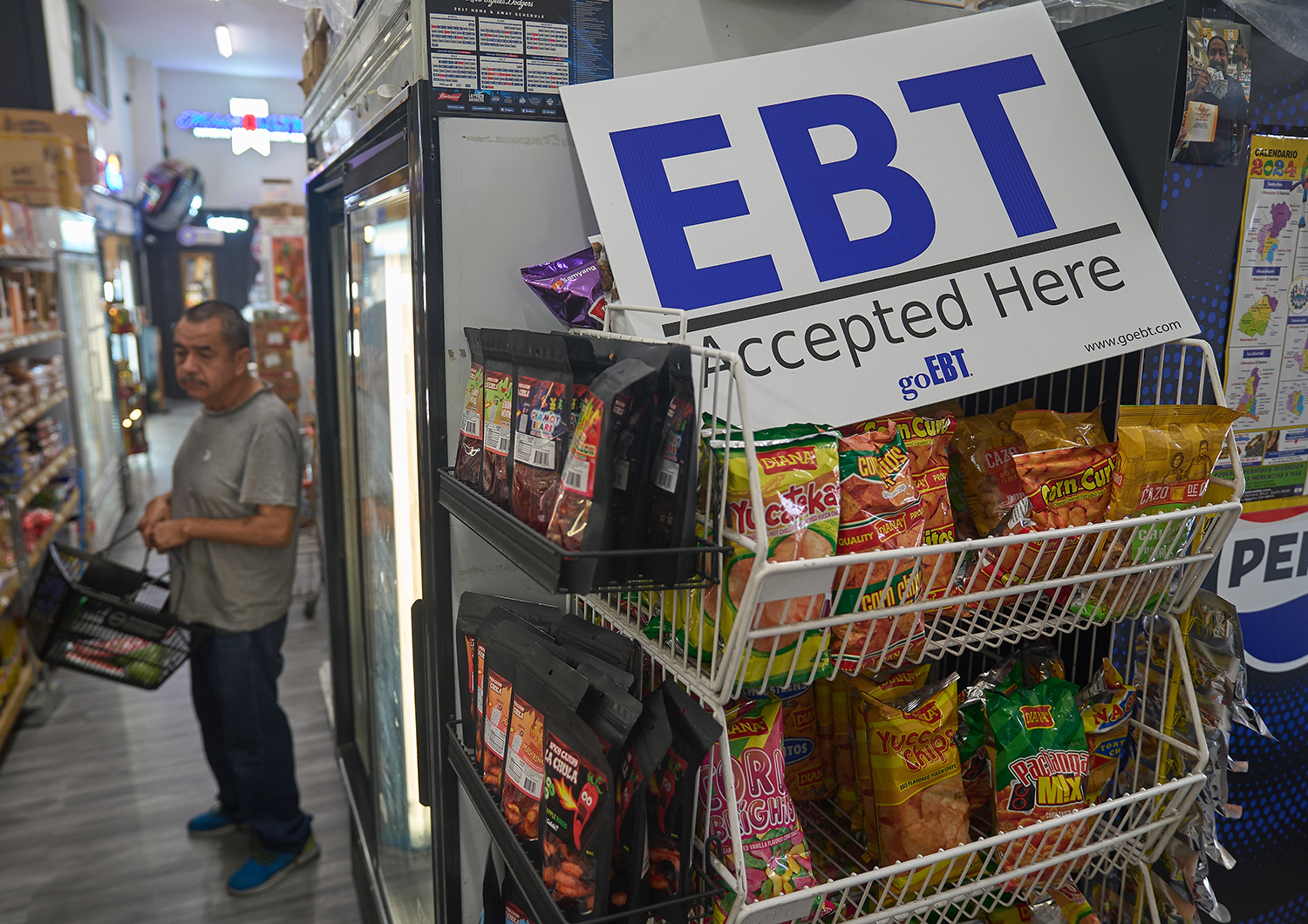
More than a month into the federal government shutdown, Americans who rely on government food benefit programs are seeing those benefits come under threat, and Catholic health care providers are responding to community members affected by the fallout.
Funding for the Supplemental Nutrition Assistance Program and the Special Supplemental Nutrition Program for Women, Infants and Children was set to lapse Nov. 1. While court rulings and Trump administration actions promised to preserve some of the funding, there still was a real concern in early November that millions of Americans' food benefits would be curtailed, disrupted or ended.
According to a sampling of Catholic health system and facility leaders, countless numbers of their employees, patients and community members believe their food stability is at risk. These ministry systems and facilities are focused on staying attuned to these constituents' needs, making them aware of how to get food aid and helping to shore up the emergency food supply in their communities. They've also been advocating for a sustainable government solution.
"The most pressing concern we're hearing is uncertainty — families are unsure how they will feed their children, and caregivers are worried about how this will affect their ability to focus on work and care for others," said Greg Till, chief people officer of Providence St. Joseph Health. "There is a real fear that the loss of benefits will force people to make impossible choices between food, medication, housing and other essentials."
EJ Kuiper, president and CEO of FMOL Health of Baton Rouge, Louisiana, said, "We are concerned about the well-being of those already facing food insecurity within our communities."
Jenna Speckart, vice president of mission and ethics operations for the Mercy health system of Chesterfield, Missouri, said food security is a critical social determinant of health. "We need to focus on what's going to keep people whole," she said. "We are interested in (ensuring) that individuals can flourish," and nutrition is essential to that goal.
Helping Hands
Providence has 51 hospitals and a network of other facilities across seven western U.S. states. It employs about 125,000 people.
Till said, "We are deeply concerned about the ripple effects of the federal government's temporary suspension of SNAP benefits. … We recognize that food insecurity is a growing challenge for many — especially among vulnerable populations we serve."
He said Providence hospitals and clinics were reporting increased anxiety among patients who rely on SNAP.
Providence partner organizations said they saw higher demand at local food banks.
Till noted, "We've also heard concerns about the long-term implications of this disruption, including the potential for increased stress, worsening health outcomes and strain on community resources."
Providence is implementing a multipronged response. The system's government affairs team is advocating against cuts to SNAP and other safety net programs. This includes working with lawmakers to address community needs. Providence and its facilities also are communicating with staff and the community to ensure people know how to get aid. The system also has provided its staff with access to Findhelp.com, which is integrated into the Providence electronic health record. Through Findhelp, staff can connect patients to essential services, including food, housing and job help as well as mental health care.
Additionally, Providence is ensuring that its staff have resources if they are hit by SNAP and WIC disruptions. Staff can access aid through Brightside, Providence's partner for staff financial benefits. Brightside can provide financial aid through a grant-funded program and access to community resources like food pantries.
First Lady partnership
FMOL Health, formerly called Franciscan Missionaries of Our Lady Health System, has 10 hospitals and a network of outpatient sites spanning Louisiana and Mississippi. It employs about 20,000 people. The health system says the potential SNAP disruptions could threaten the food access of nearly 384,000 Mississippians. The Louisiana Department of Health said in a recent release that 792,769 Louisianans are enrolled in SNAP.
In an interview with Louisiana First News, Kuiper said there is a direct correlation between food insecurity and poor health outcomes, and so nutrition "is core to our mission."
FMOL Health has donated $100,000 to support food pantries in Mississippi and $100,000 for those in Louisiana. First Lady Sharon Landry provided a $100,000 match in Louisiana from her Love One Louisiana Foundation. FMOL Health's Mississippi donation is going to Stewpot Community Services, which has a pantry, a community kitchen and meals-on-wheels services.
Kuiper said FMOL Health's donations "are an example of the health system fulfilling its calling to serve. By providing critical nutrition resources to our communities, we continue to uphold our mission and values."
Preparing for surge
Mercy has 55 hospitals and an outpatient network that spans Arkansas, Illinois, Kansas, Missouri and Oklahoma. The system employs more than 50,000 people.
Speckart said that even before the SNAP and WIC disruptions, numerous people within the communities Mercy serves were barely able to meet basic needs, even with benefits. She said Mercy facilities reported in late October and the start of November that community members were very worried and uncertain about the status of their food benefits. People were starting to investigate what they would do if their benefits were cut off.
Mercy and its facilities were making staff aware of the Mercy Crisis Fund, which aids colleagues in emergency situations. The fund can provide grocery store gift certificates to staff that they do not need to pay back.
Additionally, Mercy was ensuring its community health workers had lists of local organizations that can assist with food needs. Speckart said it is likely that there will be a surge of demand at already-pressed food pantries.
"We think there will just be a lot of people reaching out to get help now that it feels more real to a lot of people," Speckart said.
Ministry-wide response
Around the Catholic health ministry, other systems and facilities were taking various steps to ensure they were prepared to assist staff, patients and community members.
St. Louis-based SSM Health was partnering on food drives and distribution events with local food banks. Some facilities within that health system also have their own on-site emergency food banks to ensure that food-insecure patients have food on hand upon discharge. Sioux Falls, South Dakota-based Avera Health had facilities opening on-site food pantries. And some Trinity Health facilities were allowing staff to access on-site food pantries that normally served patients alone.
Mercy's Speckart said she is glad CHA and its members are drawing attention to and taking on the concerns arising from the SNAP disruptions. "This is not a political question …. It is a human question," she said.
Providence's Till agreed. "We view this situation as a humanitarian issue. Access to nutritious food is a fundamental human right and a cornerstone of health and well-being," he said.
He added, "Discontinuing SNAP benefits undermines the health and dignity of millions of Americans, and we are committed to supporting those affected."
Further reading: 'This could be a catastrophic moment': Leaders of Catholic health and social service ministries warn of fallout from food benefit cutoffs