
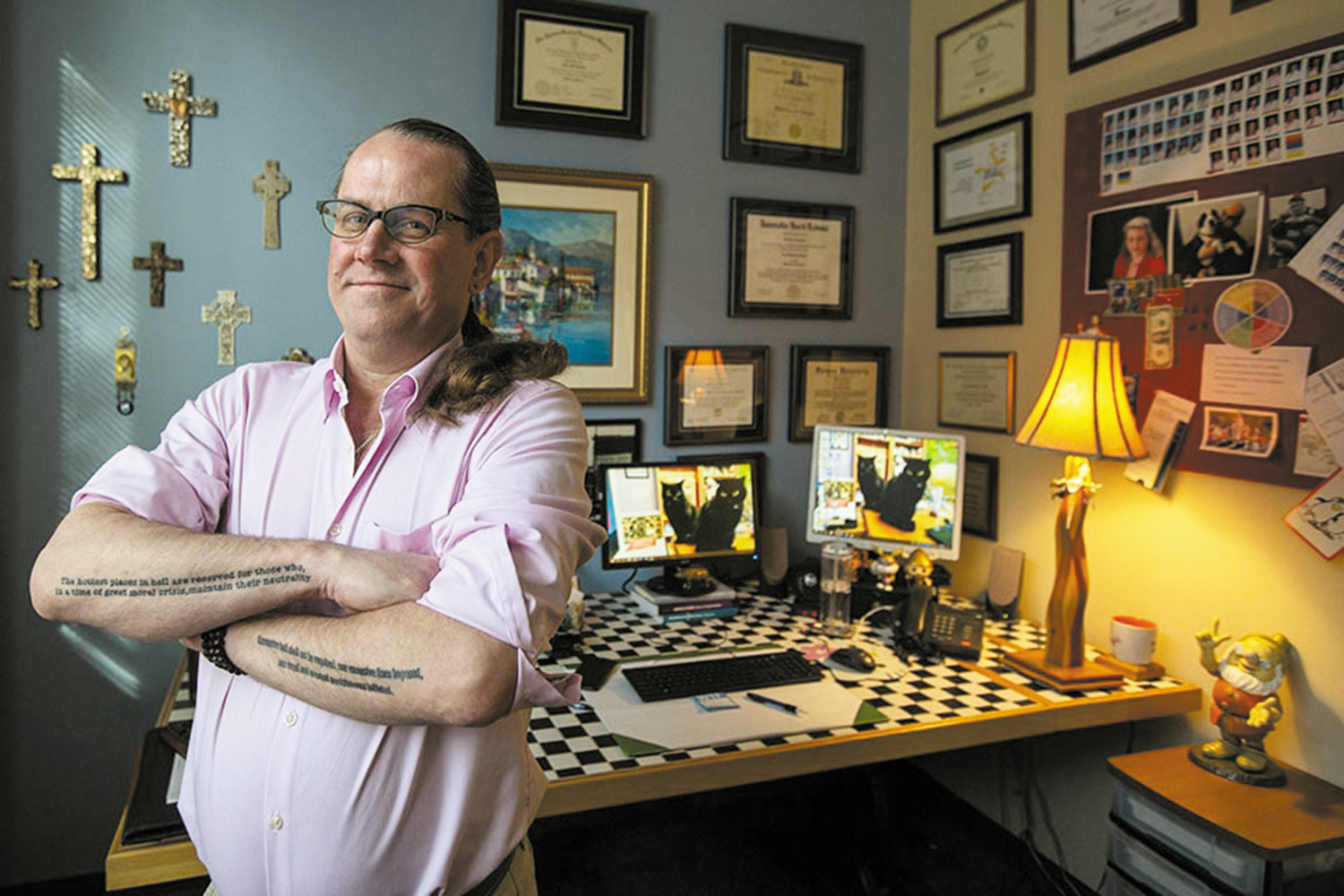
The first in his family to go to college, Rottnek closely identifies with the blue-collar folks he knew as a boy working in his parents' St. Louis hardware business. He also finds connection with people who are unhoused, incarcerated, dealing with addictions or struggling with mental illness.
Rottnek first encountered people in shelters through an elective course he took in medical school. One of the most important lessons he learned was that only good fortune separated him from those experiencing homelessness.
"Something went off for me, viscerally, when I realized these are the working-class folks I grew up with," Rottnek says.
For his work caring and advocating for people on the margins, Rottnek is the 2026 recipient of CHA's Sister Carol Keehan Award. The award's namesake is a former CHA president and CEO who spent her life working tirelessly for equitable healthcare. The award honors someone who is a fierce advocate for social justice and healthcare access.
Addiction care innovator
Now in his 17th year as director of community medicine at Saint Louis University School of Medicine, Rottnek has a secondary appointment in the university's School of Law. He has written about correctional medicine and addiction medicine for CHA's Health Progress and served on the journal's editorial council for seven years. He has won many awards, including the Dr. Norman White Award for Engaged Scholarship and Service given by the Saint Louis University Faculty Senate and a Collaborative Partner Award from the university's Division of Student Development, which honors staff members with diverse experiences and perspectives for outstanding contributions.
Rottnek is chief medical director of the Assisted Recovery Centers of America, a treatment provider in Missouri. His one stipulation for initially joining the agency was that the work he and the agency developed would be free for other clinicians to duplicate in their own treatment of patients. The Gibson Center for Behavioral Change in Southeast Missouri and Southeast Missouri Behavioral Health have adapted and used guidelines based on that work.
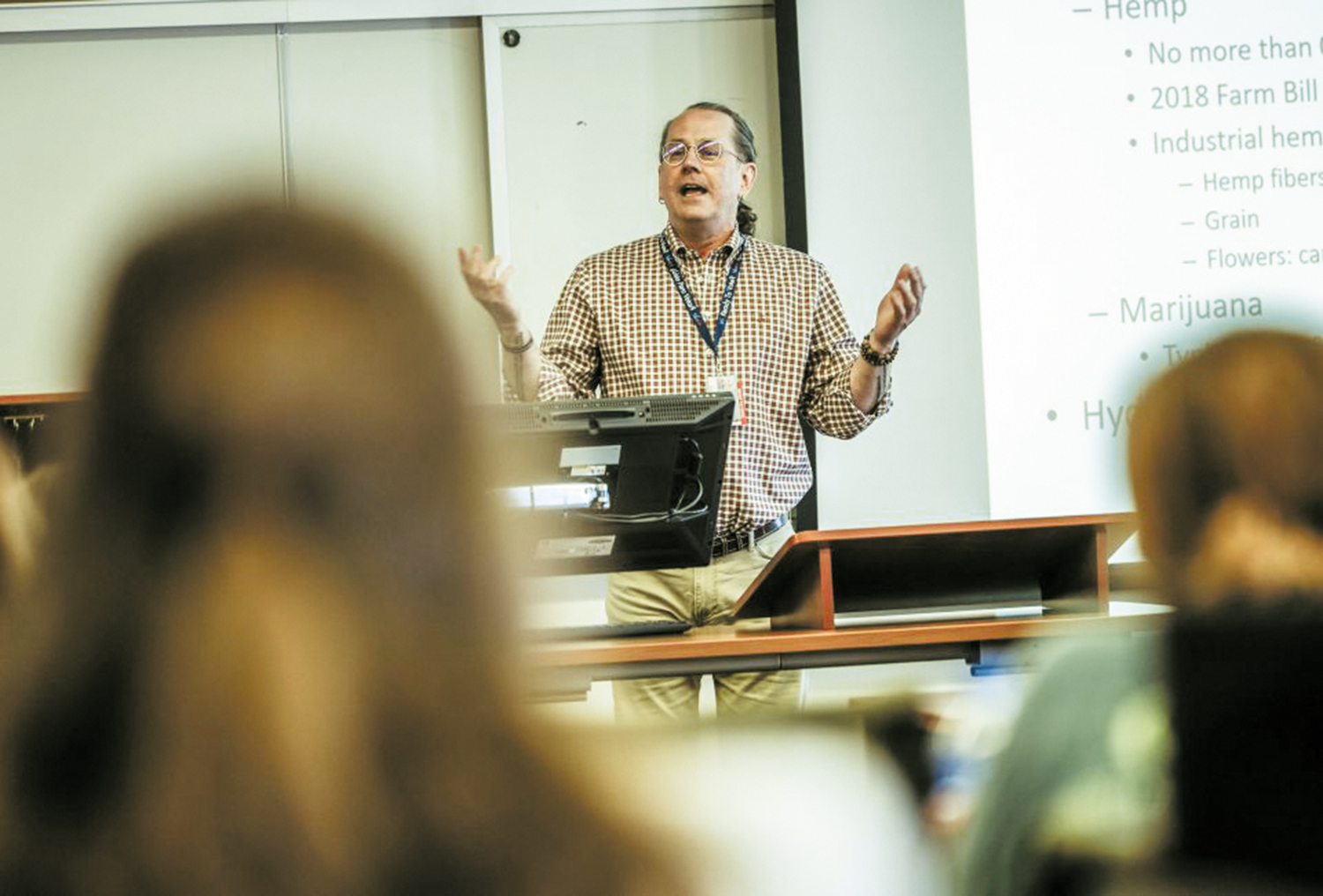
"People who are incarcerated -- these are folks we need to care about because they are somebody's children," Rottnek says. "When they go back to society, they should not be going back sicker than how they came in."
Rottnek was instrumental in creating SSM Health Saint Louis University Hospital's addiction medicine fellowship -- one of the first in the Midwest. During the yearlong program, fellows complete rotations in the addiction medicine consult service, psychiatry, telehealth and maternal fetal medicine at SSM Health Saint Louis University Hospital and SSM Health St. Mary's Hospital as well as at community clinics.
"We built it from the ground up," Rottnek says. "And where we had just two addiction medicine-trained docs, now we've got seven."
Medical-legal link
Another pioneering effort Rottnek has been behind marries medicine and law. A nascent medical-legal partnership pairs resident physicians at SSM Health Cardinal Glennon Children's Hospital with Saint Louis University law students to support children and families served by the hospital. The partnership uses legal interventions to address health-related needs, such as safe affordable housing that is compliant with the Americans with Disabilities Act, individualized education programs, and benefits for children with complex medical issues. The interventions may include a conversation, litigation or threat of litigation, and changes in laws, rules and regulations.
None of these efforts would be possible without teamwork, Rottnek says. Relationships formed and nurtured over years and decades are key to turning ideas into realities, he says, and the financial piece can be especially critical.
"People think, 'Oh, Fred does cool stuff,'" Rottnek says. "Well, Fred does cool stuff because Fred works with cool business directors in our department that teach me and work with me on how to make dollars and cents work."
Among those assisting Rottnek in funding projects is Lizette Morgan, director of business operations at Family and Community Medicine at the SSM Health SLUCare Physician Group. She admires Rottnek's ability to relate to everyone.
"I've seen him address individuals with the same level of respect whether they have all the alphabets behind their name or whether they're someone off the street who is unhoused," Morgan says.
Rottnek treats colleagues with the same level of care he extends to his patients, she says. In January, when a snowstorm blanketed St. Louis, he wanted to be sure everyone in the department was safe.
"He was reaching out, asking, 'What do you need? What does your family need? How can I help?'" Morgan says.
Involvement in federal efforts
While Rottnek's focus is often on individuals, his reputation is widespread.
His national efforts include writing materials for the federal Substance Abuse and Mental Health Services Administration to educate healthcare providers about best practices for opioid use treatment in correctional facilities.
Recently, as part of the national court case settlement on opioid treatment that involved manufacturers, distributors and large retail pharmacies, Rottnek was tapped to create a plan to mitigate the harm created by prescription opioids. He donated the funds from this work to the addiction fellowship program.
He is published in numerous medical journals, including Annals of Family Medicine, Journal of the American Board of Family Medicine and Journal of Substance Use and Addiction Treatment.
"Moral inventory"
Early on, Rottnek's success seemed anything but assured.
In 1986, while pursuing a doctorate at Harvard University on a full scholarship, a malaise Rottnek could not identify led him to drop out. After teaching high school for a few years, he decided to become a Jesuit. But plagued by the same despair he'd felt at Harvard, he left the novitiate eight days in. A friend suggested he see a psychiatrist, who diagnosed him with major depression and prescribed Prozac.
"Here I am in a sliding-scale resident clinic in psychiatry, sitting next to people who are actively psychotic, hallucinating," Rottnek says. "So I did kind of a moral inventory in terms of what's important to me and thought, 'Maybe I need to look at medicine.'"
Rottnek attended Saint Louis University School of Medicine from 1991 to 1998, initially eyeing psychiatry but switching to family medicine. He says that decision freed him from some of the boundaries psychiatrists must put into place.
"I can tell my patients, 'Hey, I know what it's like to be depressed; let me tell you a little bit about how medications have helped me,' or 'I know what it is like to be gay in St. Louis and have friends with HIV,'" Rottnek says. "That kind of radical honesty with people has always been something I've really enjoyed."
Illustrating Rottnek's commitment to authenticity is a quote attributed to writer and poet Maya Angelou on his arm. Of his many tattoos, it's one he chose as a reminder to himself. It reads: "I've learned that people will forget what you said, people will forget what you did, but people will never forget how you made them feel."
Listening is key
Kelly Everard, a fellow medical professor and researcher who calls Rottnek her "work husband," directed a clinical interviewing course with him for eight years.
"We would interrupt each other like an old couple," Everard says. "I'd say, 'You're not making sense right now,' and he would just laugh and say, 'There she goes again.'"
Rottnek stands out, she says, for his lack of ego and his appreciation for the knowledge and skills of others.
"Fred takes his job very seriously, but he and I do not take ourselves seriously," Everard says. "One of the reasons we work really well together is that we're not afraid to make a mistake because the whole point is getting better, making something, trying something new, seeing a problem, trying to solve it."
Rottnek hopes that in the future Catholic healthcare systems will take an even bigger role in mental healthcare, especially for people who are incarcerated and addicted to substances.
"We really need to lean into that because if not, who else will?" he says.
The personal theology that has guided Rottnek's career centers on asking people what they need rather than telling them what he thinks.
"I embrace this idea of listening to people, finding out what's important to them," Rottnek says. "What are their drivers? What do thriving and flourishing mean for them? And how can I support them as a physician?"