
When survivors of domestic violence or sexual abuse show up in the emergency department, sometimes hospitals are unequipped to give them the wraparound support they need. An increasingly robust partnership between Mercy Health — Cincinnati and the nonprofit Women Helping Women is helping to fill the gaps.
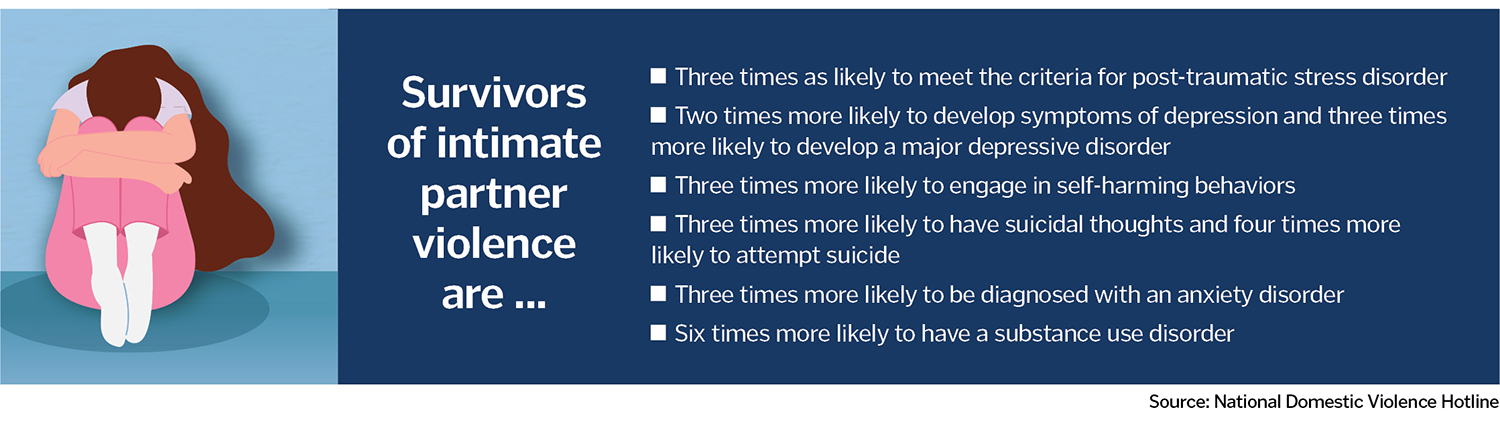
Women Helping Women sends an advocate to Cincinnati-area emergency departments to provide trauma-informed support to domestic violence and sexual abuse survivors. It is an increasing need: Across Ohio, there were 157 domestic violence fatalities in 2025, including victims and perpetrators, a more than 37% increase from 114 the year before, according to the Ohio Domestic Violence Network.
"The partnership with hospitals and advocates is hugely important," said Kristin Shrimplin, president and CEO of Women Helping Women. "Is it new? No. Does Mercy Health do an outstanding job? Yes."
Women Helping Women sends professional advocates to 26 hospitals in five counties in and around Cincinnati. That includes a long-standing relationship with Mercy Health — Cincinnati. The organization serves five of Mercy Health's six Cincinnati-area hospitals. (A different advocacy organization serves the sixth hospital.) Mercy Health is a subsystem of Bon Secours Mercy Health.
Expanding into a new county
Women Helping Women only started sending advocates to Mercy Health — Clermont Hospital, just east of Cincinnati, two years ago. The organization had received hotline calls from domestic abuse survivors in the county but didn't have a formal arrangement with the Mercy Health hospital.
Gina Hemenway, the executive director of community health at Mercy Health — Cincinnati, saw the signs that help was needed. A couple of domestic violence homicides made headlines there, including that in August 2023 of a Clermont County woman strangled with a sheet by her husband who later shot and killed himself.
Hemenway contacted Women Helping Women to see if they could again team up. "I think it was a shared understanding that we needed to do something to make that happen," she said.
Women Helping Women launched the hospital advocate program in Clermont County in March 2024. It split the $300,000 cost three ways with Mercy Health — Cincinnati and the HealthPath Foundation of Ohio, with Mercy Health providing a planning grant and then the first year of funding. A similar financial agreement continued the second year, and Women Helping Women agreed to pick up the total costs for the third year and beyond.
"Mercy Health did something that none of the other hospital systems did, and they invested dollars," Shrimplin said, pointing to a first in the organization's more than 50 years.
In 2024, the advocates at the Clermont hospital helped 130 survivors, who received more than 557 supportive services.
Serving an increasing need
Advocates typically spend four to six hours at a hospital helping a domestic or sexual abuse survivor. They offer trauma support, assistance going to court to get an order of protection, a connection to a support group, and help with financial assistance to relocate or help to prevent eviction.

"It's been an incredible service, and we know survivors do better when they're not alone in a system," Shrimplin said. "Because of that partnership, we can always go back to Mercy Health if we notice data trends or if we notice there's some really complex things happening and maybe survivors' needs aren't getting met as best as possible. We have a trusted partner to have that conversation."
The need for advocates at hospitals is increasing each quarter, she said. Her organization is seeing a jump in calls of about 25% each year. From 2020 through 2024, more than one in four violent crimes in the United States involved a domestic relationship, according to a FBI report released in February.
Women Helping Women is seeing another troubling trend: Of the nearly 9,300 survivors their advocates responded to in 2025, more than half of them, a record, had been strangled.
Shrimplin said strangulation is a key indicator that the victim will experience a traumatic brain injury or eventually be killed.
"This is why strong hospital responses matter, because we know if we're seeing more injury in the community, and folks are getting rushed to the hospital ... they also have to get mapped to an advocate," Shrimplin said. "It'll continue to be this repeat victimization if the advocate doesn't get on scene at the hospital where people are presenting with that type of injury."
Relying on one another
Hemenway said that it is helpful to clinical caregivers to have that advocacy partner in the emergency department. She knows of one Clermont hospital nurse who had worked in another hospital with Women Helping Women. When the nurse learned the program was expanding to Clermont, Hemenway said "you could just tell ... that a weight was lifted." The nurse told stories about patients who were assisted and supported by Women Helping Women, Hemenway said.
Both the hospitals and Women Helping Women need each other to provide the best support to survivors, Hemenway and Shrimplin said.
"Partnerships at the hospitals matter, because (they) are a huge entry point where folks are going to come in," Shrimplin said. "And that partnership matters to have advocates there, to be alongside survivors at entry point, so then we can walk that path with them ... throughout all the other systems, to hopefully prevent that next victimization."
Hemenway said: "We don't just see our job as a hospital or health system to provide clinical care. Because we are a faith-based, mission-based organization, we see our job as a hospital or health system to provide holistic healing to the patients that we support. We can't do that alone."