

A 2024 community health needs assessment for Denver's Intermountain Saint Joseph Hospital revealed multiple ZIP codes in the hospital's catchment area where fewer than half of the residents own their homes. In a survey conducted for the assessment, 83% of respondents said affordable housing was a top health priority. The assessment also found that 16% of households experience severe housing cost burdens. In two ZIP codes, a severe housing burden was cited by nearly 25% of households.

One way Saint Joseph’s parent system, Intermountain Health, is helping to address the housing concerns in greater Denver is by loaning $2 million to the Elevation Community Land Trust. The funds have enabled the nonprofit to finance construction of what it calls "permanently affordable homes" in a neighborhood hit by the housing affordability crisis.
It is one of an increasing number of place-based investments that Intermountain Health is making to get at pressing social determinants of health surfaced in community health needs assessments. Nicholas Fritz, Intermountain Health director of place-based investing, says the initiatives the system invests in "are projects that change the game" for vulnerable populations.
"We see place-based investing as a way to advance the Catholic health mission by improving the health of the people involved," he says.
Jacob Harrison, Intermountain Health chief Catholic mission officer, says the place-based investing strategy relates to the question: "How do we create the social conditions to allow people to flourish?"
He added, "We’re partnering to address inequities, and that is all part of the core commitments of Intermountain."
A force multiplier
Fritz says Intermountain Health began place-based investing in 2019 in its Utah service area. After the secular nonprofit Intermountain Health merged with the Catholic SCL Health system in 2022, Fritz and his team looked for opportunities to employ the strategy in what had been the SCL Health markets. The eight Intermountain Health hospitals that are legacy SCL Health sites are in Colorado and Montana and are grouped together as the system’s Peaks Region.

Fritz explains that there are two types of place-based investments that Intermountain Health makes: intermediary and direct. With intermediary investing, the company makes loans to or equity investments in projects that align with the health system’s mission. This includes investments in community development financial institutions. Fritz explains that intermediary investments are a "force multiplier because we can use the relationships and underwriting capabilities of the teams in our partner organizations to multiply our ability to do this work. "Intermountain Health’s risk is pooled with others and diluted among multiple investors. "It’s a pretty easy way to start," he says.
With direct investing, Intermountain Health provides affordable, low-interest loans to organizations unable to secure a traditional commercial loan because of the size or perceived value of the project. Intermountain Health will invest if the project aligns with its community benefit and mission priorities.
Fritz notes that it can be a challenge for a health system to enter the money-lending business because at the outset the organization may not have the needed expertise on staff or the reputation in the market as a trusted lender. This is why Intermountain Health has started small in its markets and then built up its lending portfolio over time, growing its expertise in the process.
Borrowers rejected by traditional lenders
Fritz says in many of the communities Intermountain Health serves, wages have not kept pace with housing prices, making homeownership increasingly unattainable.

Also in Colorado, Intermountain Health invested $3 million in the Colorado Housing Accelerator Initiative, which bills itself as an impact investment platform. It offers debt and equity financing for affordable housing in Colorado. It has funded 18 projects across the state, creating or preserving more than 1,000 affordable housing units. The organization also offers rental units, returning some proceeds to its tenants.
In Montana, Intermountain Health invested $450,000 into the Christian nonprofit Community Leadership & Development, with about half of that going toward a loan for expanding its Hannah House sober living facility in Billings. The recovery home claims a 75% success rate helping women to maintain sobriety by gaining stability in their life, housing and employment. Intermountain St. Vincent Regional Hospital long has partnered with Community Leadership & Development and its recent support facilitated Hannah House’s growth to 20 housing units from 15.
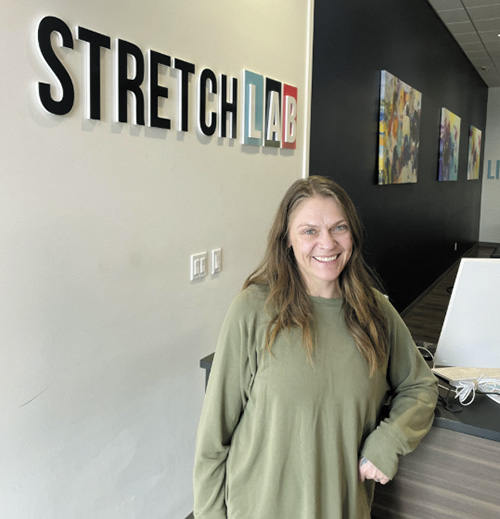
Last year, Intermountain Health provided a $5 million loan through its place-based investing strategy to the MoFi Montana community development financial institution. Operating in Billings for 15 years, MoFi has funded 164 small businesses. The infusion from Intermountain Health enabled it to increase its lending to people who could not obtain traditional loans. This included operators of childcare centers, a personal training business and a massage therapy business.
Intergenerational wealth
Fritz notes that place-based investing is in keeping with the whole-person care that Intermountain Health facilities strive to provide. He says stability — including in housing — is a prerequisite to health and well-being.
He adds that these investments help ensure vulnerable people not only have a roof over their heads but also that they can set themselves on an "upper-aiming path." He says housing is a key component of building intergenerational wealth, and that is something Intermountain Health hopes the investments will spur.
Mission leader Harrison says in this way the investments are getting at structural issues.
Harrison says such investments could lead to people being integrated more fully and healthily into their community. "We are stronger together," he says of healthy, restored people. "And this is for the common good."
.jpg?sfvrsn=d61b1227_7)