
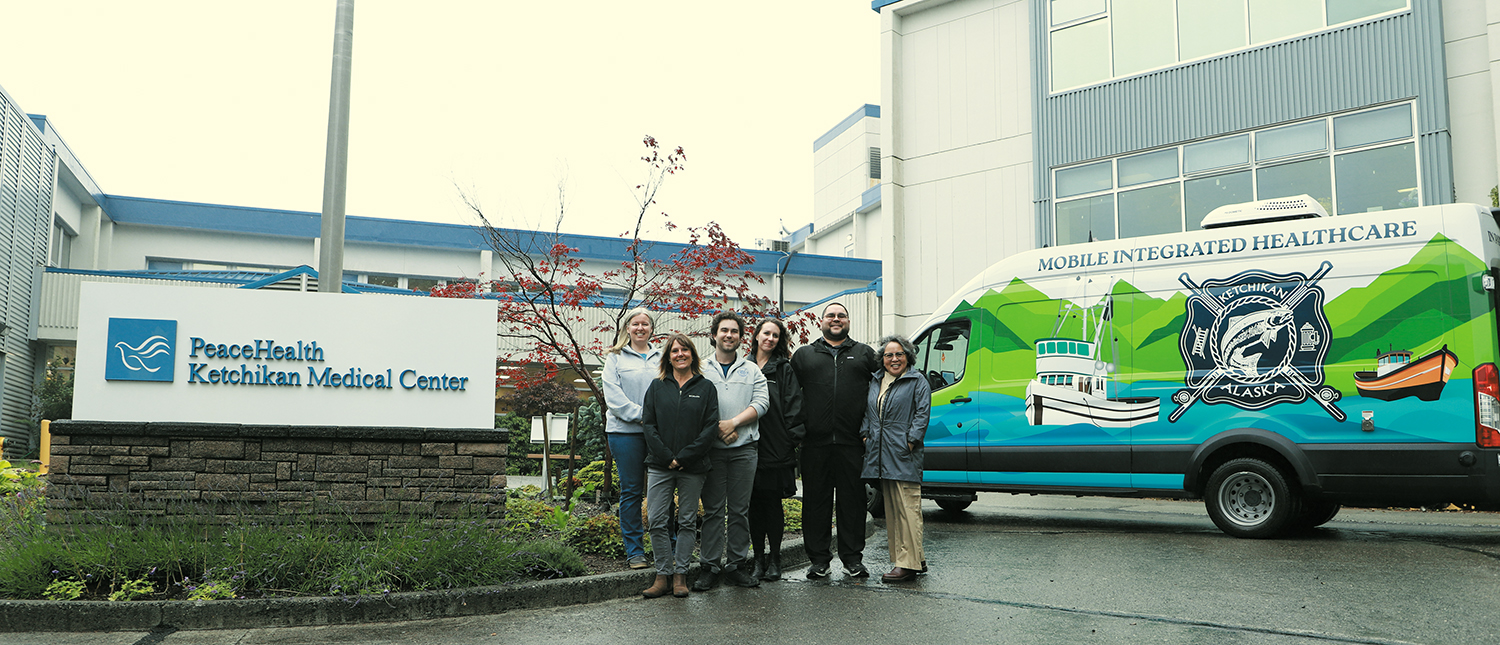
If there's a problem accessing healthcare in Ketchikan, Alaska, the community has a way of coming up with creative solutions.
Last year, a landslide took out a road connecting the town to its north end, where many PeaceHealth doctors live. Residents used boats to ferry the doctors to and from work.
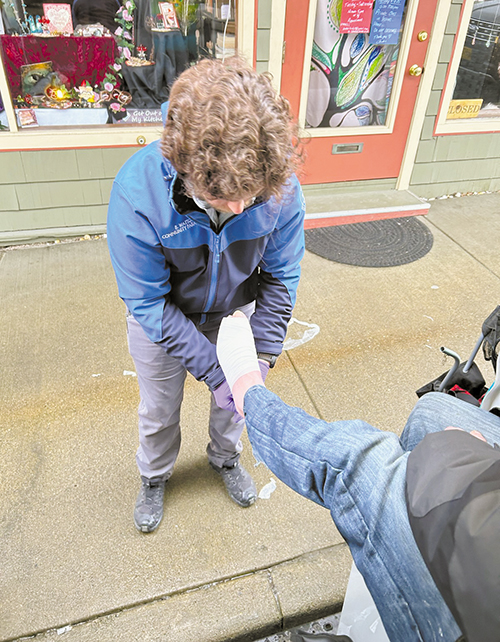
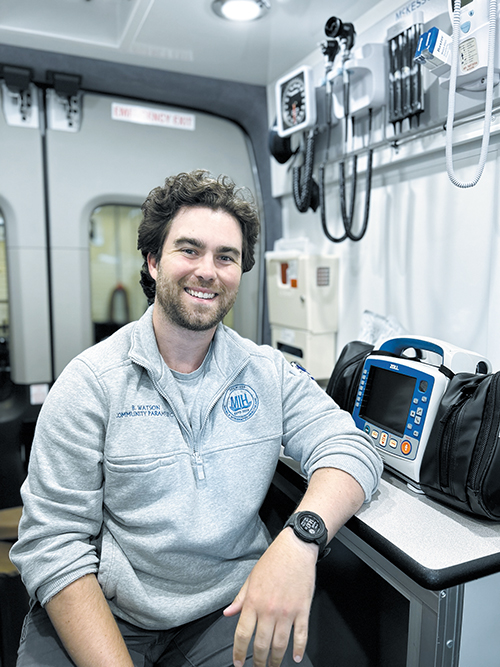
Conversely, Ben Watson, a paramedic with the city of Ketchikan, meets with patients where they are. He can do a follow-up EKG, draw blood and bring it to the hospital, and set up a telehealth appointment. For those who can travel, he can arrange transport for an appointment.
Watson works with the Mobile Integrated Healthcare Program, which the city and the Ketchikan Wellness Coalition launched in 2024, with $100,000 in community benefit funding from PeaceHealth. By providing nonemergency, at-home care, the program has helped reduce readmissions among "high utilizer" patients at PeaceHealth Ketchikan Medical Center by more than 80% over the last three years. Overall, the hospital has seen a reduction of about 43% in readmissions over 12 months. The program comes at no charge for city residents.
"A lot of it is just outreach and education," Watson said. "That's a huge part of what I do."
He pointed out, as an example, that explaining to patients the side effects of medication can reduce their trips to the hospital.
Watson routinely helps people who are unsheltered get healthcare. He also helps those who do have homes but for whatever reason have difficulty getting in and out of them. The home of one of Watson's elderly patients is up about 200 stairs, not unusual for rugged Ketchikan. He said there's "no way" she can get down the stairs to a doctor's appointment, so he goes to her.
Adaptability
Watson thinks of himself and those who work alongside him as "worker bees" of the hospital. "We're able to go into places that maybe they can't get to ... whereas we can be really flexible with our schedule and our time and what we're able to do," he said.
Last year, the Alaska Hospital and Healthcare Association gave the Innovation in Patient Safety and Quality Award to the program's leaders for "taking progressive and effective steps to improve patient care and outcomes." Other city fire departments and the Alaska Department of Health have talked to the program's leaders about how it works, Watson said.
Watson thinks one reason the program is successful is that it's adaptable.
"I think some of the things we do, you'd just be like, why are you doing that? That's not something a healthcare organization does," he said.
For example, he's gone grocery shopping for people to buy food that helps prevent conditions like gout flare-ups, he said. That could avert 911 calls. "If we can tie it to healthcare, we're going to do it," he said.
Identifying patients
Primary care providers, home health clinicians, hospice workers, or someone on the city's EMS crew refer patients to the program. Watson also identifies patients at readmissions meetings with PeaceHealth Ketchikan Medical Center staff.
Those meetings focus on who has returned to the hospital and try to identify gaps in care. Patients with frequent emergency department readmissions are often the most vulnerable ones who face housing insecurity, mobility challenges and chronic conditions.
"We review every single readmission," said Louis Scott, a quality facilitator at PeaceHealth who digs through data to identify issues, "and having Ben on that team has been like a whole new door has opened up."
Watson often knows these patients and their circumstances and can identify blind spots that hospital staff missed. "Our readmissions numbers have been much better since Ben joined the meeting, so I definitely give him some credit for that, without a doubt," Scott said.
When the program started, Watson and PeaceHealth staff identified more than 50 people as high utilizers of EMS and the emergency room for basic needs. Last year, the number was down to 34, and as of mid-May this year, Watson counted eight.
In 2023, the year before Watson started with the program, the city had about 2,900 EMS calls a year. The average went down to about 2,450 calls the last couple of years, and this year, the number of calls may drop to around 2,000. "I'm worried I will work myself out of a job," Watson joked.
Lessening the strain
Carolyn Henry is the quality and patient safety manager at PeaceHealth Ketchikan. Reducing readmissions is one of the system's strategic targets, she said.
Both the city and the hospital want to keep people from needing to go to the ER and to lessen the strain on resources, she said.
She calls the mobile health program "a beautiful partnership." "In our community ... we do have limited resources," she said. "So we have to share those things. We share these patients, right?"
Ketchikan and PeaceHealth have a long-standing connection. The city owns the hospital building, and PeaceHealth has leased it since 1963. The Mobile Integrated Healthcare Program evolved from that relationship and out of the Ketchikan Wellness Coalition, a nonprofit made up of individuals, organizations, businesses, local government and others to improve the quality of life for residents.
Watson can refer people to PeaceHealth's Priority Care clinic for same-day appointments. He also refers people to a weekly clinic run by the mobile healthcare program and the Salvation Army for vaccinations and sexually transmitted disease testing. The Salvation Army provides the space for the clinic.
Watson also drives a van that acts as a mobile clinic. The mobile clinic is particularly nice for unhoused patients, giving them a space to talk to Watson or another clinician privately. That helps build trust and leads to better outcomes, Watson said.
He keeps medications locked in a safe in the van for patients, most of them unhoused, so they live without fear of those medications getting stolen from them on the street. "I know where they all hang out," Watson said of these patients. "I can find them and give them their medicine."
He also refers unhoused patients to resources to help them get into permanent housing.
"It can be challenging for people, especially isolated people, to access things they need up here," Watson said. "But thankfully, from what I've witnessed ... as long as you're willing to ask for help, there's no shortage of people willing to step up and do their part."