
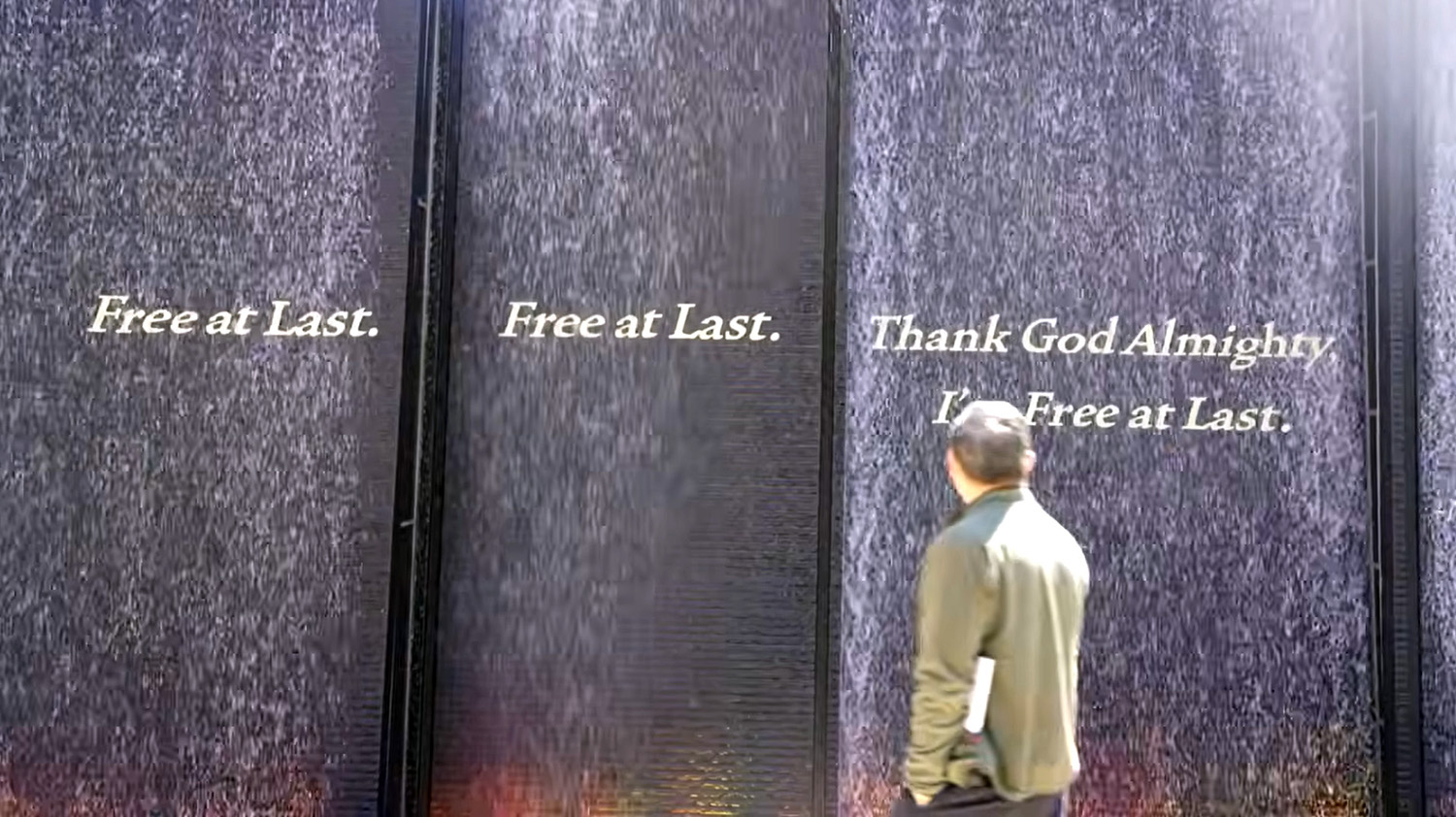
Even without any promotion, the civil rights pilgrimages that the Catholic Mobilizing Network has been organizing for the last four years fill up.
Krisanne Vaillancourt Murphy, the organization's executive director, believes there is a whisper campaign behind the popularity of the journeys to sites in Montgomery and Selma, Alabama, that memorialize some of the nation's worst racial atrocities and celebrate its hard-won racial progress.
She says the 350 Catholic leaders who have been part of the 13 delegations — including two contingents of bishops — say they come away from the experience with a greater understanding of a part of American history that is under told, of how that history continues to affect the nation politically and socially, and of how they can be instruments of racial justice and reconciliation.
"I think they come home sobered but empowered," Murphy says.
This fall, CHA is co-sponsoring one of the pilgrimages. Up to 50 leaders from the Catholic health ministry can join what organizers hope will be a transformative journey Sept. 30-Oct. 2 that leads to deep reflection and action.
'Part of what we're called to do'
Kathy Curran, senior director of public policy at CHA, says being aware of and concerned about civil rights in this country is within the mission of Catholic healthcare. "It's part of what we're called to do if we're going to truly work for a situation where we can have a society that fully recognizes the dignity of every human person," she says.
Curran and Dennis Gonzales, senior director of mission innovation and integration at CHA, will be among the guides for the pilgrimage. The two have been the leaders of CHA's We Are Called initiative. That program began in 2020 and has rallied the association's membership to publicly commit to confront racism by achieving health equity.
Curran and Gonzales see the pilgrimage as a means for leaders within the ministry to strengthen their commitment to We Are Called.
Gonzales is hopeful that visiting sites that shaped or that memorialize the nation's racial reckoning will prompt pilgrims to work to end whatever vestiges of racism remain. That could take various forms, he says, including prayer or writing to lawmakers to urge reforms. "It's action at the level that the person is comfortable with," he says.
Gonzales points out that the church is calling on its ministries to take up the charge of racial equity. "Pope Leo himself is consistently — and he did in his encyclical (Magnifica Humanitas) — talking about the dignity of the human being and the common good," he says. "So it's core to our Catholic identity as a healthcare ministry."
The pilgrimage will start in Montgomery. Among the planned stops there are the Equal Justice Initiative legacy sites:
- Legacy Museum: From Enslavement to Mass Incarceration, an immersive journey through the U.S. history of racial injustice
- National Memorial for Peace and Justice, a sacred space for truth-telling and reflection about lynching and its legacy
- Freedom Monument Sculpture Park, a 17-acre site that honors the lives and memories of the 10 million Black people who were enslaved in America and celebrates their courage and resilience
In Selma, pilgrims will cross the Edmund Pettus Bridge, the site of the brutal Bloody Sunday beatings of civil rights marchers in 1965, and walk part of the Selma to Montgomery National Historic Trail that honors the 54-mile march that led to the adoption of the 1965 Voting Rights Act.
Grounded in Catholic social teaching
The Catholic Mobilizing Network's work is focused on ending the death penalty, advancing justice solutions aligned with Catholic values, and promoting healing and restorative justice. Murphy says the civil rights pilgrimages promote that work by fostering a better understanding among Catholic leaders of how racial injustices, past and present, reverberate in the nation.
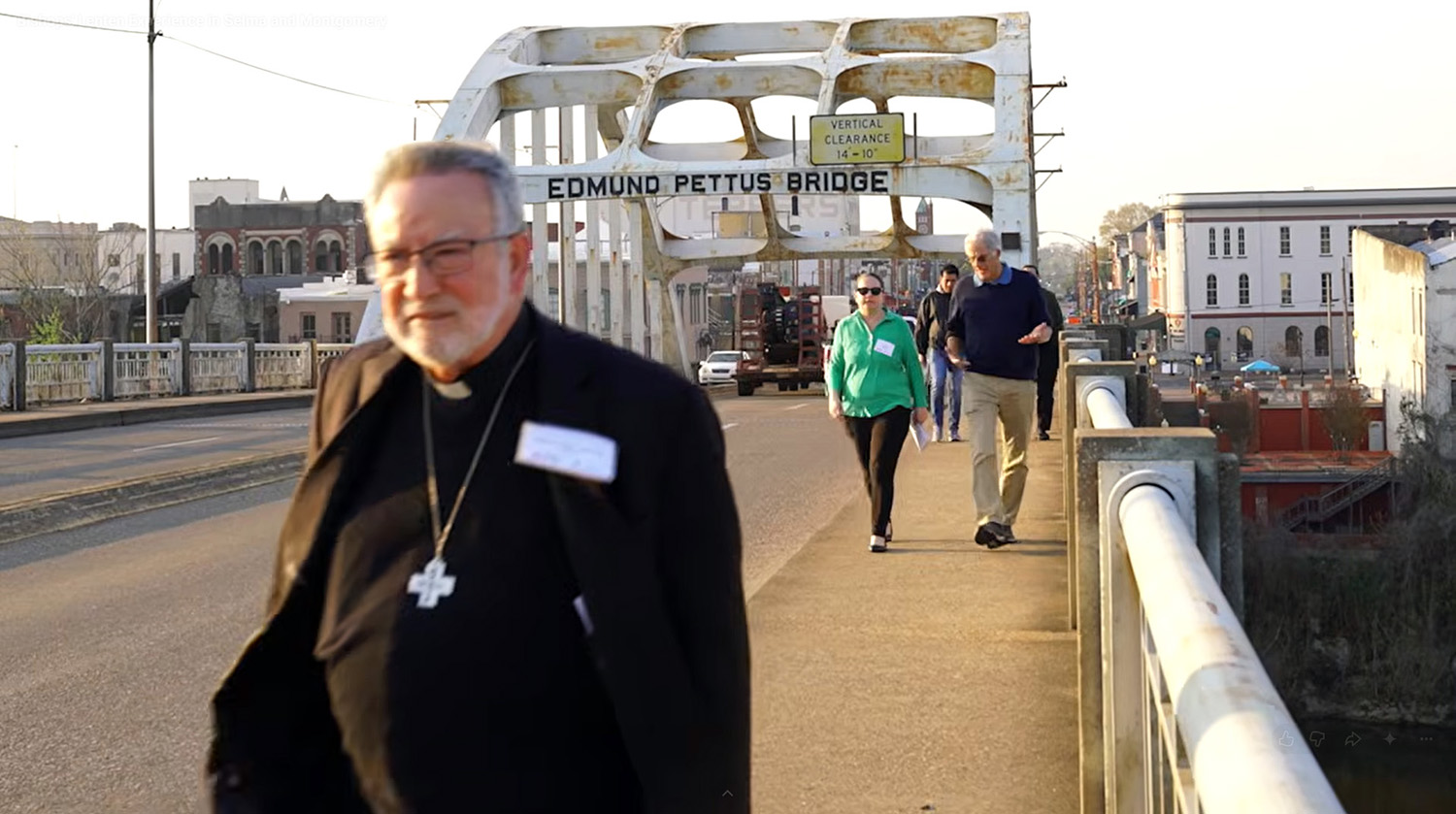
In addition to visiting historic sites, the pilgrims meet with people who share related experiences, such as having worked with the Rev. Martin Luther King Jr. or crossed the Edmund Pettus Bridge on Bloody Sunday. The delegations also meet with people who are moving the cause of racial justice forward, such as leaders of the Edmundite Missions, a Catholic social ministry in Selma founded by two priests that is focused on providing education, healthcare and support during large-scale emergencies and on meeting basic needs.
Murphy says like all of the network's efforts, the pilgrimages are grounded in Catholic social teaching. For example, the journeys elevate human dignity by taking the pilgrims to places they might not have gone otherwise and hearing the voices of people on the margins. They highlight subsidiarity by spotlighting the work being done in communities to address racial injustices.
Murphy calls the Catholic healthcare ministry one of the church's "greatest contributions to society." She notes that Catholic healthcare providers pursue the belief that all life is sacred but they also bear witness to the economic and racial disparities in the nation's healthcare system. She hopes the pilgrimage will deepen their perspective on the pervasive impact of racial injustice across all of society.
Exploration and dialogue
To promote deep reflection during the journey, the delegations take part in "restorative circles" to communally discuss what they have seen and learned about racial injustice and to share their reactions.
"We offer, I think, a safe place for people to explore that and dialogue about it, pray about it, and then come home ready to make a difference in the ways that they can in their sphere of influence," Murphy says.
Gonzales traces racial equity and justice work back to the origins of Catholic healthcare. "The religious sisters who came to the United States and founded most of our healthcare ministries were passionate about serving the most vulnerable and underserved in their communities, including those who faced discrimination, racism, and injustice," he says. "This work is in our DNA in Catholic healthcare."
Curran took part in a past civil rights pilgrimage led by the Catholic Mobilizing Network. That journey inspired her to help organize the CHA-sponsored one.
"We know that this means taking two to three days out of people's personal and work lives, and that's a significant commitment," she says. "But we really think it's worth it because you're going to come back to your workplace with the greater understanding of the mission of Catholic healthcare and how it applies in our society today."