
To better navigate the complexity of today's global health relationships, we must ground our work in Catholic social teaching and embrace the wisdom of the Serenity Prayer, which begins: "God grant me the serenity to accept the things I cannot change; courage to change the things I can; and wisdom to know the difference."
This posture will help strengthen our global relationships and deepen our witness to justice, compassion and the common good by engaging in a culture of encounter in our fractured world.
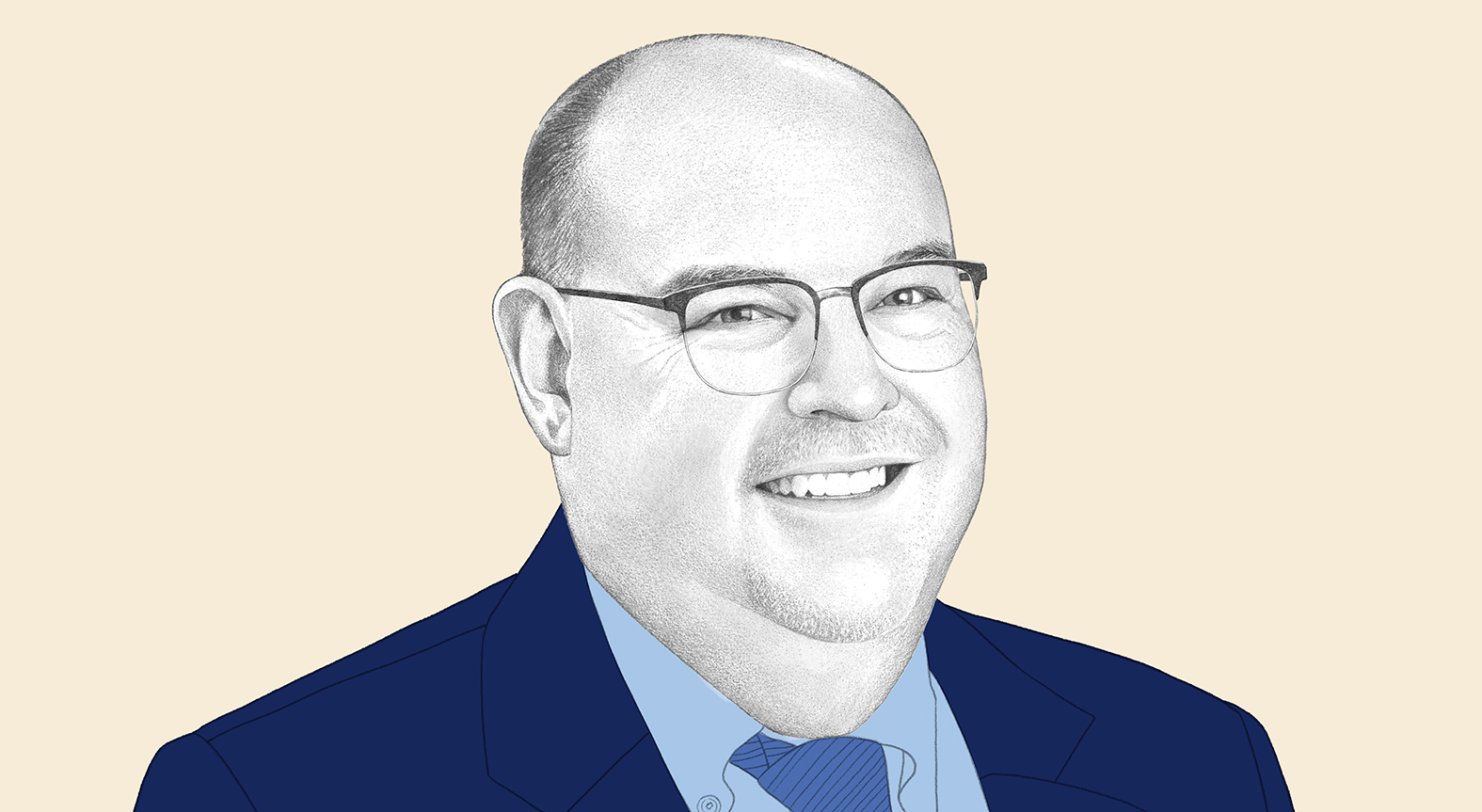
To help us reimagine global health partnerships, Dr. Neeraj Mistry, a global health consultant, shares how we can embark on this initiative through humility, shared responsibility and deep listening. His call is a timely invitation for
Catholic health care in the U.S. to align more fully with the global Church as we live out our faith in service.
LOVING MORE: PARTNERING WITH THE POOREST AND MOST VULNERABLE THROUGH CHANGING TIMES
NEERAJ MISTRY, MD
It is interesting how context and environment shape our actions and the path we follow through our lives. For me, growing up as a person of color in apartheid South Africa grounded my commitment to social justice. I chose to apply myself to the study and practice of health and medicine to address the inequalities that the system of apartheid had created. When I started as a doctor in clinical practice, I served one patient at a time within a health and social system that, at times, worked against the well-being of my patients and community.
While I found the immediacy of clinical practice fulfilling, I soon realized that to achieve systemwide change, I needed a wider scope of action and impact. Consequently, I dedicated my efforts to global health on HIV/AIDS, tuberculosis, malaria and neglected tropical diseases. My decision to focus on these diseases — broadly described in the Bible as pestilence and famine — emerged from the desire to "change the things I can" in terms of the health of the poorest and most vulnerable in our societies. These vulnerabilities arise from system failures and structural imbalances that leave us with a world of "haves" and "have-nots" that correlate broadly to north-south, urban-rural, educated-uneducated and white-people of color.
And I am far from alone in this work. The past century has witnessed dramatic improvements in global health and development, indicators that are a collective success borne from decades of hard work by the global health and development community. Here, I must acknowledge that further scrutiny reveals that despite aggregate improvements (for example, in education, maternal and child health, and life expectancy indicators), low-resourced and vulnerable populations have seen a much slower rate of improvement.
This bifurcated pace of progress has created an ever-widening gap between poorer and better-resourced sectors of society. Our limited success shows where there is still work to be done. The task of "loving more," as Pope Leo XIV reminded us in his first homily, is clearly set before us.
MOVING FORWARD FROM LOSS WITH LOVE
We are now living in a time of volatile political and economic uncertainty that undermines and threatens the hard-won gains in health and development,1 potentially setting the health and development status of vulnerable populations back by decades.2 The global health and development community has suffered setbacks resulting from changes in bilateral and multilateral aid, shifts in economic and trade policy, and a widespread retrenchment of health and development personnel that have left government programs in endemic countries reassessing their national plans. Through this transition, the poorest have become even more marginalized.
This global predicament has led me to reflect on a time in my life when my South African community was working to dismantle a deeply entrenched system: the anti-apartheid struggle. Apartheid's deeply discriminatory policies were pervasive across all sectors and disciplines of society, and opposing this system required an equally broad range of resistance actions employed by citizens at every level of society.
Philosopher Friedrich Nietzsche's truism that "he who has a why to live for can bear almost any how" is helpful when withstanding periods of discord, division and degradation, but is perhaps less useful when charting a collective path out of the desolation of prejudice and the weaponized fear of our differences. I have found both solace and inspiration in the Serenity Prayer, which was introduced to me by one of my country's faith-based anti-apartheid comrades. The Serenity Prayer beautifully holds us as we acknowledge and grieve what is loved and lost, and then take our individual and collective actions to love more.
I share this reflection in a world that is becoming increasingly unjust, unstable, unpredictable and polarized. It is ultimately the poorest and most vulnerable among us who bear the brunt of this rise in instability. Indeed, the role of the Church and faith-based communities to champion the poor and vulnerable has never been more relevant. As Pope Francis said, "Today, as in the past, liberating the poor, the oppressed and the persecuted is an integral part of the mission entrusted by God to the Church."3
AN URGENT CALL FOR HOPE
The withdrawal of the U.S. from the foundational role it played in global health and international development has disrupted the global health and development ecosystem. Not only was the U.S. the major financial supporter of health and development, albeit at a lower proportion of its GDP when compared to other industrialized countries,4 but it had also set up the institutions and the human capital critical to sustaining the effort. Furthermore, it enabled other sectors to complement the foundational role, where we saw private foundations and philanthropists having the bandwidth for nimble innovation and experimentation, nongovernmental organizations and faith-based groups focusing on community and last-mile related work, universities providing academic robustness, and businesses bringing about economic growth and development. These respective efforts were enabled by steadfast, reliable and sincere leadership from the U.S.
The world still needs that committed partner for development. Mis- and disinformation on social media, misaligned corporate incentives, partisanship and political infighting, and rising inflation and cost of living are just some of the factors leading to discord and distrust in society. The Church, together with the broader faith-based community, can provide that solid foundation of hope. As Pope Leo XIV has said, "a leaven for a reconciled world," has never been more urgent.5
What would it take for the Church to organize itself as we strive to "love more" for global health? What would it take to better mobilize ourselves to serve as the leaven of unity, communion and fraternity within the development community? These questions can be challenging, especially given that under the broad umbrella of Catholicism, Christianity and the even more expansive faith-based sector, there is much division of parallel work.
Resources beyond financial ones abound in the sector, and the starting point that unites all faiths is the ethic of service. Could the Church better be that reliable and consistent partner for the poorest and most vulnerable? How can we work collectively to provide ourselves with the courage to change what we can and provide each other with the wisdom to know where best to place our talents and efforts?
It is through discernment that Catholic health care, as a ministry of the Church, can move from working within the status quo (or the past's paradigm) to a new role of partnership and fraternity with and for the poorest and most vulnerable. It is through fraternal and courageous action that the faith-based sector mobilizes as a force through its instrumental role in effecting change. And we must have the wisdom to appreciate the dynamic state of acceptance and change in an ever-changing global landscape in this moment, as Pope Leo XIV describes as an "hour for love."6
BRUCE COMPTON is senior director, global health, for the Catholic Health Association, St. Louis. DR. NEERAJ MISTRY is an independent global health consultant based in Washington, D.C. He served as managing director of Global Network for Neglected Tropical Diseases and medical director of the Global Business Coalition on HIV/AIDS, TB and Malaria.
NOTES
- Shereen Hussein and Jonathan Samet, "Measuring Population Health Impact of the Trump Administration's Withdrawal from WHO and Cuts to USAID: Time to Start Counting," Population Health Metrics 23, no. 13 (2025): https://doi.org/10.1186/s12963-025-00376-y.
- Sharon Basaraba, "Life Expectancy Then and Now: 1800 vs. Today," Verywell Health, August 8, 2025, https://www.verywellhealth.com/longevity-throughout-history-2224054#; John Stover et al., "The Effects of Reductions in United States Foreign Assistance on Global Health," SSRN, April 8, 2025, http://dx.doi.org/10.2139/ssrn.5199076.
- Pope Francis, "Address of His Holiness Pope Francis to the Members of the Plenary Council of the International Catholic Migration Commission," The Holy See, March 8, 2018, https://press.vatican.va/content/francesco/en/speeches/2018/march/documents/papa-francesco_20180308_icmc.pdf.
- "Official Development Assistance (ODA)," OECD, https://www.oecd.org/en/topics/official-development-assistance-oda.html.
- Pope Leo XIV, "Homily of the Holy Father Leo XIV," The Holy See, May 18, 2025, https://www.vatican.va/content/leo-xiv/en/homilies/2025/documents/20250518-inizio-pontificato.html.
- Pope Leo XIV, "Homily of the Holy Father Leo XIV."