
When Scripps Health experienced a cyberattack in 2021, supervisory FBI special agent Todd Walbridge was part of the investigation. He got to know the organization and Scripps President and CEO Chris Van Gorder, a former police officer himself.
In October 2023, when Walbridge retired from the FBI, Van Gorder tapped him to help the Southern California health care system full time.
Walbridge is now the senior director for safety and security for Scripps. Van Gorder initiated the Hospital Violence Task Force in San Diego, a group that started in late 2023 and includes leaders from hospitals and health systems as well as law enforcement agencies and the San Diego County District Attorney's Office.
Walbridge sits on the task force and focuses on how to reduce violence within the Scripps health system. Two of its five hospital campuses, Scripps Mercy Hospital San Diego, and Scripps Mercy Hospital Chula Vista, are Catholic.
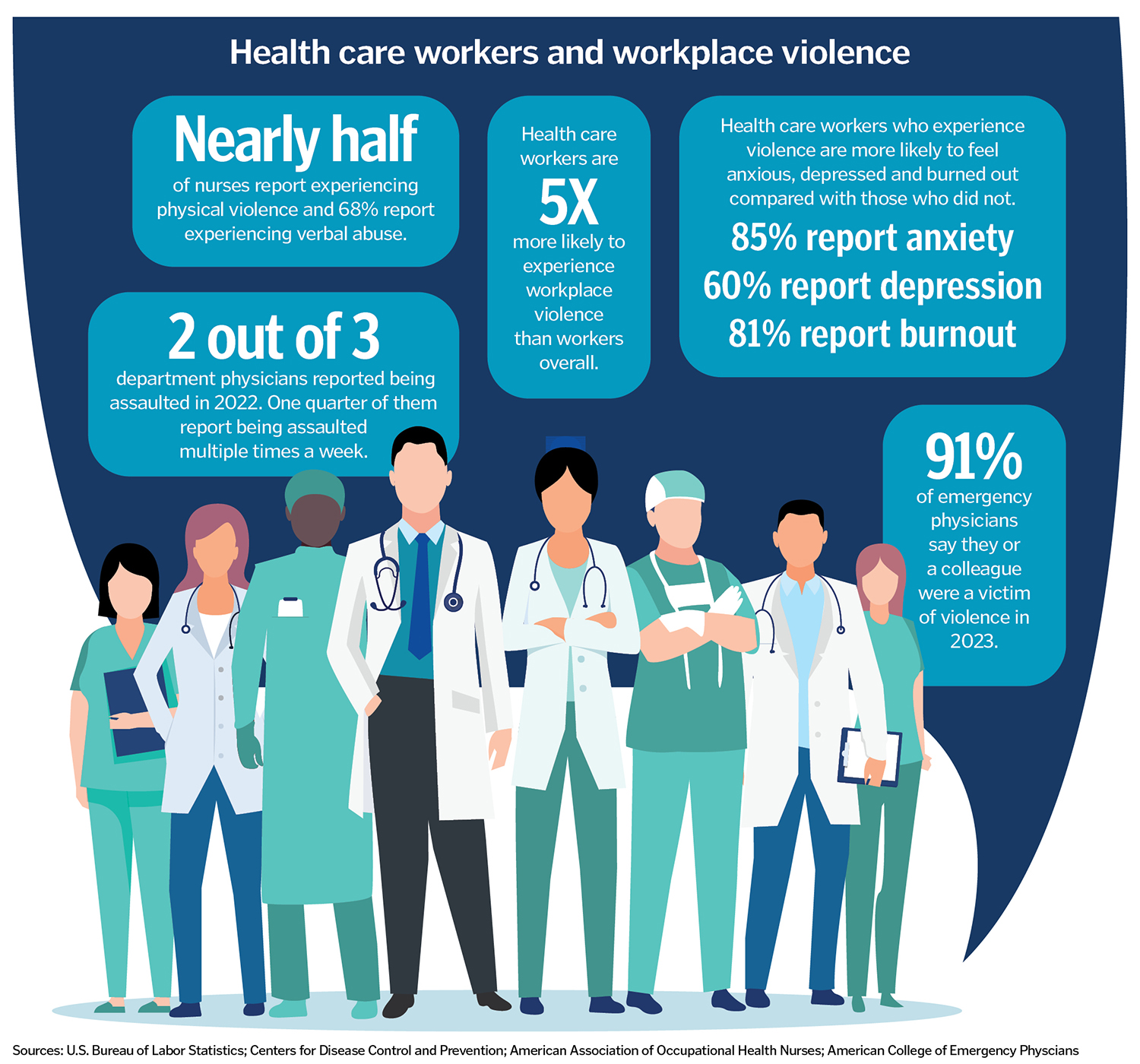
Across the country, violence in hospitals has "significantly increased" over the past decade, with rising rates of assault, homicide, suicide and firearm incidents, according to the American Hospital Association. These incidents were further exacerbated during the COVID-19 pandemic. The violence comes at a cost: the AHA estimates the price to prevent violence and pay related expenses was $18.27 billion in 2023.
Walbridge reports that Scripps reduced workplace violence injuries by 31% last year compared to 2023. Calls for "code 55," or violence in action, dropped 22%. Calls for Behavioral Urgent Response Teams went down 14%.
Catholic Health World spoke with Walbridge about the system's approach to reducing violence and encouraging communication. His answers have been edited for length and clarity.
How did you bring your FBI experience to health care?
As a SWAT team leader, my specialty in planning operations was: How do we bring a very violent person into custody safely? And the underlying tactic is: How do we reduce opportunities for violence? The opportunities for violence have driven our planning and preparation and reduction of workplace violence. Here at Scripps Health, I oversee all five hospital campuses, all 30-plus clinics, plus our corporate buildings. We've been making a lot of changes to how we do things, everything from the structure of our security program, to empowering our staff on what a correct response looks like for behavioral response versus a medical response and being able to delineate that difference and respond differently than they have in the past.
You have all those buildings, doors, people and opportunities. Where do you even start?
What it starts with is level-setting my security team and then reaching out as frequently as I can to all staff members. One of the things I've passed on to our staff is very similar to what we did on our SWAT teams, which is, protect yourself; protect your buddy. I had to explain that no, it's not selfish, because if you don't get injured, that means you're here today and tomorrow and the next day to not only care for our patients, but also so that the load is not shifted to the rest of your co-workers. They had never been told about the importance they have in the plan, and how important not being injured is to the organization from an operational standpoint, from a human being standpoint, and even a financial standpoint. The bottom line is also impacted by violence injuries that cost organizations money.
How have you trained your staff?
Part of that strategy is integrating our security staff into our care model. You have phlebotomists who handle blood, you have ED techs who triage patients' vitals, you have imaging techs who do X-rays. ... We are the behavioral techs, if you will, who manage behavioral problems. Our security (team) has been trained in de-escalations. We have a full day of training on what's called AVADE, which focuses on health care. We are doing more advanced training on behavioral care issues. I write an article at least once or twice a month and work with our marketing department, and we continue to broadcast what our messaging is about. We just created a video last week with our chief medical officer and our CEO called "10 Things You Can Do to be Safer at Work." Lesson number one is mindset. Be mentally prepared. If you've never envisioned violence, then you're going to struggle to understand it when it's happening before you.
How are you implementing technology to help with security?
Some of the violence comes from the visitors. This year, we have rolled out the use of facial recognition as part of our visitor registration, so that if somebody returns, the system recognizes them to quickly provide them with a visitor badge or to say, "Please wait here" and alert security because they've been restricted. We're trying to stop drug dealers from coming into our hospital to deal to the people we are trying to treat and care for.
I'm a big data person, as a cyber agent — ones and zeros are important to me — and we've built a dashboard of workplace violence, and I built a new hospital model for security around where the violence actually occurs.
We use cameras and artificial intelligence to do what our security officers aren't great at. Patrolling is not very successful from a law enforcement perspective, and even less effective from a security perspective. We can use AI to identify suspicious behavior, send alerts directly to our officers, and then they can respond. It sends a six-second snippet of the video directly to them. We are replacing their radios with smartphones.
(The cameras and AI) also detect firearms or edged weapons that are brandished. Since most active shooters start outside of a building and then make their way inside, that gives us the opportunity to begin the lockdown of the hospital and call 911.
Tell me more about the task force.
We meet every other month. We had a meeting recently where we talked about sexual assault in the health care setting, where patients are sexually assaulting nurses, but historically, nurses have told younger nurses, "That's just part of the job." I shared with the city attorney's office and the district attorney's office some of the stories from health care, and they were aghast, I guess, for lack of a better word. And so they said, "We want to help." We have an intranet site here at Scripps, and it talks about what law violations are, examples of them, and how to report them. They are working on a frequently asked questions page about sexual assault. We also have a page for how to report a crime, and that came out of our health care violence task force.
The big thing that this task force has brought is the education to our staff that, unlike television, if you file charges, it doesn't mean you're going to be on the stand in court, testifying. The district attorney's office has prosecuted over 40 health care cases in San Diego, which includes Scripps and others, since the task force started. The defendants all pled guilty, so there's been no need to testify in court, which is very powerful for our people.
What's the benefit of working with other health systems and hospitals?
I now communicate regularly with the health care leaders in other health care systems. There are people who frequent all of our local hospitals. One of the persons was recently arrested, and due to my relationships with the city attorney and district attorneys, I was able to reach out to them and include all of our health care security leadership on the email saying that this person has been a challenge for all of us, and we would appreciate any prosecution at any level that would send a message that we protect health care personnel throughout San Diego County. It's not just us. It's about all of us together working to solve these problems.