
Every year as fall approaches, a deep unease settles into the McKenzie River valley in Western Oregon. This year is perhaps even more distressing. It's been five years since the Holiday Farm Fire blazed through the region, killing one person and destroying hundreds of homes and businesses. The anniversary is a grim reminder of a tragedy that raises fears about whether it could happen again.
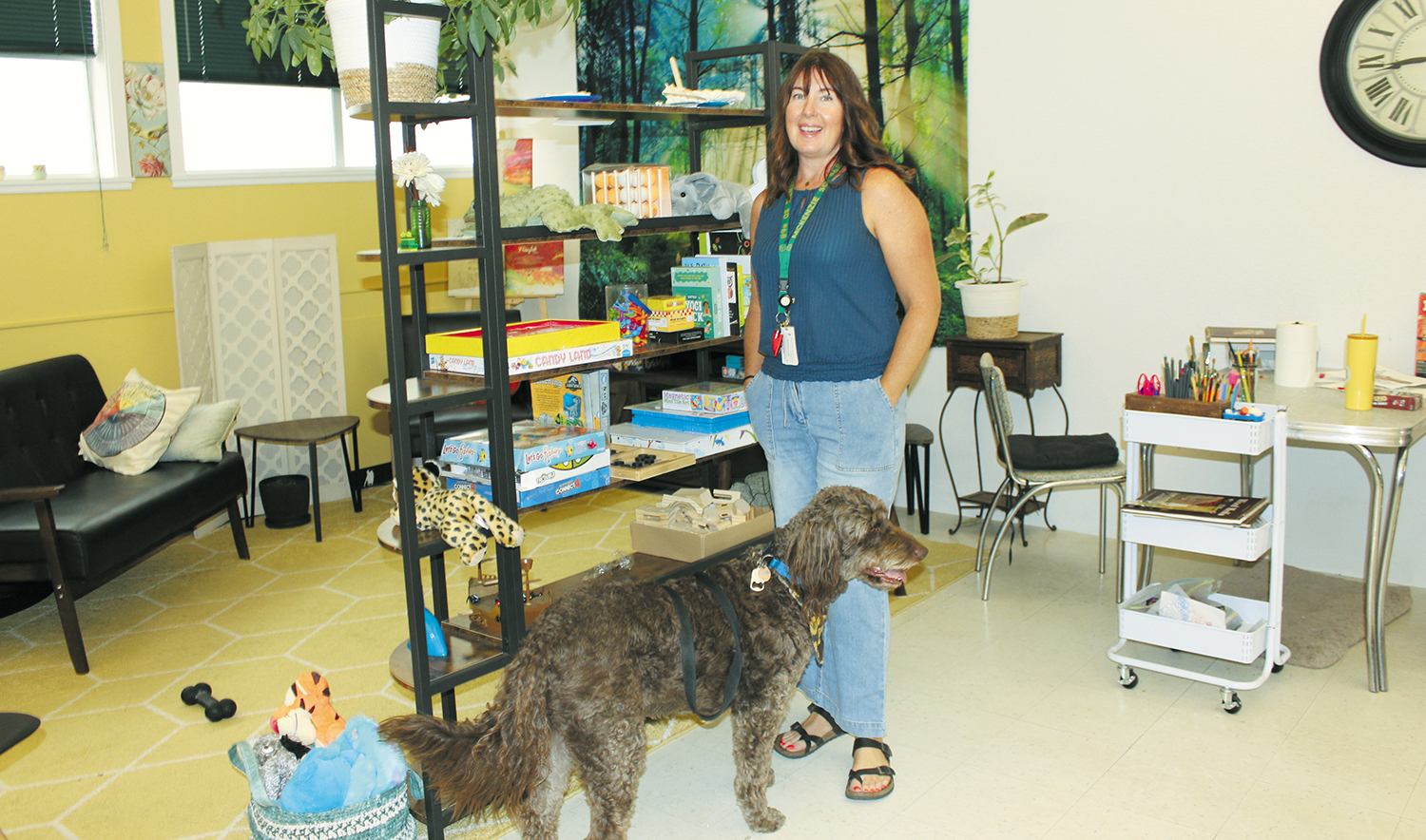
But thanks to an arrangement between PeaceHealth and the local school district, help is nearby for the community's young residents. Kelly Shaw, a licensed professional counselor with PeaceHealth, has an office inside McKenzie River Community School in Finn Rock, which serves preschool through high school students. From there, she can offer counseling to every student in the district, helping them and their families cope.
Shaw, who graduated from the school as did her mother and other relatives, jumped at the chance to help children and families at her alma mater.
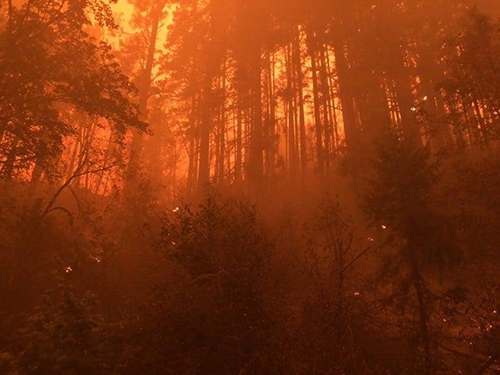
"The fire brought a lot of terror for folks — to be so close to it, to feel the heat through the car as they fled," Shaw says. "People were in genuine fear for their lives."
Working through emotions
Shaw understands the terror firsthand. She vividly remembers the Labor Day 2020 exodus when she fled her home with her elderly mother and aunt. It was two weeks before Shaw and her family, along with the rest of the community, could return to the blackened region.
Unlike many of her neighbors' homes, Shaw's home, which had once belonged to her grandparents, remained standing. That her house was spared seems inexplicable to her, given that the heat was intense enough to melt her blinds and that four surrounding homes were destroyed.
In the aftermath, a cascade of emotions washed over the community.
"There was a lot of gratitude and relief, and because there was a death, we were in wonder about how so many people got out safely and alive," Shaw says. "And then the devastation of it all started to trickle in."
At McKenzie River Community School, Shaw helped students work through initial feelings through doll play and puppetry, building with LEGOs, and playing card games. Talking while walking helped many students open up.
Children and adolescents, who already were dealing with COVID restrictions, grieved for friends whose families moved away after the fire. They picked up on the stress of their parents, some of whom struggled with post-traumatic stress disorder from the fire and evacuation.
"How do you get back in the car and drive someplace after the car was both your rescue and also the place where you felt trapped?" Shaw says.
A lot of work with parents involved managing panic attacks and helping them cope with persistent emotions such as survivor's guilt, and feeling unable to help others despite wanting to. Shaw understood all too well.
"I was in it with them, trying to figure out my own feelings while holding space for them to have their own," Shaw says. "I was grateful to have my work and to be a support."
'A mental health desert'
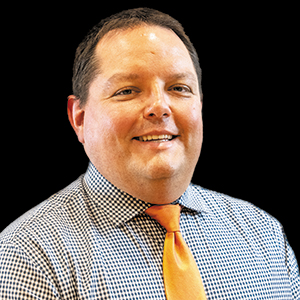
Superintendent Lane Tompkins says the McKenzie School District, with fewer than 200 students, long had been in need of an accessible therapist. Even before the fire and pandemic, Tompkins was concerned with his students' ability to regulate emotions and the lack of a school counselor or any other nearby options.
"It was kind of a mental health desert," Tompkins says.
Not only are mental health providers some 45 minutes away, the cost is prohibitive for many families. All students in the district receive free breakfast and lunch. "They're great kids but they just don't have a lot of the resources that some families do," Tompkins says.
The district secured funds for mental health counseling through Oregon's 2019 Student Success Act, which created a corporate activity tax to support schools. But figuring out how to successfully execute the idea proved difficult until PeaceHealth — a more robust health care system than the one the district initially partnered with — offered to provide supervision and billing services along with a therapist.
"We appreciate PeaceHealth coming out to an underserved rural area," Tompkins says. "It's definitely in line with their mission of helping those in need."
Money from the special tax covers all co-pays so there is no cost for families. Those families "really respond to Kelly and really respect her," Tompkins says.
"And I'm not saying our classrooms are problem-free, but a lot of the kids who've worked with her have been able to find a much better path forward," he says.
'A big, collective breath'
Since January 2021, Shaw's office has been conveniently located inside the school. Teachers keep an eye out for students they might refer. Those who spend a lot of time with comfort objects such as weighted blankets, or whose parents have brought up concerns, are potential candidates.
Shaw frequently attends Individual Education Program meetings for kids who need extra support. She also goes to parent-teacher events, making sure to keep her office door open or mingle with parents in the halls.
"Sometimes the idea of seeing a counselor can come with a lot of stigma or past experiences that might not always be positive," Shaw says. "When people come into my room and meet me, maybe I can show that I might not live up to whatever stereotype they had."
In the years since the Holiday Farm Fire, other nearby fires have blanketed the area with thick, black smoke. Some have been close enough that firefighting operations were based at the school. "In my head, I know the fire is far away and I'm safe," Shaw says. "But physically, I feel a tightness in my chest and I'm edgy and irritable."
It's hard to ever forget the danger.
"Every fire season, it seems like the valley just takes a big, collective breath and holds it," Shaw says. "We're all praying and crossing our fingers."
This year, she imagines even former students may make appointments with her outside of her school hours and obligations.
"Those who were freshmen the year of the fire have all graduated," Shaw says. "Now they're in a different developmental stage than they were five years ago, so they might need to talk about it again."