
Don't try to tell Agnes Cannella there's no such thing as angels. She knows better.
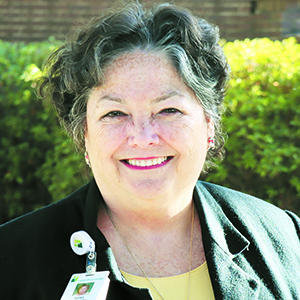
Cannella is director of mission services at St. Joseph's/Candler in Savannah, Georgia, where she has led the Angels of Mercy for five years. Named in honor of the Sisters of Mercy who started what was then St. Joseph's Hospital and their nearly 200-year mission of service to those in need in coastal Georgia, the volunteers, primarily staff members, undertake projects that promote wellness and assist underserved residents.
With projects at least once a month, from bed building to a fall festival and a program with the Salvation Army, the Angels have a busy schedule.
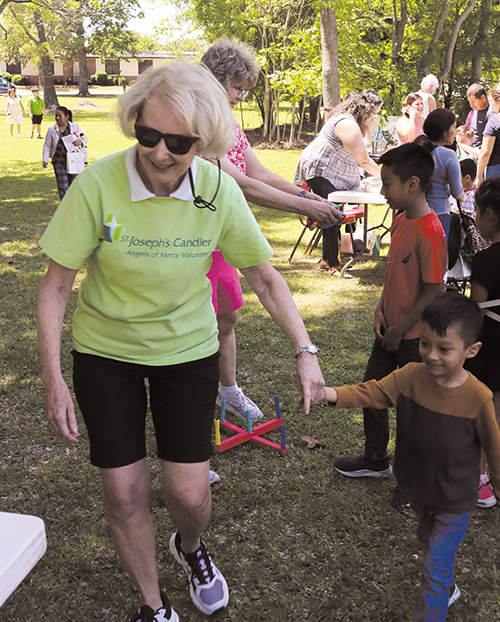
Cannella sees the Angels' community outreach work as an extension of the mission of the health system that includes two anchor hospitals and serves parts of Georgia and South Carolina. Friends and family members of staff members, including teens who need school volunteer hours, are invited to join the Angels' projects. Anywhere from five to 50 volunteers might be needed.
The Angels got their start during the 1996 Atlanta Olympics, which required a large volunteer corps to handle the influx of international visitors. As a major local employer, the health system accepted an invitation to take part.
"As a continuation from that, we just decided this was a great way for new co-workers to get together and meet each other while also living our mission," Cannella recalled. "It's 'I like it, I'll invite you because you're my friend or my co-worker,' and it just grows from there."
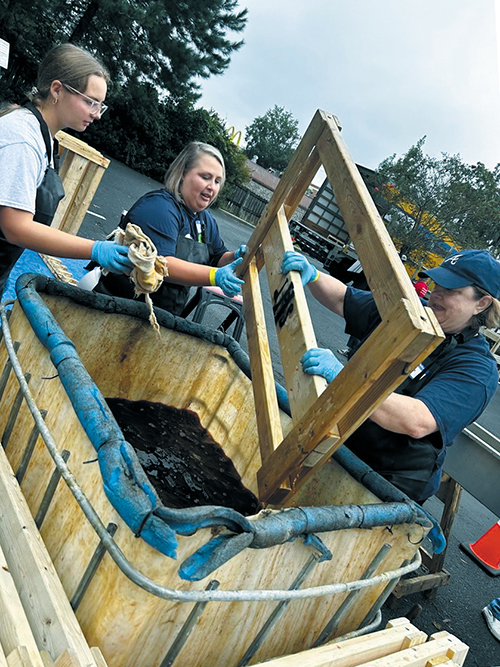
Meredith Scaccia, the health system's director of women's and children's services, said such enthusiasm can be contagious. "We're all very passionate," she said. "We're just trying to make a little bit of a difference, one day at a time."
Life lessons
Creativity is important when the Angels are looking for projects — and surprises also play a role. For example, Cannella said helping at a free foot care clinic taught some of the volunteers a valuable lesson. The clinic was held in a central location, on a bus route, with a population generally served by other hospital programs.
Some of the people who came to the clinic needed special shoes that addressed issues caused by diabetes. But some of the volunteers didn't understand that the cost put those shoes out of reach for some people.
"We were able to buy certificates that they gave to some of the clients that allowed them to buy diabetic shoes," Cannella said.
She added: "Bringing somebody into a new world that they may not be aware of — and seeing that someone's actual condition is not through any fault of their own — that really helped them."
Scaccia recalled a man who came to the clinic who was embarrassed because of the condition of his feet. He was humbled by the support of the volunteers. "It actually brought him to tears," she said.
Sleep in Heavenly Peace
Another successful project for the Angels has been working with the organization Sleep in Heavenly Peace, which assembles and donates beds for children in need ages 3 to 17.
The group was started by a Boy Scout troop in Idaho in 2012 and has spread nationwide with 400 chapters. Bonnie Scurry, a former special education teacher, heads its Savannah chapter. She said the organization demonstrates the same neighborly spirit as Angels of Mercy.
The case of a significantly disabled teenage girl and her mother stands out in her mind. "The whole time we were building the bed," she remembered, "they sat right at the door where the little girl could see, and she was making all kinds of beautiful sounds."
The volunteers set the bed low and when it was finished, the girl crawled to it from the hallway and climbed in. "That mother fell apart in tears," Scurry recalled. "She said (the girl) had never been able to get in bed by herself. That one will remain for me forever."
Measuring succes
The Angels of Mercy volunteer with Sleep in Heavenly Peace every year.
"They spend half of their Saturday with us, and they're very tired when they leave," Scurry said. "To build 30 beds, they stay on that assembly line the whole time. It's quite a sacrifice because I know that people in the medical industry work long, hard hours."
Cannella said the Angels contribute more than just sweat equity. "When it first started, if we needed any money, we were all chipping in ourselves," she said.
Now the Angels accept financial assistance from colleagues who don't have the time or the physical ability to join their projects. Using money from their annual campaign, the Angels this year donated $500 to Sleep in Heavenly Peace that went toward the cost of lumber.
How would Cannella measure whether the Angels of Mercy are a success? The answer, she says, is simple but basic.
"Health care is all about numbers," Cannella said, "but when you're doing service, is it really about numbers? You helped one person, and you touched one life by the activity that you did. You made a difference. That's a success."