Catholic Health World Articles

September 02, 2025

High school students get 'raw' experience of what it's like to be a clinician through Holy Name career program

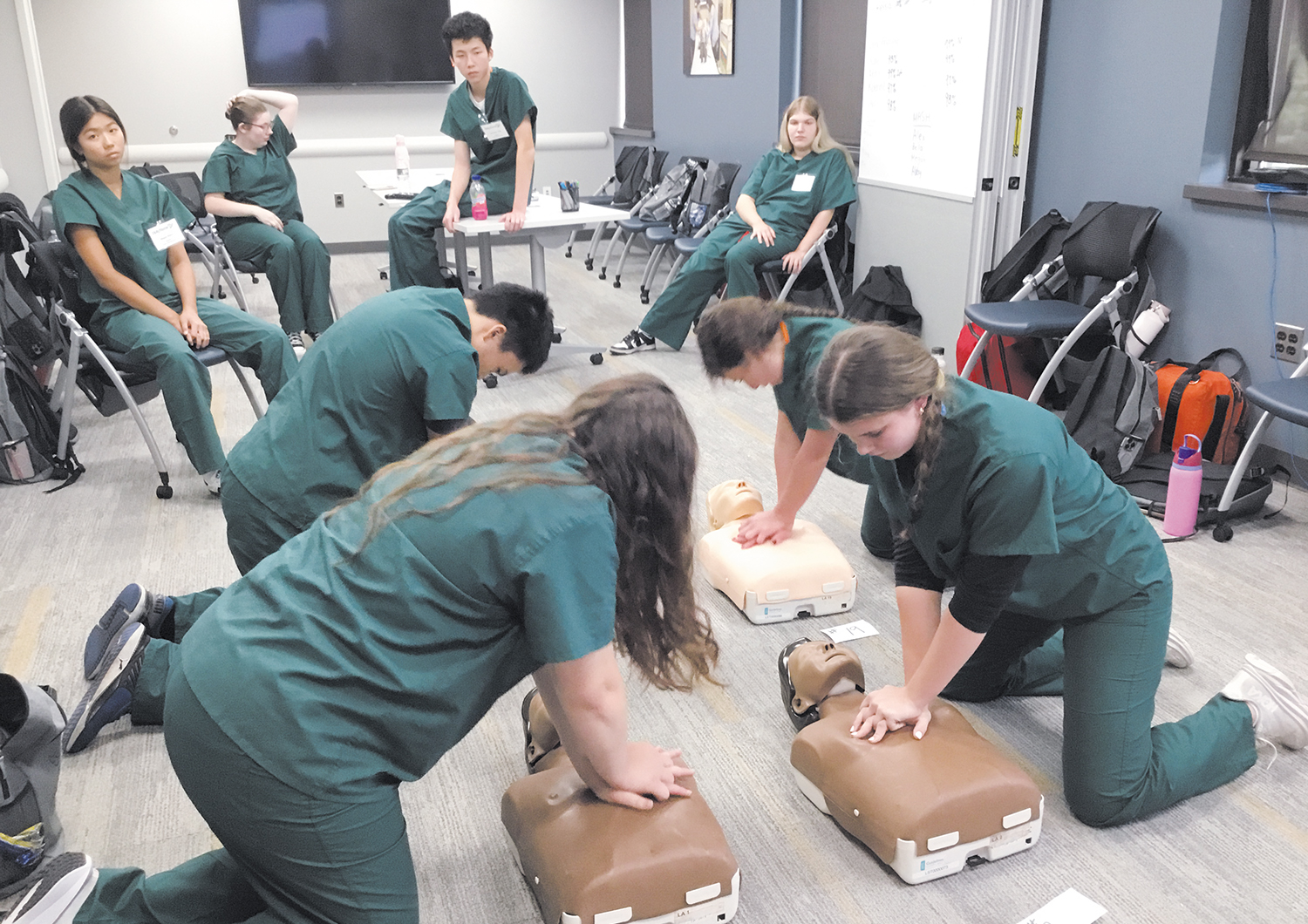
High school students engage in team-based CPR races as part of the Holy Name Medical Center Healthcare Careers Discovery Program earlier this summer. Holy Name is in Teaneck, New Jersey.


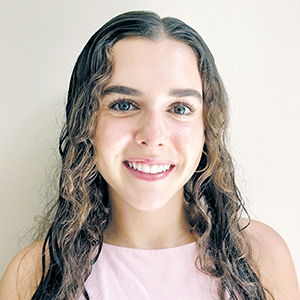
Freedman

When Alexis Freedman applied for the Holy Name Medical Center Healthcare Careers Discovery Program, she knew she'd get exposure to the goings-on at the 361-bed hospital in northern New Jersey. But when she actually took part in the weeklong session this summer, she was shocked at how much she, as a high school student, got to do.

"It was very hands-on, and I was so excited when I saw how raw the experience would be. It was beyond exciting," says Freedman, who is a high school student at Montville Township High School in Montville, New Jersey.

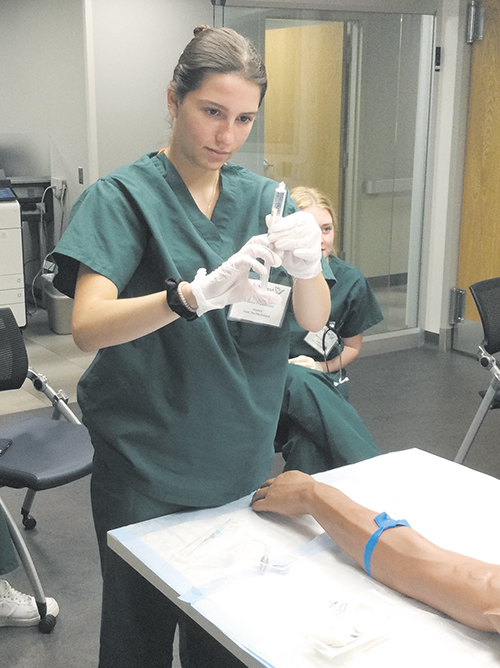
In the simulation lab, Freedman gave injections and delivered the babies of lifelike manikins. She took the vitals of other high school students participating in the session. And she did mock job interviews with staff members of Holy Name Medical Center, which is in Teaneck, New Jersey.
Goldman

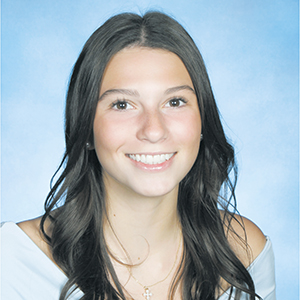
Abigail Goldman, who participated in the more advanced session of the Healthcare Careers Discovery Program shortly after Freedman's, was similarly amazed by the level of access. She rotated through multiple units of the hospital, shadowing clinicians. She even observed a gallbladder removal. "I saw the teamwork and conversation between the nurses and doctors and others," she says. Goldman is entering her junior year at Cresskill High School in Cresskill, New Jersey.

Igniting the career passions of students like Freedman and Goldman is exactly what Holy Name leadership had in mind in 2015 when it began the Russell Berrie Institute for Simulation Learning's Healthcare Careers Discovery Program. The summer program gives high school students who are considering a medical career a wide range of experiences at the hospital, including shadowing clinicians, rotating through medical units, attending a panel discussion with clinicians, practicing interview and job-seeking skills, and learning clinical procedures in the simulation lab.
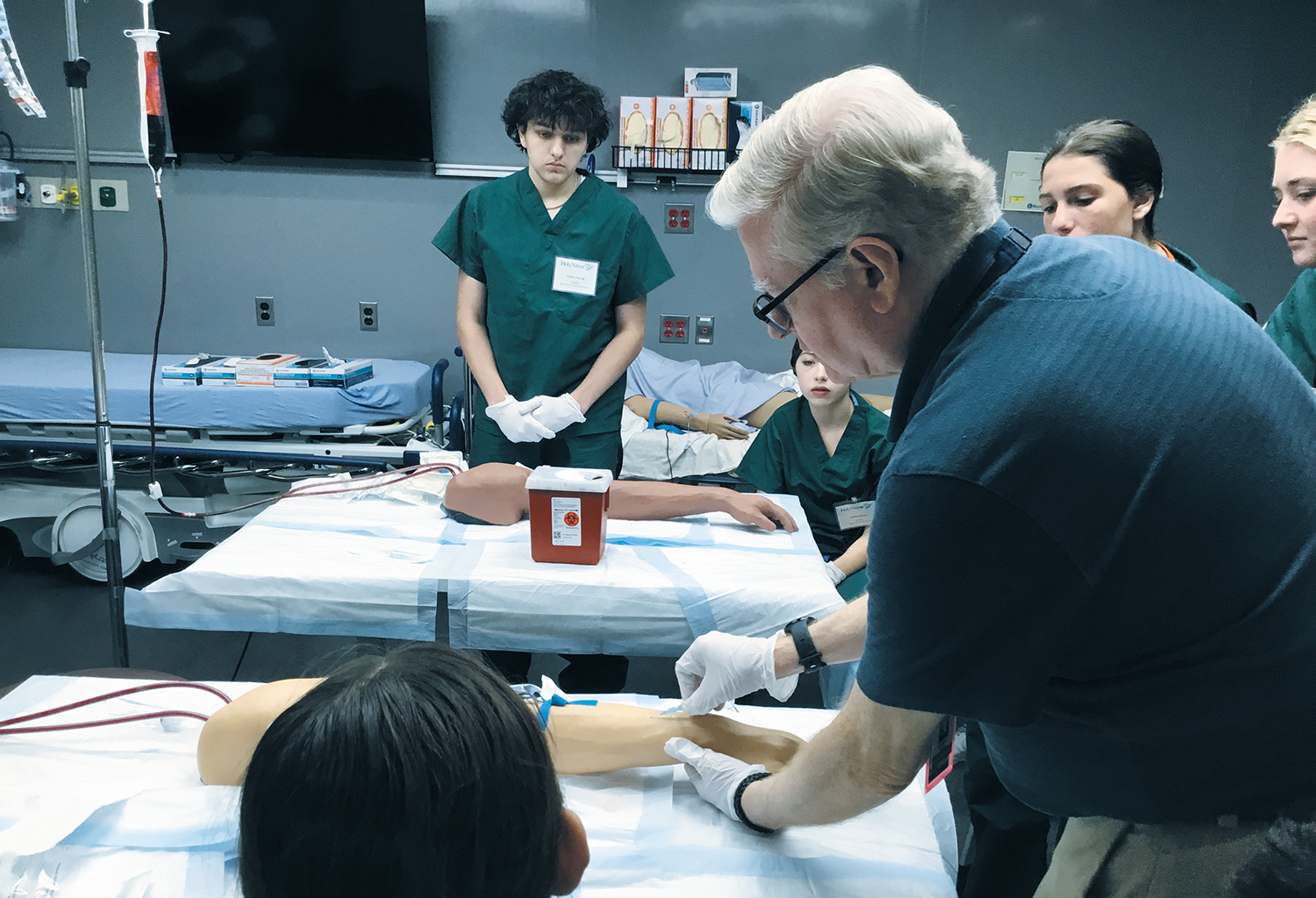
Ben Mazza Jr., a nurse, simulation educator and manager of emergency preparedness training, teaches the students IV skills during a session.


Holy Name is one of many Catholic hospitals across the nation with similar programs that offer career-building opportunities to students. (See more in the list below.)
Kostelnik

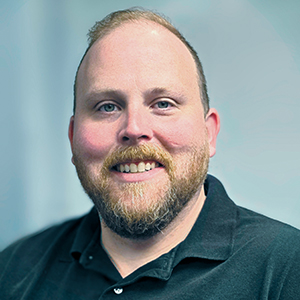
Matthew Kostelnik, the lead simulation specialist at Holy Name Medical Center, says with its program, the hospital is "taking a stance, preparing for the future workforce shortages that are coming with nurses and physicians" and other clinicians.

"The students leave here empowered," he says.
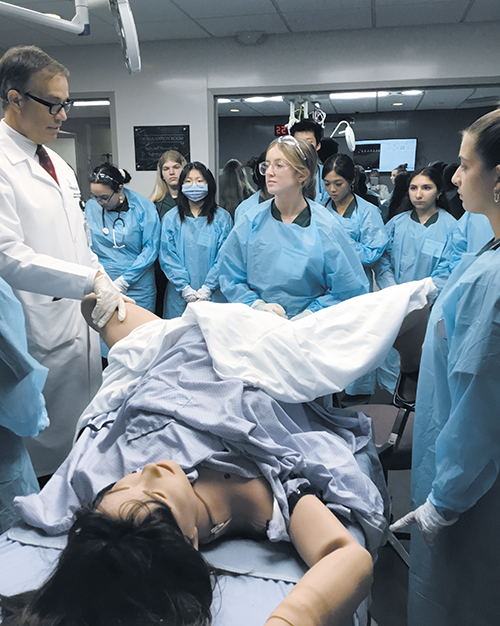
Dr. Jason Kanos, Holy Name chairman of obstetrics and gynecology, completes a simulated delivery session to teach students in the program.

Experiential learning
Kostelnik says the program began when Holy Name leaders identified a gap in the number of candidates available to fill clinical positions at the hospital.

While the program has evolved over the years, the current iteration features the initial program for younger students and the advanced program for older students who have attended the basic program. Both the basic and advanced program include a combination of classroom and simulation learning experiences and exposure to the hospital environment. Some of what the students learn is basic life support, labor and delivery practices, airway intubation and suturing. They can earn first aid certification.
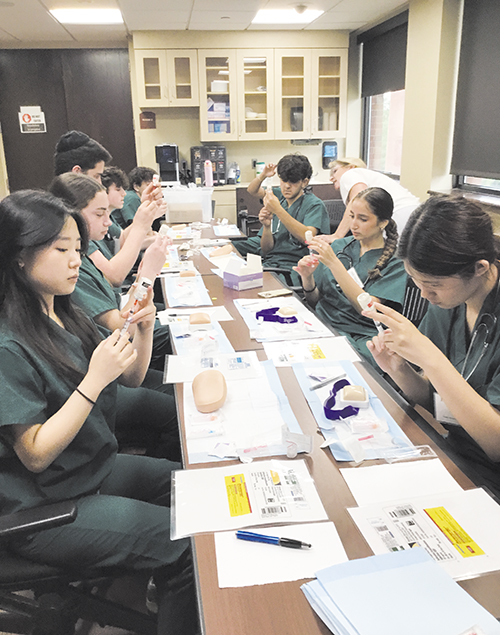
Students in the Careers Discovery program practice injection techniques during a skill session.

The students in the advanced session spend more time on the units shadowing clinicians and, as circumstances allow, can observe clinical care delivery, such as the gallbladder removal that Goldman watched.

Holy Name accepts applications for the program between January and March before the sessions that run in mid-summer. Hundreds apply. This year, 24 students were chosen for each of the two sessions. The program cost $875 to attend. Holy Name offers scholarships for students who cannot afford the cost. The Alpha Kappa Alpha sorority offers a scholarship for Black young women attending the program.

'Bright and eager'
According to a 2024 report from the National Center for Health Workforce Analysis, which is affiliated with the Health Resources and Services Administration, "as of June 14, 2024, approximately 75 million people live in a primary care Health Professional Shortage Area." The report also said that "across all physician specialties in the United States, there is a projected shortage of 187,130 full-time equivalent physicians in 2037." According to a Health Workforce Analysis published by the center in 2022, there was a projected shortage of 63,720 full-time nurses in 2030. That report said New Jersey was among 10 states with the largest projected shortages.

Kostelnik says it has been heartening to see hundreds of high school students moving through the program, "bright and eager," and enthusiastic about careers in medicine — although it's also a good way for students to discover early whether it is perhaps not the career for them after all.

Kostelnik says graduates of the program have returned years later to work at Holy Name.
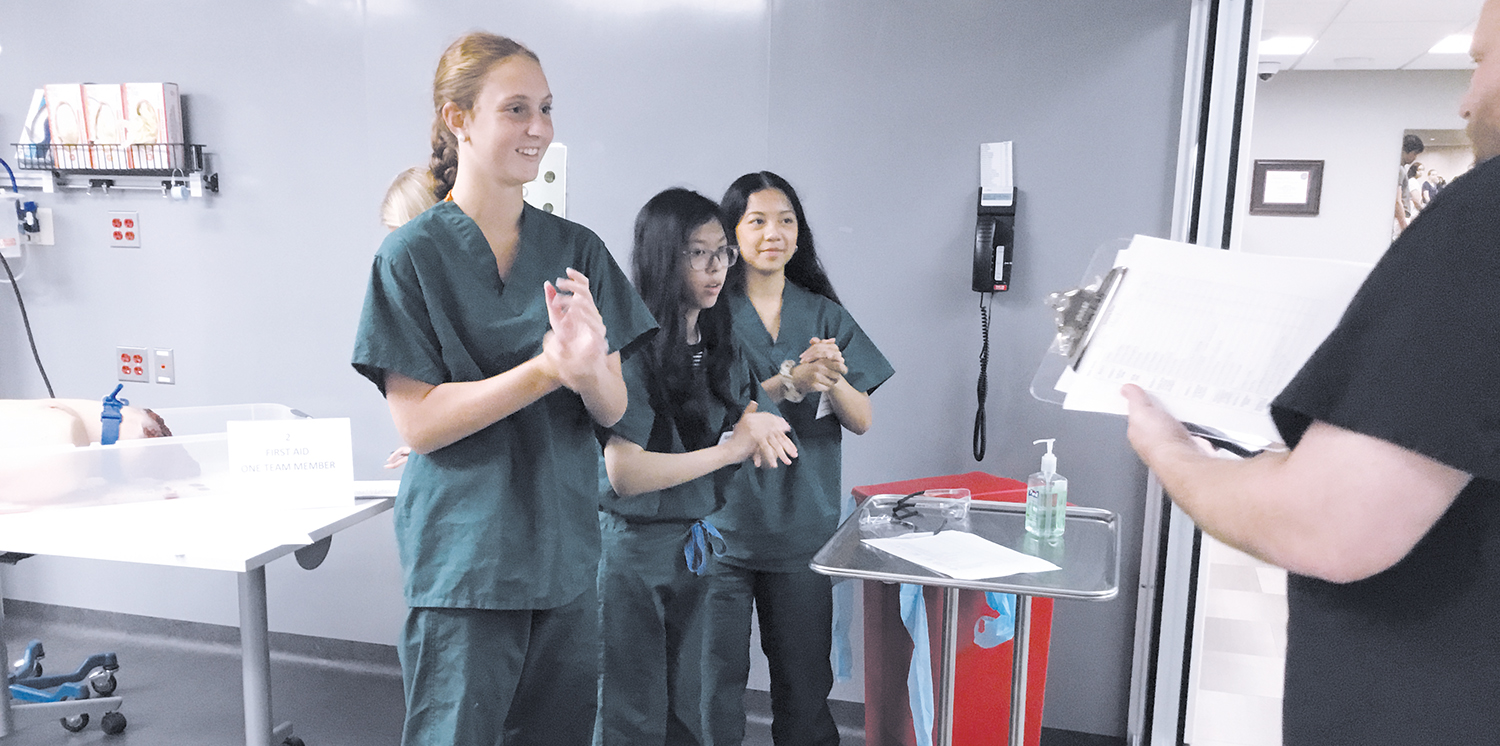
Matthew Kostelnik, lead simulation specialist, at far right, evaluates a team during "The Amazing Race," a multi-skilled simulation escape room challenge.


Careers Discovery participant Alexis Freedman takes part in a simulation exercise.

Freedman is considering a career in education or health care, and she says her experience this summer has got her thinking of potentially combining her passions, perhaps as a health care educator. She says she will probably apply to be in the advance program next summer.

Goldman, whose mother is a physician in the oncology and hematology unit at Holy Name, says she has "always been drawn to health care because I want a career where I can make a difference and help people."

Goldman is considering nursing, and her experience this summer observing a surgery has her interested in being an operating room nurse.

She is thinking about volunteering at the hospital to gain even more exposure.

Kostelnik says the program builds confidence in the students. "They walk away being comfortable with whatever situation we put them in," he says.


Ministry facilities use varied approaches to spark high schoolers' interest in health care careers
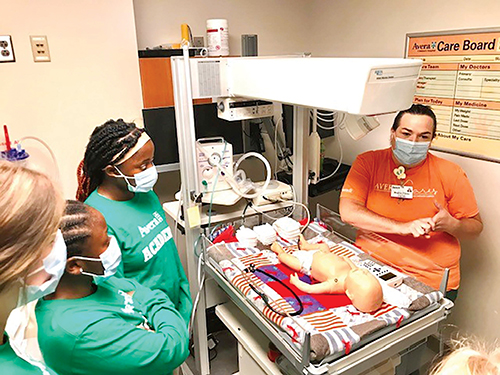
Avera Academy students visit the simulation lab at Avera McKennan Hospital & University Medical Center. The two-semester Avera Academy program offers high school seniors in Sioux Falls, South Dakota, the opportunity to explore health care careers while earning credit from nearby Southeast Technical College. Credit: Shantel Krebs/Avera Academy

Many hospitals offer career awareness building to high school students. Here are ways that a sampling of Catholic health care facilities are doing this:

  • Sioux Falls, South Dakota-based Avera Health began offering its Avera Academy in 2019 to high school seniors in the Sioux Falls School District who are interested in pursuing health careers. Avera pays for the students to take coursework at Sioux Falls' Southeast Technical College, and students also get the opportunity to explore careers in a variety of settings at Avera McKennan Hospital & University Health Center. In selecting applicants for the program, Avera prioritizes students who are underprivileged. Since the program began, about 90% of graduates have continued on and found jobs in health care, with a large majority employed by Avera.
  • Multiple CommonSpirit Health regions offer internships for high school and college students of minority background to experience working in health care. CHI Health Midlands in Omaha, Nebraska, offers shadowing programs to minority students. And a pair of Dignity Health hospitals in Southern California offers a yearlong internship to high school and community college students who are from groups that have low representation in health care.
  • High school and middle school students in the Pacific Northwest can apply to take part in Virginia Mason Franciscan Health's Student Healthcare Exploration Program. All eight of Virginia Mason Franciscan's hospitals and some of its clinics offer the program. Students can spend up to eight hours being exposed to a variety of medical careers, including by observing clinicians and other staff perform in simulations. Additional extended opportunities are available as well. The opportunities at this CommonSpirit system include exposure to patient care delivery, careers involving medical technology, and behind-the-scenes operational roles.
  • St. Joseph Hospital in Nashua, New Hampshire, part of Covenant Health, offered its inaugural Health Careers Academy this summer. Sixteen high school students from seven different schools were selected from among 60-plus applicants to take part in the weeklong immersion into the hospital. They toured numerous departments, spoke with clinicians, asked questions about pursuing health care careers and got hands-on experience in the hospital's simulation lab.
  • Seven Hospital Sisters Health System hospitals offer the High School Bootcamp Program, which runs in the summer and the winter. The program offers information on health care careers and opportunities to shadow health care staff, to learn about careers in health care and participate in hands-on activities. Over 300 students are estimated to be participating in the bootcamps this year.
  • Mercy Hospital St. Louis offers a teen hospital volunteer program in the summer for students aged 16 years and up. It is called Teens Learning in the Community, or TLC. The students interact with clinicians including nurses and doctors, medical technicians, and staff in nonclinical roles such as administration. Each day, during "lunch and learns," participants hear from Mercy guest speakers including how to pursue a medical career. The students also tour numerous Mercy hospital departments and help Mercy staff in various departments. This could include working with children, delivering mail to patients and helping visitors navigate the hospital. And many hospitals throughout the Mercy system offer health care career fairs with hands-on demonstrations to build high school students' awareness of health care careers they could pursue.
  • For 30 years, Providence Saint Joseph Medical Center in Burbank, California, has partnered with another Providence St. Joseph Health organization — the local Providence High School — on the Medical Program. Through the program, the high school's students learn and work alongside hospital staff. The program is rooted in the values of the Sisters of Providence, the foundresses of the hospital and school. The Medical Focus program is intended to develop the next generation of clinicians.
  • Saint Francis Healthcare System, a standalone system in Cape Girardeau, Missouri, has partnered with the local Jackson, Missouri, high school to offer what the two call the IGNITE Program. Launched with the 2025-2026 school year, the program enables juniors and seniors to get both classroom instruction at their school and real-world experience at Saint Francis to better understand what a career in health care would look like. The program includes didactic coursework, hands-on projects and professional skill-building. In this inaugural school year, 33 of 55 applicants were accepted into the program.
  • Scripps Mercy Hospital in San Diego is among the Scripps facilities that offer the Young Leaders in Health Care club and the Summer High School Exploration Program to young people. The club offers a monthly, virtual meeting format throughout the school year for students to enhance their leadership skills; takes on projects that help the community and takes part in competitions about health care topics. Students who participate in the club are eligible for the exploration program, which is a five-week internship. Interns are immersed in departments throughout the hospital, talk with hospital leaders about the career path they took and then present what they have learned.
— JULIE MINDA
CHA Publications

Reprint Requests

Would you like permission to reprint an article from one of CHA's publications? To do so, please use our online request form. Please allow our team 1-2 business days to respond to your request.