
A nurse residency program that CommonSpirit Health began rolling out to its hospitals in 2023 is achieving promising results: a retention rate of about 86% for new nurses who complete the residency. Previously, the retention rate was about 60%.

By late 2026, CommonSpirit plans to spread the program to all of its hospitals that hire new graduate nurses. The effort includes mentorship, career coaching, support, and didactic courses. The system has 137 hospitals across 24 states employing about 45,000 nurses.
CommonSpirit's could well be one of the largest nurse residency programs in the nation, says Jennifer Hubek, system director of the national nurse residency program. "Our program is standardized across our system," she says, "and that gives us the quality and efficiency that we weren't able to achieve when our facilities were running residency programs individually, alone."
Amrit Kamboj, system vice president of clinical education and professional staff development, says CommonSpirit is seeing "a huge cultural shift" as facilities implement the residency program. "It used to be that many new nurses left after about one year on the job because of burnout or because of trouble navigating challenges," Kamboj says. "Now we have mentorship, and we provide ongoing additional education and well-being support and we debrief on challenges."

She says the nurses feel valued and it's a "huge satisfier for them that we are investing in their growth."
Challenging transition
A study reported in May 2024 in The Online Journal of Issues in Nursing found nurses are leaving the profession within their first two years of practice at rates as high as 33%.
The study authors write that "it has been suggested that nurses leave due to factors such as bullying by co-workers, inadequate educational preparation and/or orientation as a new hire, and more recently, the impact of the COVID-19 pandemic."
In a release on its nurse residency program, CommonSpirit notes that "stressful work environments, a lack of support and difficulty navigating the change from an academic to a clinical environment all play a role in new nurse turnover."
Hubek says when she started as a nurse 33 years ago, "I was able to get my first job right out of school, and I was able to care for the patients right away. The acuity was much less. The interpersonal challenges were less. The equipment was simpler."
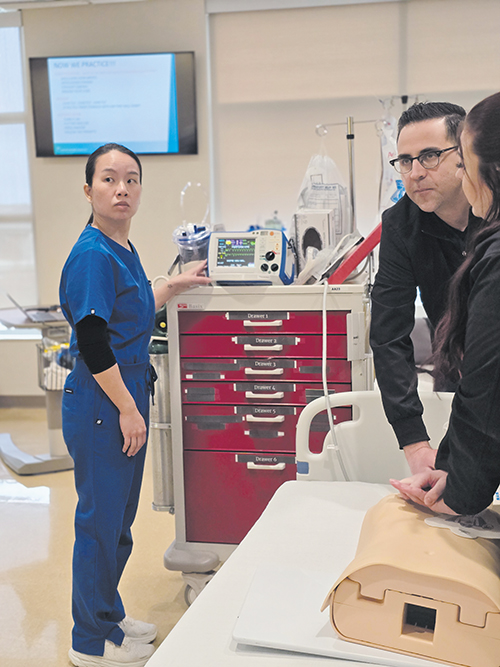
She adds, "Now, nurses are coming out of school with less hands-on experience, and we have very sick patients, complex regulatory requirements and complex equipment. You can no longer just step out of school and step right into a new nursing job."
Failure to retain nurses is a serious problem in health care today. On a webpage on the issue, the American Association of Colleges of Nursing says "the U.S. is projected to experience a shortage of registered nurses that is expected to intensify as baby boomers age and the need for health care grows. Compounding the problem is the fact that nursing schools across the country are struggling to expand capacity to meet the rising demand for care."
Evidence-based approach
Kamboj says that health care systems are concerned about workforce shortage issues including availability and retention. CommonSpirit decided to take a systemwide approach to new nurse retention.
An assessment revealed that while many CommonSpirit facilities had residency programs, there was no standard of practice, and many of the programs did not provide the comprehensive support needed to smoothly transition nurses from school to bedside. Additionally, many residencies lasted just a few months and ended before nurses felt fully prepared to provide patient care alone.
Kamboj says a CommonSpirit system-level team studied the issue, seeking to understand how nurses learn best, what they retain from training, and what makes new nurses stay and leave. The team used that evidence to create the yearlong program.
About 70% of the program is on-the-job training with preceptors, about 20% is coaching and mentoring, and about 10% is didactic, through online and instructor-led courses. The new nurses move through the program as cohorts.
The program is standardized for particular units, including medical-surgical-telemetry, critical care, progressive care, emergency department, perioperative, neonatal intensive care, labor and delivery, mother-baby, pediatrics and pediatric intensive care and behavioral health.
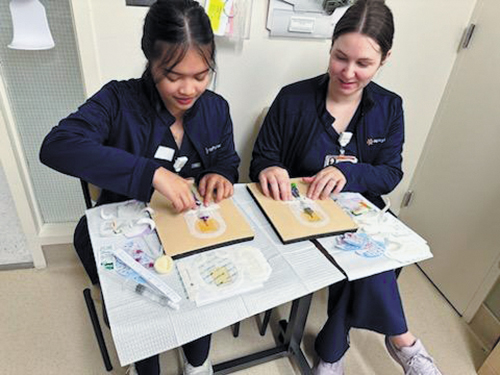
The program requires significant buy-in, engagement and involvement from all levels of the departments involved, Kamboj says. That is because all legacy staff involved must be well-trained, able to comply with the standards, and committed to ongoing program measurement and improvement, she explains.
Touchpoints
So far, CommonSpirit has rolled out the program to 81 of its hospitals. Nearly 3,500 nurse residents have started the program. About 1,200 have completed it, and most of the remaining count are current participants. More than 4,000 staff have been trained to serve as preceptors, and about 700 to serve as mentors.
Given the significant improvement in retention, CommonSpirit plans to expand the program to more departments as well as into ambulatory settings, Hubek says. The system also is looking to expand it into some critical access hospitals.
Kamboj and Hubek say they believe some of the reasons the program has succeeded are that it fully engages nurses, it is interactive, it provides a strong support system for the nurses, and it provides touchpoints to ensure things are going well for them.
Understanding the deeper message
Madeline Thompson is a 2024 graduate of the University of Nebraska Medical Center at Lincoln's nursing program. She started as a nurse in the post-intensive care unit at CHI Health Immanuel in Omaha, Nebraska, in late spring 2024 and then entered the nurse residency program, graduating last June.
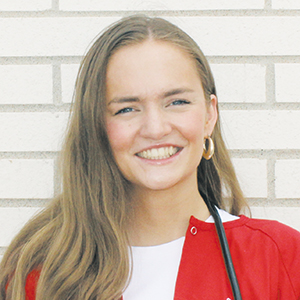
She says the program "enabled me to find success early in my nursing career." She says she enjoyed that the cohort structure provided her with a small community and a feeling of support. "It felt nice to not feel alone," she says.
Thompson adds that "orientations, skills days, group work, debriefs and wellness discussions and the class have allowed me to meet new people. I have some true friends that I have met from residency who I still confide in and talk to today."
She and her fellow cohort members check in with each other and build one another's confidence.
She adds that her mentor, Hayden Marlatt, who is a charge nurse on her floor, was an essential source of support. "Our talks have been very beneficial," Thompson says. "I liked that part of residency a ton!"
Thompson says the support of the residency program told her something about the health system's mission and values: "I feel like I understand CHI and its deeper message."
Further reading: CHI Health takes holistic approach to training with new nurse residency program