
Ascension recently launched a Clinical Innovation Institute, which brings together a team of its leaders to focus on improving patient care and the experience of clinicians through technology and innovation.
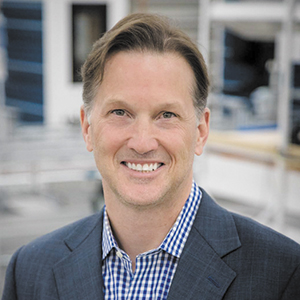
"We're accelerating a lot of great work," said Dr. Thomas Aloia, Ascension executive vice president and chief clinical officer, a role he assumed in January. "This isn't like a start from zero. Maybe the car was going at 60 mph, and now we have an infusion of leadership, commitment and capital to take it to the next level and speed us up."
The current budget for the institute is $20 million and there are more than 100 full-time equivalents of staff working under its various units.
The institute, announced in early August, will take a closer look at technology that will help patients while at the same time reduce digital and administrative burdens. The institute also will facilitate access to the latest clinical trials to advance care.
The four leaders who will direct the institute are: Dr. Mitesh Patel, vice president and chief clinical transformation officer; Dr. Samit Desai, vice president and chief medical information officer; Dr. Fred Masoudi, vice president and chief academic officer; and Jon Taves, associate vice president of clinical innovation.
Charged to 'achieve excellence'
When Aloia took on his new role, he said CEO Joseph Impicciche and President Eduardo Conrado, set to be CEO upon Impicciche's retirement at the end of this year, challenged him to envision the next 10 years of clinical care. He said they wanted leaders to ponder: "How are we going to differentiate, and how are we going to achieve excellence?"
"Ascension doesn't have the luxury of innovating for innovation's sake," Aloia said. "We really have to tie it to the mission. We have to tie it to quality and safety."
Ascension is one of the largest Catholic health care systems in the United States. It operates in 16 states and the District of Columbia, running 94 wholly owned or consolidated hospitals.
The mere size of the system forces its leaders to be deliberate in their work, Aloia said. "You might have a vendor approach 11 of our hospitals a day with a great idea, or what appears to be a great idea," he said. "If we can vet it and then facilitate it for the markets, that's gold."
The institute's leaders will charge themselves to catch up with technology. Like many health care organizations in the United States, Ascension relies in part on technology that can date as far back as the 1980s, Aloia pointed out. "The watch on your wrist has vital signs capabilities that exceed what we use in a typical hospital in America," he said. "That's a great example of catch up, and then do true innovation."
Aloia said that despite the challenges ahead, especially with potential Medicare cuts, Ascension will continue to care for the poor and vulnerable.
"There's no way the traditional ways of doing health care are going to work in the future," he said. "So we've got to create new care models and be hyper selective and call out those brilliant, game-changing technologies and implement them if we're going to be successful. If we don't innovate, we will fail against the challenges of payment reform."