SAN ANTONIO — There are many organizations in San Antonio — the nation's seventh largest city — that long have been working to address the needs of its homeless population of more than 3,000.

But community and civic leaders grew concerned more than a decade ago that the community organizations' responses were often disconnected, uncoordinated and sometimes duplicative, so collaboratives have formed to help ensure a more efficient and effective response. CHRISTUS Santa Rosa Health System of San Antonio has been a key player in these collaboratives, says Esmeralda "Mela" Perez, community health director of CHRISTUS Santa Rosa, a four-hospital subsystem of CHRISTUS Health.
Perez says two of the most effective efforts to streamline and improve community response to homelessness have been San Antonio's Homeless Outreach effort and the Southwest Texas Regional Advisory Council's homelessness services mapping approach. As part of a broader effort, that advisory council convenes the county's health care facilities and law enforcement agencies to ensure it is clear where police should take people with behavioral health needs, including people who are homeless.
"We had been seeing that there was a population of people who were homeless, and in some cases undocumented, who were not getting the access they needed to services," Perez says. "So we have been collaborating with other community organizations. We want to address the social determinants of health."
Homeless Outreach
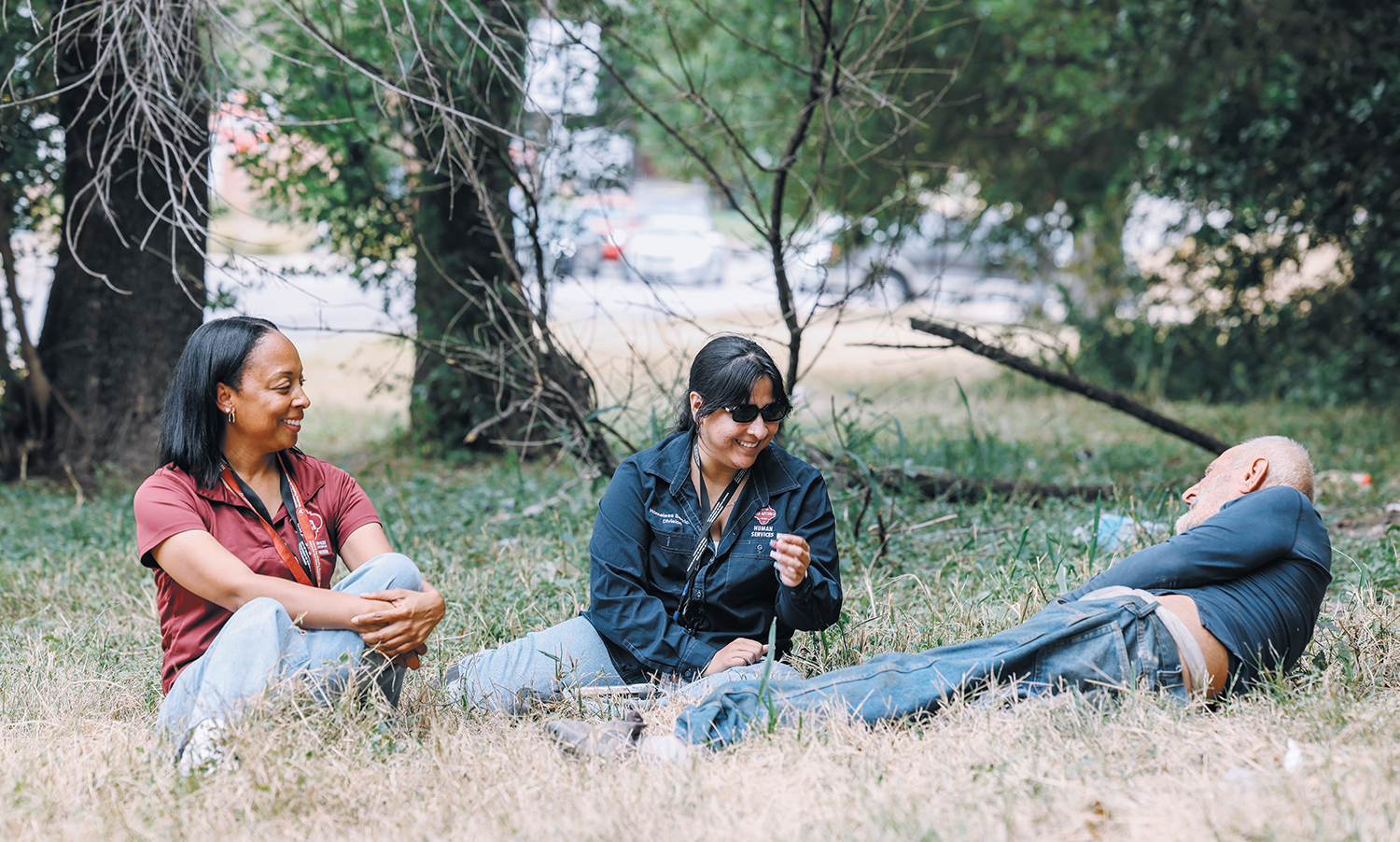
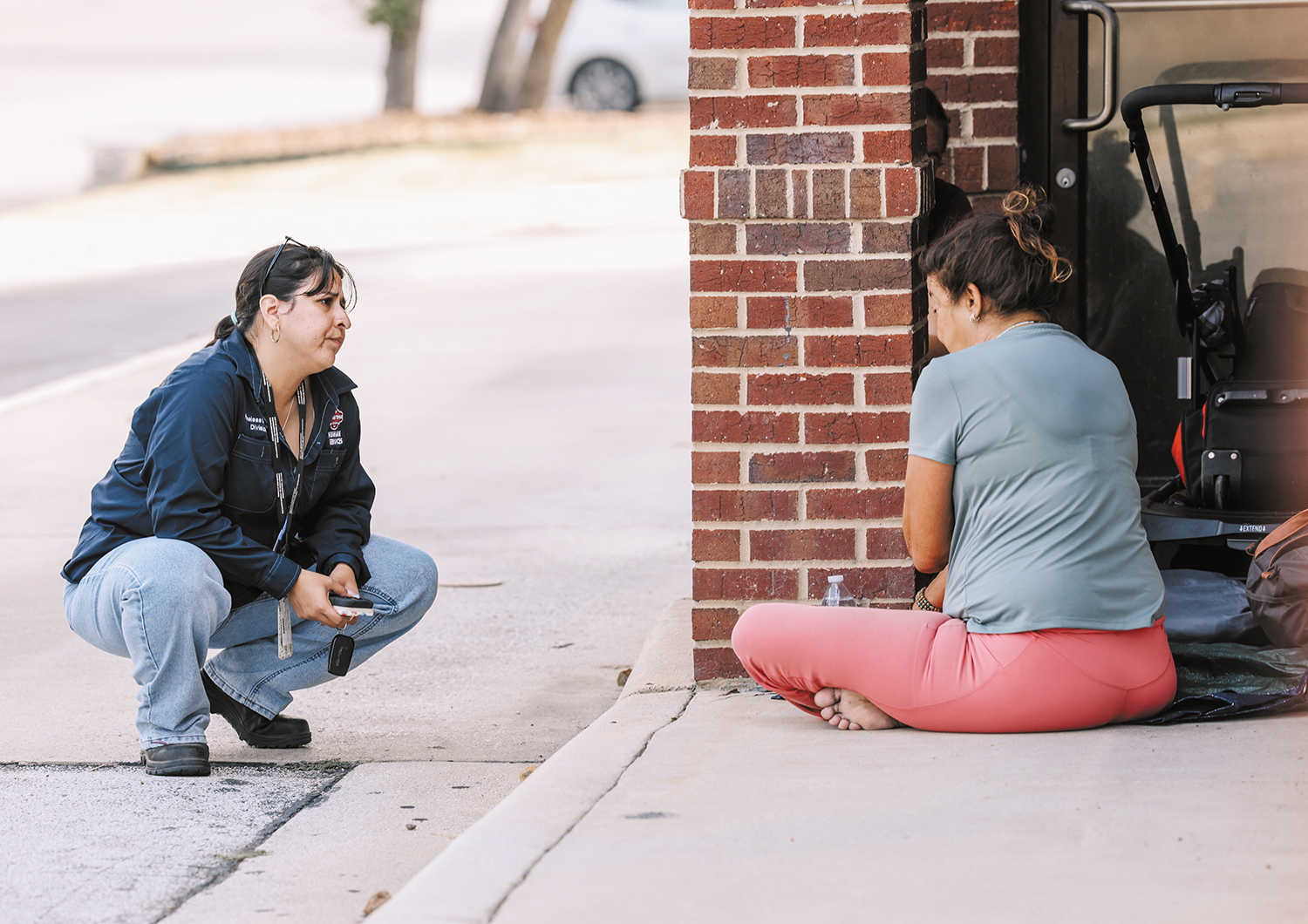
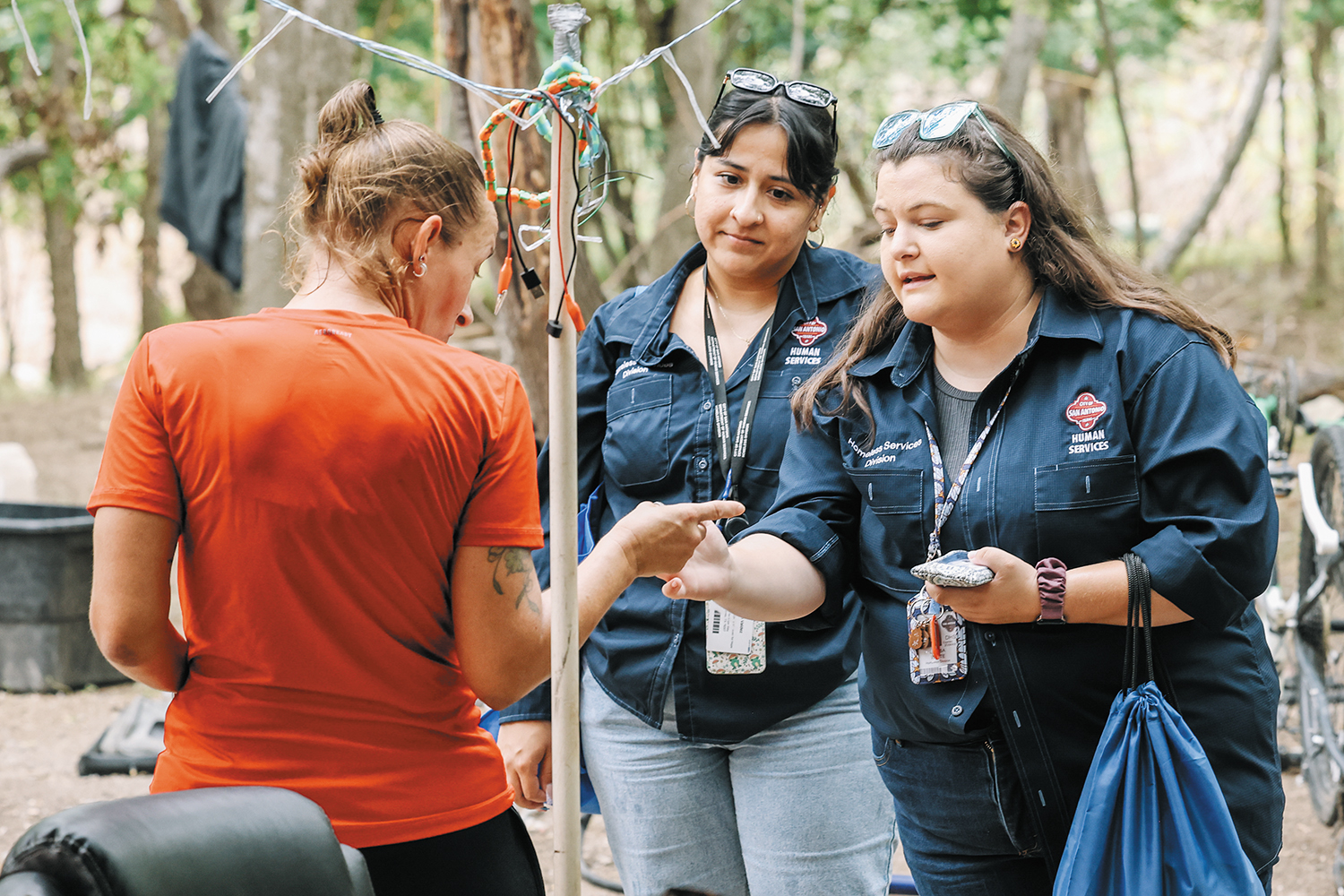
Members of the city of San Antonio's Homeless Outreach team locate and engage daily with people who are experiencing homelessness. The team is part of the Homeless Services and Strategy Department that the city is launching in October. The Homeless Outreach team members establish trust with the individuals, get to know them, collect their biographical information if shared, learn their social and health needs, and work to connect them with services.
The team members are trained to approach their work in a person-centered, trauma-informed and culturally responsive way.
The outreach team uses a mapping process to document where people who are experiencing homelessness live, where they are at any given time and what they need.
The city outreach team connects the people who have health needs with CHRISTUS Santa Rosa and other health care providers in the collaborative. CHRISTUS Santa Rosa's clinical team members assess these patients and provide treatment. Additionally, CHRISTUS Santa Rosa refers patients who are experiencing homelessness but who are not yet connected with the city's homeless response system. CHRISTUS Santa Rosa's community health program remains in touch with patients who are experiencing homelessness after their discharge, to help them navigate the social service system to obtain shelter, prescriptions, follow-up care and other services.
Checking on coverage
CHRISTUS Santa Rosa partners with the company Elevate Patient Financial Solutions to meet with patients who are uninsured, including those referred by the Homeless Outreach team, to provide free financial information and advocacy. Elevate identifies what financial assistance may be available to these patients to cover medical bills. If patients qualify as disabled or for Medicare or Medicaid, Elevate representatives help them access that coverage.
Additionally, CHRISTUS Santa Rosa has trained staff who work with these vulnerable patients on how to ask about social determinants of health. This way, the clinical team can fully understand these patients' situations and help connect them to social service providers, if the Homeless Outreach team has not already helped the patients address those needs.
Perez says working together, the Homeless Outreach team, CHRISTUS Santa Rosa and other San Antonio health and social service providers have helped many people, including with housing, transportation, food and immigration services.
Southwest Texas Regional Advisory Council
The Southwest Texas Regional Advisory Council is a nonprofit agency founded in 1998 to convene Bexar County health care providers and other organizations to ensure it is clear where frontline responders and law enforcement officers should take individuals who are in a medical trauma or emergency. This ensures a more efficient use of local resources and that people get the right care at the right location. In 2016 the council convened providers to determine the care paths for individuals in behavioral health crisis, including homeless people. CHRISTUS Santa Rosa is among the Bexar County medical providers that annually fund the network that was created to ensure individuals get to the right place to get the right care.

Perez explains that law enforcement and other frontline responders and health care facility representatives came together through the council's efforts after seeing that police officers frequently brought homeless individuals who were in behavioral health crisis to emergency rooms for treatment, when they did not have an acute medical need. It took much time and effort to get the individuals to the appropriate site of care. And there was no consistency of care. Some people were just circulating through these facilities with no lasting resolution of their behavioral health and other needs, and little or no communication among the organizations.
The council, which goes by the acronym STRAC, linked health and social service providers serving this vulnerable population into a network called the Southwest Texas Crisis Collaborative. All organizations in the network have access to a central electronic record system. This way, they all can document their interactions with each individual who comes to them through this system and keep a record of the health care and social services those patients receive.
Continuity of care
The approach promotes continuity of care. Providers avoid duplicating services and they are aware of past services received.
Perez says working through this interconnected network, CHRISTUS Santa Rosa clinicians can avoid overprescribing medicine that other health care providers dispensed to patients. The network also flags concerning trends, she adds. For instance, health care providers learned that an unscrupulous insurance provider was selling very high-premium, high-deductible plans to vulnerable populations. The plans failed to cover the health conditions of the patients. Having this knowledge enabled the members of the network to intervene.
According to the STRAC website, the system has been used to help law enforcement better understand where they should take people who are unhoused and have acute psychiatric needs.
Perez says that the San Antonio Homeless Outreach program and STRAC are examples that illustrate how vital it is for all the organizations working together in a community to be closely connected and in continual communication. She says being linked so closely has resulted in homeless individuals getting more seamless access to services.
She adds that since the responding organizations have limited resources, it has made sense to work together to figure out the best way, as a collaborative, to meet the needs of vulnerable populations.
She says it is all linked to a goal that is right in line with CHRISTUS' mission to extend the healing ministry of Jesus Christ. She says: "We want people to have a better quality of life."