
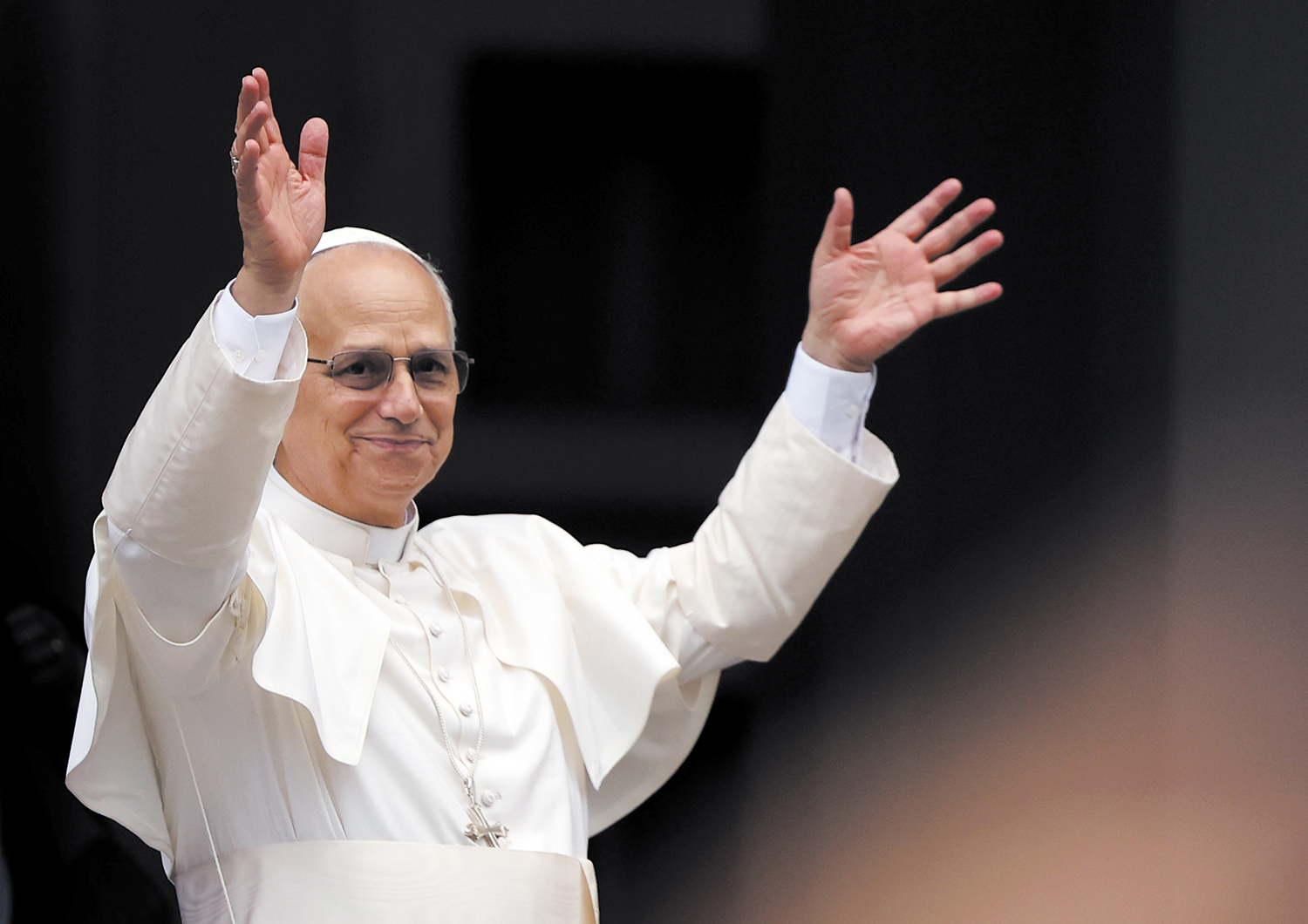
Pope Leo XIV's first apostolic exhortation, Dilexi Te, reaffirms that faith cannot be separated from love of the poor, and he specifically calls out the Catholic health care ministry for continuing to serve them.
"The Christian presence among the sick reveals that salvation is not an abstract idea, but a concrete action," he wrote in the document released Oct. 9. "In the act of healing a wound, the Church proclaims that the Kingdom of God begins among the most vulnerable."
Darren Henson, CHA senior director of ministry formation, spoke with Catholic Health World about the lessons for Catholic health care providers in the exhortation and how they can use those teachings to advance human flourishing. His responses have been edited for length and clarity.
What should Catholic health care providers take from this document?
It's intended to push us. It's not an encyclical; it's not a formal teaching that must be adhered to. But he's urging us, he's exhorting us, to use this lens of the experience of poverty and suffering to help us see where we might go with our ministry. It's like an executive leader telling their team: I need you to stay focused on this.
What were your first impressions of the document?
This concept of a preferential option for the poor was popularized and first articulated in the 1970s by Gustavo Gutiérrez, a Dominican priest who was Peruvian. And it was very contentious at the time and received a lot of pushback. Now we have our second pope from South America, Pope Leo, who is American, is also a Peruvian citizen like Gutiérrez. Pope Leo starts his pontificate off saying, "We're going to highlight this preferential option for the poor." So I find that lovely.
I find it also really appropriate and fitting that, by all accounts, this was being drafted previously by Pope Francis. I think he's demonstrating his clear continuity with his predecessors. I think he's signaling he's squarely in the mainstream of the tradition, with a topic that can sometimes be difficult, especially for those of us in a very affluent society.
There is a very specific section on health care. What are your thoughts on that?
I think there's room for those of us who do this work — whether it's in a formation program, whether it's among folks in mission departments — to look at that section and see, what is it that we would add to it? I appreciate that he's saying that this legacy of caring for those who are sick and poor continues today in Catholic hospitals and health care facilities. In the very act of healing a wound, the church is proclaiming the reign of God amongst those who are poor and vulnerable.
He also rightly reiterated aspects of Catholic social tradition that articulate how the state or the government is responsible for the common good. This is where our efforts in policy and advocacy are important, which is to help our civil servants and leaders of nation states to maintain their focus and their commitments, their responsibilities to the common good. More specifically, he addressed housing and environmental issues as two topical areas that are pressing matters for those who are poor.
He speaks broadly about other matters that apply to Catholic health care. What can we take from that?
Underneath all this, of course, is the bedrock of the Catholic social tradition — the fundamental dignity of all human life — and that this dignity then becomes the basis for human rights, and some of those rights, as the church has taught, are the right to health care, the right to be cared for in old age, the right to be cared for in times of widowhood, and when one is not employed.
He's reiterating for us this fundamental right to be cared for, especially for those who are poor and most in need of care.
From a mission formation perspective, we bring this aspect of Catholic identity into our formation programs, so that our leaders are deeply immersed in this vision and integrate it into our policies and operations.
Pope Leo is saying we have to be mindful of how we are shaped, or I would say, formed by secular ideologies, and then the need to be also formed by the Gospel specifically. He does an exquisite job of going through a lot of the Gospel text, showing Jesus's own experience of poverty, which I think is a real gift of this document. But I think it tells us that we have to return to those Gospel stories, in particular the parable of the Last Judgment and the parable of the Good Samaritan.
Poverty is both about and not about money in this document, correct?
It certainly is a critique of the wealthiest of the world, of the growing inequalities in societies and globally. And it could be seen as a critique of the government defunding things like USAID and other programs that have aided some of the poorest of the world with regard to their health, food, water, shelter, safety.
There are different kinds of poverty that we need to be aware of, and he specifically says there "is no longer a single, uniform reality, but now involves multiple forms of economic and social impoverishment, reflecting the spread of inequality even in largely affluent contexts." He then talks about new forms of poverty that are emerging. Lack of access to electricity used to not be considered a sign of poverty, nor was it a source of hardship, but that very well might be for many people around the world. In our United States context, access to the internet can create new forms of poverty. I think it would be a really rich opportunity in a formation program, where you have some space and time to do some table exercises, to ask: What do we think of when we hear the word poverty?
Leaders and people in power have many things to learn from the poor, as Pope Leo points out.
He reminds us that, and this part of what liberation theologian Gustavo Gutiérrez and his collaborators say, we also have to recognize the uniqueness and the subjectivity of the poor and involve them, allow their voice and their experiences to be part of the creating of something new. He has this beautiful reflection and a reminder that it's not just what the rich do for the poor, but let's also reflect upon and take seriously what the poor do for the rich, or what the poor can offer the rich.
The example he uses comes from health care, where he talks about the elderly and our experiences of accompanying our elders. They offer us so much in return. And I think that could even be an inroad in approaching some of this with our clinicians. Really good clinicians, nurses, or a good physician preceptor will help other caregivers see how their patients will teach them a lot.
There are a lot of challenges out there. How do we take these lessons and do something?
I think a lot of our type A, left brain functioning jumps to ideas for solving the experience of poverty.
The exhortation links poverty with suffering, and we are called to enter into one another's suffering. We journey with one another and bear each other's burdens, as Jesus did for the least of us.
But that doesn't mean we shouldn't work towards greater expressions of God's justice, peace and love.