
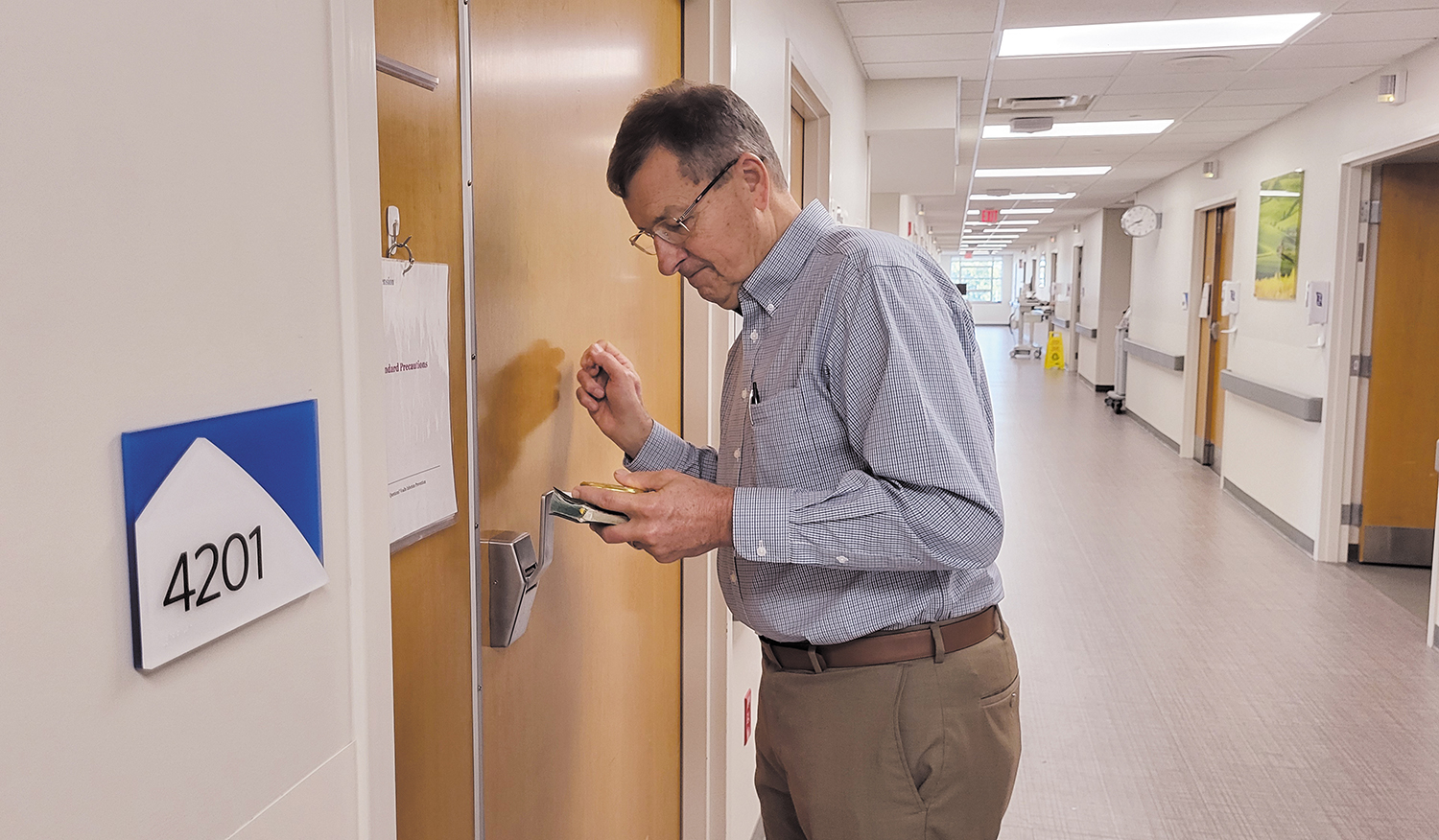
Faith and medicine long have been central throughlines of Dr. Tony Schapker's life.
He says from the start of his 40-year medical career, he recognized the critical importance of spirituality to healing. But it is only now, as a volunteer in retirement, that he has been able to invest significant time and energy into learning how best to provide pastoral care to people in his Southern Indiana community.
Throughout his time at what is now Ascension St. Vincent in Evansville, Schapker was intentional not just about advancing his skills as a physician but also about forming himself in his Catholic faith and looking for ways to bring that faith to his work. Ordained a deacon in 2009, he long has been an active member of the Eucharistic ministry volunteer corps at the hospital and of his church's visitation program for sick parishioners. Around the time of his 2022 retirement, when a member of the pastoral care department of Ascension St. Vincent suggested Schapker pursue clinical pastoral education, he was intrigued, though not quite ready to act.
The seed of the idea took root, and late last year, Schapker enrolled in the Ascension St. Vincent Hospital Clinical Pastoral Education program. Since then, he has taken CPE classes there and elsewhere to deepen his knowledge of how to provide spiritual support to patients.
He says this new era of his life reconfirms for him how essential it is for ministry clinicians to embrace holistic care. "The emphasis is that healing takes place not just in the body, but in the mind, body and soul," he says. "As I have witnessed the delivery of spiritual care in different departments in the hospital, I could see that people felt they were receiving better care when their spiritual needs were addressed."
Inspired by the Daughters
After medical school, Schapker served in private practice before accepting a position with the family medicine residency program at what was then St. Mary's Medical Center in his hometown of Evansville.
He was hired to work with St. Mary's family medicine residency program and concurrently supervised a pediatric clinic for indigent children. He transitioned into private practice in Evansville in the early 2000s before his medical group joined St. Mary's as a managed practice. He finished his medical career at that Ascension hospital. Founded by the Daughters of Charity, St. Mary's was part of the Daughters of Charity National Health System, which merged with another system in 1999 to form Ascension Health, the predecessor of Ascension. In 2017, St. Mary's was renamed Ascension St. Vincent; it is part of the St. Vincent Health subsystem of Ascension.
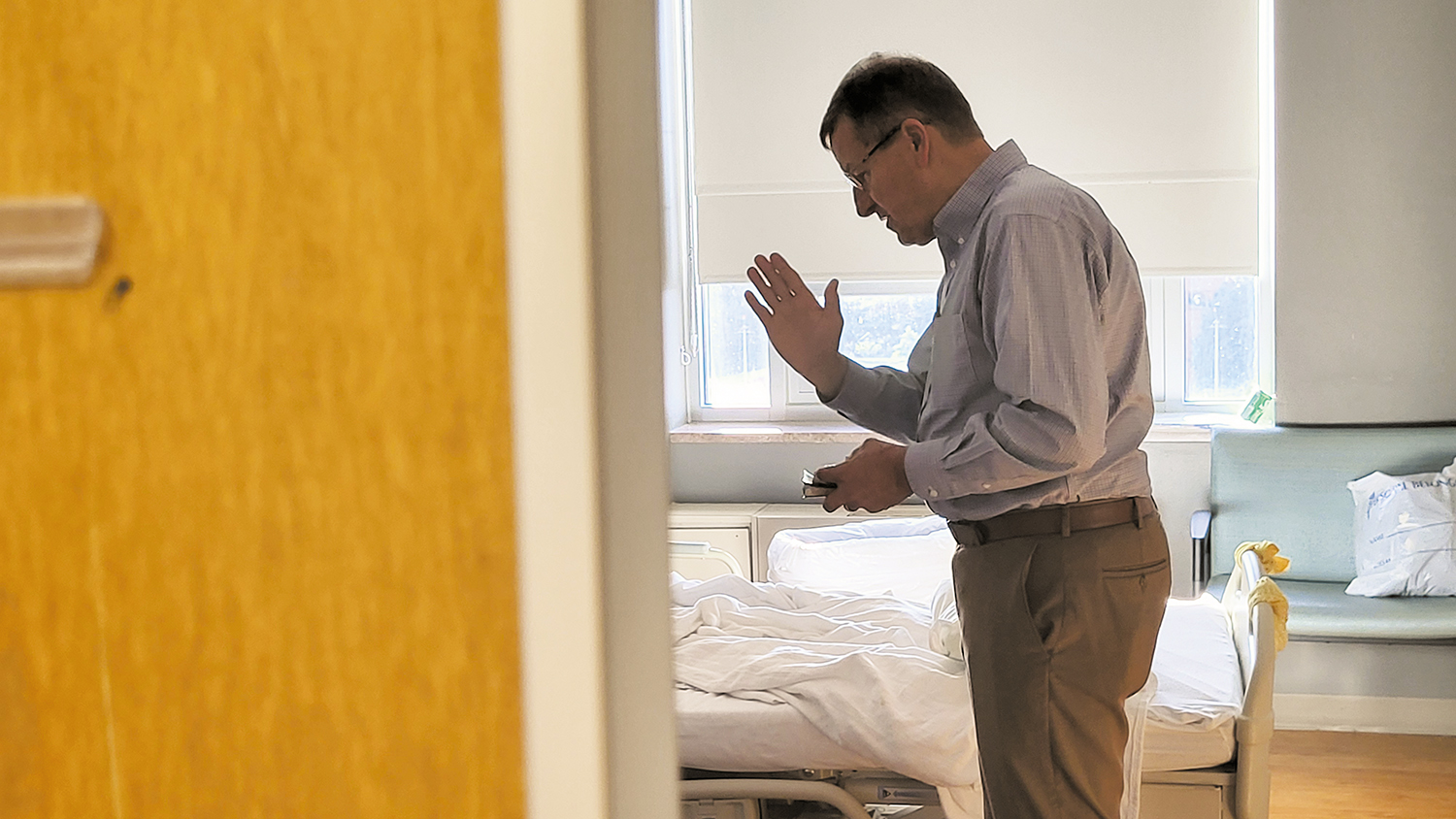
Schapker says that from the time he started at St. Mary's, he valued the presence of the Daughters of Charity at the hospital, as well as the colleagues in the pastoral care department. "I worked alongside some of the Daughters — they had a presence at St. Mary's," he says. "They showed how spirituality was important, and gradually I added it more to what I was doing. My main emphasis was patients' physical health, but the Daughters showed me how to utilize spiritual health, too."
Taking action
During much of Schapker's early tenure at the hospital, Sr. Catherine Kelly, a Daughter of Charity, headed the spiritual care department. Due in large part to her encouragement, Schapker found many ways to act on his faith to improve patients' health in a holistic way. He became a volunteer in the hospital's Eucharistic ministry, a role he continues to this day. He came to better understand the social determinants of health, and that drove him to go on more than a dozen medical missions to provide care in Jamaica, as well as to volunteer at a mobile health clinic in Evansville.
He also took on some transformative roles that drew upon his medical expertise but also enabled him to advocate for and help vulnerable people. This included volunteering to staff outreach clinics at affordable housing complexes, assisting with lead screenings, and helping conduct evaluations of abused children to help them get the care they needed.
He also joined the Catholic Medical Association, a professional organization for physicians. He helped establish a CMA guild in Evansville that remains active today. He drew upon CMA resources to host seminars and reading groups around hot ethical topics, such as natural family planning and brain death. He served on his hospital's ethics committee.
"My Catholic faith has informed and influenced me in what I've done in medicine. I knew it was important. Because of my upbringing and education, I knew holistic care was important. I knew there was more to medicine than the physical health of a person."
He adds, "There's so much more enjoyment (for clinicians) when we become involved in different aspects of patients' lives beyond just the medical."
New vocation
Schapker's wife of 40 years died of pancreatic cancer in 2020. Retirement has opened up more time to visit his three children and five grandchildren, who all live out of state, as well as to indulge his joy of gardening, reading and hiking. In 2023, he and a group of friends spent more than a month trekking the Camino de Santiago, a 500-mile hike across northern Spain.
Since late last year, Schapker, 70, has been building up his pastoral care capabilities through the CPE courses and other educational programs. He says he has been learning how to better listen to patients and their loved ones to understand their spiritual needs and what resources could help. In addition to those courses, he's enrolled in learning opportunities from the Formation and Education for the Life of the Church program from Saint Meinrad Seminary and School of Theology in St. Meinrad, Indiana.
"I'm learning to listen to people in a different way than when I was a physician listening to patients," he says.
He is considering applying to join the pastoral care staff on an as needed basis.
No 'separate boxes'
Schapker says that when he visits patients in his volunteer roles, he sometimes is invited to huddle with care teams. He says that if it's appropriate, he makes a point of raising people's emotional and spiritual struggles with the medical team. For instance, he once informed a patient's team that the person feared being homeless upon discharge, and that was causing stress that could impact their physical health.
He notes that many clinicians he sees at the hospital in his spiritual care volunteer role approach him to ask about this new era of his life.
He is eager to share how clear it's always been to him that spiritual and physical health are intertwined. He encourages them to explore their own faith and bring it to bear on their work. He says compartmentalizing different aspects of life can contribute to burnout among health care workers.
He says, for him, "I've always known, there's no putting the different things I do in separate boxes. I want to bring them together."