
Given the challenges to providing in-person emergency care, many health care systems and facilities have expanded into — or are looking to expand into — virtual emergency care.
Providing emergency care via telehealth can help address many concerns, including clinician and resource shortages and financial constraints. But virtual emergency care is an emerging field, and entrants into this novel space are facing some complex challenges in establishing protocols and practices. This includes ethical challenges having to do with trust, justice and dignity.
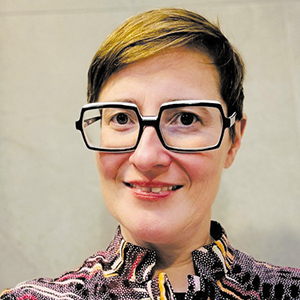
During a recent CHA webinar, Dr. Marija Kirjanenko spoke on the topic. Kirjanenko is a lecturer in philosophical bioethics at Australian Catholic University as well as an emergency physician. The webinar, "Ethical Challenges in the Novel Space of Virtual Emergency Care," is the latest in CHA's series, Emerging Topics in Catholic Health Care Ethics.
"Virtual emergency departments fill a gap, but they are not quite like in-person care," Kirjanenko said. "It will take time to establish standards, and in the meantime, we'll aim for best practices and avoiding harm."
She said virtual emergency departments "are a very high-risk environment, and this is a very different model" compared to in-person care and virtual, nonemergency care.
63-fold increase
The growing use of virtual emergency care has followed the dramatic increase in telehealth use generally since the pandemic's onset. A late 2021 report from the U.S. Department of Health and Human Services found that "massive increases in the use of telehealth helped maintain some health care access during the COVID-19 pandemic." The report said, for instance, that Medicare visits conducted through telehealth increased 63-fold in one year — from 840,000 in 2019 to 52.7 million in 2020.
According to an online HHS resource, some ways that providers are using telehealth for emergency care include:
- Tele-triage, which involves screening patients remotely to determine their condition and the care needed
- Tele-emergency care, in which clinicians at a central hub connect with providers and patients at hospitals on the "spokes" of the hub
- Virtual rounds, in which health care providers check on emergency department patients virtually, including to avoid exposure to contagions
- E-consults, in which specialists provide recommendations to providers remotely
- Telehealth follow-up care, or care delivered remotely to patients who have been triaged before emergency care or to those who have been discharged from the emergency department
A May 2025 study in the Annals of Emergency Medicine showed the potential for growth in virtual emergency care. It found that telehealth could be an option in up to 10% of U.S. emergency department visits.
Skyrocketing use in Australia
Kirjanenko said the use of telehealth has been skyrocketing in Australia since the pandemic, with a variety of models evolving in the last several years. The main models are: outpatient general practitioner care delivered remotely, inpatient consultation between hospital hubs and satellite locations, specialist consultations to fellow providers, and virtual emergency departments.
She explained that unlike in the other three models, in virtual emergency care, the patients' location, the clinicians involved, the tasks that need to be performed, and the structure of the relationships among the clinicians and patients can be very unpredictable and fluid. The providers and patients may not know each other. Instability or uncertainty in patients' conditions can make virtual emergency consultations extra risky, as can off-kilter family dynamics.
Trust, justice, dignity
Kirjanenko used two case studies to illustrate what virtual emergency care might look like. She talked through how ethical concerns around such priorities as trust, justice and dignity could be at play in these cases.
The first case was Anna, an 80-year-old woman in long-term care with abdominal pain, vomiting and heavy perspiration. The staff at her facility call an ambulance, and the paramedic connects remotely to a physician for an emergency consult.
For Anna, Kirjanenko raised these questions: If the remote physician is asking the paramedic to perform some basic physical examinations on the patient, to what extent does the physician trust the paramedic, particularly if they've never worked together? And to what degree do the paramedic and patient trust a potentially unfamiliar physician? How does the physician's lack of physical presence impact the situation? Being unable to have in-person eye contact and to observe other in-person cues can impact the interaction. Additionally, the artificial environment of communicating through an electronic screen can impact the situation. If Anna is cognitively impaired, she may react negatively to a physician talking through a virtual connection. And does the patient get full justice and preserve her full dignity if a physician is making a judgment call on her care based on information received through a mode of connection that may lack the quality of an in-person interaction?
The second case was Tony, a 45-year-old who arrives at an urgent care center after severely cutting his thumb with a chainsaw. A nurse at the center consults remotely with a physician. Tony tells the nurse and remote physician he just wants his thumb sutured, he does not want to travel the two hours to go to a hospital in case the laceration has done significant damage to his thumb. Kirjanenko said that a physician consulting remotely could experience significant moral distress from trying to make decisions based on the limited information he is receiving and from potentially agreeing to the suturing, which could have grave implications if the thumb injury is worse than what it appears to be. The bedside nurse likewise could experience moral distress from the situation.
Speaking up
Kirjanenko said as emergencies unfold — with unacquainted physicians working together virtually, limited information and evolving standards of care — there are many ethical quandaries to consider even beyond those explored in the Anna and Tony case studies.
For instance, what is the hierarchy among providers who are not used to working together? What is the team structure, when the team members and dynamics may be constantly changing? What is the duty to care? How is harm defined in the imperfect world of virtual care? What risk are providers taking on in the way they are carrying out their roles over telehealth connections?
She encouraged intentionality around communication and team-building among providers as possible steps. She said all team members must know their limits and be comfortable speaking up and expressing what they are thinking without shame or stigma. She also advised relationship-building outside of the virtual care environment. She said in Australia's Queensland, for instance, providers have organized a hub system, and those involved in the care hub gather in-person periodically to build their connections and assess how they are doing on the job.
Kirjanenko acknowledged that there are more questions than answers now when it comes to virtual care. But she said it's important to work through the issues. "We need ways to get out of these dilemmas. How do we provide compassionate care in virtual spaces without causing distress to patients and families" as well as the providers caring for them? she asked.