
Sixteen years ago, Dr. Jennifer Tegethoff didn't know her son Aaron would be born with Down syndrome. But on the evening of his birth, after a difficult day of grasping the fact that he had the disorder, she went over to the warmer in the nursery to hold his tiny hand.
In her head, she heard what she believed was God's voice saying: "This is my plan, girl, not yours."
"It was a wake-up moment," Tegethoff recalled. "I remember thinking, this is going to be OK."
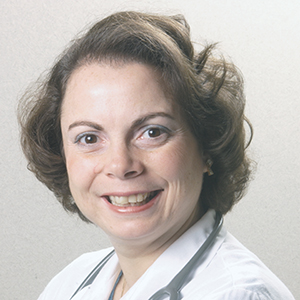
Tegethoff, a pediatrician in Mitchell, South Dakota, is one of the co-founders of the Avera Down Syndrome Clinic, which she runs with another pediatrician, Dr. Christiane Maroun.
The clinic opened in 2014 and operates about once every two months out of the Avera McKennan Hospital & University Health Center campus in Sioux Falls, South Dakota. At the clinic, families and their children with the genetic disorder can see a general pediatrician and several other experts, including pediatric subspecialists and speech, occupational and physical therapists.
About one in every 775 babies in the United States — or about 5,000 a year — is born with Down syndrome, according to the Centers for Disease Control and Prevention. It is the most common chromosomal condition diagnosed in the country.
The disorder can cause developmental and physical challenges, such as speech delays, congenital heart defects, hearing loss, obstructive sleep apnea, poor muscle tone, and loose joints, according to the CDC. Many people with Down syndrome develop thyroid issues.
There are evaluations that children with Down syndrome should have at certain ages, said Tegethoff. She said her job at the Down syndrome clinic "is to make sure that all those appropriate evaluations are getting done, and to incorporate (patients') subspecialties as much as we can into all one visit."
Stewarding, sharing resources
Tegethoff remembers taking Aaron to 32 medical appointments in the first three months of his life. Navigating the system and arranging the trips, often a 75-mile drive from Mitchell to Sioux Falls, was at times overwhelming.
"I think that helping to combine services and helping to provide everything all in one place really is being a good steward of our services," Tegethoff said.
Tegethoff and Maroun stay up to date on research and recommendations for patients with Down syndrome and inform parents and other caregivers.
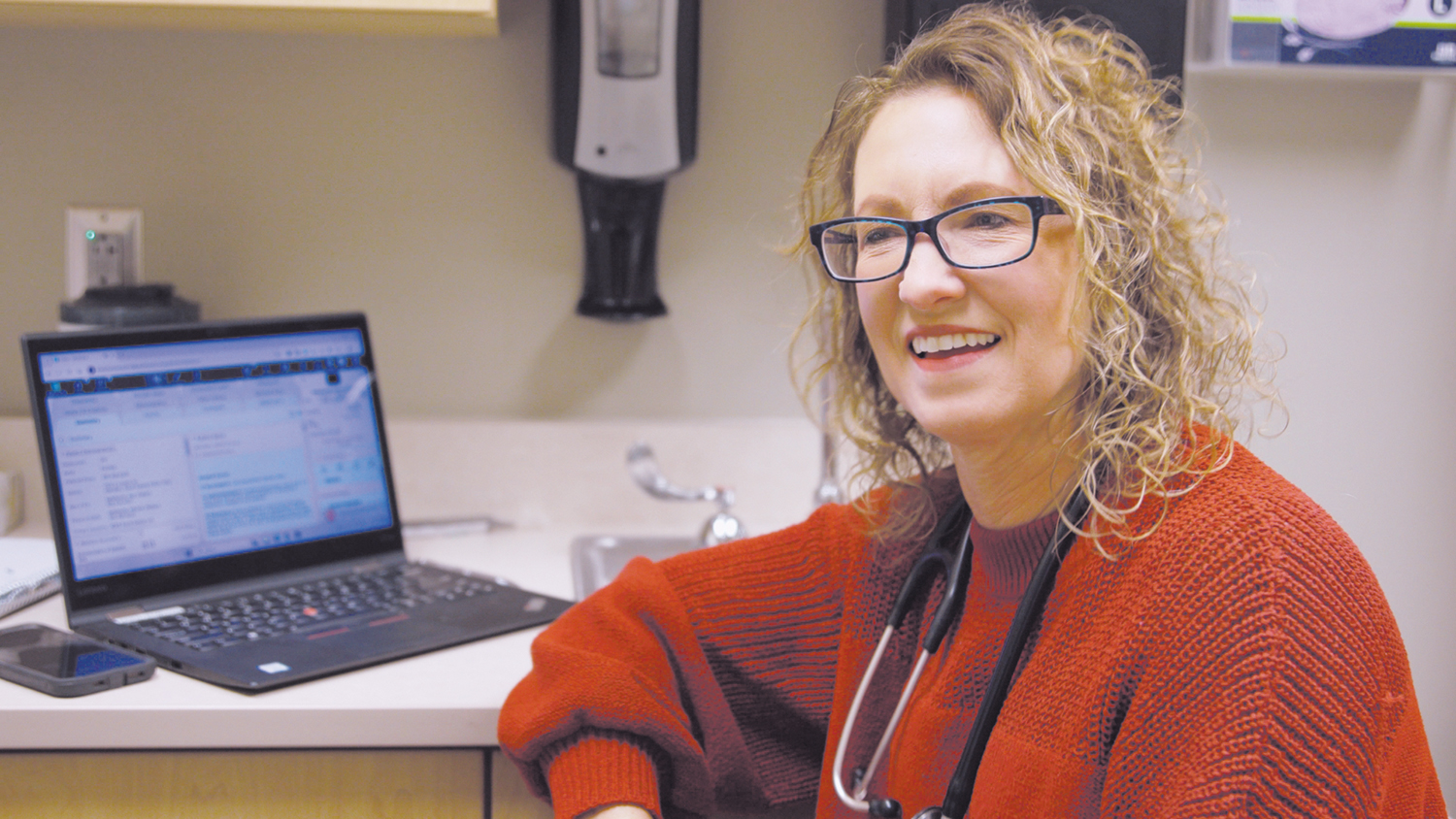
The clinic sees about 30 patients a year, or about five every other month. It has seen more in the past and has hosted the clinic monthly to meet the need. Families come from South Dakota, Iowa, Minnesota and Nebraska.
Because she has a child with Down syndrome, Tegethoff is able to reassure families and give them advice, such as how to navigate the individualized education program process at school or search for other treatment options, such as additional therapy services and resources.
"I hope that the advice that I'm giving is helping parents see the positive and helping them navigate the journey," she said. "Even if I didn't have that problem, I often know where to look for those resources."
A safe place
MiKayla and Alex Bellefeuille found out their baby girl had Down syndrome when MiKayla was pregnant.
"We kind of felt like the world was over," MiKayla Bellefeuille said. "I know that sounds so terrible. But we were 27, and all of our friends were having healthy babies, and we're like, why don't we get that?"
While they were absorbing the news, they picked out a name for their daughter — Havyn, pronounced the same as the word for a safe place.
"We were able to talk about her, and we kept the name to ourselves, and we could always just keep her like our safe place (during) the whole situation." Bellefeuille said.
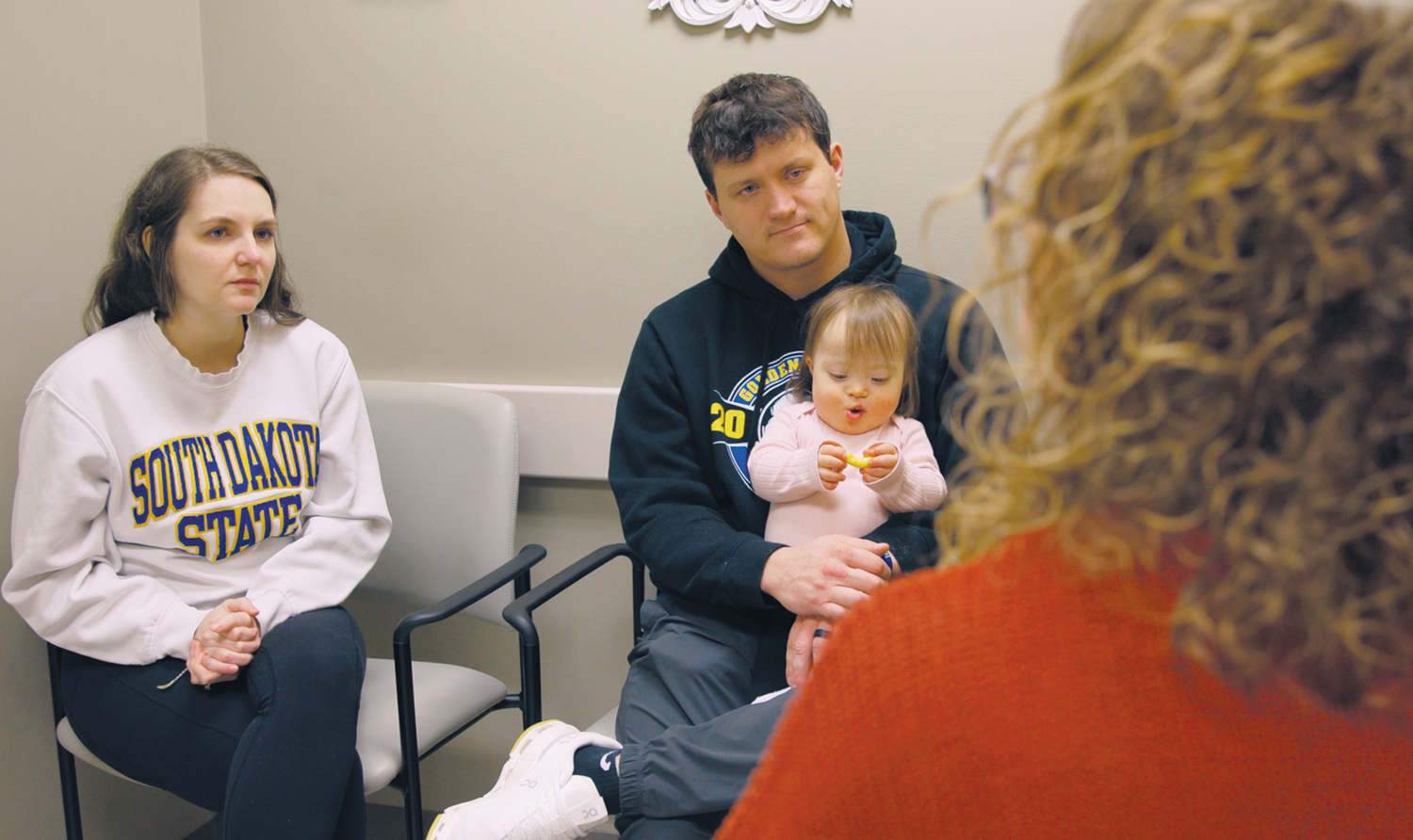
After Havyn spent some time in the Sioux Falls hospital's neonatal intensive care unit, the Bellefeuilles learned about the Avera Down Syndrome Clinic. It would become a safe place for the young family.
They have traveled there about four times since Havyn, now 2, was born. The family lives in Aberdeen, about 200 miles from Sioux Falls.
MiKayla Bellefeuille feels confident that the doctors and specialists work and communicate with one another and are familiar with patients with Down syndrome. Havyn has had surgeries for a cleft palate and has cervical instability issues. She sees Avera specialists for monitoring and treatment.
Bellefeuille also feels reassured when she talks with Tegethoff, and knows that her spunky, sassy toddler will someday be a teenager like Aaron. She and her husband also have a baby boy, who is neurotypical.
Bellefeuille wishes she could offer her younger self encouragement. "It's going to be a better place when you actually get to see her and smile and snuggle her," she said she would say. "Really, the world was nowhere near ending for us."
More typical than different
Tegethoff tells parents what she wished she would have known during those first days after delivering Aaron: Yes, this is going to be hard at times, but life is going to be a lot more typical than you think it is.
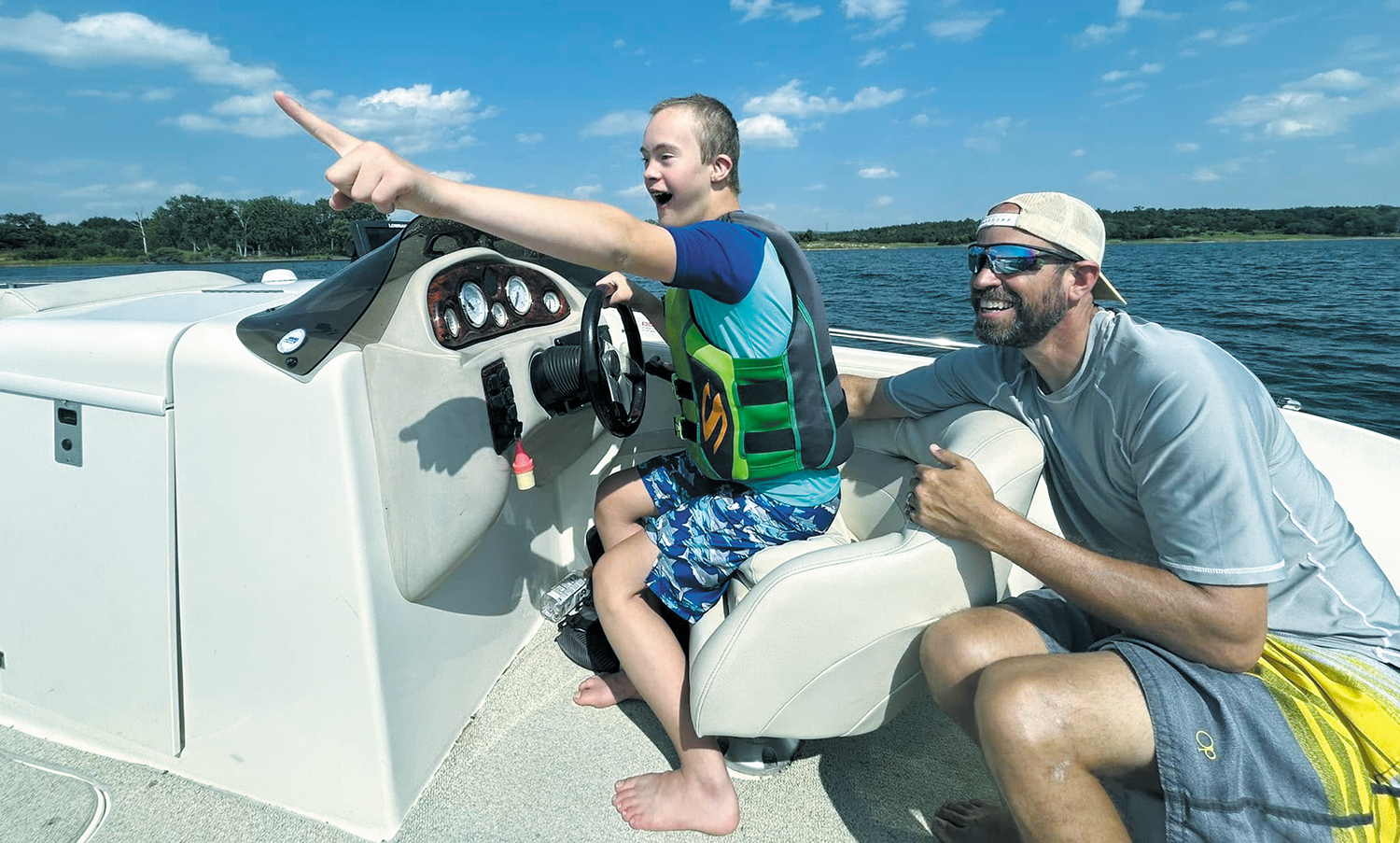
Aaron goes to high school and is involved in sports and activities. He's one of six children, and the family's time is spent navigating typical kid activities instead of medical and therapy appointments. And that is also normal: As many children with Down syndrome age, they need less monitoring for medical and developmental issues.
"I hope the main things that I'm honestly doing are saving families time and resources, helping people see the beauty of this situation, and giving parents places and people to turn to when they have struggles," Tegethoff said.