
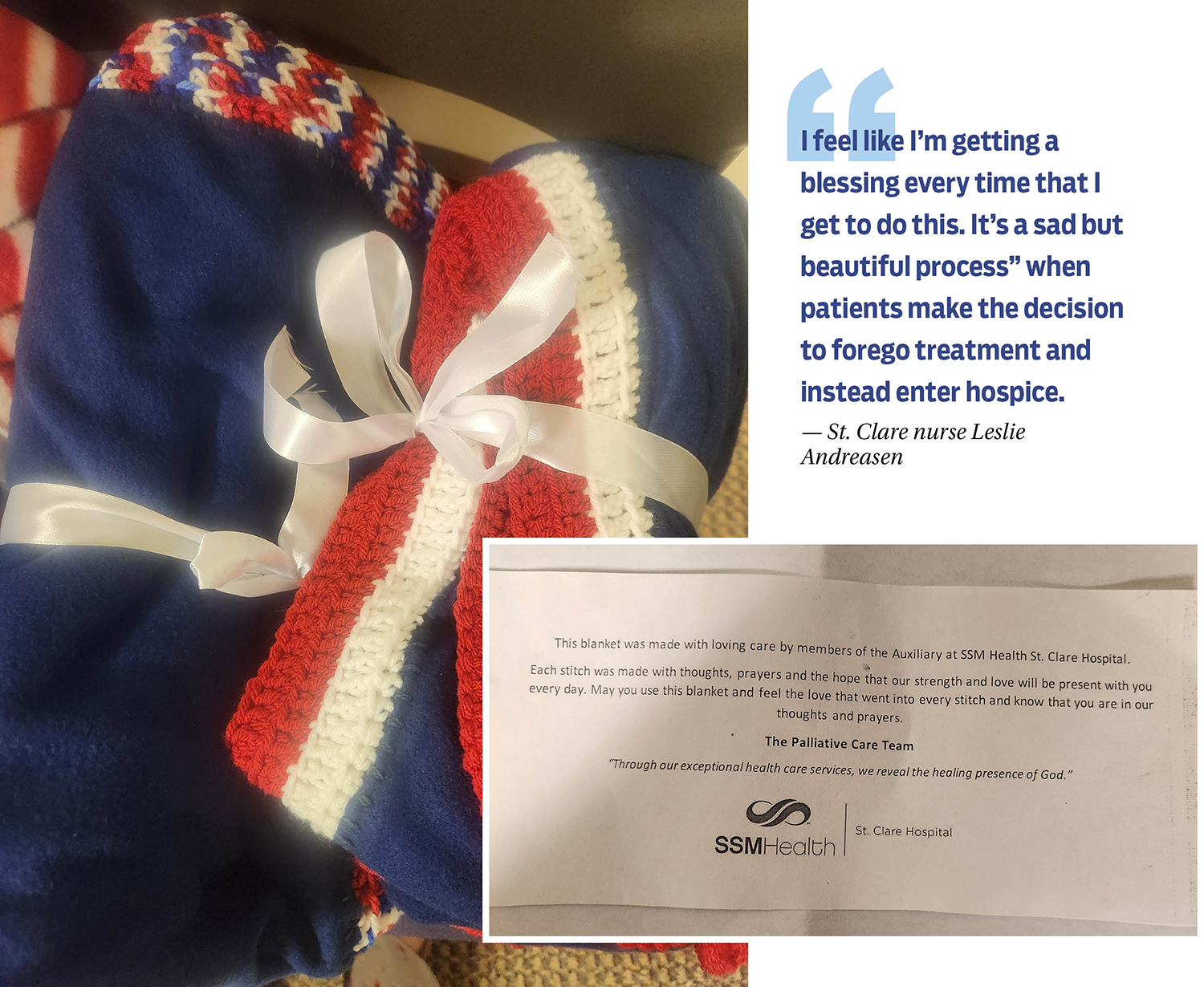
"This blanket was made with loving care by members of the Auxiliary at SSM Health St. Clare Hospital. Each stitch was made with thoughts, prayers and the hope that our strength and love will be present with you every day. May you use this blanket and feel the love that went into every stitch and know that you are in our thoughts and prayers."
SSM Health St. Clare is one of multiple ministry facilities where volunteers devote hours to creating homemade blankets for staff to give to seriously ill and dying patients and others who need a little extra tenderness. Associates connected with blanket programs at SSM Health, Bon Secours Mercy Health and Providence St. Joseph Health facilities say these gifts can convey to patients that they are cared for. And, they say, the blankets can be part of a much broader effort to ease patients' suffering, especially at the end of life.
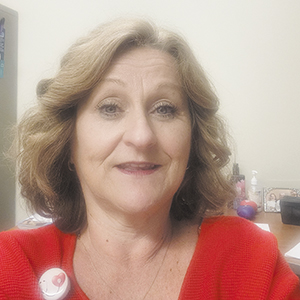
St. Clare nurse Leslie Andreasen is a palliative care team member who presents the "Prayer Blankets" to patients. "I feel like I'm getting a blessing every time that I get to do this," she says. "It's a sad but beautiful process" when patients make the decision to forego treatment and instead enter hospice, she says.
"The blankets are sort of like our acknowledgement that this has been a difficult decision, and that we offer you peace," she says. "That's what a warm blanket feels like to me, is peace and comfort."
Honor them one last time
Andreasen says St. Clare's palliative care department has given patients Prayer Blankets almost since the hospital opened in 2009. About a half dozen volunteers make the blankets out of a variety of patterns and colors of fleece, crocheting the edges with intricate designs.
When a patient decides to end curative treatment and instead enter hospice care, after discussing the decision and coming up with a plan for next steps, Andreasen or another member of the palliative care team selects a blanket from the collection. She says team members form close relationships with patients, getting to know them as people, and they draw upon that knowledge when picking out which blanket to give each patient. The palliative care team member then brings the blanket to the patient's hospital room, explains that it is a gift for them, describes how they chose that particular blanket and lays the blanket upon the bed. The blankets go home with the patients upon discharge, and their loved ones can keep them after the patient's death.
One year, when a retired firefighter was discharged to home hospice and received a sendoff and firetruck escort from fellow firemen, Andreasen thought how neat it would be to have red, white and blue blankets to pay tribute to patients who have served the nation. Since then, volunteers have worked patriotically colored fleece into the regular rotation. Andreasen says in a video SSM Health made about the program, "It's just an honor to be able to lay that blanket upon them and just let them know that we still want to honor them one last time."
Prayed overNurse Abby DeSantis and social workers Kelsey Wooten and Anna Jones of Bon Secours — St. Mary's Hospital in Richmond, Virginia, knew that patients could receive smaller, hospital-issued blankets, but they wanted palliative care and hospice patients to receive big, cozy blankets that could surround them with warmth during a difficult hospitalization.
DeSantis and Jones mentioned the need to their moms, and the women quickly enlisted their Bible study groups into finding a solution. Since 2024, those groups have gathered on an ongoing basis to hand-make fleece blankets in a wide variety of designs for palliative care team members to give to some of the hospital's most vulnerable patients.
As they make the blankets, the women in the Bible study group pray for the people who will receive them.
Most of the blankets go to inpatients and clinic patients receiving palliative care at St. Mary's, but some go to patients of other Bon Secours Richmond locations. Most of the patients who receive these gifts are seriously ill. Many are nearing the end of life.
Jones says patients and families can see they are cared for when they receive the one-of-a-kind blankets. Wooten says they are a source of comfort for patients, families — and staff, too. DeSantis says numerous patients and families have been moved to tears by these gifts.
A keepsake
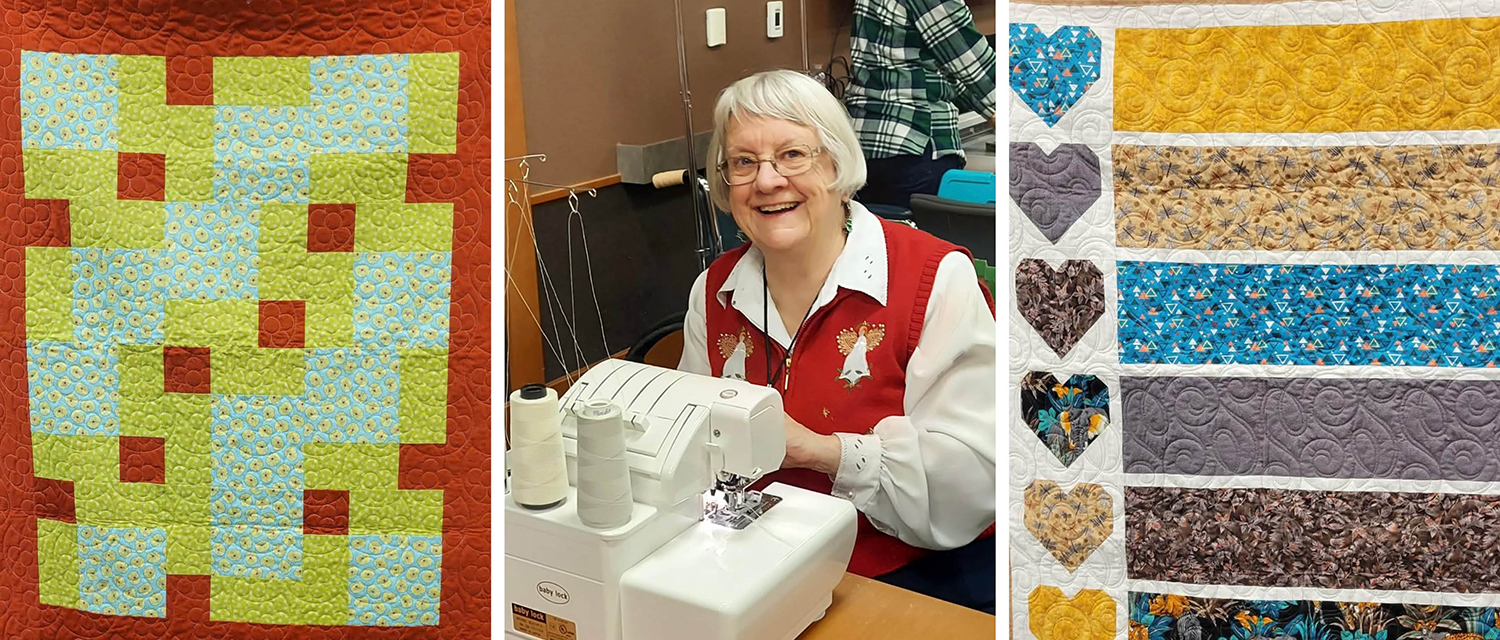
While it is not known exactly how long volunteers have created "Passage Quilts" for terminally ill patients at five Providence St. Joseph Health hospitals in Oregon, it certainly has been decades, says Fr. Godfred Ocun, AJ, director of pastoral services for Providence St. Vincent Medical Center in Portland, Oregon.
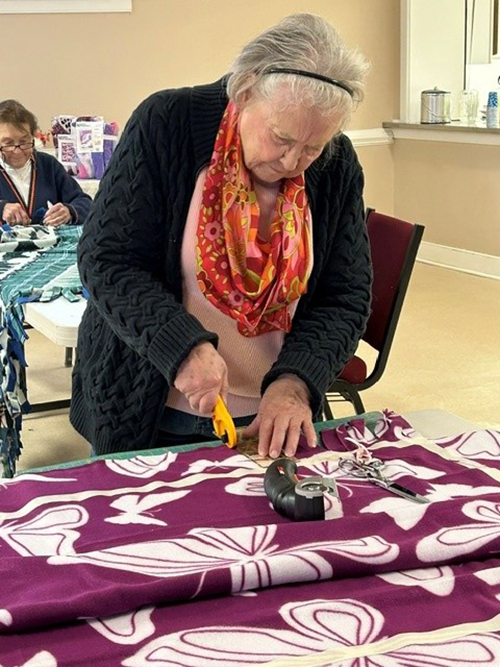
Dozens of volunteers in the region gather periodically as part of auxiliaries, small groups and sewing guilds to make the quilts. They spend hours per quilt to create them, each one with its own unique design and colors. It can take at minimum about eight hours from start to finish to make each one. About eight or nine people may be involved in making each quilt. Barb Curran, who volunteers with Providence St. Vincent, estimates all the volunteers make a total of more than 800 quilts annually. Curran notes that local community members support the quilters, including by donating fabric, quilt tops and other materials.
The St. Vincent volunteer group also create fidget or activity quilts, lap-sized quilts with accessories that encourage activity by the user. Such features include zippers, buttons, lace for threading and tiny trinkets tucked into pockets for discovery. Some of the fidget and activity quilts feature tactile elements like satin or a textured onion bag. The neurology unit gives the fidget quilts to patients with dementia, and some of them go to patients of the pediatric unit.
Fr. Ocun says each hospital has a ritual in which chaplains work with dying patients and their family members to select the particular quilt that will have the most meaning. The chaplains bring the quilts to the patients' room and offer to pray with them. Fr. Ocun says the concept is that "we need to do death well — with dignity, with compassion and reverence."
He adds that after a patient dies, family members can keep that person's quilt as a keepsake. Curran says some families have displayed the quilts at their loved one's memorial service or draped them on their casket. One family requested a father get two quilts. He kept them on his hospital bed and when he died each of his daughters cherished her own quilt that still retained the scent of their father. One woman treasured her mother's Passage Quilt because it was the last thing she had touched before her death. Some of the quilts have been used during honor walks, when a hospital community lines the halls to pay tribute when a patient is being transported to donate organs at the end of life.
Fr. Ocun says, "Death is difficult for everyone, but the experience people get when their loved one is dying can make a huge difference. So, Passage Quilts is one of those experiences we provide to families when their loved one is dying, at least to ease their grief and to change their experience."
Every year in November, Memorial Passage Quilts are displayed in public spaces in all Providence acute ministries in Oregon. This helps build awareness of palliative and hospice care while also honoring and celebrating the lives of people who have died as well as paying tribute to the people who cared for them, Fr. Ocun says.
Curran says a note that a family member sent to the quilters illustrates the profound impact the gifts can have. It reads in part: "My father received this special quilt back in 2022 at (Providence St. Vincent), and it was all he could talk about from the moment he received it. Anyone who entered his room heard all about it, and the excitement in his face was priceless. Thank you from the bottom of my heart to the person who made this quilt with love to each and every one of you."