
The vice president of mission integration for SSM Health in Wisconsin learned differently after attending a civil rights pilgrimage this fall to Montgomery and Selma, Alabama.
The trip was co-sponsored by CHA and the Catholic Mobilizing Network.
"There are moments I get very weepy about it, and in fact, I'm trying not to get weepy about it right now," she said in an interview with Catholic Health World after the pilgrimage. "I came home realizing how much I didn't know. It was humbling. It was emotional. And in many ways, just really kind of unsettling. I can't look at things the same way, especially when it comes to my role in healthcare."
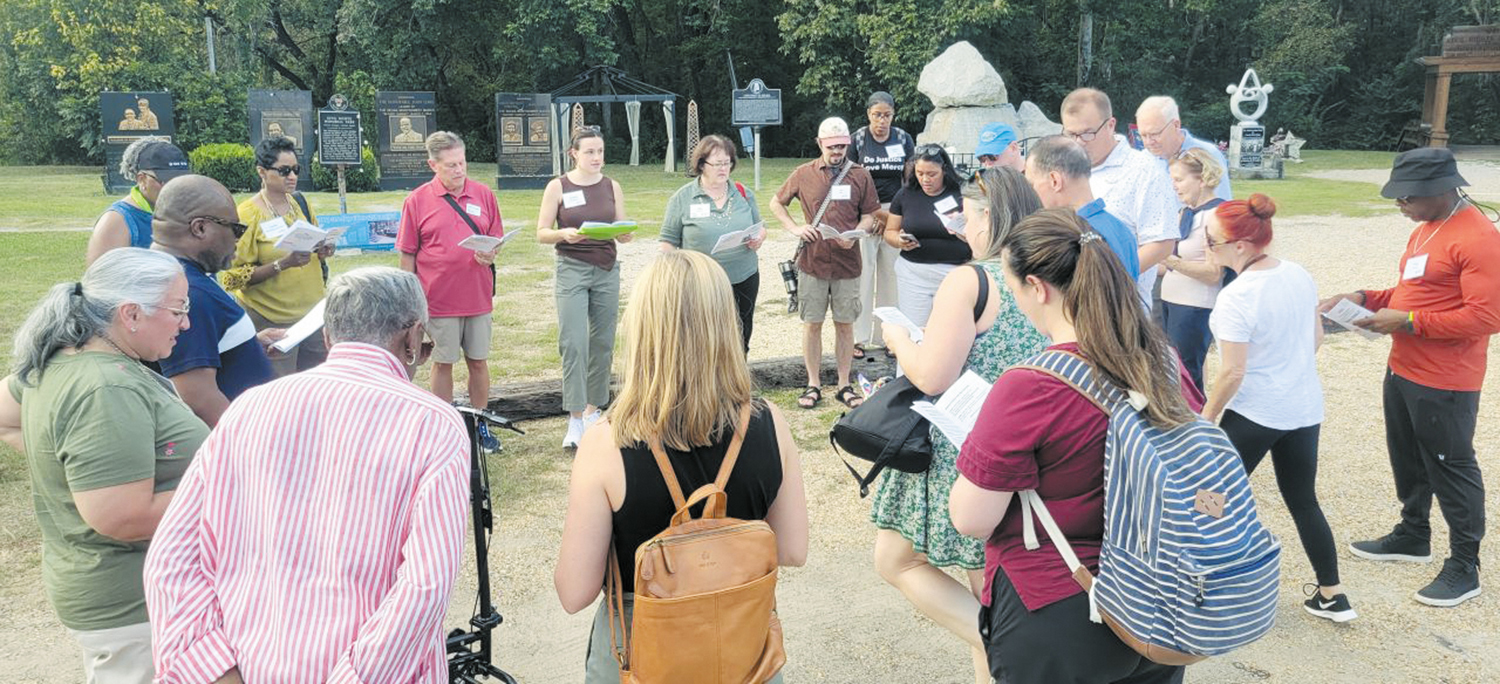
About 20 people attended the pilgrimage, which took place Sept. 30-Oct. 2, including leaders from Scripps Mercy Hospital in San Diego; Sisters of Charity Foundation of Columbia, South Carolina; Angela Hospice of Livonia, Michigan; The Carmelite System of Germantown, New York; Providence St. Joseph Health of Renton, Washington; and Trinity's Holy Cross Health of Silver Spring, Maryland.
CHA's Senior Director of Public Policy Kathy Curran and Senior Director of Mission Innovation and Integration Dennis Gonzales also attended. The two have been leaders of CHA's We Are Called initiative, which began in 2020 and has rallied the association's membership to publicly commit to confronting racism by achieving health equity.
Learning and remembering
The trip included daily prayer circles, times for confidential reflection, and praying a version of the Stations of the Cross on overcoming racism between visits to sites, including The Legacy Museum and The National Memorial for Peace and Justice. The group also met with representatives of the Edmundite Missions, which provides workforce development, nutrition and youth programs in Selma's low-income communities.
Mark Koenig, a member of the sponsors council for Providence St. Joseph Health, said that he was impressed that Montgomery has dedicated so much space to help others learn and remember. Some sculptures and memorials were in natural settings. Some included names and not just numbers and statistics, he said.
"That just created a really wonderful setting to try to absorb, because it's just so much to absorb," Koenig said. "It's still hard to just believe and think what we can do to each other as human beings."
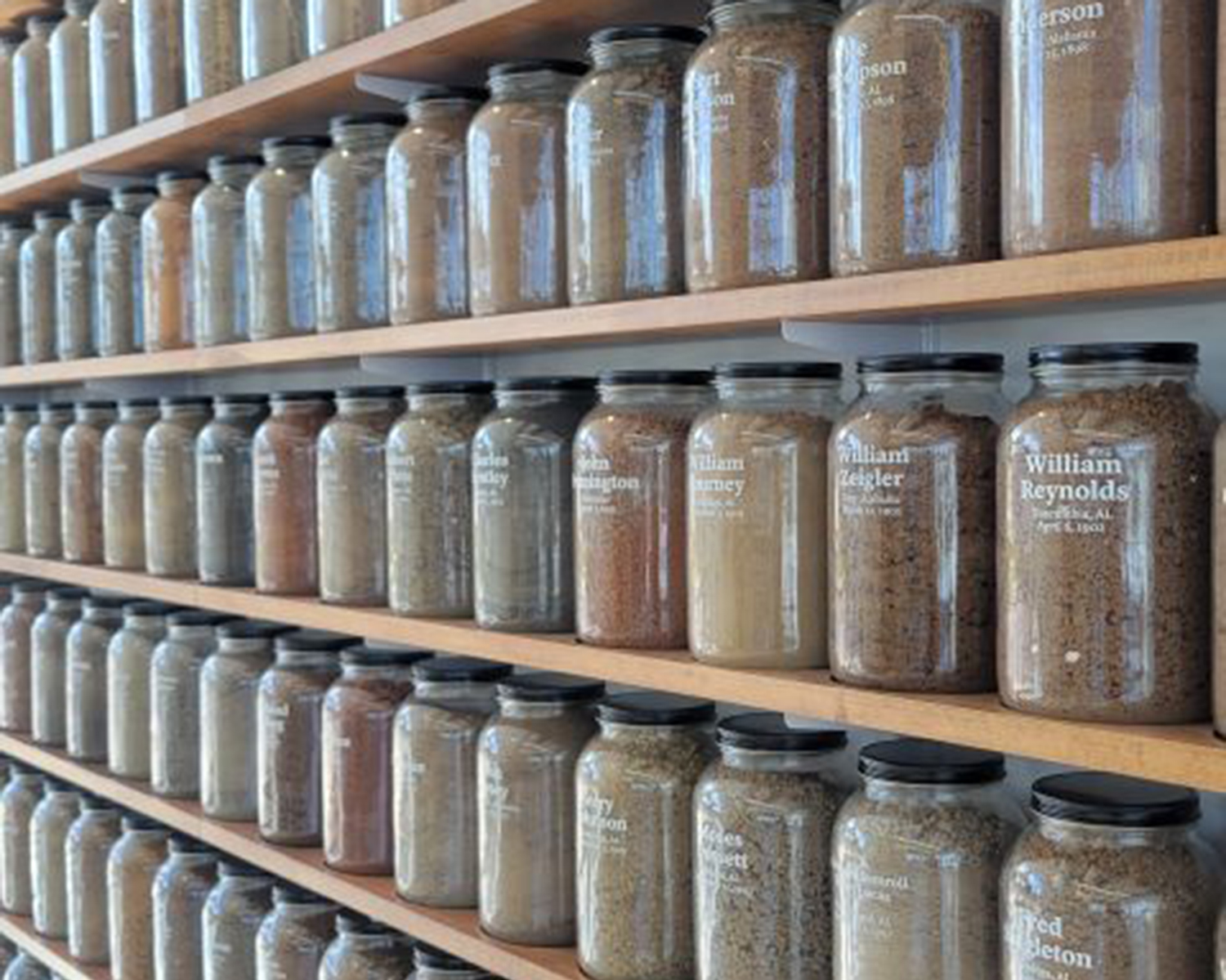
Gonzales called the emotional experience, especially watching the emotions of others in the group, "hard and powerful." He said the last time he felt such emotion while visiting a museum was while visiting the U.S. Holocaust Memorial Museum in Washington, D.C. He described a stark display at The Legacy Museum in Montgomery, which contained jars of dirt collected from underneath trees where people had been lynched.
"It's hard to believe that this really happened," he said.
Healthcare Connections
During the trip, he said the group made various connections to healthcare, the most obvious one being access. "The access is extremely limited, and it's not equitable," Gonzales said. "There is such a terrible gap in equity between the Black community and the white community. It's like a Grand Canyon between the two."
There are no Catholic hospitals or health systems in Alabama. Property tax levels are the lowest in the nation, which limits funding to public schools primarily attended by Black students. Alabama ranks nearly last in preterm birth rates and ranks low overall in health outcomes.
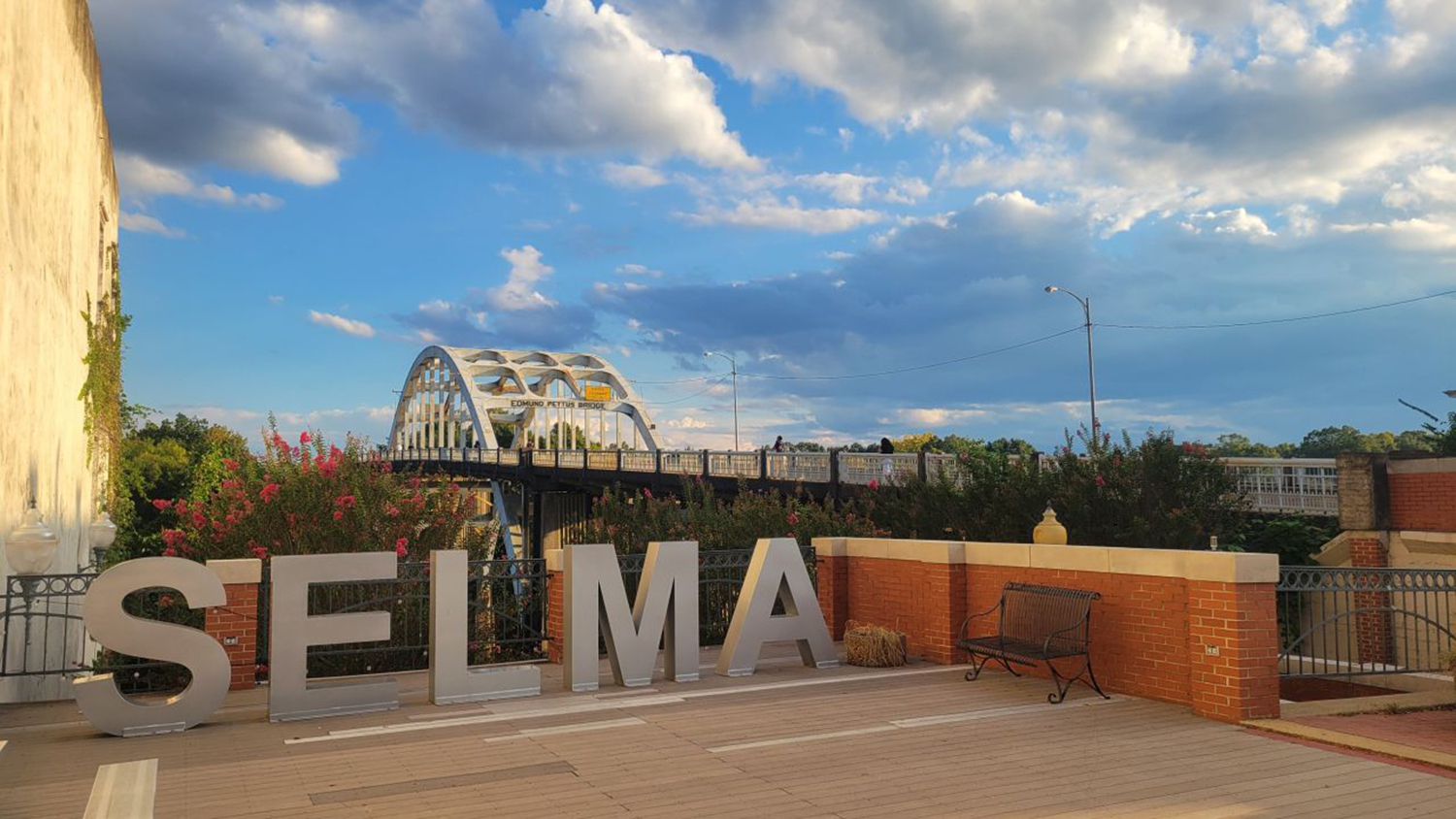
Even within view of the Edmund Pettus Bridge in Selma, which the group walked across, the community struggles. The bridge is now a National Historic Landmark and was the site of the Bloody Sunday beatings of civil rights marchers during a march for voting rights.
"This was a community that fought so hard to get the right to vote for Black people, yet they are still disproportionately affected from a healthcare perspective," said Shannon Dwyer, a member of the Providence St. Joseph Health sponsors council. She said that she learned that it takes a year for some people there in a mental health crisis to have access to a mental health provider. The disparity is inspiring Dwyer to take a closer look at access across the system's seven states.
Dwyer and Koenig gave a presentation about their trip to the Providence St. Joseph sponsorship board and hope to return with other members someday.
Perez said the trip made her think about the conversations that occur when a system has to make hard financial decisions on when to drop services, especially in rural communities.
"Of course, we're conscientious when doing those discernments, but I think our mission requires us to ask more than whether a decision is financially necessary," she said. "I think we also need to ask what happens to the people, the communities left behind, and what is the responsibility we continue to have for them."
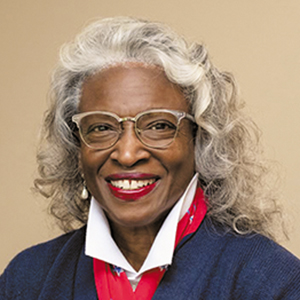
Diane Smith is the director of Catholic social teaching for Angela Hospice in Livonia, Michigan, just outside of Detroit. She is Black and grew up in Jackson, Mississippi.
She said she was not surprised by much of what was presented on the trip, having grown up with and learned about the South's racial history and Civil Rights leaders.
But she welcomed the opportunity to speak with other leaders in Catholic healthcare and inform her work at the hospice. Lately, she has been focusing on the Catholic social teaching tenet of the call to family, community and participation, especially on informed voting.
"It's a perfect time to underscore our responsibility for the common good," she said, explaining that she's not telling colleagues how to vote, but is encouraging them to see voting as a way to engage the public square for the common good. "I wouldn't have done that before," she said.
At The Legacy Museum in Montgomery, which explores America's history of racial injustice, Smith found herself in a tall gallery space featuring photos of trailblazers in the movement for equal rights and justice: among them Martin Luther King Jr., Cicely Tyson, and Medgar Evers, a Civil Rights activist who was murdered in his driveway in Jackson, Mississippi, just a two-minute drive from Smith's house.
Smith thought about the fact that most of the services and memorials she has officiated as a minister of the Disciples of Christ were for people who are white. That would never have happened without the work of those trailblazers, she said.
"These are the people who fought to get me where I have come to," said Smith, tearing up as she spoke. "And nothing else impacted me more than that."