
Rachel Hernandez hit rock bottom.
The rural Louisiana woman had grown addicted to heroin over eight years. She lost her job, got cut off from family, had no phone or vehicle, and got evicted along with her boyfriend from their apartment.
She was also three months pregnant.
She wasn't sure she could go into rehab, because she wasn't sure any programs would accept pregnant women. She was worried about going to the doctor, because she feared being tested for drug use and arrested. She worried about going cold turkey, because she and the baby would go into withdrawal.
Within a few weeks of finding out she was pregnant, Hernandez was arrested and jailed on drug and related charges. From there, she was taken to Our Lady of the Angels Hospital in Bogalusa, Louisiana, a move that potentially saved her and her daughter's life.
Handcuffed and wearing a black-and-white striped jail uniform, she sat nervously in an exam room. "(The doctor) walked in with a big old smile on his face, and he shook my hand, and he sat down, and he started talking to me like any other patient," Hernandez said. "And he just created this really, really comfortable, safe place for me."
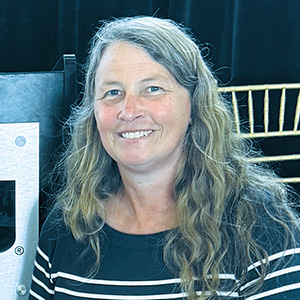
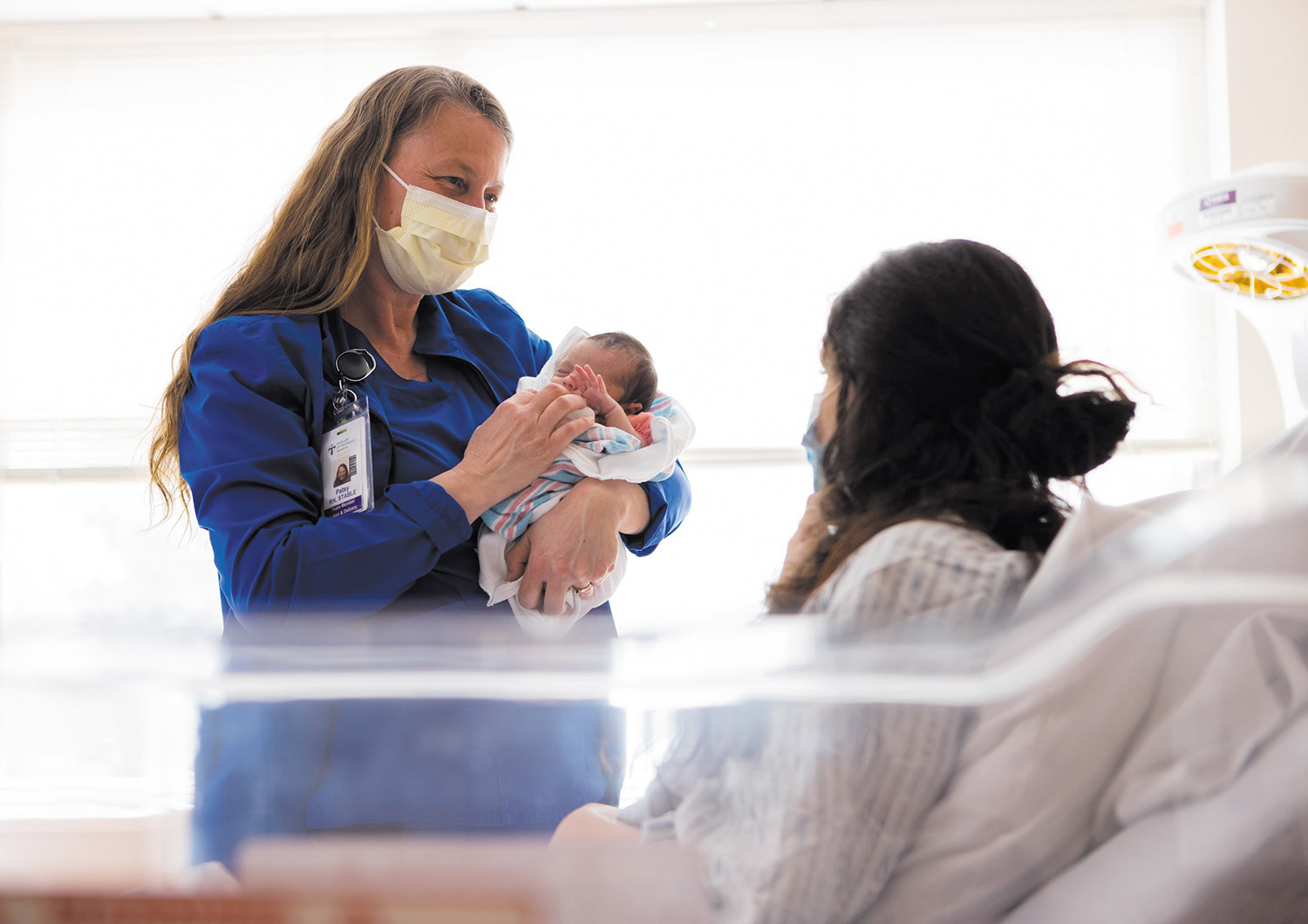
Hernandez became part of the hospital's Rise Up program, the first of its kind in Louisiana. The program started in 2020, the year she came to the hospital. It aims to curb opioid addiction in pregnant women. Of about 20 babies who are delivered at the hospital each month, two or three typically are addicted to drugs and need treatment, said Patsy Welch, labor and delivery director at the hospital and the champion of the Rise Up program.
The hospital is part of Baton Rouge, Louisiana-based FMOL Health, formerly Franciscan Missionaries of Our Lady Health System.
Welch said she knew the hospital couldn't turn away from the problem. "Because whether you want to punish the mom or not, or whatever your thoughts are towards mom, you have a baby here that you could possibly give a better life, a better outcome, and you can also help the mom with treatment and help her get back on track," she said.
Leading cause of death
Since 2018, accidental opioid overdose has been the leading cause of pregnancy-associated death in Louisiana, according to the Louisiana Department of Health. A department effort called Project M.O.M., or Maternal Overdose Mortality, launched in May with a goal of reducing pregnancy-associated opioid overdose deaths by 80% within three years.
Welch has spoken at multiple events about the Rise Up program and the hospital has hosted people from other hospitals interested in the program. Hernandez recently spoke at the first Project M.O.M. Summit in Baton Rouge. Hernandez shared her experiences with the Rise Up program, considered a model for the state.
"They just showed me so much compassion, and that meant a lot when I didn't even have faith in myself," Hernandez said. "It really made a huge impact on me and my daughter and my recovery."
Detoxing mother and baby
Hernandez's daughter, Raedynn, was born in December 2020. Both mother and infant had to detox. Dr. Ronak Shah, who had treated Hernandez so kindly at their first visit, had prepared her for how Raedynn would behave and informed her when her baby needed morphine.
"They didn't make me feel like I didn't deserve to know what was going on with her, because of what we had been through," said Hernandez. "They kept me very informed through the process."
The two were in the hospital for about a week, and Hernandez continued on the road of her own recovery. Like other women in the program, she took part in medication-assisted therapy, or MAT, getting an opioid analog to address withdrawal symptoms without creating a high. This is considered safer than if a woman tries to quit cold turkey on her own. MAT is given through a partnership with the Louisiana State University Rural Family Medicine program, which also trains residents on how to treat mothers with substance use disorders.
Authorities put Hernandez on probation for her charges and terminated it after she successfully completed a drug court program, she said.
Putting mom at the center
For supporting babies experiencing withdrawal symptoms, Our Lady of the Angels is the only hospital in the state to use an approach called Eat, Sleep and Console. The approach relies on a function-based assessment of an infant's ability to eat, sleep and be consoled using interventions like skin-to-skin contact, a low-stimulation environment, and breastfeeding. This minimizes the need for medication and empowers caregivers.
"It puts the mom at the front and center of the care," Welch said. "She understands her part. And we also encourage them to breastfeed, because if they are complying with their treatment regimen, then the medication goes to the baby through the breast milk, and it helps with their withdrawal systems as well."
Rise Up also provides patients with counseling services and access to social workers. With that support, as well as support from the state's division of family services and other community partners, families are able to bring their babies home sooner, Welch said.
Welch said the patients stay in the program as long as needed, and follow up with the MAT clinic if needed, and many newborns are followed in the pediatric clinic, and are closely monitored and referred to resources if needed.
In the past, some babies would stay an average of six weeks at the hospital while detoxing, compared to an average of seven to eight days now, Welch said.
About 100 women have gone through the Rise Up program. "We get patients from all walks of life," Welch said. "We may get them from the jail. They just come to us for care.
"It aligns with our mission: to help the most vulnerable, to help those most in need, extending the healing ministry of Jesus Christ."
She hopes other Louisiana hospitals can replicate Rise Up.
Grateful for help
Hernandez now lives in Ponchatoula, about 48 miles east of Baton Rouge, and works as a peer support specialist for the Louisiana Perinatal Quality Collaborative, making videos and hosting seminars about maternal health. She volunteers with Our Lady of the Angels as a patient partner for other women with addictions.
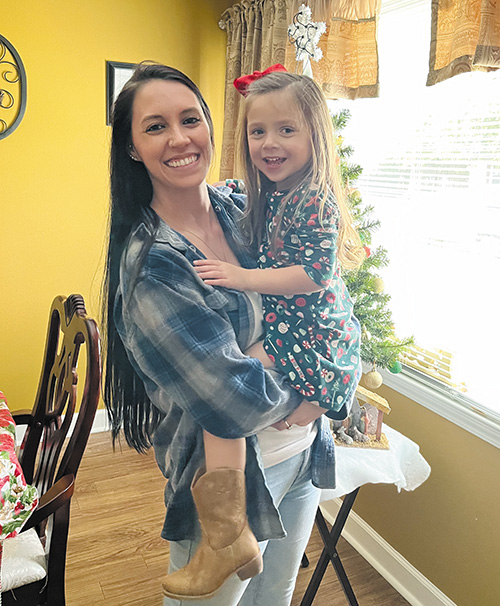
As for Raedynn, she is now 4, in a pre-kindergarten program, and gearing up for the T-ball season. She's a smart little girl who keeps Hernandez on her toes.
"I couldn't imagine not having her," Hernandez said. "I couldn't imagine her being taken from me as soon as she was born, and just her being behind a glass window. They just kept telling me: You're the medicine. You are the medicine. And she was mine, like, she is mine. It's full circle: like me, her, and the hospital staff. And we all work together."