Parker Johnson was born prematurely last December at Ascension Saint Thomas Rutherford Hospital in Murfreesboro, Tennessee, he was just 3 pounds, 3 ounces, and needed immediate medical intervention.
The clinical team rushed him to the hospital's neonatal intensive care unit. Parker's mom, Stephanie Johnson, was admitted to an inpatient unit with high blood pressure. Johnson couldn't visit Parker in the NICU because she was tethered to a magnesium drip.
Thankfully, the hospital has livestreaming cameras that enable parents and other loved ones to log in to view their babies in the NICU.
"He was sleeping most of the time, so we're mostly watching a sleeping baby," Johnson laughs. But she says the cameras "gave me the peace of mind just to know, hey, I can pull this up at any time."
Mother and son were both discharged by early this year.
"Every hospital should have a NICU, and then every NICU should have these," Johnson says of the cameras.
Ascension Saint Thomas Rutherford's NICU is among a growing number that have installed livestreaming cameras in bassinettes to allow nearly around-the-clock viewing of the hospitalized babies.
For parents or family members who are unable to be with their infant, the cameras allow them "to feel more involved right from the start, making them partners in the process of giving their hospitalized infant the best start to life," says Elishia Gifford, NICU and nursery manager for Ascension Saint Thomas Rutherford, which has 22 cameras – one for each bedspace and an additional six mobile cameras.
Across oceans
A 2021 article in the Journal of Pediatric Nursing says the first virtual NICU visit using a video phone took place in 1983. Usage has been increasing since, and "now live-stream virtual visitation services is gaining in popularity," says the article.

Dr. Pratik Parikh, assistant medical director for the NICU at CHRISTUS Children's in San Antonio, says it is hard on parents of NICU babies to be separated from them.
"Parents often tell us they feel torn between work and the hospital, between caring for older children at home and being with their newborn," Parikh says. "We wanted to bridge that gap and offer them peace of mind."
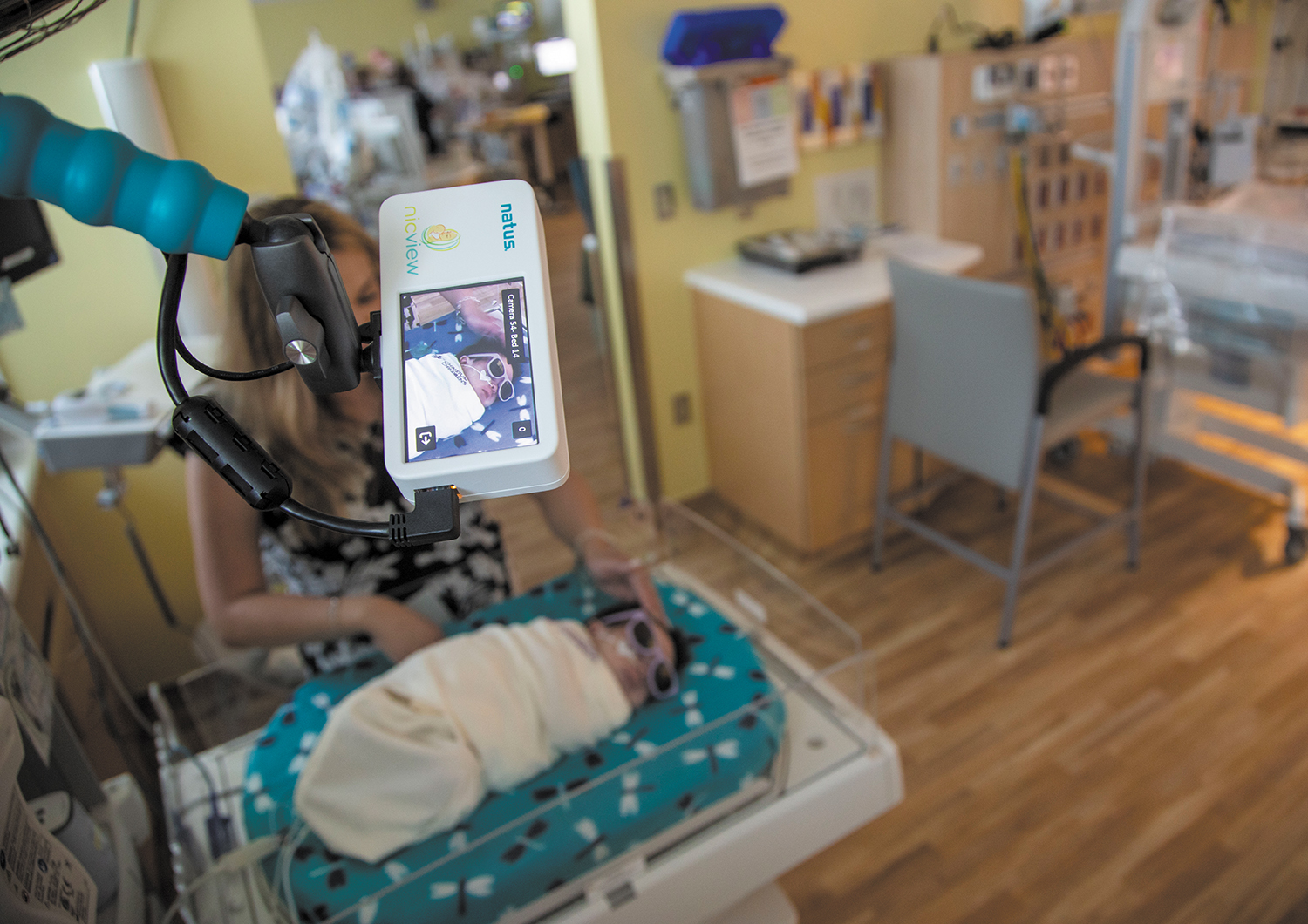
The hospital's NicView camera system allows relatives "to know that their child is safe and cared for, even when they cannot be physically present," he adds.
With dollars from the new CHRISTUS Children's Initiative fund, CHRISTUS Children's installed cameras in each of its 60 bassinets. Parents get a log-in code that they can share with loved ones that provides access to the secure livestream.
"One of the most beautiful surprises has been the way NicView has connected families across oceans and continents," Parikh says. "We've had grandparents in other countries, sometimes thousands of miles away, able to see their grandchild in the NICU for the very first time. For many, travel wasn't possible due to health, cost, or even global circumstances, but this technology gives them that moment of joy and connection."
Three other CHRISTUS Health NICUs have similar technology.

Health equity
Elizabeth Petrich-Kennedy, chief nursing informatics officer for Providence St. Joseph Health, has helped oversee the deployment of livestreaming cameras to NICUs throughout that seven-state system. Since 2016, 13 Providence NICUs have installed cameras from either NicView or AngelEye Health. Some of those devices allow two-way messaging between NICU staff and the infants' parents.
With no reimbursement source, the cameras usually are funded by philanthropy.
Petrich-Kennedy says the NICUs have seen an almost limitless array of loved ones helped by the cameras: parents who must return to work after exhausting their leave, mothers admitted to a different hospital or unit than their babies, loved ones deployed in the military, and people who are too ill to visit the hospital. Petrich-Kennedy says offering this connection is a matter of health equity for Providence, since marginalized families often have the most barriers to maintaining an ongoing presence with their hospitalized babies.
Families are universally grateful for the technology, says Jim Burke, NICU manager of HSHS St. Vincent Children's Hospital. An anonymous donor approached the Green Bay, Wisconsin, hospital to fund cameras mounted this summer in each of the 24 bassinets in the NICU. The donor funded six more cameras that staff can move as necessary, such as if medical equipment temporarily blocks the bassinet camera.
'Well taken care of'
There are challenges to deploying livestream cameras. Facilities staff have to work with vendors to install the equipment. Hardware and software can present issues. It takes time to train staff on the cameras' use and on how to show a revolving door of families how to access the livestream. Families must agree not to post any images from the livestream online for privacy reasons.
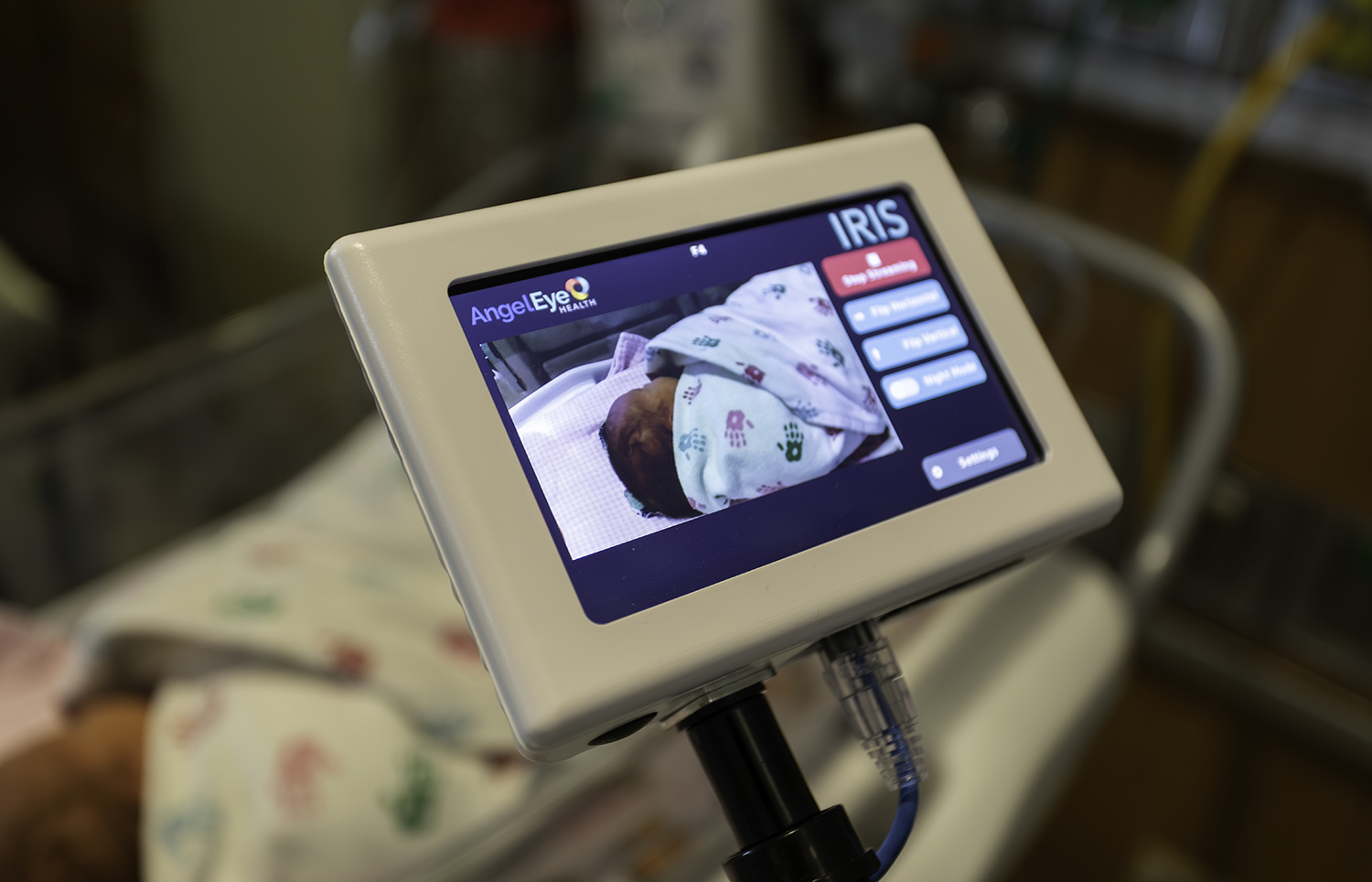
The Journal of Pediatric Nursing analysis flags additional concerns: Livestream viewers may become hypervigilant, nearly obsessively watching with concern. Also, viewers may be distressed if their baby cries and they cannot comfort them. The journal article notes that some nurses report increased calls from parents with worries about what they see on the livestream.
Burke acknowledges that some St. Vincent Children's NICU staff were initially wary, fearing that the cameras would add to their workload. But, he says, staff have found that the upsides of the cameras overwhelmingly outweigh the downsides.
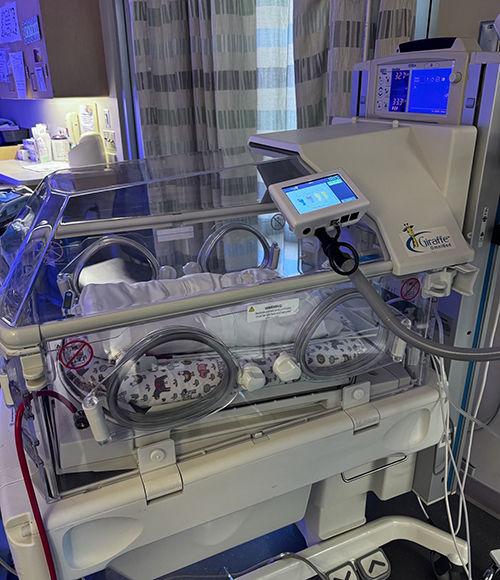
He says with families having nearly constant access to the livestream, there is increased comfort and trust. "When you see your baby snuggled up, warm and content, it makes you feel better, and you can see they're well taken care of," he says.
He notes that there is a strong correlation between family trust of the clinical team, satisfaction with care, and likelihood to follow discharge instructions. While it is too early to have hard evidence at St. Vincent Children's, Burke believes using the cameras could result in improved outcomes for babies and their parents.
Petrich-Kennedy notes there is evidence that moms who pump breastmilk for their babies while viewing the livestream have a better yield than those who don't.
Family-centered care
Petrich-Kennedy says the livestreaming supports Providence's goal of providing family-centered care. She says Providence NICUs have seen improved communication and relationships between staff and the babies' families. Staff say families do not call them as often when they can see the babies on the livestream, and that frees the clinical staff to focus on care delivery.
Gifford says at Ascension Saint Thomas Rutherford's NICU, the livestreaming capabilities have reduced the distress and anxiety parents often feel when separated from their babies.
At CHRISTUS Children's, Parikh says, "nurses and physicians see how much calmer and more connected parents are when they can use NicView. It doesn't replace face-to-face conversations, but it adds another layer of trust and partnership.
"Clinicians feel it strengthens communication because parents come in feeling more engaged and reassured," he says.
Parikh adds that NICU staff have noticed that families who use the livestream tend to engage more actively in discussions about their babies' care. "They feel informed and involved, which is exactly what we want," he says. "Most importantly, babies thrive when their families are connected and emotionally supported."
"It's one more way we are working to ensure that every baby in our care is surrounded not just by excellent medical treatment but by the love and connection of their family," he adds.