
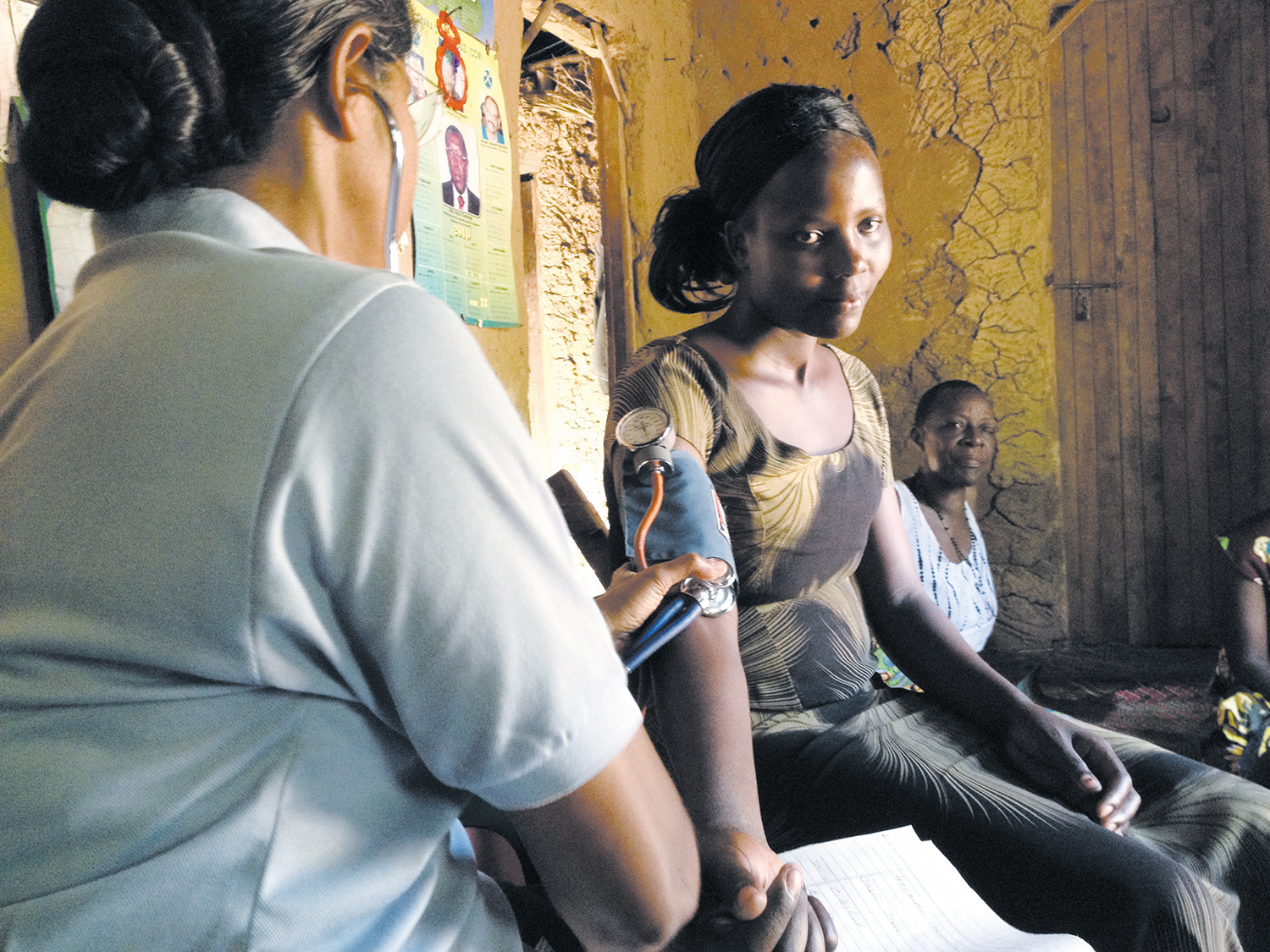
SPRINGFIELD, Ill. — Hospital Sisters Mission Outreach Executive Director Erica Smith remembers talking by phone about two years ago with administrators of a hospital in Western Africa. She explained that her nonprofit could ship them whatever medical equipment and supplies they needed: beds, linens, syringes, surgical trays. She noted, "You get to choose what you want."
They repeated back to her, "We get to choose what we want?"Smith thought there was a miscommunication or misunderstanding. The administrators explained that another organization had sent equipment that they did not choose, and much that they could not use.
"Yes, you get to choose what you want," Smith replied.
The joy over her response was palpable. It felt like a triumphant movie moment when everyone cheers, she said.
"We could make Mission Outreach faster, cheaper, or whatever, but we could not do that and do it at the quality that we do," she explained. "It is a lot of work, and it is complex to do the work that we do, but we do it for these moments of, 'Yes, you can choose what you want.'"
For nearly 25 years, this arm of Hospital Sisters Health System has reached out to hospitals and health systems around the world — 120 shipments to 102 countries at last count, affecting a combined service area of an estimated 28 million people — to provide supplies and equipment of their choosing.
For its work gathering and sending needed medical supplies and equipment across the globe, Mission Outreach has earned CHA's 2026 Achievement Citation, the association's recognition of innovative programming that changes lives.
Mission Outreach strives to ensure every donation is usable, repairable and appropriate. Its goals include equipping health workers, expanding maternal and child services, supporting disaster and crisis recovery, assisting with medical and surgical missions, and providing biotechnology services to make sure equipment works and to provide technological support.
HSHS President and CEO Damond Boatwright likes to remind others that the Hospital Sisters arrived in America from Germany more than 150 years ago because they saw a need to serve in another part of the world. "When they heard that calling for help, they only had four words to say: 'Here I am, Lord,'" Boatwright said. "And so global health being local health, when there is a need, wherever it is ... we say, 'Here I am, Lord.'"
Humble beginnings
Mission Outreach started in 2002 in the garage of a convent, where the Hospital Sisters of St. Francis began collecting medical supplies and equipment that HSHS could not use. They thought perhaps the missions they partnered with around the world could.
As word spread, requests and donations poured in. The congregation built their first warehouse in 2006. They later built a second one nearby. In 2020, the Hospital Sisters transferred ownership to HSHS because they felt the health system had the capacity to handle future growth. Today, sisters volunteer with the organization.
Half of Mission Outreach's $1.9 million budget comes from donors and grants. The other half comes from shipping and handling charges paid by donation recipients, fees that domestic health systems pay for pickup of donation, and recycling revenue.
While most equipment and supplies come from HSHS, Mission Outreach now gets donations from other Catholic health systems such as Ascension, Mercy, SSM Health, Avera Health and PeaceHealth.
Mission Outreach has equipped 530 medical mission organizations with supplies and equipment. It has helped save and redistribute 10 million pounds of equipment and supplies, valued at more than $85 million, that might otherwise have been dumped into landfills.
"It is incredible that they think ahead, they think outside of the box, and they do the right thing," said Peggy Frisella, founder of Surgical Outreach for the Americas. The nonprofit provides surgical services for underserved people in Central and South America, performing more than 2,500 surgeries since 2009.
Frisella finds many supplies at Mission Outreach for the life-changing hernia and gynecological surgeries her group performs. "We just honestly would not be able to do anything without them," she said. "The patients are so appreciative. You cannot even imagine it."
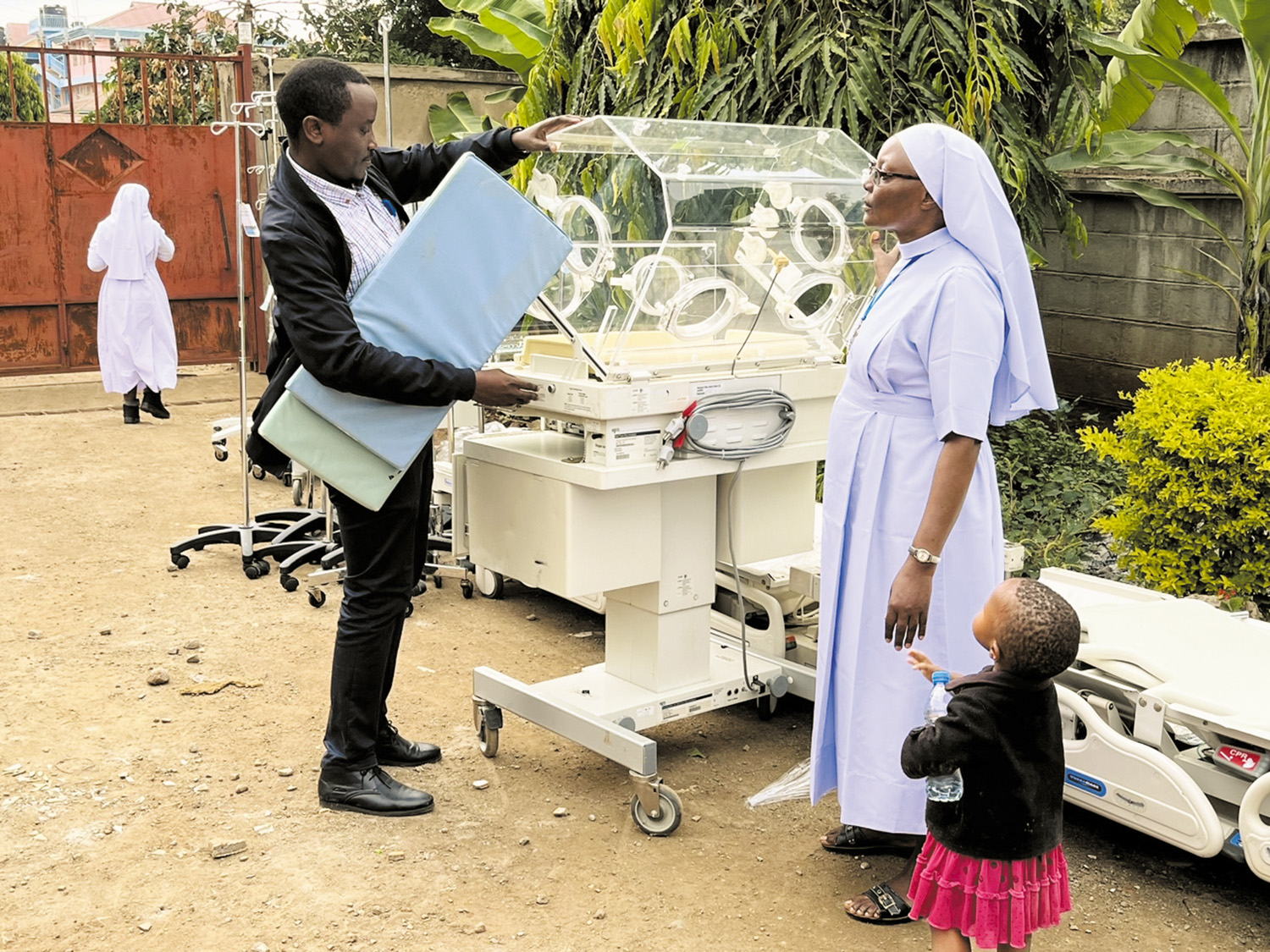
The nonprofit Kenya Relief has received about a dozen full containers from Mission Outreach over the years, representing more than $2 million in equipment and supplies, including operating room tables, ultrasound machines, portable X-ray units, gowns, drapes and surgical instruments.
"Our Kenyan clinicians often tell us how different it feels to work in an environment where they finally have what they need," President and CEO Melissa Cook said. "Nurses do not have to tell surgeons, 'We do not have that,' and surgeons can perform procedures with modern equipment they would never otherwise access. Patients recover more safely and comfortably because the environment is clean, consistent, and properly supplied."
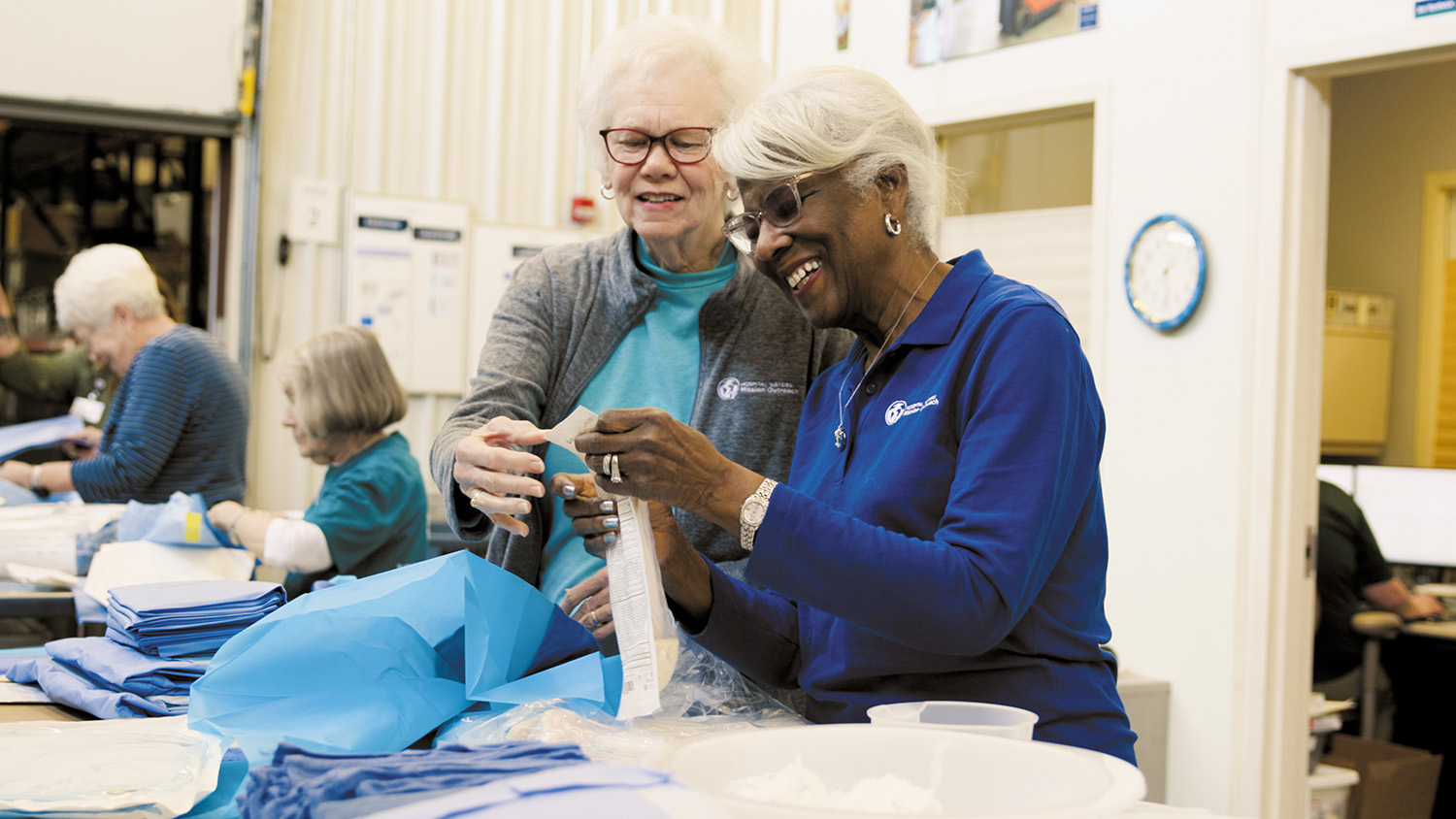
Twelve employees work for Mission Outreach, along with 100 regular volunteers, whose hours collectively equal the work of five full-time employees.
Many volunteers are retired medical workers who know the difference between, say, a reinforced tracheal tube and an uncuffed reinforced tracheal tube. They come in at least once a month, most of them weekly, and sort items and enter them into an online inventory system.
Elaine Kuhn, a retired teacher, loves the welcoming atmosphere at Mission Outreach and the friends she has made as a volunteer.
"I know I am just a small part of the process," she said. "Everybody is working together in the process that makes everything come together."
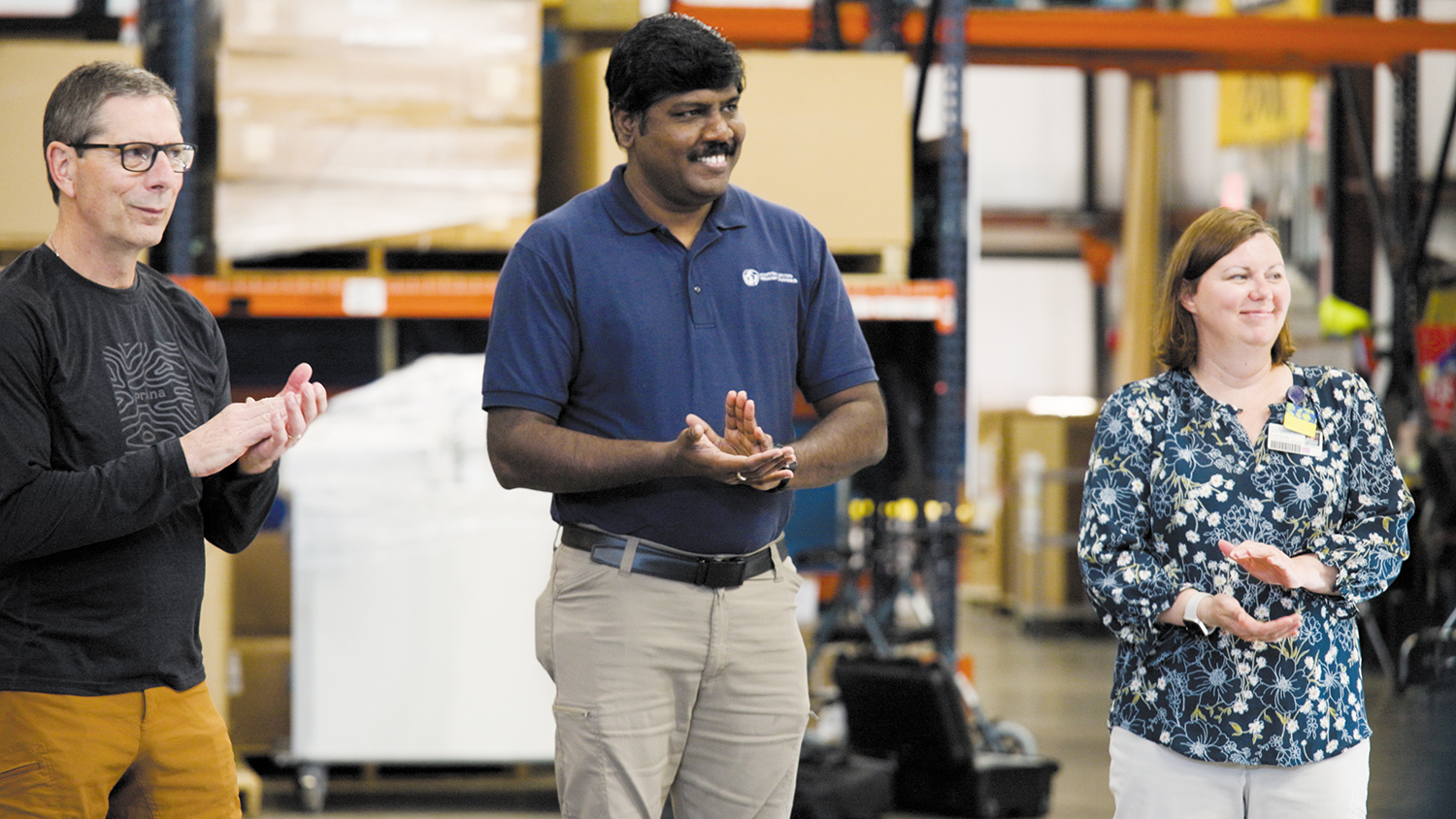
Ratish Kumar, a 2023 Tomorrow's Leaders honoree, is a biomedical engineer with Mission Outreach. He makes sure that donated equipment, such as patient monitors and ultrasound machines, are in working condition. He also works closely with the partners overseas, ensuring they have the means to maintain and sustain the equipment.
When Kumar joined in 2016, Mission Outreach received a lot of what its leaders referred to as "junk for Jesus," donations that might be well-intentioned but were unusable or not worth salvaging. He cited a World Health Organization study from 2011 that said 70% of medical equipment donated to developing countries ended up in junkyards.
Mission Outreach came up with an equipment disposition decision matrix to help donors understand what was proper and needed, and what might be better sold elsewhere or scrapped instead of donated. Now, most equipment donated to the organization is in good condition.
"It took us a long time to achieve this stage through constant education and awareness," Kumar said.
Handling with care
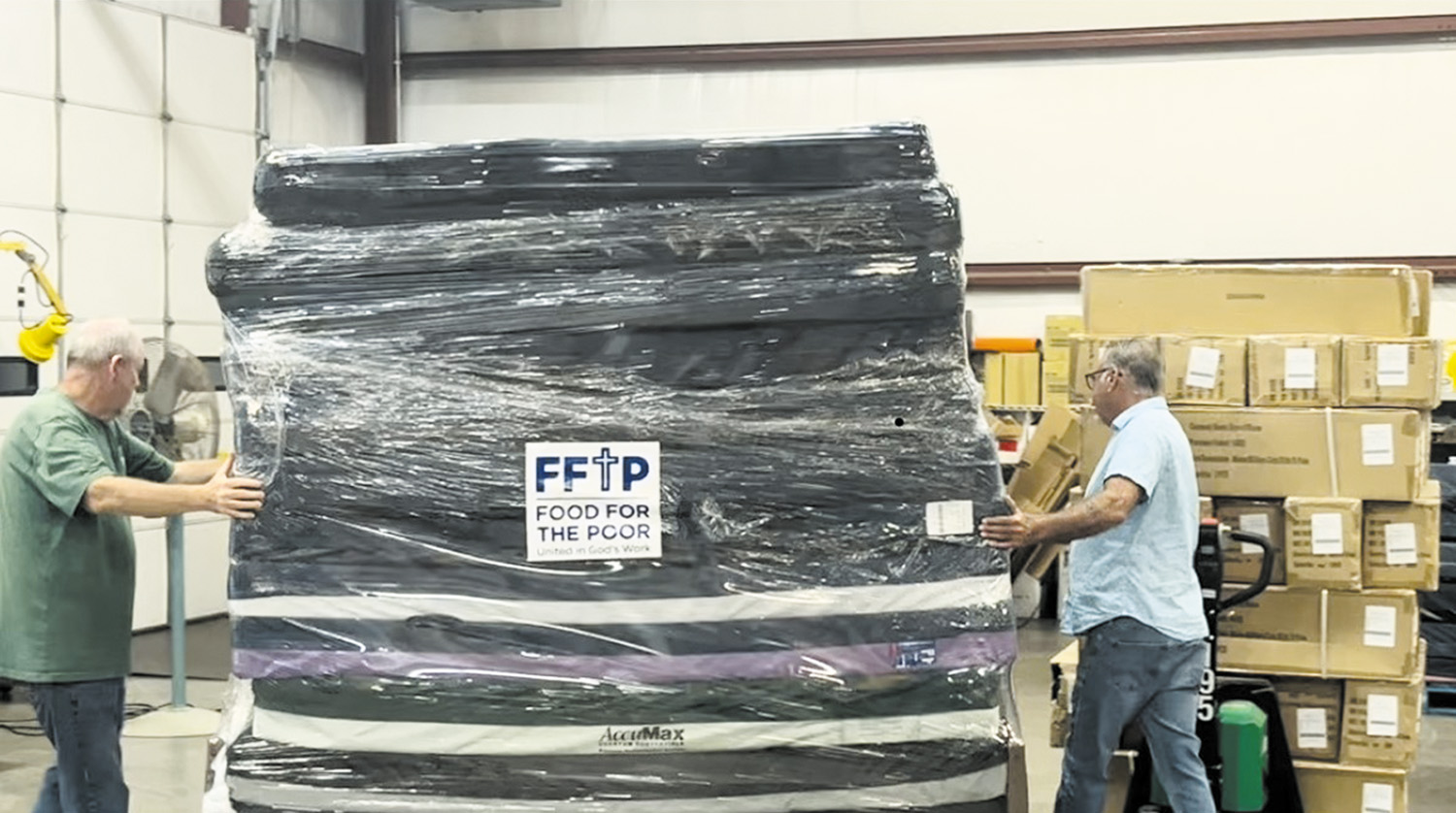
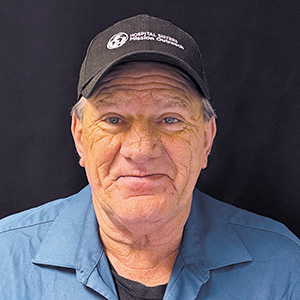
When a hospital in another country makes an order, warehouse workers fit the goods into a 40-foot shipping container. Kenneth Ware, a commercial driver and warehouse associate, is in charge of the task.
"They call me the Tetris master," Ware said of his ability to fill every nook and cranny of the container.
Larger items, such as exam tables and beds, go in first. Smaller items go in stacked boxes. He likes to make a good impression, so he will stack beds and mattresses at one end, so they are the first thing recipients see when they open the door.
David Wilcox, a carpenter, builds special crates to protect furniture and equipment from being damaged during shipment. Linens and scrubs serve as cushioning material. Shrink-wrap keeps the items nice and snug.
Before the truck hauls the container away, the staff and volunteers gather around it and hold hands. Then, they recite the container blessing, which says, in part: "Provide us wisdom to understand the needs of your people; motivate us to take the appropriate actions; and give us the courage to face the challenges that taking action will create."
Reaching others
Smith, Kumar and other staffers have traveled around the world to meet with recipients.
At St. Joseph Hospital in Moshi, Tanzania, Kumar conferred with hospital leaders on the location of a new MRI machine and the electricity requirements of other machines. In Ukraine, Smith learned how a portable ultrasound she hand-delivered would be used multiple times a day for orthopedic surgeries on soldiers injured on the front lines. In Peru, Mission Outreach staff watched as a mother offered purified water in a sippy cup to her toddler. The organization, in collaboration with Bon Secours Mercy Health, had sent water purifiers after a violent storm worsened an outbreak of dengue fever.
Often, recipients send videos back to Mission Outreach. Volunteers and staffers watch from Springfield.
"And the people there are just filled with joy, and that is our motivation," Ware said. "They say, 'This was great stuff, the best we have ever had.' We take pride in what we do — everybody here does."
Spreading the mission
As part of its longer-term partnerships in some countries, Mission Outreach is working on measuring outcomes. St. Joseph Hospital in Tanzania is seeing a difference in mother and baby outcomes after Mission Outreach donated fetal monitors and other birth-related equipment.
A nurse there told Smith: "I am a better nurse because of this. I have a tool that really gives me the confidence to make decisions."
Meanwhile, the heart of Mission Outreach beats inside the Springfield warehouses.
One recent early evening, a group of new executives for HSHS came to learn about and help serve Mission Outreach. It is part of their formation process. They gathered around boxes of scrubs, laughing and chatting as they checked the garments for rips and stains, and folded and sorted them by size.
Rachelle Barina, senior vice president and chief mission officer for HSHS and a 2024 Tomorrow's Leaders honoree, challenges groups like this. She asks: What is your Mission Outreach right now? What are you building out of your garage that is contributing in a way that you cannot imagine 10 years from now?
"The Hospital Sisters of St. Francis have given us a tremendous example, and we today are responsible at Hospital Sisters Health System for continuing their legacy," Barina said. "That is an amazing thing to see what people of goodwill can do when we come together, when we overcome differences, when we just pause for a moment and think: Can we do better? Look what we can accomplish together."